








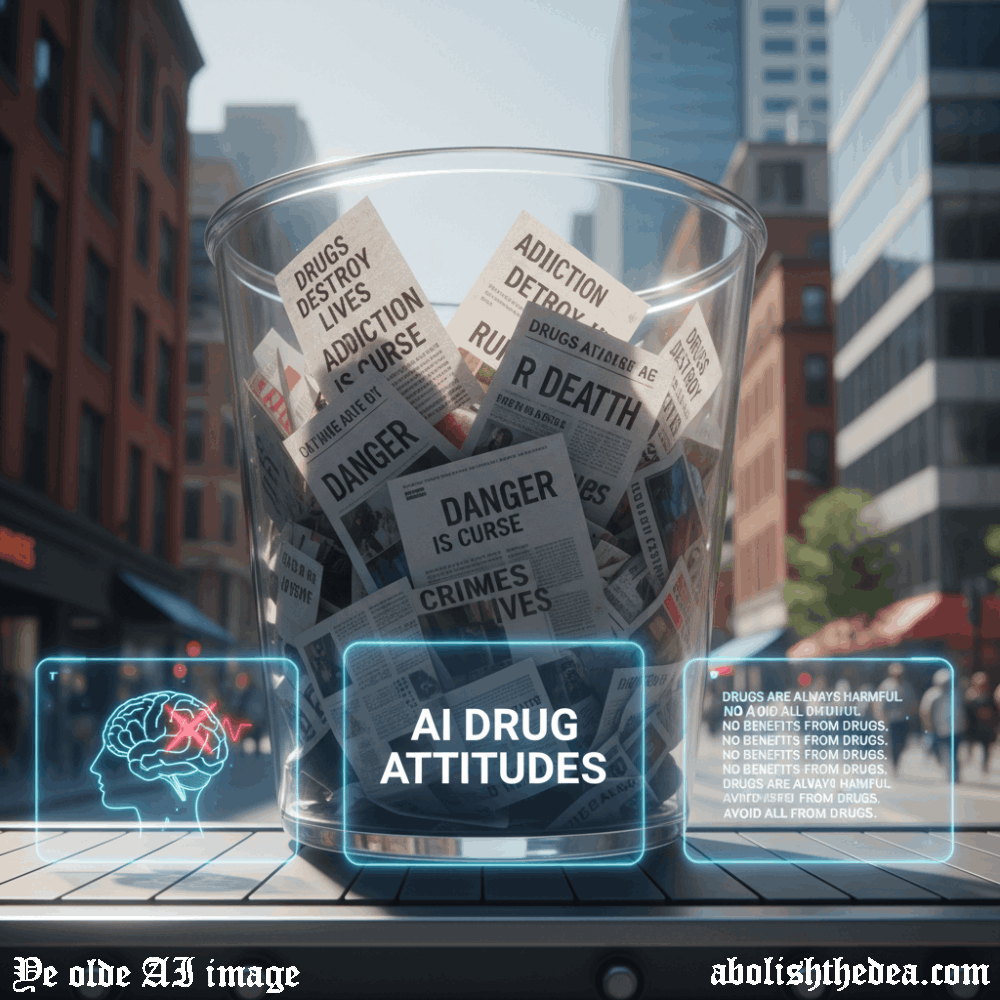
 I watched a clip on Sky News last night in which the wide-eyed tech pundit told us that the AI behemoth known as Anthropic had its own philosopher on staff. Its own philosopher! This was supposed to shock the viewer. A company the size of Coca-Cola has its own philosopher on staff! But what shocked me was the fact that Anthropic did not have DOZENS of philosophers on staff -- or that it did not subject the implicit philosophical point of view of its algorithms to multiple critiques from the general public. If such companies are going to leverage Big Data to give us the apparent final word on everything, then it is hugely important upon which philosophies their answers are based, and that philosophy should not be invented by one single company-appointed philosopher. Sure, 2 + 2 is always going to be equal to 4 in abstract mathematics regardless of unspoken assumptions about the world, but the AI answers to questions about the propriety of drug use are going to depend entirely on the philosophies assumed, knowingly or not, by the AI algorithms.
  Imagine educational documentaries showing how folks manage to safely incorporate today's hated substances into their life and lifestyle.
Why don't those politicians understand what hateful colonialism they are practicing? Psychedelics have been used for millennia by the tribes that the west has conquered -- now we won't even let folks talk honestly about such indigenous medicines.
The so-called "herbs" that witches used were drugs, in the same way that "meds" are drugs. If academics made that connection, the study of witchcraft would shed a lot of light on the fearmongering of modern prohibitionists.
Kids should be taught in grade school that prohibition is wrong.
Musk and co. want to make us more robot-like with AI, when they should be trying to make us more human-like with sacred medicine. Only humans can gain creativity from plant medicine. All AI can do is harvest the knowledge that eventually results from that creativity.
There would be almost no relapses for those trying to get off drugs if all drugs were legal. Then we could use a vast variety of drugs to get us through those few hours of late-night angst that are the bane of the recidivist.
Americans think that fighting drugs is more important than freedom. We have already given up on the fourth amendment. Nor is the right to religion honored for those who believe in indigenous medicines. Pols are now trying to end free speech about drugs as well.
How would we even KNOW that outlawed drugs have no positive uses? We first have to incorporate them in a sane, empathic and creative way to find that out, and the drug war makes such a sensible approach absolutely impossible.
The press once again hauls out the easy answer. Reiner's son was using drugs! Aha! Of course, that explains EVERYTHING! [sigh]
The MindMed company (makers of LSD Lite) tell us that euphoria and visions are "adverse effects": that's not science, that's an arid materialist philosophy that does not believe in spiritual transcendence.
Imagine educational documentaries showing how folks manage to safely incorporate today's hated substances into their life and lifestyle.
Why don't those politicians understand what hateful colonialism they are practicing? Psychedelics have been used for millennia by the tribes that the west has conquered -- now we won't even let folks talk honestly about such indigenous medicines.
The so-called "herbs" that witches used were drugs, in the same way that "meds" are drugs. If academics made that connection, the study of witchcraft would shed a lot of light on the fearmongering of modern prohibitionists.
Kids should be taught in grade school that prohibition is wrong.
Musk and co. want to make us more robot-like with AI, when they should be trying to make us more human-like with sacred medicine. Only humans can gain creativity from plant medicine. All AI can do is harvest the knowledge that eventually results from that creativity.
There would be almost no relapses for those trying to get off drugs if all drugs were legal. Then we could use a vast variety of drugs to get us through those few hours of late-night angst that are the bane of the recidivist.
Americans think that fighting drugs is more important than freedom. We have already given up on the fourth amendment. Nor is the right to religion honored for those who believe in indigenous medicines. Pols are now trying to end free speech about drugs as well.
How would we even KNOW that outlawed drugs have no positive uses? We first have to incorporate them in a sane, empathic and creative way to find that out, and the drug war makes such a sensible approach absolutely impossible.
The press once again hauls out the easy answer. Reiner's son was using drugs! Aha! Of course, that explains EVERYTHING! [sigh]
The MindMed company (makers of LSD Lite) tell us that euphoria and visions are "adverse effects": that's not science, that's an arid materialist philosophy that does not believe in spiritual transcendence.


 (up)
(up)