



introduction to the Drug War Philosopher website at abolishthedea.com
orange rss icon with stylized radio waves orange rss icon with stylized radio waves bird icon for twitter bird icon for twitter


back navigation arrow forward navigation arrow


America's Naive Views about Drug Use in the Entertainment Industry

by Ballard Quass, the Drug War Philosopher

June 7, 2026


Drug prohibition has fried the brains of modern academics. Nowhere is this more obvious than in the subject of human psychology. Our pundits in the ivory tower will search high and low for the causes of drug use in entertainers, speculating extravagantly about the role of their problematic childhood or their biochemical propensity to use mood-altering substances, and yet the use of drugs by entertainers makes perfect psychological sense -- at least if we are talking about common-sense psychology rather than the deterministic psychology of the behaviorists1. To put this as briefly as possible, entertainers use drugs for the same reason that the Oracle at Delphi inhaled mind-altering fumes: in order to transcend herself (with all her mortal sorrows, cares, fatigue, self-doubt, etc.) and thereby put on a good show -- and thereby earn a living! There's no need to ascribe her drug use to hedonism: she uses her "drug" of choice to make a living, and this is true of drug-using entertainers as well.

But here I am forced to make a quick digression. I was just now searching for a supporting annotation regarding the Oracle of Delphi, when I ran across the following irritating headline from a May 2026 article in Popular Science magazine by one Andrew Cotelli, to wit: "Ancient Greece’s most famous oracle was just high on gas fumes." How's that for dispassionate analysis? I'm sorry, but I could not let that pass. The word "just" in that headline speaks volumes about the simple-minded disdain that Americans have been taught to lavish upon non-standard types of human consciousness. I simply had to take a break from writing in order to fire off the following salvo of principled complaints via the link to the editors at the magazine in question.

With respect, the headline for this article is very biased in favor of a materialist understanding of the world. William James claimed that no study of perception, reality and consciousness would be complete without an examination of the many forms of consciousness revealed by altered states. But like almost every author in the time of Drug Prohibition, Andrew can see nothing in such states but "getting high."

It is viewpoints like these that help to normalize drug prohibition and keep chronic depressives like myself from using godsend medicines -- forcing me instead to use dependence-causing Big Pharma "meds" that are harder to kick than heroin and which have turned me into a patient for life.

If you want to write an article about the supposed ontological meaninglessness of altered states, then write one. But please don't insert materialist assumptions as established truth in your headlines.


You see what I'm up against given the subject that I have chosen to address? Almost every search for a factual annotation uncovers more drug-bashing that cries out for a quick and indignant response on the part of someone in my position, someone who has lost the right to heal thanks to our childish demonization of psychoactive substances.

Now then, where was I?

Ah, yes, I had just pointed out that it is common sense that an entertainer might use drugs. I use the word "might" because, unlike materialist drug researchers, I see an enormous difference between individuals, with each human being's behavior being the result of the interaction and concatenation of a mind-boggling array of variables, including the individual's expectations, goals in life, their upbringing, their biochemistry, their genetics, ad infinitum. But these individuals all have one thing in common insofar as they are entertainers: if they are to succeed, they must not "choke" -- they must not think too much -- they must not yield to that tendency to self-destruction that Poe describes with such clinical precision in "The Imp of the Perverse." The victim of this tendency to "choke" laments as follows in the Poe story:

"I well, too well understood that to think, in my situation, was to be lost." 2


But the phenomenon of "choking" is just a damnable subset of the problems caused by unnecessary thinking in general. If Jimi Hendrix had ever started to think consciously about where his fingers should go on the guitar, his career would have been over. He had to BE the artist. The moment he stepped out of the role and became an observer of his own act, his crowd-drawing appeal would have ended. Signals cannot pass quickly enough through the body for Jimi to direct each movement of his fingers in real-time with conscious thought. A kind of "body memory" has to be involved and not just conscious thought. In fact, as Heidegger himself pointed out, conscious thought is a positive evil in these cases: it gets in the way of a unified, holistic process, like some busybody bystander who is determined to teach his grandmother how to suck eggs. What the self-doubting performer needs is to stop thinking -- at least while he or she is performing.

And yet the psychiatrists get this wrong. They think that the performer needs to "understand" why they feel inadequate when they are "sober" (according to the western definition of that term). They want the entertainer to begin a long process of making peace with their stepmother who beat them unjustly 30 years ago, etc. etc. That's all fine and good for the psychiatrist, who gets a regular paycheck out of that protocol, but meanwhile the entertainer is losing his or her job and being subjected to catcalls from off-stage. Such performers need to achieve inspired self-forgetfulness pronto -- right now -- if they are going to prosper in life, and this is exactly why drugs are so useful. If the performer has some time available years later in retirement, they may wish to trace their imperfections in life to some supposed smoking gun on their family tree, but for the time being, that has nothing to do with the price of tea in China. One needs to actually succeed right now, not at some unspecified time in the future. This is why it is folly for the FDA to approve psychoactive drugs one at a time -- or rather to disapprove them one at a time. Why are they dealing retail with drug approval when they should be dealing wholesale? For the fact is that any psychoactive substance can be a blessing if it inspires the user and helps them to transcend self-doubt and thus avoid on-stage catastrophes, ranging from an unnecessarily apologetic demeanor on stage, to an unnecessarily hoarse voice on the radio, to the inability to leap from excellence to genius in a concert performance. Those who think that drugs are never necessary simply do not understand the psychological facts of life in a society that values ambition and competition. There may indeed be a person born someday who will be able to outdo Jimi Hendrix on the guitar while using only their own default biochemistry, but that's no reason to outlaw drugs that can help the rest of us mere mortals to leverage our innate talents to the maximum amount allowed by the laws of physics.

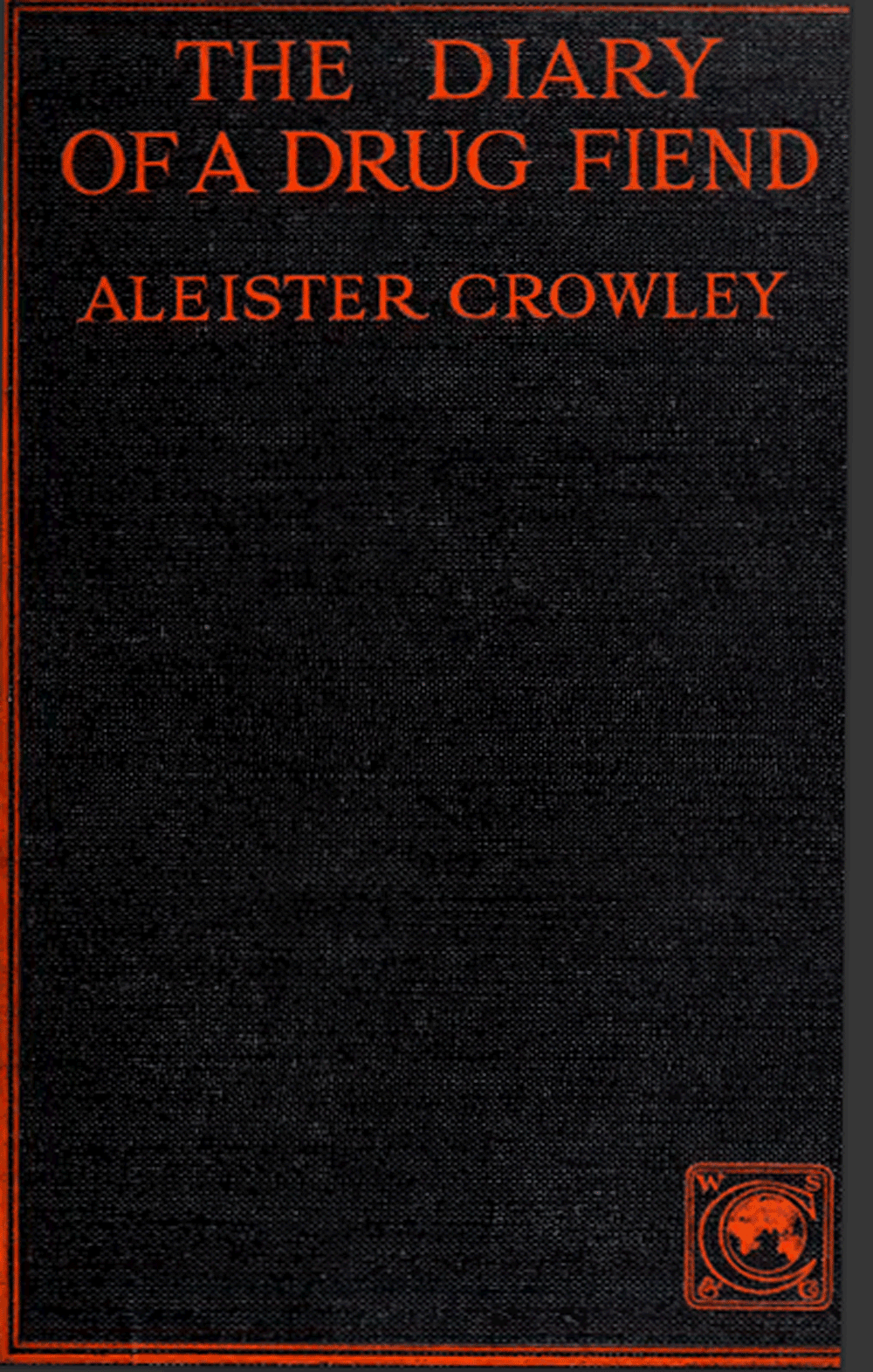
I maintain that most entertainers have an intuition of the dangers of excessive rationality as described above, and that much of their drug use is merely self-medication in response to that tacitly understood threat. I believe as well, however, that few of these drug-using entertainers are likely to see their own use in this light given the prevalence of moralist narratives that a drug-bashing society always attaches to drug use. Such entertainers will have, therefore, a sort of false consciousness on the subject. They will see themselves as hedonists. And yet as Aleister Crowley wrote, "Cocaine removes all hesitation," and that capability is "just what the doctor ordered" for the performer whose self-doubts are threatening to destroy their career. Of course, it is considered heresy to say such things because we have learned that we are all children when it comes to drugs and that we will never be able to use them wisely for beneficial purposes. The fact is, however, that the world is full of drugs with potential psychological benefits of every shade, especially when we consider the laboratory drugs inspired by Mother Nature -- although demagogue politicians are doing everything they can to prevent any and all pharmacological progress on the psychoactive front. The world will be our oyster on the day when we finally decide to investigate any and all substances for their usefulness for specific people in specific situations -- rather than investigating them for their ability to move molecules around in a way that flatters the latest theory of the biochemical determinists working for the tellingly named National Institute for Drug Abuse. The job of those Feds is purely political in the age of drug prohibition: it is to find any and all reasons to outlaw substances that may prove to have psychological, metaphysical or religious benefits for humankind. In other words, their job is to protect the monopoly of Big Pharma and psychiatry when it comes to mind and mood medicine.

Of course, drug prohibition is all about making drug use as dangerous as possible, by failing to offer drug choice, failing to regulate substances as to quality and identity, placing drug dealing in the hands of gangs and cartels, meanwhile threatening to arrest users, confiscate their houses and even deny them the right to work in America via drug testing, which is nothing but the outsourcing of extrajudicial punishment to big business. Given this vicious backstory and our refusal to educate about safe use, it is not surprising that entertainers may have problems with using drugs sustainably. And yet there are benefits to use, even in cases where we would least expect to find them. If a musician is able to make a living through inspired musical performance with the help, say, of cocaine, the drug will have created for them a habit of success in the musical field. This is what we call a virtuous circle. If they have trouble with the drug later on in life, that is a treatable condition -- or at least it would be in a world full of legal alternatives and a sensible view of drugs as being inanimate objects with upsides and downsides.

But no one will be able to take the pride-enhancing memory of that success from such users. This is why I am always bothered by those stars who hit the big-time using drugs and then end their careers by publishing a book about their troubles with drugs and their eventual ability to get off them, etc., etc. Talk about ingratitude. There is always a Christian Science subtext to such books. Why couldn't they have just gotten high on sunshine?! The highly improbable message of such books is that the drug use had no benefits for the performers and that, in fact, they could have been so much more in life had they only relied on their default biochemistry during their working years. Yeah, right. No, the fact is that they needed the drugs to be the person that they desired to be -- although, of course, whether the drug was the best medication for that purpose is another matter altogether. If they had trouble using those drugs sustainably, however, that is a problem caused by social policies, laws, and a lack of education, not a problem caused by the inanimate objects that we call drugs.

AFTERWORD

I need hardly add that Big Pharma antidepressants are not exactly known for creating the inspired self-forgetfulness that can save the overthinking performer from the downsides of ratiocination. My own experience is quite the opposite, in fact. After being placed on my first antidepressant, Prozac, over three decades ago, I soon found that my piano playing skills were deteriorating. I suddenly found myself THINKING about notes before I played them. I suddenly saw a new sinister meaning in the line by TS Eliot in The Hollow Men:

Between the emotion
And the response
Falls the Shadow


My spontaneity seemed to be gone as did my one-time ability to intuitively accompany a singer with the appropriate tempo and volume. My organ teacher even asked me one day if I were not perhaps pursuing the wrong pastime by playing keyboard instruments, this despite the fact that I had played the piano for a variety of choirs both in intermediate school and high school and had enjoyed doing so. It was almost as if my sense of rhythm had been taken from me.

I cannot say for sure that Prozac was the culprit. My point is merely this: that if the "med" WERE responsible, I was certainly not going to hear about it from the media, nor would anyone be in a hurry to perform any studies on the drug based on my own experience. And yet, if this downside were to have been associated with a demonized drug, the story would have gone viral in the media and been looked upon as yet another reason to expand drug testing and to confiscate houses and to remove people from the workforce for using and/or selling the bounty of Mother Nature.

Welcome to American capitalism, where science comes in second place to money-making, healthcare freedom and even common sense.


Notes:

1: The purblind coldness of the Behaviorist doctrine is made clear in the following words of its founder, JB Watson, as quoted in the 2015 book "Paradox" by Margaret Cuonzo: "Concepts such as belief and desire are heritages of a timid savage past akin to concepts referring to magic." (Surely, Watson was proactively channeling Dr. Spock of the original Star Trek series.) (up)
2: The Imp of the Perverse Poe, Edgar Allan, Poe Stories, 1850 (up)


read more essays here


Ten Tweets

against the hateful war on US


The Thomas Jefferson Foundation is a drug war collaborator. They helped the DEA confiscate Thomas Jefferson's poppy plants in 1987.

If daily drug use and dependency are okay, then there's no logical or scientific reason why I can't smoke a nightly opium pipe.

I don't have a problem with CBD. But I find that many people like it for the wrong reasons: they assume there is something slightly "dirty" about getting high and that all "cures" should be effected via direct materialist causes, not holistically a la time-honored tribal use.

In the board game "Sky Team," you collect "coffees" to improve your flying skills. Funny how the use of any other brain-focusing "drug" in real life is considered to be an obvious sign of impairment.

Materialist scientists cannot triumph over addiction because their reductive focus blinds them to the obvious: namely, that drugs which cheer us up ACTUALLY DO cheer us up. Hence they keep looking for REAL cures while folks kill themselves for want of laughing gas and MDMA.

All drugs have positive uses. It's absurd to prohibit them because one demographic might misuse them.

I have yet to find one psychiatrist who acknowledges the demoralizing power of being turned into a patient for life. They never list that as a potential downside of antidepressant use.

We would never have even heard of Freud except for cocaine. How many geniuses is America stifling even as we speak thanks to the war on mind improving medicines?

Getting off some drugs could actually be fun and instructive, by using a variety of other drugs to keep one's mind off the withdrawal process. But America believes that getting off a drug should be a big moral battle.

When folks banned opium, they did not just ban a drug: they banned the philosophical and artistic insights that the drug has been known to inspire in writers like Poe, Lovecraft and De Quincey.


Click here to see All Tweets against the hateful War on Us


back navigation arrow forward navigation arrow


No cookies, no ads.


Attention, Teachers and Students: Read an essay a day by the Drug War Philosopher and then discuss... while it's still legal to do so!

The Partnership for a Death Free America is a proud sponsor of The Drug War Philosopher website @ abolishthedea.com. Updated daily.


label reading 'add as a preferred source on Google'


Copyright 2025, Brian Ballard Quass Contact: quass@quass.com

tombstone for American Democracy, 1776-2024, RIP (up)