




Homepage of the Drug War Philosopher, Brian Quass
blog icon orange rss icon with stylized radio waves bird icon for twitter bird icon for twitter substack icon


back navigation arrow forward navigation arrow


Doping Arizona

FDA approves Lexapro for kids

by Brian Ballard Quass, the Drug War Philosopher

July 12, 2023


The FDA has just approved the antidepressant Lexapro for kids, despite the fact that 1 in 4 American women are already dependent on such drugs for life.

This is a bizarre dystopian outrage in the age of the Drug War, which outlaws all common sense godsends and forces the depressed to rely on dependence-causing meds that enrich Big Pharma .

How does Big Pharma get away with it? In part because decrim advocates like Carl Hart, Rick Doblin and DJ Nutt continue to insist that pharmaceuticals are scientific and (therefore) valid treatments for depression. As I've said time and time again, Cassandra-like, destined to be ignored apparently (at least in my lifetime), one cannot assess SSRIs without reckoning with prohibition, which gives antidepressants 1 a monopoly on treating depression.

In a world in which common-sense godsends are outlawed (or heartily discouraged) - like laughing gas , coca, occasional opium , occasional speed, MDMA , etc. - it makes ZERO SENSE to prescribe antidepressants. ZERO. The sensible course - the pro "patient" course - is to decry loudly and forcibly the outlawing of godsend treatments for the depressed. I mean to say that the moral imperative is to demand legalization . If, in the meantime, antidepressants are prescribed because they are the only legal game in town, then they should be prescribed, as it were, in protest - not hailed, as Doblin and company hail them, as good in and of themselves, these drugs that numb rather than inspire. In this sense, antidepressants are like shock therapy. Whatever you say of that treatment (and I abhor it and think it scientism gone amok), it makes ZERO sense in a world in which we have outlawed drugs that could elate WITHOUT damaging the brain, and so ECT if used (and please don't), it can only be used, as it were, under protest as well, lest we give prohibition a huge mulligan for damaging brains and unnecessarily diminishing human potential.

But America (and the west) love "science," and as long as we can pretend that antidepressants are created according to a reductionist and materialist formula (even though Science News itself has reminded us that they do not really fix a chemical imbalance), we turn around and say: "let science be science." But this is scientism at work, not true science. Unfortunately, even prominent drug researchers don't get that.

Carl Hart, in his otherwise excellent book "Drug Use for Grown-Ups," goes so far as to say that his advocacy for legalization 2 is not meant to suggest that the depressed should use "drugs" - but rather they should stay on their scientifically developed meds (Where have I heard that before: "Just take your meds," a slogan that keeps stockholders laughing all the way to the bank.)

It would appear that depressed folk like myself cannot join in any of Carl's reindeer games. We sick guys should stay dependent as patients for life, wards of the healthcare state, using drugs that tranquilize rather than inspire. Which, sorry, Carl, but... wrong. If you have a right to use drugs recreationally, surely I have an even greater right to use them therapeutically.

Carl's proprietary attitude on this topic surprised and bothered me. As a chronic depressive myself, I looked forward to Carl normalizing the use of the many godsends out there for the depressed - but he wants to tell me that I should just listen to my doctors and remain a patient for life. No, Carl: I've done that for 45 years and I'm more depressed than ever; whereas, if I had the coca leaf to chew or MDMA 3 to use on a weekend or occasional opium , etc., I would not have been depressed. It's called intermittent use. Human psychology, after all, is not a black box, Carl - it does not take a scientist to understand. Good times - and anticipation of good times - improve overall mood. It's just that simple. If scientists do not consider that to be scientific, that's their own problem. I'd rather be happy than be "scientifically correct" and a ward of the healthcare state.

It's worth notice, that in a free market, no one would buy these scientific godsends that Carl so casually signs off on. Surely that mere fact should tell Carl something about how useful such drugs actually are in fighting depression. Indeed, the shopper's comparison would be stark were all drugs to be re-legalized. Just imagine the shopper comparing depression therapies in a free world.: "Okay, I could buy an expensive SSRI that numbs my brain and turns me into a ward of the healthcare state and which I have to take for life... or I can take a substance that elates and inspires me with new ideas and stamina and which, if used wisely, does not have to cause dependence at all, a substance which keeps me from becoming a patient in the first place. Gee now, which option should I go for...?"

This is why psychiatry is the handmaiden of the Drug War, dispensing meds that no one in their right mind would use except for the monopoly that psychiatry currently has on mood medicine thanks to prohibition.

But it's not surprising that Carl toes the line about the supposed scientific efficacy of antidepressants. He's a scientist after all. He's already asking his colleagues to swallow a lot when he calls for the decriminalization of drugs; he would surely alienate them entirely were he to question the scientific nature of antidepressants. Still, he might have stayed silent on the subject, rather than carving out an exception for drug use which bars outlawed medicines from precisely those who need them the most. Why? Apparently because Big Pharma meds are "scientific," whereas drugs are... (ahem)... just drugs. This false dichotomy is a product of the same tone-deaf scientism which causes Dr. Robert Glatter to naively ask if laughing gas 4 could help the depressed (see Forbes magazine, 2019). Of course it could help, but Glatter needs reductionist proof - he doesn't care how much I laugh on N2O - or how much I look forward to laughing, thereby improving my overall mood. Such obvious facts count for nothing in modern materialist science. If it can't be viewed under a microscope or under FMRI, then it does not count.

I have mentioned the problem with decrim advocates promoting Big Pharma cures under the false belief that they are scientific; but even the most outspoken enemies of Big Pharma miss the point. Dr. McFillin, for instance, is outraged about the approval of Lexapro for kids, but he considers all mind and mood medicine to be unnecessary, not just antidepressants. But the doc has just replaced scientism with Christian Science. For there is no compelling rational reason why we should foreswear the use of psychoactive drugs for mental or emotional improvement, least of all when the medicines come straight from Mother Nature, which God himself tells us are good. Certainly, if McFillin had grown up in a rain forest surrounded by drugs, he would not grow up to tell his mates that all those medicines should not be used. (What an oddball Mac would seem out in the wild: "Come on, guys, we should just eat wholesome plants: you know, those that do not affect our minds! Don't eat anything that makes you feel good at all! Just appreciate the beauty of the jungle, stone cold sober - except for our native coffee, of course, and our regularly updated cache of Corona Extra.")

In a recent Tweet, McFillin assured me that all one needed to beat depression was meditation, friends, a good novel, etc. etc. One wonders if the doc had imbibed his first cup of coffee before writing that 1980s-style bromide. How many times have I seen similar posts, piously telling me that all one needs is to get out in nature and just, as it were, allow oneself to be happy. Such comments (which are simultaneously condescending, naïve, and presumptuous) remind me of the wornout Josef K. in The Castle. When the officials tell K. that they are weary as well, the narrator remarks: "One had to conclude from this that it was by nature an entirely different kind of weariness from K's. Here it was probably weariness in the course of happy work, something that from the outside looked like weariness but was actually indestructible calm, indestructible peace." Likewise, I'm sure that what McFillin experiences as depression is a very different beast from the depression that I experience, a depression which is most visible in the rearview mirror in the form of endless goals not quite reached, endless roads not quite taken, abandoned simply because one got dragged down in morbid introspection and a pathological doubt of the meaning of it all.

The galling thing is to know - both from rational reflection and from past experience - that such moods could be countermanded at will, if only racist politicians had not outlawed godsend medicines and put government in charge of dispensing (or withholding) the psychoactive bounty of Mother Nature.

This is why opposing the Drug War is so difficult - it's based on so many cleverly hidden assumptions that it seems like every Drug War opponent has at least one area in which they are bamboozled as well, whether it's their scientistic belief in Big Pharma 5 6 medicines or their puritanical disdain for "drugs." Even Terence McKenna 7 himself was a supporter of drug apartheid, the mistaken idea that psychedelics are great while coca and opium 8 are bad. Terence shared the Drug Warrior prejudice that drugs are to be judged based on one's impression of the sort of people who happen to be using them in the culture in which one happens to live.

One would hope, however, that everyone would agree on one thing: namely, that kids should not be made part of a pill mill upon which 1 in 4 American women are already dependent for life.

Unfortunately, the approval of Lexapro for kids shows us that this is no longer the case today, which is just another sign that drug policy in the US is all about power, politics and money, and has nothing to do with public health.


Notes for essay entitled Doping Arizona: FDA approves Lexapro for kids:

1: Antidepressants and the War on Drugs DWP (up)
2: “National Coalition for Drug Legalization.” n.d. National Coalition for Drug Legalization. https://www.nationalcoalitionfordruglegalization.org/. (up)
3: How the Drug War killed Leah Betts DWP (up)
4: Forbes Magazine's Laughable Article about Nitrous Oxide DWP (up)
5: Seife, Charles. 2012. “Is Drug Research Trustworthy?” Scientific American 307 (6): 56–63. https://doi.org/10.1038/scientificamerican1212-56. (up)
6: LaMattina, John. n.d. “Why Is Biopharma Paying 75% of the FDA’s Drug Division Budget?” Forbes. https://www.forbes.com/sites/johnlamattina/2022/09/22/why-is-biopharma-paying-75-of-the-fdas-drug-division-budget/. (up)
7: McKenna, Terence. 2026. “History Ends in Green.” The Library. 2026. https://www.organism.earth/library/document/history-ends-in-green. (up)
8: The Truth About Opium by William H. Brereton DWP (up)


read more essays here


Ten Tweets

against the hateful war on US


Richard Evans Schultes seems to have originated the harebrained idea (since used by the US Supreme Court to suppress new religions) that you have no right to use drugs in a religious ritual if you did not grow up in a society that had such practices. What tyrannical idiocy!

Researchers insult our intelligence when they tell us that drugs like MDMA and opium and laughing gas have not been proven to work. Everyone knows they work. That's precisely why drug warriors hate them.

Everyone's biggest concern is the economy? Is nobody concerned that Trump has promised to pardon insurrectionists and get revenge on critics? Is no one concerned that Trump taught Americans to doubt democracy by questioning our election fairness before one single vote was cast?

Drugs that sharpen the mind should be thoroughly investigated for their potential to help dementia victims. Instead, we prefer to demonize these drugs as useless. That's anti-scientific and anti-patient.

Videos about science and psilocybin are funny. They show nerds trying to catch up with common sense.

In 1886, coca enthusiast JJ Tschudi referred to prohibitionists as 'kickers.' He wrote: "If we were to listen to these kickers, most of us would die of hunger, for the reason that nearly everything we eat or drink has fallen under their ban."

Prohibitionists will me that we're all children when it comes to drugs, and can never -- but never -- use them wisely. That's like saying that we could never ride horses wisely. Or mountain climb. Or skateboard.

It is folly to put bureaucrats in charge of second-guessing drug prescriptions: what such bureaucrats are really doing is second-guessing the various philosophies of life which are presupposed by the way we use psychoactive drugs.

The DEA has done everything it can to keep Americans clueless about opium and poppies. The agency is a disgrace to a country that claims to value knowledge and freedom of information.

Drug prohibition represents the biggest power grab by government in human history. It is the state control of pain relief and mental states.


Click here to see All Tweets against the hateful War on Us


back navigation arrow forward navigation arrow
Book Cover

Break the ice with a sledgehammer: place this book on your coffee table.

This book features 150 annotated images, designed to force brainwashed Americans to confront the fact that drug prohibition is wrong. Here is what author Richard Parrish II says of the book's compiler: "The drug prohibition philosopher provides first-hand, principled, persuasive, and insightful arguments against the current drug prohibition regime..."

Purchase Your Copy
Book Cover

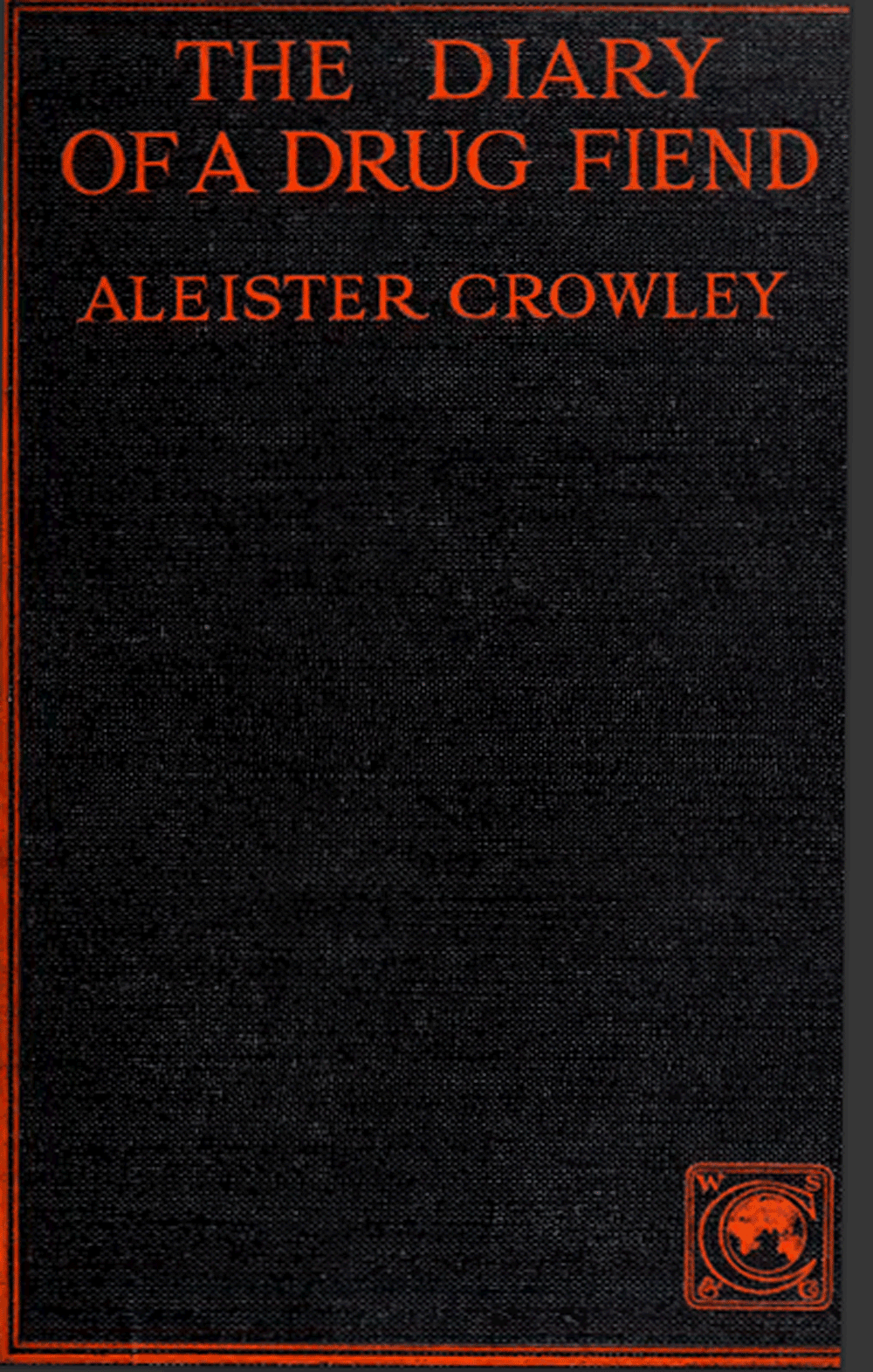
Diary of a Drug Fiend

This is the only full-cast recording of Aleister Crowley's 1922 classic paeon to common sense. It is the first book -- and so far almost the only book -- to stake out a philosophy of drug use that is compatible with human freedom, one in which we learn to use drugs as wisely as possible for the benefit of humanity. This recording was produced by the Drug War Philosopher and your purchases help support his effort to push back against the tragically counterproductive policy of drug prohibition, in the name of human freedom and of humanity's right to heal.

Purchase Your Copy


No cookies, no ads paid for by amoral and immoral billionaires (or trillionaires).


Unless otherwise indicated, no AI is used in the creation of site content. These essays represent the original ideas of their author and not the ideas that the author SHOULD have based on an algorithmic parsing of existing data. For more on this subject, consider the AI-related viewpoints to which the author subscribes as delineated in the New York Times opinion piece entitled "What 370,000 College Essays Tell Us About A.I.’s Effects on Creativity" by Rebecca Winthrop of the Brookings Institution.

The Partnership for a Death Free America is a proud sponsor of The Drug War Philosopher website @ abolishthedea.com.


Copyright 2026, Brian Ballard Quass Contact: quass@quass.com

tombstone for American Democracy, 1776-2024, RIP (up)