






Homepage of the Drug War Philosopher, Brian Quass
blog icon orange rss icon with stylized radio waves bird icon for twitter bird icon for twitter substack icon


back navigation arrow forward navigation arrow


In praise of doctor hopping

by Brian Ballard Quass, the Drug War Philosopher

June 2, 2022


The DEA monitors prescriptions to make sure that doctors are not going overboard in prescribing addictive pills -- but this is politics and philosophy at work, not science. For what constitutes "going overboard"? Except in cases of outright poisoning, that is an aesthetic question, not a scientific one. After all, the DEA has no problem with the fact that one in four American women are chemically dependent on antidepressants 1 for life. So apparently it's not "going overboard" if you prescribe multiple addictive pills for the same patient to be taken every single day of their life until death do they part.

Author's follow-up for October 13, 2025

Why then is the DEA upset about a dependency on more exhilarating drugs, like opium 2 and coca? These latter drugs are merely potentially addictive, after all, while the addictive quality of SSRIs is a feature of those medicines, not a bug. Besides, it's well known that one can live a full life while yet using heroin or morphine 3 every day of that life. The problems only come when one withdraws from the med, but problems also come when withdrawing from SSRIs, so much so, in fact, that some Big Pharma drugs, like Effexor4, have a 95% recidivism rate for those long-term users who seek to kick that habit. (This is a closely guarded secret, by the way. I once had a psychiatrist who was fired for sharing this factoid with me.)5

The DEA has no scientific reason to pooh-pooh the so-called "hard drugs" while affirming Big Pharma nostrums. Rather the DEA first has a philosophical idea of what constitutes "the good life," and then they crack down accordingly. They believe that this good life is predictable, low-key and not subject to major mood swings: in short, the good life, according to the DEA, results in a good consumer, and pills are good to the extent that they lead to that end. Yet some of us want to live a fully engaged life in which we're constantly involved in the world, constantly wondering anew at Mother Nature, constantly feeling and experiencing, without any overreliance on the capitalist system and the next big and expensive thing. These are the live-wires of whom Jack Kerouac wrote: "The ones who are mad to live, mad to talk, mad to be saved, desirous of everything at the same time, the ones who never yawn or say a commonplace thing, but burn, burn burn like fabulous yellow roman candles." (The Effexor I take daily reminds me more of a lobotomy on the instalment plan than a roman candle.)

Yet, the DEA, and the establishment it represents, are intimidated by such lives and so demonize those drugs that facilitate such a lifestyle. They call them "crutches," although they never tell us why Big Pharma meds are not crutches as well. It's just more Drug War hypocrisy: Big Pharma pills are important "meds", naturally occurring godsend medicines are "crutches."

Newspeak aside: Doctor Feelgoods are simply doctors who prescribe what their patient wants rather than what the DEA wants for that patient. But for the medical world to keep power, these doctors have to be suppressed, because in the age of criminalized plant medicine, it is the medical community that decides what we need, emotionally speaking, not the patient, and if we don't like their idea of the "good life," then tough luck. We can either play the game or incur the wrath of the medical gods by going "doctor hopping."

Of course, some Doctor Feelgoods take advantage of the poorly informed and young, but then so do psychiatrists, by putting them on meds that they will end up taking for life.

But when mature and responsible adults go to a doctor for mood medicine, they should ask and receive what THEY want, not what the medical community wants them to have based on that community's unspoken assumptions about what constitutes the good life.

Oh, and when a Doctor Feelgood dies, the patients will commit the big Drug War no-no of going "doctor hopping" in search of another doctor with the same prescription philosophy. Respectable doctors scream that this is morally wrong, but there is nothing wrong with doctor hopping. In fact, doctor hopping is a duty, if we're to be true to ourselves and our own needs and desires rather than those of the doctor (who in some of our cases is decades younger than we are). Doctor hopping would only be wrong if we assume that mental health therapy is entirely scientific and not based on assumptions about what constitutes the good life for individual patients. But anyone who believes that is kidding themselves. Mental health specialists may like to think that they're scientific because they're using pills that target a chemical imbalance, but that has long since been proven to be wrong: in fact the psychiatric pill mill dispenses meds that cause the chemical imbalances that they purport to fix. Even if it were not so, I want the prescriptions I receive to reflect my own needs and desires, not the needs and desires that the materialist creator of SSRIs thought I should have.

In short, there's nothing scientific about the crackdown on "Doctor Feelgoods." It's an esthetic call to decry their prescription practices. Of course, there are always "bad eggs" among every type of doctor, and some will abuse their position to prescribe addictive drugs to the immature. But the answer to these threats lies in education combined with re-legalization 6 of Mother Nature's medicines, which would allow empathic doctors to shamanically, as it were, shift patients from one drug to another through guided incentivizing empathogenic journeys. In other words, even addiction is not the end of the world when psychoactive medicine is understood and used aggressively by empathic guides, rather than being feared and used in such a miserly way that we outlaw nature's pharmacopoeia almost entirely. In still other words, the answer to any addiction - to the extent that the addiction is not desired by the patient him or herself - is to harness the therapeutic power of entheogens and empathogens, after which psychiatric counselling can finally work like it was always supposed to do, with an honest and willing confab between client and healer. Indeed, some say that one day of MDMA 7 therapy can do the work of years of counselling.

We need only to break the medical world's vise-like self-serving grip on the keys to the medicine cabinet, re-legalize Mother Nature, and let patients, not the DEA, decide how - and how much - they are allowed to think and feel in this life.


Author's Follow-up: September 30, 2022


Speaking of drugs that give you years' worth of 'counseling' via one drug experience: Paul Stamets8 tells us, in the 2019 documentary "Fantastic Fungi," that he was able to cure himself of his childhood stuttering problem thanks to one afternoon that he spent under the influence of a psilocybin mushroom (you know, one of the many psychoactive substances that the DEA tells us has no potential therapeutic uses whatsoever).

Author's Follow-up: April 21, 2023


Incidentally, the Drug Warriors are libeling God himself when they tell us that drugs have no positive uses and are "junk" and "dope." In the book of Genesis, the deity tells us that the world he created was good. For this reason, the Catholic church has always found that good or bad resides in individuals, and that they are labels that cannot meaningfully be ascribed to "things." In other words, the Drug War advances a religious viewpoint, one at odds with Christianity.


Author's Follow-up:

October 13, 2025

picture of clock metaphorically suggesting a follow-up


34% of America's Vietnam vets used heroin during the war and 20% were thought to be dependent upon it. Yet when these soldiers returned to the states, only 5% needed help getting off the drug9. Compare this to the Big Pharma 10 11 drug known as Effexor (or Venlafaxine). Only 5% of long-term users are able to get off the drug, EVER -- and those few who do so find that they have cognitive impairment!

No wonder you need to doctor hop! You'd BETTER doctor hop in such a mad world. In the age of the Drug War, you've got to search like Diogenes with his lantern for those rare doctors who can still think straight despite their lifelong indoctrination in the substance-demonizing ideology of the War on Drugs.


Notes for essay entitled In praise of doctor hopping:

1: Antidepressants and the War on Drugs DWP (up)
2: The Truth About Opium by William H. Brereton DWP (up)
3: Three takeaway lessons from the use of morphine by William Halsted, co-founder of Johns Hopkins Medical School DWP (up)
4: How Drug Prohibition makes it impossible to get off of Effexor and other Big Pharma drugs DWP (up)
5: Hall, Wayne, and Megan Weier. 2016. “Lee Robins’ Studies of Heroin Use among US Vietnam Veterans.” Addiction 112 (1): 176–80. https://doi.org/10.1111/add.13584. (up)
6: “National Coalition for Drug Legalization.” n.d. National Coalition for Drug Legalization. https://www.nationalcoalitionfordruglegalization.org/. (up)
7: How the Drug War killed Leah Betts DWP (up)
8: Paul Stamets The Joe Rogan Experience (podcast), 2017 (up)
9: Hall, Wayne, and Megan Weier. 2016. “Lee Robins’ Studies of Heroin Use among US Vietnam Veterans.” Addiction 112 (1): 176–80. https://doi.org/10.1111/add.13584. (up)
10: Seife, Charles. 2012. “Is Drug Research Trustworthy?” Scientific American 307 (6): 56–63. https://doi.org/10.1038/scientificamerican1212-56. (up)
11: LaMattina, John. n.d. “Why Is Biopharma Paying 75% of the FDA’s Drug Division Budget?” Forbes. https://www.forbes.com/sites/johnlamattina/2022/09/22/why-is-biopharma-paying-75-of-the-fdas-drug-division-budget/. (up)


read more essays here


Ten Tweets

against the hateful war on US


In his book "Salvia Divinorum: The Sage of the Seers," Ross Heaven explains how "salvinorin A" is the strongest hallucinogen in the world and could treat Alzheimer's, AIDS, and various addictions. But America would prefer to demonize and outlaw the drug.

So much harm could be reduced by shunting people off onto safer alternative drugs -- but they're all outlawed! Reducing harm should ultimately mean ending this prohibition that denies us endless godsends, like the phenethylamines of Alexander Shulgin.

Drug prohibition is superstitious idiocy. It is based on the following crazy idea: that a substance that can be misused by a white young person at one dose for one reason must not be used by anybody at any dose for any reason.

I can't imagine Allen Ginsberg writing "Howl!" while under the influence of mood-damping drugs like Inderal and Prozac -- but then maybe that's the point: the powers-that-be do not want poets writing poems like "Howl!"

We should start taking names. All politicians and government officials who work to keep godsends like psilocybin from the public should be held to account for crimes against humanity when the drug war finally ends.

If anyone manages to die during an ayahuasca ceremony, it is considered a knockdown argument against "drugs." If anyone dies during a hunting club get-together, it is considered the victim's own damn fault.

There's more than set and setting: there's fundamental beliefs about the meaning of life and about why mother nature herself is full of psychoactive substances. Tribal peoples associate some drugs with actual sentient entities -- that is far beyond "set and setting."

NOW is the time for entheogens -- not (as Strassman and Pollan seem to think) at some future date when materialists have finally wrapped their minds around the potential usefulness of drugs that experientially teach compassion.

The so-called opiate crisis is really a drug prohibition crisis.

Psychiatrists never acknowledge the biggest downside to modern antidepressants: the fact that they turn you into a patient for life. That's demoralizing, especially since the best drugs for depression are outlawed by the government.


Click here to see All Tweets against the hateful War on Us


back navigation arrow forward navigation arrow
Book Cover

Break the ice with a sledgehammer: place this book on your coffee table.

This book features 150 annotated images, designed to force brainwashed Americans to confront the fact that drug prohibition is wrong. Here is what author Richard Parrish II says of the book's compiler: "The drug prohibition philosopher provides first-hand, principled, persuasive, and insightful arguments against the current drug prohibition regime..."

Purchase Your Copy
Book Cover

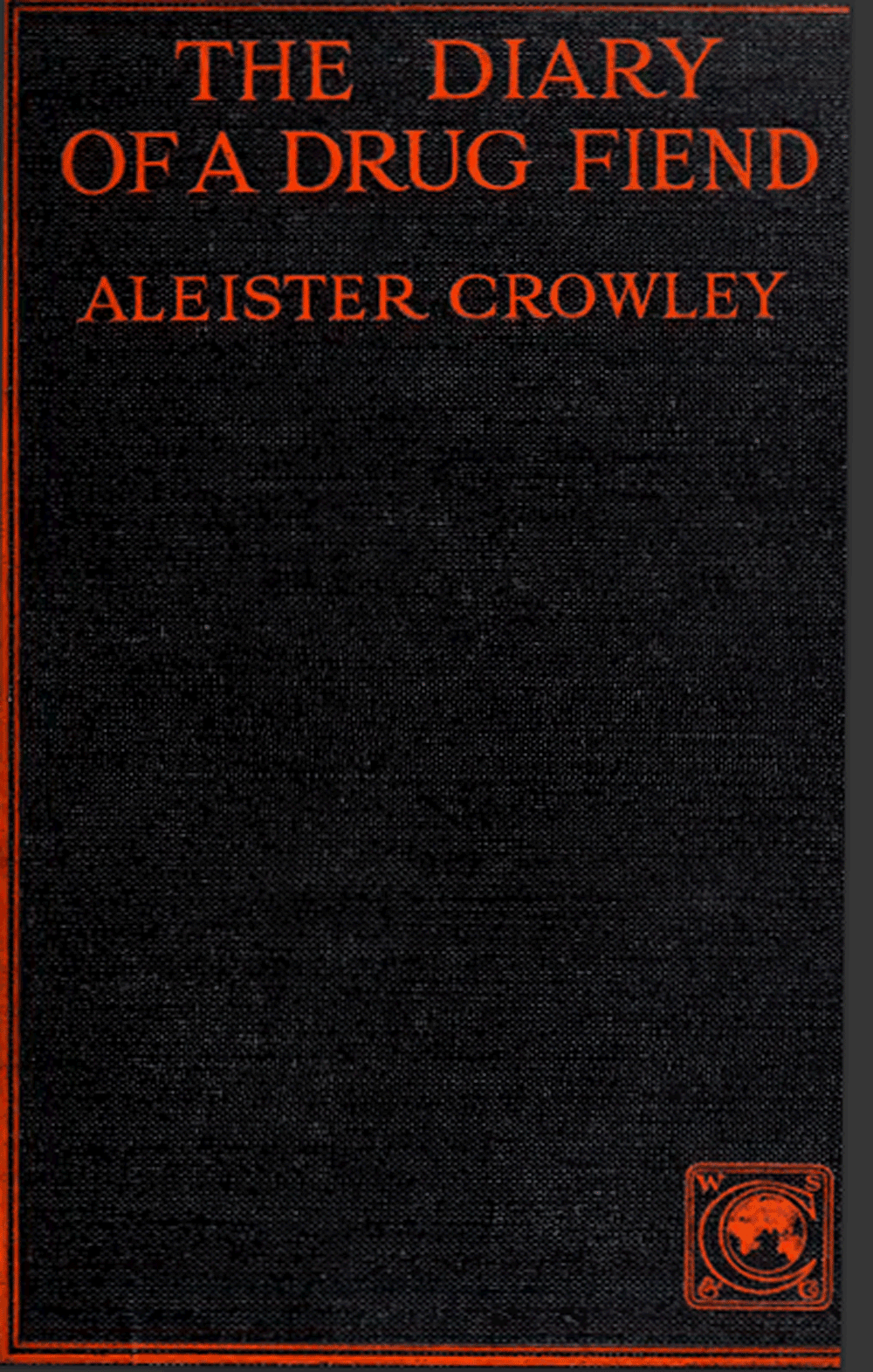
Diary of a Drug Fiend

This is the only full-cast recording of Aleister Crowley's 1922 classic paeon to common sense. It is the first book -- and so far almost the only book -- to stake out a philosophy of drug use that is compatible with human freedom, one in which we learn to use drugs as wisely as possible for the benefit of humanity. This recording was produced by the Drug War Philosopher and your purchases help support his effort to push back against the tragically counterproductive policy of drug prohibition, in the name of human freedom and of humanity's right to heal.

Purchase Your Copy


No cookies, no ads paid for by amoral and immoral billionaires (or trillionaires).


Unless otherwise indicated, no AI is used in the creation of site content. These essays represent the original ideas of their author and not the ideas that the author SHOULD have based on an algorithmic parsing of existing data. For more on this subject, consider the AI-related viewpoints to which the author subscribes as delineated in the New York Times opinion piece entitled "What 370,000 College Essays Tell Us About A.I.’s Effects on Creativity" by Rebecca Winthrop of the Brookings Institution.

The Partnership for a Death Free America is a proud sponsor of The Drug War Philosopher website @ abolishthedea.com.


Copyright 2026, Brian Ballard Quass Contact: quass@quass.com

tombstone for American Democracy, 1776-2024, RIP (up)
