



introduction to the Drug War Philosopher website at abolishthedea.com
orange rss icon with stylized radio waves orange rss icon with stylized radio waves bird icon for twitter bird icon for twitter


back navigation arrow


Propaganda 1, Human Rights 0

How drug prohibition has turned America into a drug-hating oligarchy

by Brian Ballard Quass, the Drug War Philosopher

June 5, 2026


I feel like a reporter who is covering a seemingly simple story of injustice which eventually turns out to have huge implications and involve some of the biggest names and businesses in the country. Indeed, that analogy scarcely does justice to the depths of issues that I'm uncovering as I continue my seven-year-long study of drug attitudes in America. For I find that the inhumane mindset behind drug prohibition is held not just by the movers and shakers, but by the hoi polloi as well. To use the analogy above, the corruption does not simply go all the way up to the president at the White House, as in the case of Watergate, for instance, but it goes all the way down to the boot black at Union Station, as well, for it is the very Weltanschauung of the American people that is at fault when it comes to drug prohibition. Literally no one in America seems to understand that drugs have common-sense beneficial uses, so thoroughly have the conglomerates scrubbed all positive talk of drug benefits from the media that they control and so thoroughly have scientists asserted their authority over the subjects of our thoughts and feelings.

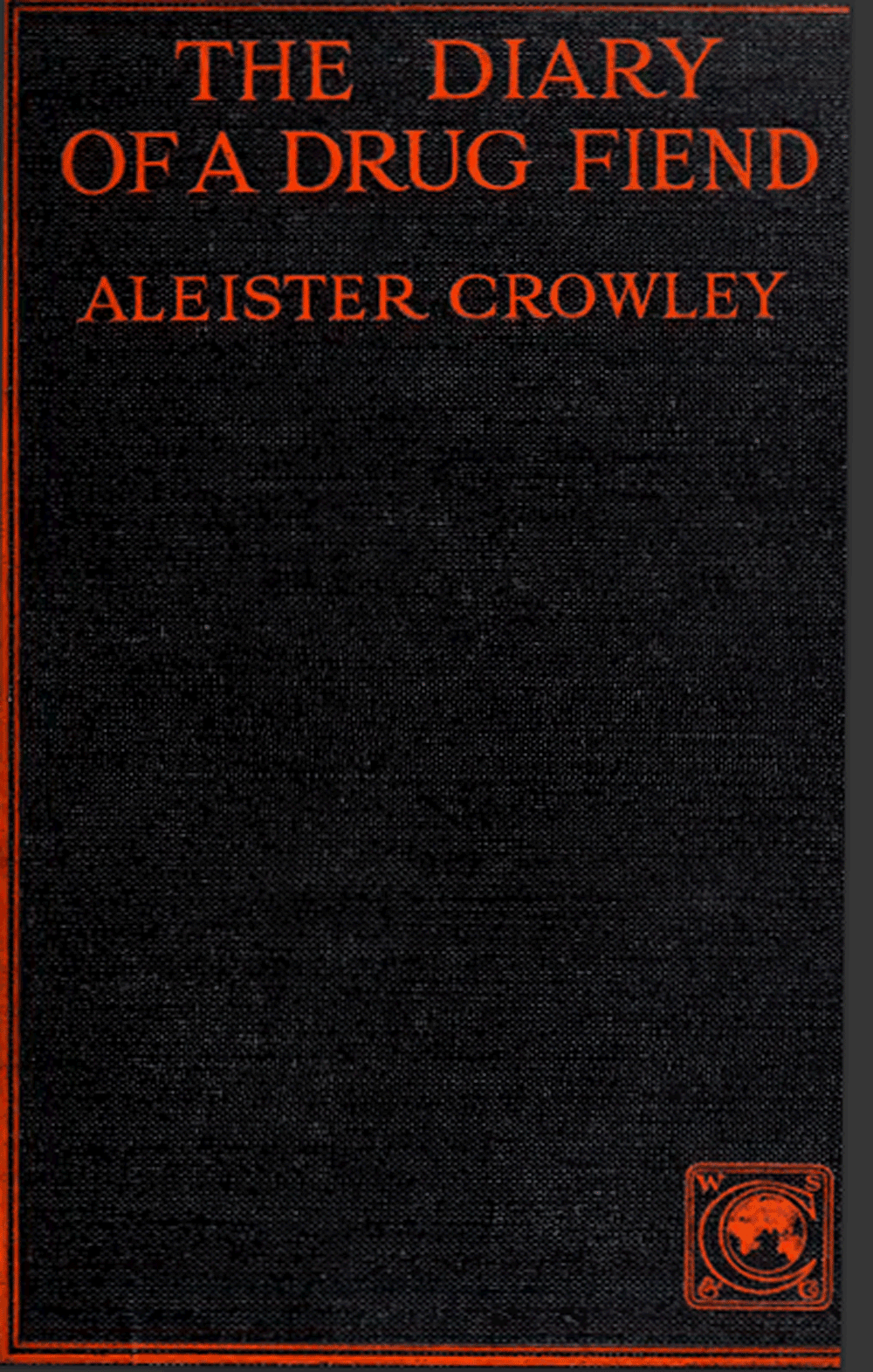
The result is that I am a heretic when it comes to the subject of depression and how to treat it. I alone point out the politically incorrect truth that depression would scarcely be a "thing" in America if we used psychoactive substances as wisely as possible for the benefit of humanity. Those who do not think so are simply uninformed about the state-of-the-art when it comes to ethnobotany and pharmacology, to say nothing of their poor grasp of religious history and common-sense psychology.1 Consider, for instance, the following description of cocaine use by Aleister Crowley:

The depression lifted from my mind like the sun coming out of the clouds. 2


Could any testimony be clearer? And yet I recently read a philosophical paper in which we're told that cocaine is not even an antidepressant.3 Imagine that, cocaine is not an antidepressant. No doubt the philosopher who wrote that unintentionally hilarious line is correct in light of the recherché terminology that is used by academicians these days, but that very terminology illustrates how out-of-touch the academic community is when it comes to drug effects. From the point of view of the depressed, cocaine is the very epitome of an antidepressant: indeed, it is the best antidepressant in the world. Nor should this surprise us, given that the cocaine alkaloid is extracted from a plant that is considered to be divine by the Inca: a substance that the Inca chew daily in order to release the alkaloids that account for the coca plant's inspirational power. Sigmund Freud understood this fact and recommended cocaine for the depressed.4 It was then that self-interested doctors began judging the substance based only on misuse, without even asking the depressed what they thought about the drug.

Today, we know that cocaine is but one of hundreds of drugs that can inspire and elate, and yet the very existence of these substances is ignored by academics, except when they haul one of these substances out for a show trial in which they focus only on the potential downsides of use. This, of course, is why it was wrong to outlaw Mother Nature in the first place, because it is possible to find downsides to anything. As GK Chesterton wrote in reference to liquor prohibition, "It is said that the Government must safeguard the health of the community. And the moment that is said, there ceases to be the shadow of a difference between beer and tea. People can certainly spoil their health with tea or with tobacco or with twenty other things.5" This is why our right to Mother Nature was always considered a fundamental right, not something that either a king or a legislature had the right to deprive us of on the grounds of expediency any more than they could justifiably deny us the right to freedom of speech or to breathe the air. In a free society, one has the right to take care of their own health, period, full stop. Drug prohibition makes this impossible and is therefore incompatible with a free society. To put this another way, we can have drug prohibition or we can have a free country, but we cannot have both.

This is why I wish that the U.S. would be honest and declare itself to be a Christian Science theocracy. Only then would the mass arrests and the disempowerment of the depressed make any logical sense. I may not agree with you that drugs are evil, but you certainly have a right to believe that as a matter of mere faith. Moreover, in such a world, I could appeal to your supposed belief in religious freedom for my right to act according to my own belief, namely, that the deity (or evolution) placed godsend medicines on this planet for a reason, and not just to set moral traps for poor white kids in the suburbs.

And so we see then that drug prohibition has not just created a few problematic laws. It has fried the brains of academia. And the evidence of this fact is all around us. Our top scientists tell us that depression is a tough nut to crack, when "depression" would scarcely be a "thing" in America if we decided to use drugs wisely for human benefit. Our top scientists tell us that dementia is a tough nut to crack, while remaining silent about the fact that drug prohibition outlaws drugs that can drastically boost mental powers. Our top political scientists tell us that hatred between peoples is inevitable, while ignoring the fact that drug prohibition outlaws substances that inspire people to respect their fellow human beings, a fact that is also ignored by our psychologists in their study of compassion-challenged autistics. Philosophers have also thrown in the towel when it comes to drug prohibition. Drug law prevents them from following up on the studies of William James with respect to the nature of human consciousness, yet not one single philosopher of consciousness is so much as protesting that fact. But that does not stop them from prematurely advancing the viewpoint that so-called "altered states" are mere humbug. It's easy to argue persuasively when your philosophical opponents are not even allowed to engage in research to support their cause.

The good news for me is that this puts me in the position of being ahead of so many other people who are clearly far smarter than myself on almost every other subject in the world. It is clear, for instance, that the philosophy of Immanuel Kant must be questioned in light of the conclusions that James reached thanks to his use of nitrous oxide, for he found that the rational consciousness upon which Kant based his categories was "but one special type of consciousness, whilst all about it, parted from it by the filmiest of screens, there lie potential forms of consciousness entirely different.6" This has blazingly obvious relevance to any informed discussion of Kant, and yet I am the only philosopher who seems to notice this inconvenient truth. I have never succeeded in getting one single philosopher to discuss the censoring effects of drug prohibition -- they think it's irrelevant to their tasks. The one philosopher who responded to my many attempts to reach out simply gaslighted me. He insisted that philosophers have no problems with calling out drug prohibition. I'm not sure when they do this, however. Maybe they whisper their objections to their students when all the cameras and cellphones have be powered down and a guard is posted at the door to ensure that the dean is not in the hallway. I used to think that being ghosted was a drag, but I'd much rather be ghosted than to be told by a condescending academic that the biases that I confront every day of my life do not even exist, especially as those biases have resulted in my lifetime dependency on Big Pharma meds and the outlawing of my right to heal.

Now let's return to the journalistic metaphor above. I am like the reporter who returns to his office after a year-long study of a conspiracy that he has traced all the way to the White House, only to discover that his story will not be published, ostensibly for journalistic reasons, and yet the reporter sees clearly now that his boss is part of the conspiracy as well. Literally no one wants him to publish the truth. Of course, we've seen this kind of story before in movies like "All the President's Men" and "The Insider." And yet my situation is even worse than this analogy would suggest. For when I go to the local pub to drown my sorrows over a cold one, I find that both the barkeeper and the local drunk think that I am talking nonsense as well. They too believe that the substances that we call "drugs" can have no positive uses for anybody, anywhere, ever. In other words, the relentless propaganda popularized by the Nazis in World War II works. People believe what they see -- and learn from what they don't see. They never see depictions of beneficial drug use, so they are easily persuaded of the lie that such substances have no good uses whatsoever. And so the final score is Propaganda 1, Human Rights 0.

This is why I cannot bring myself to watch television commercials these days. The brand being advertised may be unobjectionable, but the attempt to persuade me with advertising strategies reminds me how media conglomerates have pulled the wool over the eyes of Americans and turned America into a drug-hating oligarchy, indifferent to the kinds of truths that Americans once held to be self-evident.

AFTERWORD

I know that I have an obligation as a writer to read the latest viewpoints on these topics, but this is hard to do. Not only do the experts on MY mind and mood publish their "papal bulls" behind academic paywalls, but they inevitably write from the point of view of Americans who assume that our modern prejudices about drug use are established facts. And so "reading up" on these topics is like listening to sadists scrape their Manchurian fingernails over a blackboard. The facts that they report may be correct enough, but they always interpret those facts incorrectly in line with drug-bashing prejudices. I find also that they are typically considering only a politically correct subset of the facts that are relevant to any given case, as, for instance, the FDA never considers the downsides of NOT approving a drug, nor the fact that a drug, for all its risks, could yet lure users off of a far more dangerous drug such as alcohol. I make these points in anticipation of the charge that I am anti-science. I do not question the scientific skill of my ideological opponents; I question their philosophical skill, their ability to reason correctly from premise to conclusion, without forcing their data to "say" things that it simply does not say. But then what can we expect from academicians who take drug prohibition as a baseline state for a free society?


Notes:

1: Forbidden Quotations about the beneficial use of drugs DWP (up)
2: Arthur Crowley. “Full Text of ‘the Diary of a Drug Fiend.’” 1922. Archive.org. 2017. https://archive.org/stream/b29826433/b29826433_djvu.txt. (up)
3: Catt, Isaac. Communicology and the Worldview of Antidepressant Medicine. (up)
4: “Freud on Cocaine : Freud, Sigmund, 1856-1939 : Free Download, Borrow, and Streaming : Internet Archive.” 2023. Internet Archive. 2023. https://archive.org/details/freudoncocaine0000freu/page/n5/mode/2up?view=theater. (up)
5: Eugenics and Other Evils: An Argument against the Scientifically Organized State Chesterton, GK (up)
6: “The Varieties of Religious Experience : William James : Free Download, Borrow, and Streaming : Internet Archive.” 2021. Internet Archive. 2021. https://archive.org/details/the-varieties-of-religious-experience_202109. (up)


read more essays here


Ten Tweets

against the hateful war on US


Prohibitionists have blood on their hands. People do not naturally die in the tens of thousands from opioid use, notwithstanding the lies of 19th-century missionaries in China. It takes bad drug policy to accomplish that.

In 2017 alone, 1,632,921 drug arrests were made with 85.5 percent of those solely for possession. -- War On Us

What I want to know is, who sold Christopher Reeves that horse that he fell off of? Who was peddling that junk?!

Some fat cat should treat the entire Supreme Court to a vacation at San Jose del Pacifico in Mexico, where they can partake of the magic mushroom in a ceremony led by a Zapotec guide.

The so-called opiate crisis is really a drug prohibition crisis.

Mad in America solicits personal stories about people trying to get off of antidepressants, but they will not publish your story if you want to use entheogenic medicines to help you. They're afraid their readers can't handle the truth.

All drugs have potential positive uses for somebody, at some dose, in some circumstance, alone or in combination. To decide in advance that a drug is completely useless is an offense to reason and to human liberty.

America never ended prohibition. It just redirected prohibition from alcohol to all of alcohol's competitors.

Heroin versus Antidepressants https://abolishthedea.com/heroin_versus_antidepressants.php

NIDA is just a propaganda arm of the U.S. government -- and will remain so until it recognizes the glaringly obvious benefits of drugs -- as well as the glaringly obvious downsides of prohibition. We need a National Institute on Drug Use, not a National Institute on Drug Abuse.


Click here to see All Tweets against the hateful War on Us


back navigation arrow


No cookies, no ads.


Attention, Teachers and Students: Read an essay a day by the Drug War Philosopher and then discuss... while it's still legal to do so!

The Partnership for a Death Free America is a proud sponsor of The Drug War Philosopher website @ abolishthedea.com. Updated daily.


label reading 'add as a preferred source on Google'


Copyright 2025, Brian Ballard Quass Contact: quass@quass.com

tombstone for American Democracy, 1776-2024, RIP (up)