






Homepage of the Drug War Philosopher, Brian Quass
blog icon orange rss icon with stylized radio waves bird icon for twitter bird icon for twitter substack icon


back navigation arrow forward navigation arrow


Shut up and take your meds!

an open letter to Iolanda Ganea, peer review assistant for the Academia Journal on Mental Health and Well-Being

by Brian Ballard Quass, the Drug War Philosopher

May 28, 2025


Dear Iolanda:

I received a request to review "Psilocybin in Psychiatric Therapeutics" for the Academia Journal of Mental Health and Well-Being1. I would love to help, but I am afraid I do not qualify to be a reviewer according to your own criteria because I have no PhD.

Author's follow-up for October 27, 2025

I would add, however, that in a sane world, I WOULD be allowed to review such a paper given my personal history with both psilocybin and psychiatry and the fact that I have written hundreds of essays on this topic over the years. Unfortunately, there is a bias in the whole peer review process that ignores philosophical angles to such papers and that shows no interest in the views of the hoi polloi who are merely on the receiving end of psychiatric nostrums.

Again, I would love to provide a review, but it does not seem that academia today is open to the views of folks on the receiving end of psychiatric therapies.

They bar me from the discussion in the name of professionalism, failing to realize that by doing so, they are "reckoning without their host."

So I must leave the field to allow our credentialed scientists to carry on their private discussions amongst themselves, without input from those whom their policy decisions will ultimately affect. My only role, as my psychiatrist would tell me, is to "shut up and take my meds!"

AFTERWORD

My email to Iolanda was a trifle more diplomatic. I have fleshed out my grievances in the online version of my letter above in order to stress the problematic nature of the incestuous academic status quo, thanks to which our credentialed experts feel free to ignore all highly relevant insights unless those insights come from within the Ivory Tower itself.


Discussion Topics

June 02, 2025

cartoon figures conversing

Attention Teachers and Professors: Brian is not writing these essays for his health. (Well, in a way he is, actually, but that's not important now.) His goal is to get the world thinking about the anti-democratic and anti-scientific idiocy of the War on Drugs. You can stimulate your students' brainwashed grey matter on this topic by having them read the above essay and then discuss the following questions as a group!

  1. Behaviorism and professionalism silence the voices of the 'patient.' Explain.

  2. List the many reasons why Iolanda might be disinclined to respond to the above email.

  3. Why does it sometimes seem like the patient's only role is to "shut up and take their meds"?


Author's Follow-up:

October 27, 2025

picture of clock metaphorically suggesting a follow-up


This is the whole problem with the so-called mental healthcare system. Doctors claim to be the experts on mind and mood, and so they live in their irrelevant world of journals and research papers and self-congratulatory conferences at the Bethesda North Marriott, where they discuss what they're going to do for people like myself -- without my input, of course, for what do I know? I am just a patient, after all, and they are the experts. This is the lucrative world that doctors created for themselves when they destroyed the reputation of cocaine by judging it only by its worst possible uses 2 3 , exactly as if they had determined the utility of alcohol by studying only alcoholics! No one asked the depressed what they thought about the drug. No one mentioned the fact that cocaine could end depression for literally hundreds of millions of people.

And yet those emperors were wearing no clothes. For it takes no materialist doctor to solve the problem of human depression. There are plenty of drugs which can do just that, and in real-time, virtually all of which are far less dependence-causing than Big Pharma drugs. Of course, when I say "works," I mean that they work as far as the user is concerned -- whereas the materialists mean something quite different. They insist on establishing efficacy by looking under a microscope, not by listening to any mere patient. You remember in high-school how the teachers told you that you should be honest about your feelings, and that feelings were neither right nor wrong in themselves? Well, doctors beg to differ. You may SAY that you feel great thanks to a given drug, but doctors will be the judge of that, thank you very much! This is why materialist doctors like Robert Glatter write articles in Forbes magazine in which they doubt the power of laughing gas to help the depressed: laughing gas, for God's sake 4 .

Freud himself knew that cocaine was a cure for depression for most people 5 -- and, of course, that scared doctors to death. They made a living treating people for depression after all. They could not stand by and let this drug put them out of business. So they evaluated cocaine based on worst-case scenarios only 6, exactly as if they were to judge alcohol by only looking at alcoholics. They then proceeded to launch a media campaign to demonize the drug, writing op-ed scare pieces in which they referred to the drug's worst possible uses, never even noting the fact that the depressed themselves considered cocaine to be a godsend. Nor did these doctors ever acknowledge their vested interest in demonizing cocaine, the fact that the drug was a threat to their very business model. And so they destroyed the reputation of the drug, thereby making it easy for demagogue politicians to outlaw it. It was a win for doctors and racists and authoritarians and Christian Scientists, but not for the hundreds of millions of the depressed who were thereby denied their right to heal.

Those hundreds of millions continue to suffer unnecessarily today thanks to drug prohibition -- while health care "experts" like those on Academia.edu sit in their ivory towers and talk about biochemical pathways and antidepressants and therapies that take a LIFETIME to bear meager fruit, if any. And I can have no say in the matter for the materialist doctors are the experts 7. They will not even TALK to a mere patient, let alone invite him to a big important conference -- not even if a patient has been on their drugs for 30 years and so might have been supposed to have something important to say on the subject. No, patients are children in the age of drug prohibition 8 . Our job is to stay at home and see what second-best cures the doctors can come up with for their captive audience: namely, the depressed who have been rendered hopelessly dependent on Big Pharma drugs for life thanks to the drug prohibition that the doctors themselves so zealously helped to bring about 9.

CONCLUSION

It was the category error par excellence to place materialists in charge of mind and mood medicine in the first place. In a sane world, the experts would be the drug users themselves -- not the drug-demonizing doctors who wish to scare us into using only their "scientific" drugs. I have been on those "miracle cures" now for over 30 years and so I have some experience on their effects; in a sane world, my views would be purposefully solicited by the "experts." I would be invited on purpose to submit articles to their journals and to attend their ritzy conferences as a guest of honor. Doctors would be waiting, as it were, with bated breath to hear my informed verdict on their nostrums. Hence my excitement when I first received a letter from Academia.edu soliciting a paper on the subject of mind and mood medicine; hence also my subsequent disappointment when I discovered that the solicitation had been sent in error: it had been delivered automatically thanks to a computer algorithm that had yet to learn the difference between a high-and-mighty doctor and a mere patient like myself.


Notes for essay entitled Shut up and take your meds!: an open letter to Iolanda Ganea, peer review assistant for the Academia Journal on Mental Health and Well-Being:

1: Academia Mental Health and Well-Being Academia.edu (up)
2: Coverup on Campus DWP (up)
3: Sigmund Freud's real breakthrough was not psychoanalysis DWP (up)
4: Forbes Magazine's Laughable Article about Nitrous Oxide DWP (up)
5: “Freud on Cocaine : Freud, Sigmund, 1856-1939 : Free Download, Borrow, and Streaming : Internet Archive.” 2023. Internet Archive. 2023. https://archive.org/details/freudoncocaine0000freu/page/n5/mode/2up?view=theater. (up)
6: Lennard, Henry L. 1972. “Freud’s Disaster with Cocaine.” The New York Times, July 22, 1972, sec. Archives. https://www.nytimes.com/1972/07/22/archives/freuds-disaster-with-cocaine.html. (up)
7: How materialists lend a veneer of science to the lies of the drug warriors DWP (up)
8: How Drug Prohibition Turns Adults into Children DWP (up)
9: How Drug Prohibition turns Americans into patients for life DWP (up)


read more essays here


Ten Tweets

against the hateful war on US


In a free world, almost all depressed individuals could do WITHOUT doctors: these adult human beings could handle their own depression with the informed intermittent use of a wide variety of psychoactive substances.

The Cabinet of Caligari ('62) ends with a shameless display of psychiatric triumphalism. Happy shock therapy patients waltz freely about a mansion in which the "sick" protagonist has just been "cured" by tranquilizers and psychoanalysis. Did Robert Bloch believe his own script?

Americans believe scientists when they say that drugs like MDMA are not proven effective. That's false. They are super effective and obviously so. It's just that science holds entheogenic medicines to the standards of reductive materialism. That's unfair and inappropriate.

Prohibitionists think that they merely have to use the word "drugs" to win an argument.

The UK just legalized assisted dying. This means that you can use drugs to kill a person, but you still can't use drugs to make that person want to live.

Did the Vedic People have a substance disorder because they wanted to drink enough soma to see religious realities?

Cocaine is not evil. Opium is not evil. Drug prohibition is evil.

It wasn't until western prudery and racism came along that we started to judge people by the substances that they chose to ingest, rather than by their actual behavior in the world.

If NIDA covered all drugs (not just politically ostracized drugs), they'd produce articles like this: "Aspirin continues to kill hundreds." "Penicillin misuse approaching crisis levels." "More bad news about Tylenol and liver damage." "Study revives cancer fears from caffeine."

Drug warriors aren't just deciding for us about drugs. They're telling us that we no longer need Coleridge poems, Lovecraft stories, Robin Williams, Sherlock Holmes, or the soma-inspired Hindu religion.


Click here to see All Tweets against the hateful War on Us


back navigation arrow forward navigation arrow
Book Cover

Break the ice with a sledgehammer: place this book on your coffee table.

This book features 150 annotated images, designed to force brainwashed Americans to confront the fact that drug prohibition is wrong. Here is what author Richard Parrish II says of the book's compiler: "The drug prohibition philosopher provides first-hand, principled, persuasive, and insightful arguments against the current drug prohibition regime..."

Purchase Your Copy
Book Cover

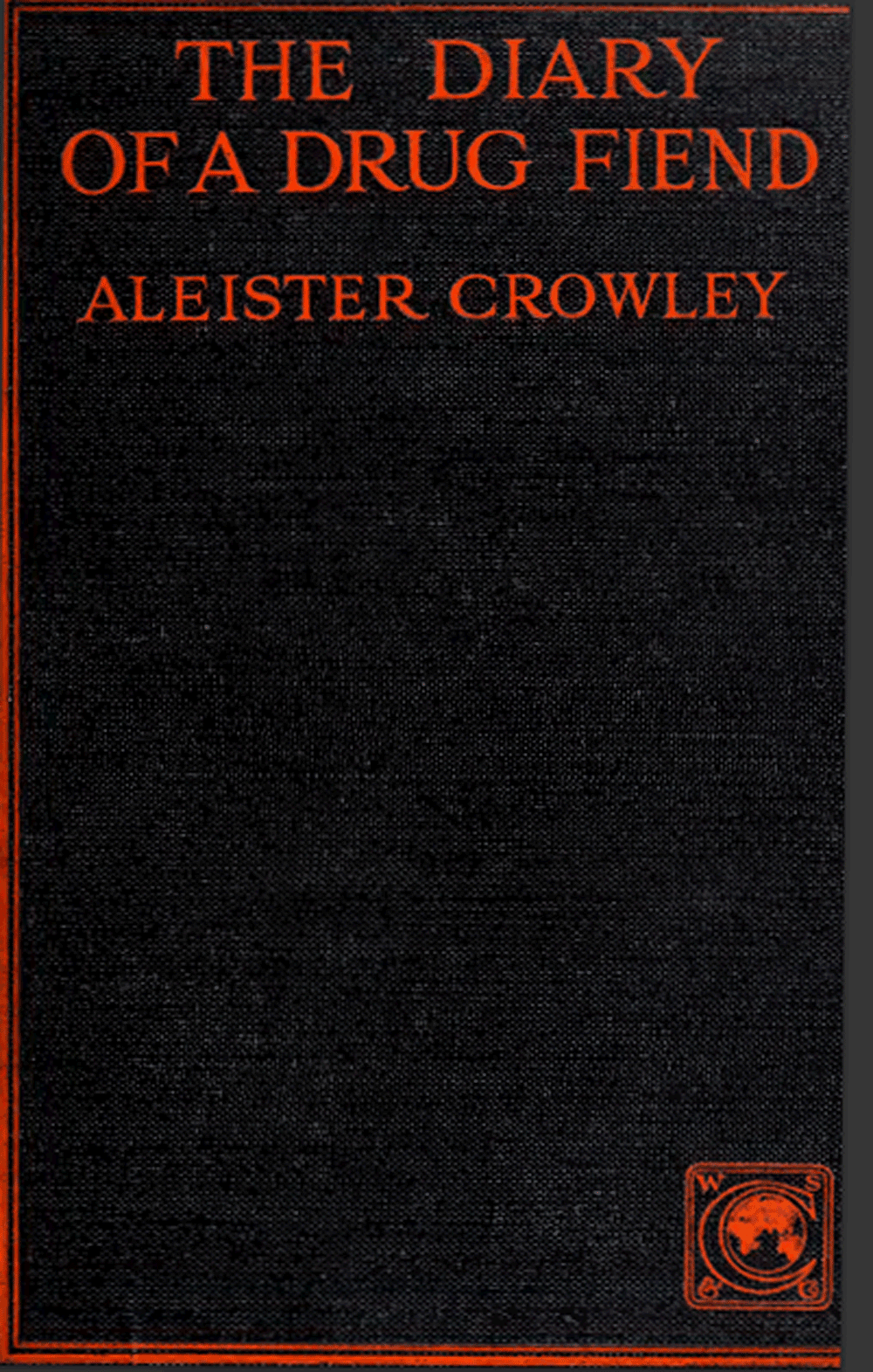
Diary of a Drug Fiend

This is the only full-cast recording of Aleister Crowley's 1922 classic paeon to common sense. It is the first book -- and so far almost the only book -- to stake out a philosophy of drug use that is compatible with human freedom, one in which we learn to use drugs as wisely as possible for the benefit of humanity. This recording was produced by the Drug War Philosopher and your purchases help support his effort to push back against the tragically counterproductive policy of drug prohibition, in the name of human freedom and of humanity's right to heal.

Purchase Your Copy


No cookies, no ads paid for by amoral and immoral billionaires (or trillionaires).


Unless otherwise indicated, no AI is used in the creation of site content. These essays represent the original ideas of their author and not the ideas that the author SHOULD have based on an algorithmic parsing of existing data. For more on this subject, consider the AI-related viewpoints to which the author subscribes as delineated in the New York Times opinion piece entitled "What 370,000 College Essays Tell Us About A.I.’s Effects on Creativity" by Rebecca Winthrop of the Brookings Institution.

The Partnership for a Death Free America is a proud sponsor of The Drug War Philosopher website @ abolishthedea.com.


Copyright 2026, Brian Ballard Quass Contact: quass@quass.com

tombstone for American Democracy, 1776-2024, RIP (up)