




Homepage of the Drug War Philosopher, Brian Quass
blog icon orange rss icon with stylized radio waves bird icon for twitter bird icon for twitter substack icon


back navigation arrow forward navigation arrow


The Make-Believe World of Mental Health in the Age of the Drug War

by Brian Ballard Quass, the Drug War Philosopher

June 19, 2025


I hate to use the term "fake science" in this age of politically inspired conspiracy theories, but the field of mental health in the western world is the fake science par excellence in the age of drug prohibition. The pundits in the field write endless papers about the patient's need for dignity and their right to healthcare, always completely ignoring the fact that we have outlawed everything that could work for these so-called "mental patients" and thereby turned them into patients for life, into wards of the healthcare state, with all of the expensive and time-consuming baggage that such a status implies. In other words, we are completely ignoring the patients' most glaringly obvious need -- the need for self-agency -- upon which all dignity is necessarily based.

First, the government denies me the right to heal, and then the professionals talk about my need for dignity without so much as acknowledging that injustice? And it is hard to push back. The heavily footnoted papers in the field are never open to criticism by individual "mental patients" with a lifetime of experience on the receiving end of mental health protocols; instead, they are reviewed and promoted by mental health "professionals" with a vested interest in the self-satisfied status quo, according to which more mental health services are desperately needed while the prohibitionist cancer consuming the field is completely ignored. The fact is that the field already has more patients than it deserves, because drug prohibition has given the mental health field an unearned monopoly on prescribing mind and mood medicine.

Take the article "Dignity in mental health care; human rights challenges and pathways" by Robert Anders, published on Academia.edu in 20251.

The paper's introduction begins with the lofty truism: "Dignity forms the bedrock of human well-being."

Fine words. And yet in what does dignity consist if not in our freedom to take care of our own mental health? And drug prohibition has prevented me from doing precisely that. This is the 6,400-pound gorilla in the room that almost all articles "in the field" completely ignore, so thoroughly have westerners been brainwashed to consider drug prohibition to be a natural baseline when it comes to mental health. True, Anders admits that "people seeking help encounter stigma, discrimination, inadequate services, and policies that neglect their needs," but it never occurs to the author that the wholesale outlawing of psychoactive therapeutic medicine might itself be one of these "policies that neglect their needs." Far less people would need to seek help in the first place if we had not outlawed almost everything that could help them and even rendered the mere study of such substances illegal, or at very least impractical. This drug prohibition has turned me into a ward of the healthcare state and an eternal patient for the last 50 years, and yet my disempowered status goes unnoticed by a field that sees no problem with it whatsoever. They pretend instead that the drug laws which have disempowered me do not even exist. They ignore the fact that drug law has given today's mental health "experts" their monopoly over mental health care in the first place.

This is why I consider almost every "paper" that is written in the field to be an exercise in make-believe. All such papers should come with a disclaimer stating that the author has taken drug prohibition as a natural baseline and so ignored the role that drug law plays in determining what treatments are available. I have tried for years to get magazines like Science News and Scientific American and Psychology Today to begin adding such disclaimers to their articles about drugs and yet they continue to publish articles based on the faulty idea that drug prohibition is a natural baseline from which to study mind-related topics like mental health, mentation, and human consciousness. But then where would the funding dollars go if we acknowledged that conditions like depression were actually easy for most people to "beat," were we to embrace the common-sense use of psychoactive medicine in strategic protocols: that is, if we studied all psychoactive medicines and used them for the benefit of humanity rather than childishly demonizing them as evil incarnate?


Notes for essay entitled The Make-Believe World of Mental Health in the Age of the Drug War:

1: Anders, Robert. 2025. “Dignity in Mental Health Care: Human Rights Challenges and Pathways.” Academia Mental Health and Well-Being 2 (2). https://doi.org/10.20935/mhealthwellb7729. (up)


read more essays here


Ten Tweets

against the hateful war on US


"If England [were to] revert to pre-war conditions, when any responsible person, by signing his name in a book, could buy drugs at a fair profit on cost price... the whole underground traffic would disappear like a bad dream." -- Aleister Crowley

New article in Scientific American: "New hope for pain relief," that ignores the fact that we have outlawed the time-honored panacea. Scientists want a drug that won't run the risk of inspiring us.

We've all been taught since grade school that human beings cannot use psychoactive medicines wisely. That is a defeatest lie. It's criminal to keep substances illegal that can awaken the mind and remind us of our full potential in life.

Judging from research articles, they do not even teach the many obvious benefits of drugs in med school.

Opium and cocaine have a vast host of potential rational uses -- yet we all have to pretend otherwise in the age of the Drug War.

Prohibitionists will me that we're all children when it comes to drugs, and can never -- but never -- use them wisely. That's like saying that we could never ride horses wisely. Or mountain climb. Or skateboard.

Musk vies with his fellow materialists in his attempt to diss humans as insignificant. But we are not insignificant. The very term "insignificant" is a human creation. Consciousness rules. Indeed, consciousness makes the rules. Without us, there would only be inchoate particles.

Alexander Shulgin is a typical westerner when he speaks about cocaine. He moralizes about the drug, telling us that it does not give him "real" power. But so what? Does coffee give him "real" power? Coke helps some, others not. Stop holding it to this weird metaphysical standard.

Psychedelics and entheogens should be freely available to all dementia patients. These medicines can increase neuronal plasticity and even grow new neurons. Besides, they can inspire and elate -- or do we puritans feel that our loved ones have no right to peace of mind?

The Drug War treats doctors like potential criminals and it treats the rest of us like children. Prohibition does not end drug risks: it just outsources them to minorities and other vulnerable populations.


Click here to see All Tweets against the hateful War on Us


back navigation arrow forward navigation arrow
Book Cover

Break the ice with a sledgehammer: place this book on your coffee table.

This book features 150 annotated images, designed to force brainwashed Americans to confront the fact that drug prohibition is wrong. Here is what author Richard Parrish II says of the book's compiler: "The drug prohibition philosopher provides first-hand, principled, persuasive, and insightful arguments against the current drug prohibition regime..."

Purchase Your Copy
Book Cover

Diary of a Drug Fiend

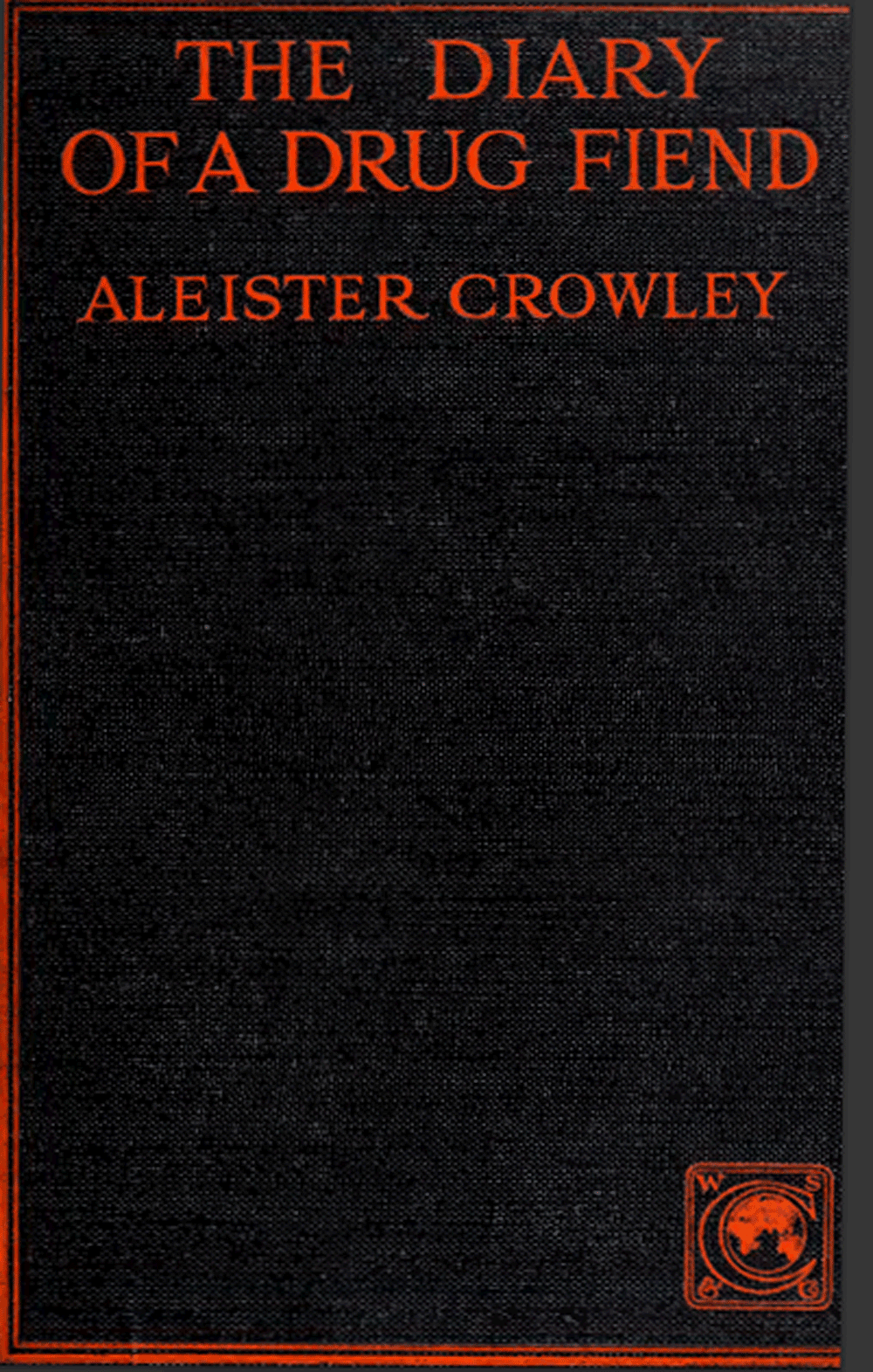
This is the only full-cast recording of Aleister Crowley's 1922 classic paeon to common sense. It is the first book -- and so far almost the only book -- to stake out a philosophy of drug use that is compatible with human freedom, one in which we learn to use drugs as wisely as possible for the benefit of humanity. This recording was produced by the Drug War Philosopher and your purchases help support his effort to push back against the tragically counterproductive policy of drug prohibition, in the name of human freedom and of humanity's right to heal.

Purchase Your Copy


No cookies, no ads paid for by amoral and immoral billionaires (or trillionaires).


Unless otherwise indicated, no AI is used in the creation of site content. These essays represent the original ideas of their author and not the ideas that the author SHOULD have based on an algorithmic parsing of existing data. For more on this subject, consider the AI-related viewpoints to which the author subscribes as delineated in the New York Times opinion piece entitled "What 370,000 College Essays Tell Us About A.I.’s Effects on Creativity" by Rebecca Winthrop of the Brookings Institution.

The Partnership for a Death Free America is a proud sponsor of The Drug War Philosopher website @ abolishthedea.com.


Copyright 2026, Brian Ballard Quass Contact: quass@quass.com

tombstone for American Democracy, 1776-2024, RIP (up)