





Homepage of the Drug War Philosopher, Brian Quass
blog icon orange rss icon with stylized radio waves bird icon for twitter bird icon for twitter substack icon


back navigation arrow forward navigation arrow


What my inability to get off of Effexor tells us about psychiatry and drug prohibition

an open letter to Mark Horowitz in response to his June 2026 post entitled 'Why Doctors Don’t See Withdrawal'

by Brian Ballard Quass, the Drug War Philosopher (Substack version)

June 28, 2026


Dear Mark,

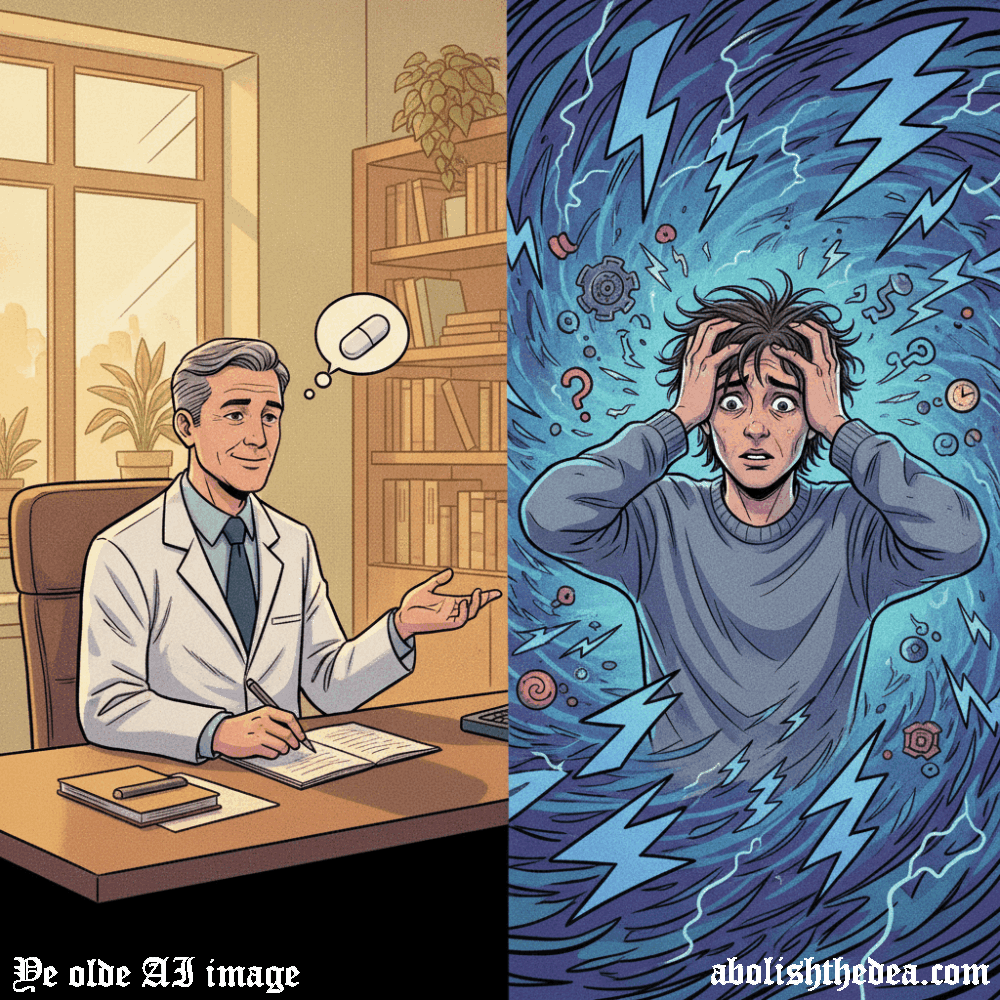
Thank you for your article entitled "Why Doctors Don't See Withdrawal." 1 You are the first prescribing psychiatrist I know who has seen these issues from the point of view of a "patient." As a 67-year-old chronic depressive, I have been on antidepressant "meds" for over 40 years now, starting with Prozac, and then switching to Effexor, which I have been "on" for the last 30 years. When I told my psychiatrist of my desire to get off the drug several years ago, he did not seem to understand how I could make such a request. He launched into a defense of Effexor as being a wonder drug, and when I was not convinced, he gave me some of the usual warnings about withdrawal: chiefly the need for a hyperbolical tapering schedule. I asked him if he could prescribe Effexor such that I could slowly and incrementally reduce the dose by a fractional amount every few weeks or so over the course of a year until I was completely "off" the drug. He said he could not do so because the drug producer, Viatris Inc., does not produce doses smaller than 32.5mg. I asked about the possibility of engaging a compounding pharmacist to create small doses for me, and he seemed to know nothing about that subject whatsoever. Apparently what I was trying to do "simply wasn't done." Finally, I asked if I could make up a dosing reduction schedule of my own and have him approve it for the use of a compounding pharmacist that I would find on my own. He agreed but remained totally unenthusiastic about my plans to get off of Effexor.

Our medical ethicists talk about patient rights, but they never talk about our right not to be a patient in the first place.


I should add that I wanted to get off the drug for a reason that I have never heard psychiatrists even acknowledge: the fact that my reliance on the drug had turned me into a ward of the healthcare state and a child for life. Our medical ethicists talk about patient rights, but they never talk about our right not to be a patient in the first place. Because of America's insane drug laws, I have to see a doctor one-third my age every three months of my life for the purpose of receiving a prescription for an expensive, underperforming, and dependence-causing "med" which I have since found to be harder to kick than heroin. 2 Before each "therapy" session, I have to answer at least a dozen humiliating questions, including, "Have I considered suicide during the last three months?", to which I always want to respond: "Only when I consider how drug law has turned me into a patient for life."

And this brings me to the observation that I alone seem to be willing to make on this subject: that there exist "drugs" that could elevate my mood in a trice, some of which grow at my very feet, and that therefore, no discussion about the propriety of using antidepressants can be complete without a discussion of the propriety of the drug prohibition which gave psychiatrists and pharmaceutical companies a monopoly on mind and mood medicine in the first place. Let me repeat that phrase: No discussion about the propriety of using antidepressants can be complete without a discussion of the propriety of the drug prohibition which gave psychiatrists and pharmaceutical companies a monopoly on mind and mood medicine in the first place. If the reader doubts that the topic of "drugs" is relevant to the debate over antidepressants, I ask them to consider the following user reports for various substances, beginning with cocaine, of which Sigmund Freud wrote, "My impression has been that the use of cocaine over a long time can bring about lasting improvement." (This was before doctors started a self-interested op-ed campaign to demonize the drug by focusing only on its downsides, exactly as if they were to study alcohol by focusing only on alcoholics.)

COCAINE

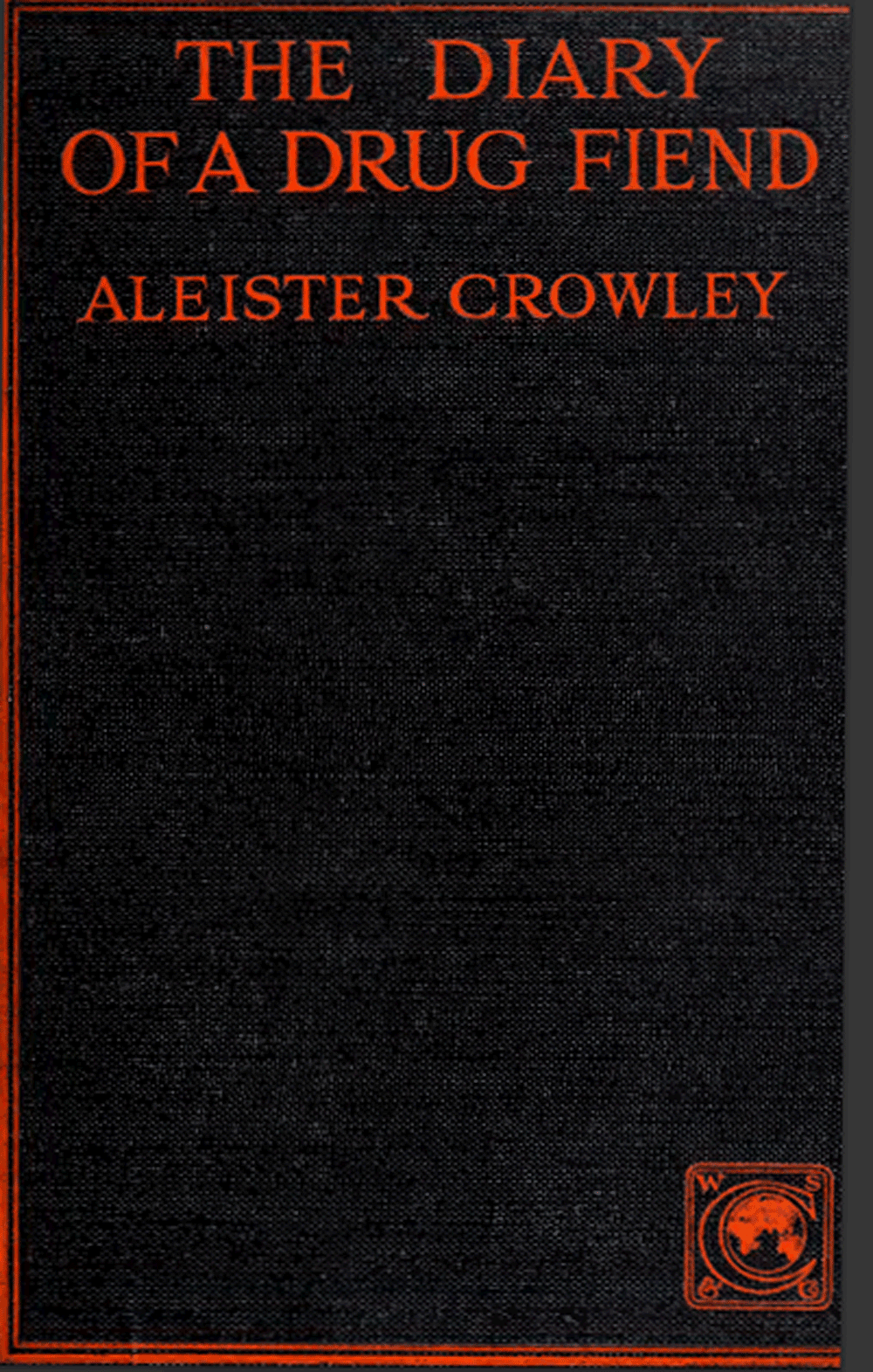
The depression lifted from my mind like the sun coming out of the clouds. 3
Aleister Crowley -- The Diary of a Drug Fiend

LSD

Fueled by small doses of LSD, almost everything was amusing or weird. 4
Rosemary Leary -- Psychedelic Refugee

MESCALINE

Everything had suddenly become so totally funny that to single out one thing rather than another would not at all have conveyed this experience of total funniness. 5
Erowid

OPIUM

Whereas wine disorders the mental faculties, opium, on the contrary (if taken in a proper manner), introduces amongst them the most exquisite order, legislation, and harmony. Wine robs a man of his self-possession: opium greatly invigorates it. 6
Thomas De Quincey -- Confessions of an English Opium Eater

FLUOREXETAMINE

My curiosity is insatiable- every nugget of information I stumble upon becomes a deep rabbit hole of reading and taking in as much information as possible, even the most mundane little things on the internet, the most one-off mentions of anything I scroll by on social media attract immense fascination. 7
Erowid

After reading these quotations, we should ask ourselves "Cui bono?" when it comes to drug prohibition. Who benefits from the outlawing of the kinds of drugs mentioned above? Hint: it's not the depressed. Just imagine the potential benefits of that latter drug alone for those who suffer from what the DSM would refer to as Attention Deficit Disorder. And yet brainwashed Americans are unable to see such prima facie potential benefits in the drug. Instead, the politically correct authors of Wikipedia dismiss Fluorexetamine as a "recreational" drug, as if its only conceivable use is to give young people a dubious and potentially dangerous "high." We are reminded here of the observation of Thomas Szasz that "The laws that deny healthy people 'recreational' drugs also deny sick people 'therapeutic' drugs." 8.

Surely, the world will be our oyster, therapeutically speaking, once we decide to use such drugs in common sense ways for common sense reasons -- once we stop insisting that psychoactive drug efficacy must be determined by looking under a microscope and that a drug must "cure" the human condition rather than simply treating it in such a way as to empower the user and to thereby create virtuous circles of behavior. Of course, such a mindset as I'm describing here would shift empowerment away from the medical field and to patients -- to the point that the latter would not even need to become patients in the first place. And so the end of drug prohibition looms as an existential threat to the medical and pharmaceutical industries and hence to the stock market. And so the conglomerate media fights back by refusing to publish any stories about the wise and beneficial use of any substance of which our politicians disapprove, meanwhile broadcasting "heart-wrenching" documentaries that focus on drug misuse outside of all context. We are thus taught to believe the defeatist lie that wise drug use is impossible. And so we shout "Drugs kill!" today, for the exact same reason that our prehistoric ancestors shouted "Fire bad!" Because they believed, as do we, that they should demonize dangerous substances rather than learn how to use them as wisely as possible for the benefit of humanity. 9

That's why I say "no more." After experiencing half a century worth of totally unnecessary depression, I refuse to be gaslighted anymore about the supposed uselessness of the vast pharmacopoeia that America has outlawed on a wholesale basis. I refuse to believe the defeatist lie that human beings cannot learn to use these substances as wisely as possible for the benefit of humanity. And so I join instead with the eccentric rehab guru, King Lamus, in "Diary of a Drug Fiend," in rebuking the drug prohibitionists as follows:

We have tamed the wild lightning... shall we run away from a packet of powder ? 10


But let us return to my attempts to get off of Effexor. Based on my online reading about "best practices" for Effexor withdrawal (to the limited extent that definitive information existed on that topic at the time), I decreased my initial dose of 225mg. rather rapidly over the first few months (the dose that I had been taking daily, literally for decades at that point), proudly checking off reductions on my homemade dosage calendar as time went by. After a few months of slashing doses wholesale, I began putting the brakes on dose diminution, in line with my belief in the need for a hyperbolical reduction process. If I continued to follow my calendar religiously, my weekly decreases would become less and less over time until the last couple of months, when I would eventually be reducing dosage by a mere .5mg per week.

To my surprise, the first nine months of this process went well, despite the fact that Viatris Inc. refused to supply my expensive compounding pharmacist with the extended release version of Effexor for compounding purposes. (It seems that Viatris Inc. sees as little reason for me to withdraw from their drug as does my psychiatrist -- and perhaps for the same reason?) I did not notice any major psychological downsides during this time. I found that I was drinking more alcohol at nights, roughly ten wine coolers a week compared to the usual four or less, but I had no feeling that this usage was in danger of escalating to pathological levels. I eventually began to dare to think that I might actually get off of Effexor and be little the worse for wear. "Finally," I thought to myself, "I will no longer have to see a condescending psychiatrist every three months of my life to be reminded what a child I've become thanks to drug prohibition."

And then, as it were, "out of the blue," during the penultimate month of my withdrawal schedule, when my daily dose was on the order of 10mgs. of Effexor per day, I simply stopped. I don't mean that I stopped using Effexor, I mean that I stopped moving. I got out of bed one morning and stopped at the top of the stairs, unable to find a reason to continue down those stairs to the kitchen to make my morning cup of coffee and begin my day. It was almost beyond "akathisia" as I understand that term, because all the distracted movement and restlessness associated with that condition was "felt" inside, as it were, as a purely mental phenomenon, rather than being manifested in the real world. I was racking my brains for a reason to live and could simply find none. I felt like a depressive Rene Descartes: "I suffer, therefore I am." Outside of this suffering, there was nothing. After an hour of fruitless attempts to "think my way" out of this hellish state of mind, I started to look over at the medicine cabinet, thinking how I could no doubt end this feeling quickly by taking a high-dosage of Effexor. I realized that in doing so, however, I would be renouncing my freedom and ensuring that I would be a ward of the healthcare state forever, should I live to be 100 or more.

Spoiler alert: I finally took a large dose of Effexor, after which I soon returned to my usual depressed self, except that this time, I knew that I was truly going to remain a patient for life.

And I have been taking my customary doses of this supposed miracle drug ever since, playing the humiliating role of the child patient every three months of my life. The only good news is that I have switched to a virtual provider so now I can be treated like a child in the comfort of my own home. The move was mandatory as I was actually "fired" by my own psychiatrist after I complained about my status as a patient for life. He accused me of questioning his integrity. It's funny. I had always been counseled both to speak the truth and to stand up for myself in the psychiatric setting, but I had never really done so at any time during my 45 long years as a patient. And then the one time that I actually say how I feel about the whole arrangement, I am kicked out on the street. The situation began to deteriorate after this relatively new psychiatrist of mine told me that he needed me to come in for an hour-long appointment so that we could get acquainted with one another. I finally "snapped," so to speak, when I heard that. I decided that I was going to finally tell this guy how I really felt about this whole arrangement. So I said to my psychiatrist, who was no more than half my age, "Why do we need to get to know each other? I'm 67 years old and have been taking this drug for 30 years. Why can't someone just hand me the stuff?" I'm here to warn you, folks: when psychiatrists tell you that they want you to be honest with them, nay, that they positively NEED you to be honest with them, they don't really mean it!

Incidentally, the subject of drug prohibition is hugely relevant to discussions of "getting off" of antidepressants, though, remarkably, I seem to be the only one in the world who has noticed this connection. What was I experiencing after all, when I found myself at the top of the stairs, unable to move? I was experiencing a hellish feeling which, no doubt, would likely disappear in time, or at least lessen in intensity, over the course of the day. Is it not obvious then that drugs of the kind referred to above (or even laughing gas, for that matter) could be employed to help me through such "rough patches"? Surely, this would be obvious to anyone (except perhaps to a medical student who has been indoctrinated in the tenets of reductive materialism). The question then begs itself: "Why are we not using such substances to help the depressed actually succeed in getting off of antidepressants?" We might say, "Well, because those drugs are all illegal." But this only begs a corollary question, namely: "Then why aren't our healthcare providers loudly protesting drug prohibition on behalf of their patient's right to heal?"

It is not surprising that psychiatrists are so dismissive of patient horror stories. No one wants to be told that they have been unnecessarily turning their clients into wards of the healthcare state and patients for life, after placing them on dependence-causing "meds" whose effects compare so poorly with those of the medicines that have been outlawed by racist politicians. This is why I called myself "The Ignaz Semmelweis of our times" in a 2023 essay on these topics. 11 Semmelweis dared to tell the doctors of his time that they were not acting in the interest of their patients -- and the doctors were as outraged to hear that message then as they are to hear it now. And yet we have a duty to speak up loudly and clearly against psychiatry's near religious belief in the infallibility of antidepressants. If the indignant mindset that is currently displayed online by testy psychiatrists is allowed to take us to its logical conclusion in the real world, then free speech in America will eventually be outlawed so that no one is allowed henceforth to speak slightingly in public about antidepressants.

Consider the massive irony here: we consider "drugs" to be so bad that we have to renounce our Constitutional rights in order to "fight" against them; and yet we consider antidepressants to be so good that we have to renounce our Constitutional rights in order to protect them from all criticism.

Of course, I will be dismissed as a disgruntled patient for saying such things, but let us remember that one can be disgruntled without being wrong. To see this, let us consider the topic of "drug prohibition and psychiatry" as seen from the point of view of a disgruntled lifetime patient of a behavioral health clinic:


I hope you find these insights useful, Mark.

In closing, I would like to say a word about psychiatrist Awais Aftab 13, whom you say you once saw as the "sensible centre" to the debate about antidepressant efficacy. I happened to visit his Substack yesterday, and I found that the subject of every single article that he has posted there would appear in a completely new light were the author to have considered the effects of drug prohibition in outlawing panaceas and in giving psychiatry a monopoly on dispensing mind and mood medicine. Every single one of them. I was especially bothered by his June 27th article entitled "Thinking Through Antidepressants and Suicidality and the ubiquity of risk in medicine." 14 When Awais takes drug prohibition as a natural baseline for analysis of that subject, he reminds me of the psychiatrists and ethicists who are analyzing and pronouncing on the case of the depressed Canadian Claire Brosseau while also taking drug prohibition as a natural baseline from which to pontificate on the subject.15 Claire is demanding her right to assisted suicide, and not one single principal in her case -- not her psychiatrists, not the medical ethicists, not even her Libertarian advocates -- are pointing out the politically incorrect truth that there are plenty of drugs (and more being found and synthesized every day) that could cheer Claire up in a trice -- at very least to the extent that we could justifiably tell her to "buck up" with their use and stop demanding a right whose granting would set such an insidious precedent for depressed people everywhere.

Claire's life is at stake here, and yet none of the principals in her case will even acknowledge my emails on this subject. Even Robert Whitaker at Mad in America will not "run with this story" about Claire despite my detailed heads-up on the subject. He apparently sees no irony in the fact that the state can use drugs to kill Claire while yet preventing her from using drugs that could make her wish to live. And so if Claire has her way, she will be sacrificed on the altar of the western world's superstitious hatred of "drugs." This is just how crazed anti-drug propaganda has rendered otherwise intelligent people, that North Americans would rather that the depressed should die than that they should use substances of which politicians disapprove. Incidentally, I tried to share my ideas with Awais, but his article about suicidality was open only to comments from subscribers. It's just as well, however, because I am so far ahead of the dogmatic curve on this issue that my reflections on his article can only read like a reproach.

But then Awais is in good company. Almost all "professionals" and bestselling authors today reckon without drug prohibition. They take drug prohibition as a natural baseline for any freedom-loving society. Our very history books (ranging from those by leftists like Harold Zinn 16 to centrists like Francis Fukuyama 17 to conservatives like Paul Johnson 18) are written as if drug prohibition has never existed in America, though the latter two authors will not stint at blaming drugs for the problems that this invisible drug prohibition brings about in American life in the way of illness, poverty and violence.


Key Takeaways:


Notes for essay entitled What my inability to get off of Effexor tells us about psychiatry and drug prohibition: an open letter to Mark Horowitz in response to his June 2026 post entitled 'Why Doctors Don’t See Withdrawal':

1: Horowitz, Mark. 2026. “Why Doctors Don’t See Withdrawal.” Substack.com. Mark’s Substack. June 2026. https://substack.com/home/post/p-200006966. (up)
2: I base this conclusion on personal experience, the research of Lee Robins, online statistics about recidivism rates, and some government studies that were shared with me by a former psychiatrist of mine regarding the difficulties of kicking Venlafaxine for long-term users like myself. (up)
3: Arthur Crowley. “Full Text of ‘the Diary of a Drug Fiend.’” 1922. Archive.org. 2017. https://archive.org/stream/b29826433/b29826433_djvu.txt. (up)
4: Leary, Rosemary Woodruff. 2021. Psychedelic Refugee. Park Street Press. https://www.goodreads.com/en/book/show/52568298-psychedelic-refugee. (up)
5: “Erowid.” 2019. Erowid.org. 2019. https://www.erowid.org/. (up)
6: “Confessions of an English Opium-Eater.” 2019. Gutenberg.org. 2019. https://www.gutenberg.org/files/2040/2040-h/2040-h.htm. (up)
7: “Erowid.” 2019. Erowid.org. 2019. https://www.erowid.org/. (up)
8: Szasz, Thomas. 1992. Our Right to Drugs. Praeger. (up)
9: Drugs Kill, Fire Bad DWP (up)
10: Arthur Crowley. “Full Text of ‘the Diary of a Drug Fiend.’” 1922. Archive.org. 2017. https://archive.org/stream/b29826433/b29826433_djvu.txt. (up)
11: The Semmelweis Effect in the War on Drugs DWP (up)
12: Indeed, we have no logical reason for treating daily heroin users differently than we do those who take antidepressants daily. As historian Richard Miller pointed out in 'Drug Warriors and their Prey', research has documented the fact that heroin users can and do function well in society. And this is in spite of the fact that drug warriors are spending billions of dollars a year in an attempt to make their heroin use as problematic and potentially deadly as possible. (up)
13: Substack. 2024. “Awais Aftab.” Substack.com. 2024. https://substack.com/@awaisaftab. (up)
14: Aftab, Awais. 2026. “Thinking through Antidepressants and Suicidality.” Substack.com. Psychiatry at the Margins. June 27, 2026. https://substack.com/home/post/p-203784365. (up)
15: Nolen, Stephanie, and Chloë Ellingson. 2025. “Claire Brosseau Wants to Die. Will Canada Let Her?” The New York Times, December 29, 2025. https://www.nytimes.com/2025/12/29/health/assisted-death-mental-illness-canada.html. (up)
16: Howard Zinn. Collins, Harper. 2015. “A People’s History of the United States: 1492 – Present.” HowardZinn.org. 2015. https://www.howardzinn.org/collection/peoples-history/. (up)
17: “Liberalism and Its Discontents.” 2025. Francis Fukuyama. Stanford University. 2025. https://fukuyama.people.stanford.edu/liberalismanditsdiscontents. (up)
18: Johnson, Paul. 2001. Modern Times : The World from the Twenties to the Nineties. New York: Harperperennial. (up)


read more essays here


Ten Tweets

against the hateful war on US


Someday, the First Lady or Man will tell kids to "just say no to prohibition." Kids who refuse will be required to watch hours' worth of films depicting gun violence, banned religions, civil wars, and adults committing suicide for want of medicine that grows at their very feet.

There are endless ways that psychoactive drugs could be creatively combined to combat addiction and a million other things. But the drug warrior says that we have to study each in isolation, and then only for treating one single board-certified condition.

The problem with blaming things on addiction genes is that it whitewashes the role of society and its laws. It's easy to imagine an enlightened country wherein drug availability, education and attitudes make addiction highly unlikely, addiction genes or no addiction genes.

The formula is easy: pick a substance that folks are predisposed to hate anyway, then keep hounding the public with stories about tragedies somehow related to that substance. Show it ruining lives in movies and on TV. Don't lie. Just keep showing all the negatives.

Some outlawed drugs grow new neurons in the brain. To refuse to use them makes us complicit in the dementia of our loved ones!

Cocaine is not evil. Opium is not evil. Drug prohibition is evil.

Governor Kotek is "dealing" with the homelessness problem in Oregon by arresting her way out of it, in fealty to fearmongering drug warriors.

We might as well fight for justice for Christopher Reeves: he was killed because someone was peddling that junk that we call horses. The question is: who sold Christopher that horse?! Who encouraged him to ride it?!

That's the problem with prohibition. It is not ultimately a health question but a question about priorities and sensibilities -- and those topics are open to lively debate and should not be the province of science, especially when natural law itself says mother nature is ours.

Google founders used to enthuse about the power of free speech, but Google is actively shutting down videos that tell us how to grow mushrooms -- MUSHROOMS, for God's sake. End the drug war and this hateful censorship of a free people.


Click here to see All Tweets against the hateful War on Us


back navigation arrow forward navigation arrow
Book Cover

Break the ice with a sledgehammer: place this book on your coffee table.

This book features 150 annotated images, designed to force brainwashed Americans to confront the fact that drug prohibition is wrong. Here is what author Richard Parrish II says of the book's compiler: "The drug prohibition philosopher provides first-hand, principled, persuasive, and insightful arguments against the current drug prohibition regime..."

Purchase Your Copy
Book Cover

Diary of a Drug Fiend

This is the only full-cast recording of Aleister Crowley's 1922 classic paeon to common sense. It is the first book -- and so far almost the only book -- to stake out a philosophy of drug use that is compatible with human freedom, one in which we learn to use drugs as wisely as possible for the benefit of humanity. This recording was produced by the Drug War Philosopher and your purchases help support his effort to push back against the tragically counterproductive policy of drug prohibition, in the name of human freedom and of humanity's right to heal.

Purchase Your Copy


No cookies, no ads paid for by amoral and immoral billionaires (or trillionaires).


Unless otherwise indicated, no AI is used in the creation of site content. These essays represent the original ideas of their author and not the ideas that the author SHOULD have based on an algorithmic parsing of existing data. For more on this subject, consider the AI-related viewpoints to which the author subscribes as delineated in the New York Times opinion piece entitled "What 370,000 College Essays Tell Us About A.I.’s Effects on Creativity" by Rebecca Winthrop of the Brookings Institution.

The Partnership for a Death Free America is a proud sponsor of The Drug War Philosopher website @ abolishthedea.com.


Copyright 2026, Brian Ballard Quass Contact: quass@quass.com

tombstone for American Democracy, 1776-2024, RIP (up)