






Homepage of the Drug War Philosopher, Brian Quass
blog icon orange rss icon with stylized radio waves bird icon for twitter bird icon for twitter substack icon


back navigation arrow forward navigation arrow


Why the Mad in America website is dead wrong about assisted suicide for the depressed

An open letter to Robert Whitaker

by Brian Ballard Quass, the Drug War Philosopher

April 18, 2026


INTRODUCTION

I recently wrote an essay1 for Mad in America2 about assisted suicide for the depressed. I was writing in particular about the case of depressed Canadian entertainer Claire Brosseau3 who is demanding her right to assisted suicide even as we speak. I claimed that assisted suicide for the depressed cannot be ethically discussed without also discussing the drug prohibition which makes it necessary in the first place, at least in the minds of the depressed themselves. To my astonishment, the founder of Mad In America, Robert Whitaker, did not agree with me. He argued that Claire never complained about her lack of access to drugs; hence, drug prohibition has no obvious connection with her case. With all due respect to Robert, I found that argument to be shallow. I find it naive to expect that individuals who are profoundly depressed would have the self-awareness to realize how a drug policy that nearly everyone in America takes for granted as being irrelevant to everyday life would be negatively affecting themselves in particular.

But my goal is not to bash Robert. I feel, rather, that guys like Robert Whitaker are like Don Quixote with respect to myself. They are far more intelligent than I am on almost every subject in the world... until it comes to the topic of drugs, that is. When that topic is broached, suddenly they say silly things that they would never say had they been raised in a free world. And what can we expect? They have been raised since childhood on a steady diet of drug-war propaganda, above all in the form of the media's almost complete censorship of all reports of positive drug use, a bias that our equally brainwashed authors are happy to mimic in their own chef d'oeuvres, leaving the bibliophile with the impression that drugs have no positive uses whatsoever. This is how Americans have come to believe that drug prohibition can have no negative effects, to the point now that they cannot even see the otherwise obvious connection between drug prohibition and assisted suicide for the depressed.

I hope that the following essay will bring the Don Quixotes of the world back to their senses when it comes to drugs. I hope that it will convince them to join me in speaking up on behalf of Claire's right to heal and so prevent her from being sacrificed on the altar of Drug War superstition, according to which drugs are thought to be bad, regardless of all circumstances of use.

Brian


man straightening bowtie for his tuxedo THE ESSAY PROPER


Robert Whitaker suggests that I'm not sufficiently objective in my discussion of assisted suicide for the depressed. I would respond as follows:

What is objective about the status quo, when the entire healthcare industry -- and its critics -- ignore the fact that there are drugs that could end depression in a trice?


In light of this fact, it is unethical (if not positively immoral) for Americans to remain silent about drug prohibition as depressed westerners like Claire Brosseau go to an early grave under the absurd conviction that they are beyond help. The only way to gainsay this conclusion of mine would be to claim that there are, indeed, no drugs that could dramatically elevate Claire's mood in a trice. And this is simply false. Anyone who holds such a view is undereducated in the fields of pharmacology and ethnobotany. They are unfamiliar with modern drug literature. They also lack a grasp of common-sense psychology -- which is to say, psychology before biochemical determinism began to remove human volition from the equation, thereby making scientists the experts on how we think and feel4.

With respect to a specific case, Robert makes what I insist is a very weak argument: He claims that the depressed Claire Brosseau did not complain of an inability to access the drugs that she desired; ergo, drug prohibition was not a problem for her. Of course, this viewpoint reckons without the Drug War and the attitudes upon which it is based. Thanks both to harsh drug laws and America's propaganda-driven disinterest in psychoactive medicines, Claire could only have had access to a mere sliver of the sorts of medicines that we are talking about here, the word "drugs" being but a dysphemism for the endless list of psychoactive substances that have the potential to inspire and elate and which are therefore anathema to puritanical politicians on both sides of the aisle. Nor would Claire be motivated to use those drugs wisely and on a strategic basis, as the party line of drug-hating America is that such use is impossible, or at least predestined to lead to a dead-end -- a result that the government is committed to ensuring by spending 51 billion dollars a year for that very purpose5.

Moreover, Robert's argument recoils on itself. In the Stephanie Nolen story in the New York Times6, Claire claimed to have loved the drugs that she had used in the past. She loved them. This begs the sort of question that everyone is trying to avoid asking: namely, why can't Claire be encouraged to live by continuing to use that wee percentage of drugs to which she already seems to have access, only in a more deliberate, strategic and therapeutic manner, perhaps by using them on an as-needed basis? Why can't she strategically use such drugs to transcend suicidal ideation, and/or to motivate herself to leave the couch and get some exercise, and/or to help her to talk more honestly with her psychiatrists during therapy sessions? Even if Claire is unaware of the hundreds, perhaps thousands, of naturally occurring mood-enhancing drugs in the natural world, drugs of whose unsuspected but widespread existence Richard Schultes gave us a mere glimpse in "Plants of the Gods: Origins of hallucinogenic use,7" we have a duty to ask: "Why would Claire rather die than to use drugs that she herself claims to love?", followed by the corollary question that cuts to the nib of the matter: "Do we truly believe that death itself is better for Claire than using drugs?!"

Of course, no reputation-conscious professional can recommend that Claire use such drugs, for the simple reason that such drugs are illegal. But that does not stop the onlookers in Claire's case (whether they be pundits, friends, family members, or psychiatrists) from pointing out the 6,400-pound gorilla in the room: the glaringly obvious fact that her life could be made livable with drugs, or at very least be made far preferable to suicide, whence it follows that onlookers have a duty, on Claire's behalf, to indignantly demand the end of drug prohibition as nothing less than the outlawing of Claire's right to heal, a prohibition that in Claire's case could lead to her suicide.

As to my supposed lack of objectivity, am I really required to approach this topic with the passion-free disdain of Dr. Spock of the original Star Trek series, when I hear our movers-and-shakers agreeing with Claire that she is, indeed, out of options, at least if her biochemical system is so finicky as not to appreciate the "scientific" benefits of Big Pharma meds? I am a chronic depressive, too, for whom all treatments have failed (or rather done worse than fail, at least in the case of dependence-causing meds that have turned me into a ward of the healthcare state). If Claire is out of options, then so am I. I, however, would never commit suicide, even if it seems like the scientific thing to do. I understand that to commit suicide in my case would be to help normalize the policy of drug prohibition by letting it get away with murder, a murder for which my bamboozled survivors, of course, would never even think of holding it responsible.

Yes, I am passionate on this topic, but passion is called for when basic rights have been usurped. This is why drug prohibition has hung around like an unwelcome guest for well over one hundred years now, because no one is writing passionately about that usurpation, at least when it comes to its effect on our ability to take care of our own health as we see fit. Instead, we ignore the situation, pretending all is well, and we gaslight those who attempt to "cry foul," telling them that their viewpoints belong in a Subreddit for Libertarians and anarchists, as I myself was told by the moderator when I attempted to broach these topics on the philosophical forum hosted by philosopher Bernardo Kastrup8.

Finally, my essays are in the form of the argumentum ad absurdum, in which one adduces a variety of generally accepted propositions and then deduces the illogical consequences of those propositions, thereby displaying the falsity of some of our most widely held presuppositions about the world. This is what I have done in my essays on assisted suicide for the depressed. Dismissing my philosophical essays as subjective rants may provide an excuse to not grapple with the issues that I have raised, but it does not make those issues go away. But it is depressing. If even the potential unnecessary death of depressed people like Claire Brosseau cannot cause highly intelligent Americans to speak out against drug prohibition on the grounds of our right to heal, it's hard to imagine what would.

AFTERWORD

When I make such arguments to various academics, they usually ignore me; however, on rare occasions, they will tell me, almost indignantly, that they have always been a foe of drug prohibition, thank me very much. I have only to check their record on that subject! I tell them that I am glad to hear that, of course, but what I really want to say is: that is not enough. Lives are at stake now and we must speak up about specifics; we must say of drug prohibition like Laertes in the play: "Thus didst thou!" We must hold drug prohibition responsible for the endless social problems that it causes, first and foremost the way that it outlaws the right of depressed human beings to heal. Until then, our most trusted pundits will continue to ignore the connection between drug prohibition and assisted suicide for the depressed, thereby rendering themselves complicit in the untimely deaths of the Claire Brosseaus of the world.


Notes for essay entitled Why the Mad in America website is dead wrong about assisted suicide for the depressed: An open letter to Robert Whitaker:

1: From the psychiatric pill mill to assisted suicide for the depressed DWP (up)
2: “Mad in America - Science, Psychiatry and Social Justice.” 2016. Mad in America. October 2, 2016. https://www.madinamerica.com/. (up)
3: Nolen, Stephanie, and Chloë Ellingson. 2025. “Claire Brosseau Wants to Die. Will Canada Let Her?” The New York Times, December 29, 2025. https://www.nytimes.com/2025/12/29/health/assisted-death-mental-illness-canada.html. (up)
4: The purblind coldness of the Behaviorist doctrine is made clear in the following words of its founder, JB Watson, as quoted in the 2015 book "Paradox" by Margaret Cuonzo: "Concepts such as belief and desire are heritages of a timid savage past akin to concepts referring to magic." (Surely, Watson was proactively channeling Dr. Spock of the original Star Trek series.) (up)
5: “War on Us – the War on Drugs Is a War on All of Us.” 2019. Waronus.com. 2019. http://waronus.com/. (up)
6: Nolen, Stephanie, and Chloë Ellingson. 2025. “Claire Brosseau Wants to Die. Will Canada Let Her?” The New York Times, December 29, 2025. https://www.nytimes.com/2025/12/29/health/assisted-death-mental-illness-canada.html. (up)
7: Plants of the Gods: Their Sacred, Healing, and Hallucinogenic Powers Schultes, Richard, 1979 (up)
8: How Bernardo Kastrup reckons without the drug war DWP (up)


read more essays here


Ten Tweets

against the hateful war on US


Most substance withdrawal would be EASY if drugs were re-legalized and we could use any substance we wanted to mitigate negative psychological effects.

This pretend concern for the safety of young drug users is bizarre in a country that does not even criminalize bump stocks for automatic weapons.

Prohibitionists have nothing to say about all other dangerous activities: nothing about hunting, free climbing, hang-gliding, sword swallowing, free diving, skateboarding, sky-diving, chug-a-lug competitions, chain-smoking. Their "logic" is incoherent.

The "scheduling" system is completely anti-scientific and anti-patient. It tells us we can make a one-size-fits-all decision about psychoactive substances without regard for dosage, context of use, reason for use, etc. That's superstitious tyranny.

The drug war tells us that certain drugs have no potential uses and then turns that into a self-fulfilling prophecy by outlawing these drugs. This is insanely anti-scientific and anti-progress. We should never give up on looking for positive uses for ANY substance.

Doc to Franklin: "I'm sorry, Ben, but I see no benefits of opium use under my microscope. The idea that you are living a fulfilled life is clearly a mistake on your part. If you want to be scientific, stop using opium and be scientifically depressed like the rest of us."

The front page of every mycology club page should feature a protest of drug laws that make the study of mycology illegal in the case of certain shrooms. But no one protests. Their silence makes them drug war collaborators because it serves to normalize prohibition.

MDMA legalization has suffered a setback by the FDA. These are the people who think Electro Shock Therapy is not used often enough! What sick priorities.

Someone should stand outside Jefferson's estate and hand out leaflets describing the DEA's 1987 raid on Monticello to confiscate poppy plants. That raid was against everything Jefferson stood for. The TJ Foundation DISHONORED JEFFERSON and their visitors should know that!

If media were free in America, you'd see documentaries about people using drugs wisely for a wide variety of praiseworthy purposes.


Click here to see All Tweets against the hateful War on Us


back navigation arrow forward navigation arrow
Book Cover

Break the ice with a sledgehammer: place this book on your coffee table.

This book features 150 annotated images, designed to force brainwashed Americans to confront the fact that drug prohibition is wrong. Here is what author Richard Parrish II says of the book's compiler: "The drug prohibition philosopher provides first-hand, principled, persuasive, and insightful arguments against the current drug prohibition regime..."

Purchase Your Copy
Book Cover

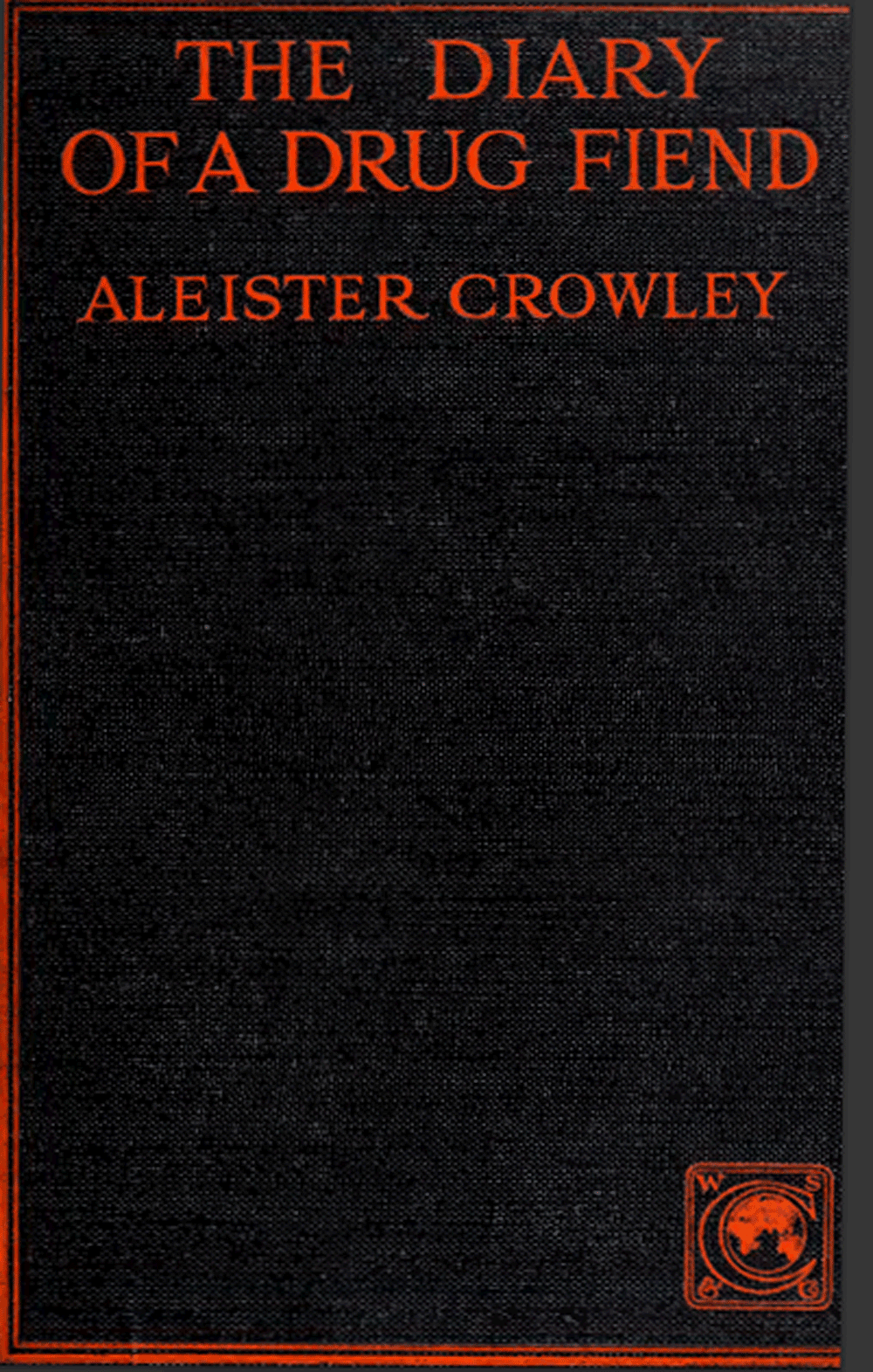
Diary of a Drug Fiend

This is the only full-cast recording of Aleister Crowley's 1922 classic paeon to common sense. It is the first book -- and so far almost the only book -- to stake out a philosophy of drug use that is compatible with human freedom, one in which we learn to use drugs as wisely as possible for the benefit of humanity. This recording was produced by the Drug War Philosopher and your purchases help support his effort to push back against the tragically counterproductive policy of drug prohibition, in the name of human freedom and of humanity's right to heal.

Purchase Your Copy


No cookies, no ads paid for by amoral and immoral billionaires (or trillionaires).


Unless otherwise indicated, no AI is used in the creation of site content. These essays represent the original ideas of their author and not the ideas that the author SHOULD have based on an algorithmic parsing of existing data. For more on this subject, consider the AI-related viewpoints to which the author subscribes as delineated in the New York Times opinion piece entitled "What 370,000 College Essays Tell Us About A.I.’s Effects on Creativity" by Rebecca Winthrop of the Brookings Institution.

The Partnership for a Death Free America is a proud sponsor of The Drug War Philosopher website @ abolishthedea.com.


Copyright 2026, Brian Ballard Quass Contact: quass@quass.com

tombstone for American Democracy, 1776-2024, RIP (up)