




Homepage of the Drug War Philosopher, Brian Quass
blog icon orange rss icon with stylized radio waves bird icon for twitter bird icon for twitter substack icon


back navigation arrow forward navigation arrow


A Deep Dive into Drug War Hypocrisy

What lifeguard-free beaches tell us about America's attitude toward psychoactive substances

by Brian Ballard Quass, the Drug War Philosopher

August 21, 2026


Last weekend, my brother and I made our annual pilgrimage to Lake Laura, the local swimming hole, where we disported ourselves among dozens of other aquatic merry-makers in the 44-acre impoundment, or manmade reservoir. Lake Laura is a 3-mile-long dam-fed lake in Shenandoah County, Virginia, jointly owned by Bryce Mountain Resort and the Virginia Department of Wildlife Resources. It is conveniently located down a steep tree-lined hill from my place of residence, though not conveniently enough, alas, for its propinquity to successfully encourage me to rise above my customary level of laziness to the point where I engage in the physically beneficial activity of swimming more than once a year. Access for swimmers here is controlled via a sort of sentry in a guardhouse to whom one pays a $12 fee for the privilege of using the facilities until 6 p.m. that day. These facilities include a grassy clearing filled with lawn chairs, a small changing station, and a floating dock that allows bathers to walk directly to the deep part of the lake without first tiptoeing over the slippery and rocky underwater topography going, "Ooch... ouch... ouch... ooch!" The point of interest here is that the sentry in the guardhouse is not, legally speaking, a lifeguard, although one side of the oversized sentry box does indeed have a window facing the water. Yet, as the signage makes clear, one is swimming at one's own risk. I had seen that sign many times before, at least once every summer since I moved to the area in 2012, but today it inspired me with a new insight about the hypocrisy of American drug attitudes. But before I reveal the details of this epiphany, you have to visualize the scene.

There I was, gently bobbing up in down in the tannic-colored ripples, my head poking up through a Dollar Store inner-tube kindly provided by my niece, when my attention was arrested by an object that I perceived to be floating near the opposing shoreline, a good quarter mile away. "What is this?" I asked myself. "Is it a beaver, perhaps, or a large piece of oddly shaped driftwood?" It was only after subjecting myself to this misleading catechism that I realized the truth of the matter: that beaver of mine, that piece of oddly-shaped driftwood, was actually the head of a swimmer, a blonde by the looks of it, who had separated him or herself from the pack of us shore-hugging bathers and set out to cross what he or she no doubt considered to be the local equivalent of the English Channel. I immediately thought to myself: "Imagine if I were the official lifeguard of this place! I would need radar and sonar to keep track of all these swimmers. In fact, it would be a challenge, even with binoculars, to keep track of all swimmers in this one section of the lake alone, especially when Mark Spitz out there is trying to set a world record in his own mind by swimming to the extreme width of this reservoir all by him or herself. What if a swimmer, as indeed sometimes happens, decides to traverse the entire length of Lake Laura? The maintenance of even a basic level of safety would require multiple lifeguards at various sections of the lake, to whom a given lifeguard could 'pass off' responsibility whenever a swimmer exits their sector, in the same way that air traffic controllers pass off responsibility for planes passing out of their jurisdiction."

LIFEGUARD 1: "Lake Laura 1, pick up blonde-headed swimmer a half-mile south of public beach at center lake."

LIFEGUARD 2: "Lake Laura 2, confirming blonde-headed swimmer a half-mile south of public beach at center lake."

I calculate that at least four such air traffic controllers (er, I mean lifeguards) would be required -- at an absolute minimum -- to ensure the safety of swimmers "lake-wide" at Lake Laura, and this, in practice, would require the hiring of at least two lifeguards per sector in order to ensure that at least four pairs of perky eyes are always scouring the ripples for signs of human distress. Ideally, of course, each of these stations would also be furnished with a computerized radar and/or sonar device that would help identify swimmers and flag their sudden disappearance.

EPIPHANY

The drug-related epiphany here is obvious. It concerns the hypocritical way in which Drug Warriors insist on different levels of safety depending on what they perceive to be the nature of a threat. There is no hue and cry to add lifeguards to Lake Laura, and I can safely say that no one at all is calling for the amount of lifeguards that would be required to keep young people safe while swimming at this lake. Nor is anyone calling for the closure of my local lake on the grounds that the necessary safety level could never be supplied for swimmers, if only thanks to economic considerations. This begs the question "Why not?" Why are American parents so unconcerned about the clear and present danger posed to their young people by an unsupervised lake while they are terrified into demanding immediate political action whenever there is a chance that those same young people might use a substance that has been shown to improve mind and mentation -- shown via history and anecdote, I mean, and not via scientistic studies designed to hobble psychoactive progress by insisting that drugs act in ways that flatter the theories of biochemical determinists?

ANALYSIS

The answer is clear: American parents have been taught from birth that there are no benefits to the substances that we call "drugs," from which it follows that any effort to rid the world of such substances must be laudable. If drugs were simply dangerous but known to have benefits, then American parents would think of drug use like they now think about swimming in an unsupervised lake: both can be dangerous but both also have important benefits when undertaken as safely as possible at the appropriate times and in the appropriate circumstances -- and therefore both activities must be allowed, regardless of the injuries and even deaths that may arise in specific cases thanks to the existence of such freedoms. Seen in this light, our drug prohibition is not so much the product of our puritanical inheritance as westerners as it is a natural result of the indoctrination that we have received from a media that simply will not publish stories about safe and beneficial drug use, but which, to the contrary, will publish stories documenting drug abuse and misuse.

Your local library is sure to feature a section on drug misuse and abuse, but if you ask your librarian to point you to the section where authors discuss the beneficial use of drugs like opium and cocaine, the poor old lady is likely to recoil in horror. "There is no such section, praise God," she thinks to herself. She might then think of a notorious title or two whose authors refuse to discuss drugs from a completely pejorative viewpoint, but she will certainly write these titles down for you on a piece of note paper rather than speaking them openly in her family-friendly library. She will not sully her drug-free lips by speaking aloud such titles as "Opium for the Masses by Jim Hogshire," "Coca and Its Therapeutic Application by Angelo Mariani" or "Our Right to Drugs by Thomas Szasz." What if the young readers over in Kid's Corner were to hear her uttering such blasphemous titles? What would they ever think?

Most Americans cannot imagine a world in which they might think differently about drugs. This is to be expected, given that the hatred of drugs is in the very air that we breathe as Americans. Our movies and TV shows and magazine articles are constantly telling us, implicitly and explicitly, that drugs are never the answer, while all stories of positive drug use are ruthlessly scrubbed from the media. We should at least be suspicious of this propaganda given the fact that there is no negative media focus on the downsides of alcohol consumption which kills 178,000 Americans a year, or on the downsides of psychiatric drugs on which 1 in 4 American women are dependent for life. This embarrassing ignorance about matters of drug benefits renders Americans highly susceptible to propaganda. Unfortunately, I am one of only a very few pundits who even recognizes the sorts of benefits of which we're speaking here, however. These benefits are far too indirect to be noticed by modern scientists. But I can at least hint at what I mean.

Imagine that I use an empathogen. It cheers me up JUST ENOUGH to persuade me to wander down to Lake Laura by myself for a change in order to relax and to get some physical exercise by swimming. Shy though I am, I yet am motivated JUST ENOUGH to talk to a woman that I meet on the dock rather than to walk by her with downcast (or "sidecast") eyes. She suggests that we walk to the beach in order to discuss a philosopher in whom it turns out that we both have an interest, and I am freed JUST ENOUGH from my self-uncertainty that I accept the offer. This hypothetical example points out an important truth that scientists ignore: namely, that a drug does not have to "cure" anything in order to be enormously beneficial. The symptomatic use of the drug in question could even lead to matrimony. Although we cannot say that the drug would have "caused" matrimony, we can certainly say that matrimony would not have existed without that drug, that the drug was a necessary condition for my attainment of "the happy state.' But scientists do not think this way. They think that using an empathogen in this manner is just a copout. I am not treating the REAL problem, after all, whatever THAT might be. They want to change my biochemistry so that I can fix the "real" biochemical cause of my psychological shortcomings. And I would argue that it is precisely this mad and hubristic ambition to find the holy grail of the "real" cause of psychological problems that has resulted in the creation of drugs that change brain chemistry in unknown ways and, as an apparent consequence, can be harder to kick than heroin.

I hope that I have successfully demonstrated the philosophical fecundity of the above-mentioned epiphany, namely, the fact that Americans have such cock-eyed safety standards when it comes to drugs.

Let me end by suggesting some of the book and documentary titles that we would see in a truly free world. This enumeration should help make it clear how far America is from actually BEING a free country when it comes to the subject of drugs. One simply cannot "see" the following titles being broadcast in Drug War America, certainly not without major editing, as when the Disney Channel broadcast 'The Making of Sgt. Pepper' only after editing out the bits in which Beatles band members said that they had not been harmed by their use either of marijuana or LSD. And if anyone doubts the fact that Hollywood is helping us to hate drugs, they have only to ask Drug Czar extraordinaire William Bennett himself, who assured us during his tenure that "The television and film industries have already done a great deal, but they must do more." That statement by the notorious smoker "Chimney Pot Bennet" was a brazen boast about how the US government was suborning American institutions to teach Americans to adopt a Christian Science attitude toward drug use. And this propaganda with the help of broadcasters continued throughout the 20th century and there is no reason to believe that it stopped yet, least of all under the administration -- or rather the regime -- of Donald Trump.

BOOKS THAT WOULD EXIST IN A FREE WORLD

"How I learned to use opium wisely for inspiration and relaxation."

"Yes, you too can use cocaine safely."

"How the strategic use of demonized medicines brought me out of my shell and made me live again."

"Yes, you can use drugs wisely: don't let self-interested doomsayers tell you otherwise."

"How I got off of valium EASILY with the strategic use of a wide variety of phenethylamines and tryptamines."

"How the weekly smoking of opium gave me something to look forward to in life, thereby making me a kinder and more thoughtful person."

AFTERWORD

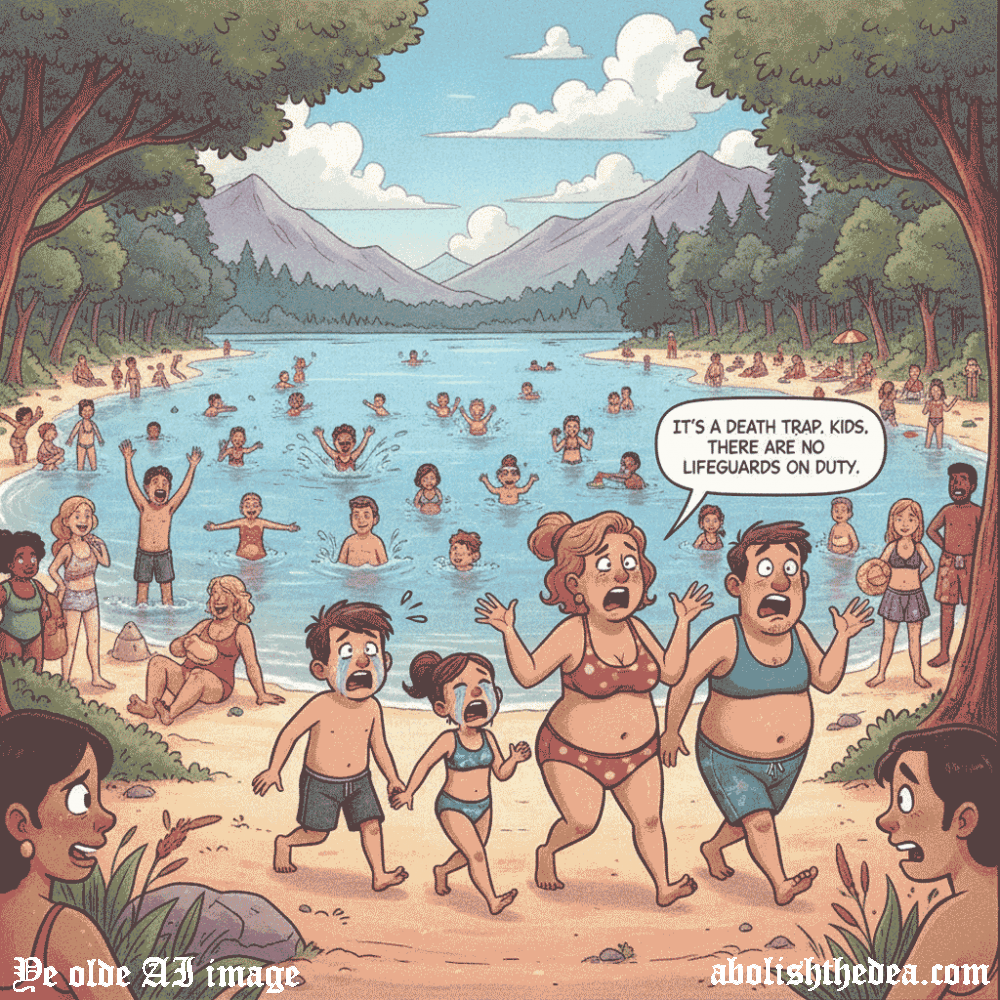
Americans hold drug use to safety standards that they would never think of applying to any other risky activity on Earth, like swimming in a local lake, for instance. I have satirized this inconsistency by creating the Partnership for a Death Free America1, in a spirit of mockery and contempt for the Partnership for a Drug Free America, the nonprofit organization which blatantly lied to Americans in the 1980s about drugs frying the brain, the Big Lie that they spread using our own tax money. All those responsible for such ads ever seeing the light of day should be prosecuted for willfully misleading Americans at taxpayer expense. Those ads were sheer propaganda. But after we finish giving the purveyors of lies their just comeuppance, we must ask ourselves the following question: "Why would Americans believe such rubbish in the first place?" Not only do many drugs focus the brain and improve cognition, but the category of "drugs" is vast when it comes to the disparate effects that they produce. To generalize about drugs is like generalizing about animals, as who should say, "Oh, don't go near those dreadful animals, Doris. They're nasty, I tell you! It gives me the shivers just to think about them!" If someone talked like that to us, we would ask them to be a little more specific, to drill down a little for us, at least to the family level of Linnaean taxonomy, to indicate wherein their aversion actually lay. Yet if someone tells us that drugs are evil, we say to them, "Oh, I know what you mean, Mabel," or whomever. "I hate them just as much as you do, if not more!"

The question is, how can Americans and other westerners have this dismissive viewpoint about a vast and potentially limitless category of psychoactive substances about which they know less than nothing -- I say "less than nothing" because the "facts" that they do know inevitably turn out to be misrepresentations, half-truths and lies. These are, after all, the kinds of substances that Mesoamericans have been surrounded by for thousands of years. They have managed to live with these "drugs" without ever having been known to recoil in horror at finding themselves so situated. They never said things like: "Oh, dear, Juan, it just occurred to me: we are absolutely surrounded by powerful psychoactive substances in this rainforest of ours, substances that junior could theoretically get ahold of and use without so much as a 'by your leave' from the tribal chieftain, to say nothing of ourselves, his own native-born parents!" Why are these substances so scary to the westerner then? Why do they fear them so much more than the local lake, that three-mile-long death trap without so much as one single lifeguard to ensure the safety of their nearest and dearest?

To answer this question, let us consider the following Substack post by Dr. Roger McFillin. It expresses a sentiment that is shared by most healthcare professionals on the platform, the idea that drug use is pointless from a therapeutic point of view, not just for professional themselves, but for the depressed whom they claim to be representing and helping.

The only evidence-based antidepressants: Love, community, purpose, nature, kindness, exercise, sex, nutrition, sun, learning, friendship, health, faith, spiritual connection, achievement, acts of service, helping, inspiration, creativity, meditation, prayer. 2
Dr. Roger McFillin

The key words here are "evidence-based." As far as the good doctor is concerned, a drug only works when a scientist tells us that it does so, thank me very much. Patients like myself can think whatever they want to think, but only doctors know what's REALLY working for us and what therefore counts as a real antidepressant. It does not matter if laughing gas makes me laugh despite the fact that I had been considering suicide just 30 minutes prior to use. That doesn't make that gas an antidepressant. I may think that its use helped me relax and get a new perspective on life, but scientists will be the judge of that. Only a scientist can prove that perception of mine to be a fact, after all. And suppose I were to claim that the ingestion of a phenethylamine dramatically increased my empathy for the nonce and made it possible for me to chat with a dejected person whose very existence I would have failed to notice in a "sober" state. We talked to one another about all sorts of psychological home truths, exchanged email addresses, and began communicating on an ongoing basis, sharing our hopes and fears and dreams. Did that phenethylamine work as an antidepressant? Nonsense, says our healthcare professions. Such benefits are not evidence based, they're just anecdotal. A real antidepressant is one that a scientist has proven to be effective, not one that merely "works." Any drug could "work." Only scientists can tell us if a drug REALLY works.

As Poe's narrator glibly observes in response to the metaphysical ravings of his high-strung friend, Roderick Usher:

Such opinions need no comment, and I will make none.


This is why American parents can tolerate zero risk when it comes to drug use. It's because they have been hoodwinked by Christian Science propaganda from their own healthcare professionals into believing that godsend medicines, some of which have inspired entire religions, can have no positive uses for anybody, anywhere, ever -- that to the contrary, such substances can only cause death and dying. Yet that attitude is silly. It is exactly like saying that Lake Laura is not a swimming hole but a death trap. It is like saying that there are no benefits to swimming there without oversight, that we should all stay home like agoraphobics rather than venture out under dangerous conditions like that. Sunshine and good times are all well and good, but not at the risk of losing our loved ones. Sunshine and good times are all well and good, but not at the risk of losing our loved ones. At least this is the conclusion that parents would draw if they were equal opportunity worrywarts and not simply conditioned to freak out about the potential threat posed by psychoactive drugs alone in contradistinction to every other potential threat under the sun.


Notes for essay entitled A Deep Dive into Drug War Hypocrisy: What lifeguard-free beaches tell us about America's attitude toward psychoactive substances:

1: Partnership for a Death Free America DWP (up)
2: Substack. 2026. “Dr. Roger McFillin.” Substack.Com. 2026. https://substack.com/@drmcfillin. (up)


read more essays here


Ten Tweets

against the hateful war on US


The Drug War shows us that American democracy is fundamentally flawed. Propaganda and fearmongering has persuaded Americans to give up freedoms that are clearly enunciated in the U.S. Constitution. We need a new democracy in which a Constitution actually matters.

"If England [were to] revert to pre-war conditions, when any responsible person, by signing his name in a book, could buy drugs at a fair profit on cost price... the whole underground traffic would disappear like a bad dream." -- Aleister Crowley

An Englishman's home is his castle. An American's home is a bouncy castle for the DEA.

They drive to their drug tests in pickup trucks with license plates that read "Don't tread on me." Yeah, right. "Don't tread on me: Just tell me how and how much I'm allowed to think and feel in this life. And please let me know what plants I can access."

Peyote advocates should be drug legalization advocates. Otherwise, they're involved in special pleading which is bound to result in absurd laws, such as "Plant A can be used in a religion but not plant B," or "Person A can belong to such a religion but person B cannot."

I've found that no one thinks I "have standing" when I comment about drugs. I'm just a guy who's been turned into a patient for life thanks to drug prohibition. People think that the real experts are the doctors and scientists who profit from the status quo.

Almost every mainstream article about psychology and consciousness is nonsense these days because it ignores the way that drug prohibition has stymied our investigation of such subjects.

Cop and detective shows are loaded with subtle drug war propaganda, including lines like, "She had a history of drug use, so..." The implication being that anyone who uses substances that politicians hate cannot be trusted.

Prohibitionists have nothing to say about all other dangerous activities: nothing about hunting, free climbing, hang-gliding, sword swallowing, free diving, skateboarding, sky-diving, chug-a-lug competitions, chain-smoking. Their "logic" is incoherent.

Drug Warriors never take responsibility for incentivizing poor kids throughout the west to sell drugs. It's not just in NYC and LA, it's in modest-sized towns in France. Find public housing, you find drug dealing. It's the prohibition, damn it!


Click here to see All Tweets against the hateful War on Us


back navigation arrow forward navigation arrow
Book Cover

Break the ice with a sledgehammer: place this book on your coffee table.

This book features 150 annotated images, designed to force brainwashed Americans to confront the fact that drug prohibition is wrong. Here is what author Richard Parrish II says of the book's compiler: "The drug prohibition philosopher provides first-hand, principled, persuasive, and insightful arguments against the current drug prohibition regime..."

Purchase Your Copy
Book Cover

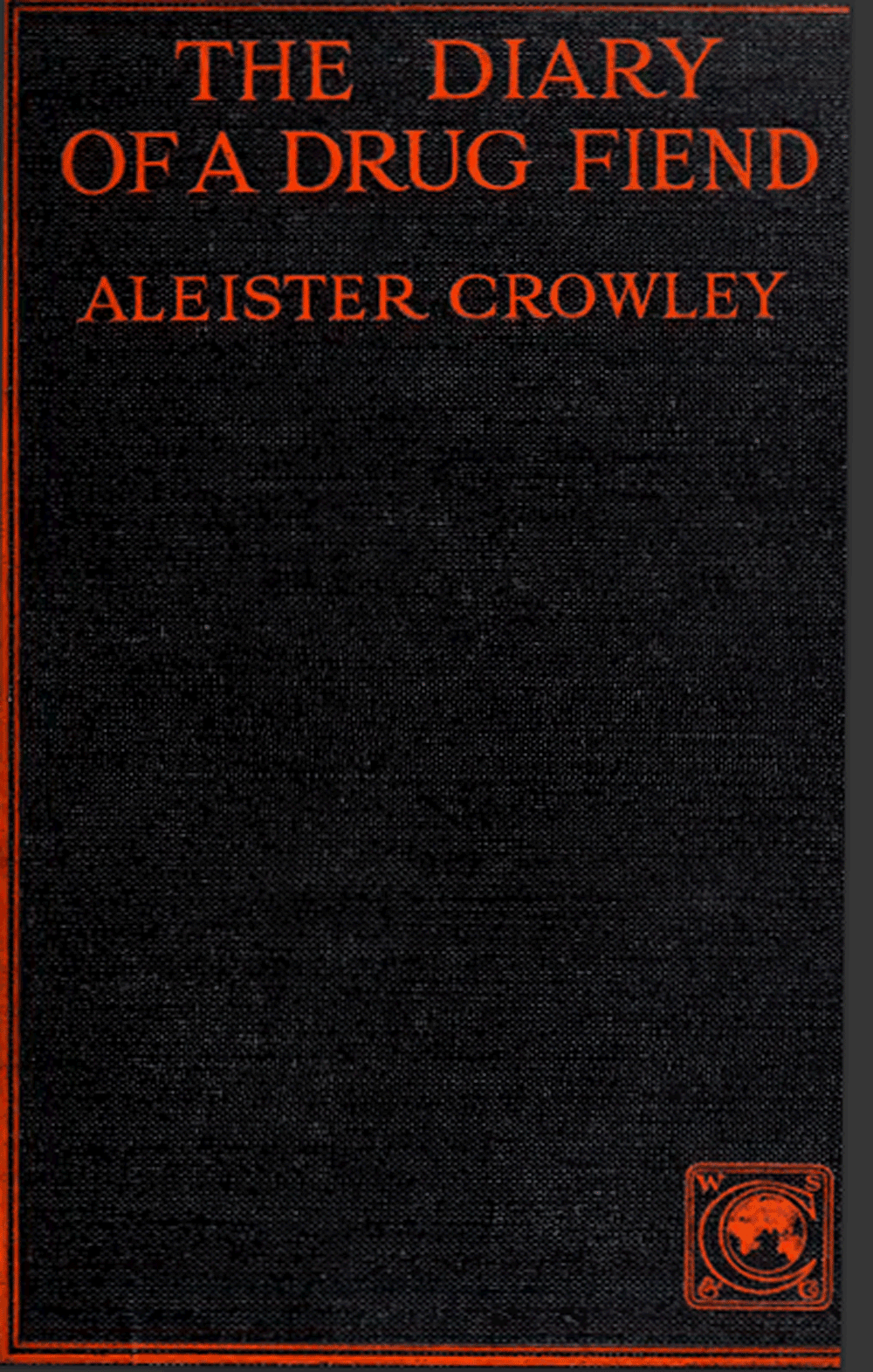
Diary of a Drug Fiend

This is the only full-cast recording of Aleister Crowley's 1922 classic paeon to common sense. It is the first book -- and so far almost the only book -- to stake out a philosophy of drug use that is compatible with human freedom, one in which we learn to use drugs as wisely as possible for the benefit of humanity. This recording was produced by the Drug War Philosopher and your purchases help support his effort to push back against the tragically counterproductive policy of drug prohibition, in the name of human freedom and of humanity's right to heal.

Purchase Your Copy


No cookies, no ads paid for by amoral and immoral billionaires (or trillionaires).


Unless otherwise indicated, no AI is used in the creation of site content. These essays represent the original ideas of their author and not the ideas that the author SHOULD have based on an algorithmic parsing of existing data. For more on this subject, consider the AI-related viewpoints to which the author subscribes as delineated in the New York Times opinion piece entitled "What 370,000 College Essays Tell Us About A.I.’s Effects on Creativity" by Rebecca Winthrop of the Brookings Institution.

The Partnership for a Death Free America is a proud sponsor of The Drug War Philosopher website @ abolishthedea.com.


Copyright 2026, Brian Ballard Quass Contact: quass@quass.com

tombstone for American Democracy, 1776-2024, RIP (up)