




Homepage of the Drug War Philosopher, Brian Quass
blog icon orange rss icon with stylized radio waves bird icon for twitter bird icon for twitter substack icon


back navigation arrow forward navigation arrow


Ayahuasca's Effects on Westerners

concerning my first experience on 'The Medicine'

by Brian Ballard Quass, the Drug War Philosopher

October 21, 2024


The most surprising part of my ayahuasca retreat came about when the 30 or so participants attempted to explain their experience in the integration session in the morning after having imbibed the medicine the night before. I never suspected that one substance could have such diverse effects on a group of what I took to be 'everyday people.' Practically everyone had had a very different experience to report from that of their neighbor. One felt nothing except for an upset stomach. Another had psychedelic visions but of a very negative kind indeed. Yet another reported that she existed in a state of absolute bliss thanks to ayahuasca. A fourth said she had heard the voice of her deceased grandmother consoling her. Another said he felt a sense of great power. Another that she cried throughout the experience, but that they were tears of wistful joy. And yet another reported that he had screamed loudly and insistently, an outburst that I well remembered and thanks to which I thought for a few minutes that the entire retreat was going to be shut down by the materialist police at any moment.

These accounts all differed from my own exciting but peaceful experience, in which I saw multicolored circus scenes that were eternally morphing into new arrangements, and threatening at any moment to reveal the ringleader, whom I sensed to be a female who was hiding chameleon-like beneath the intricate geometrical patterns, her facial features occasionally becoming clear at the corner of the scene, as if she were peeking at me from behind her colorful handiwork. I took this surreptitious surveillance on her part to mean: 'I've got more to teach you if you will only come closer. That's it, just let yourself go, and I can show you so much more!' It was an enticing offer, but it was worrisome at the same time, since her initially alluring grin would occasionally morph into something less friendly, in which she seemed to be laughing at me and not with me. This reminded me of the trickster god of the American Southwest or of the notoriously equivocal verdicts of the Oracle at Delphi. (By 'multicolored,' I do not mean to say that one perceived object was red, another blue, and yet another green. All discernible objects, or even mere points thereof, were pulsing with light and emitting a rainbow of luminescence, thanks to which the picture as a whole made one think of a house at Christmastime for which the homeowner is spending a fortune on electricity with the express goal of catching the attention of passersby. In other words, I could easily see why Terence McKenna 1 called ayahuasca 'the television of the rainforest.')

But the biggest takeaway for me was the sheer malleability of reality - how any existing arrangement could be morphed with the help of an inspired mind into something uplifting and powerful. I found that I could control what I was seeing, at least to some extent, by mere willpower, by merely WILLING to see THIS rather than THAT. There was a small framed picture at the retreat whose caption caught this feeling I was having with the words 'Thought becomes things.' I think that this is what the guy probably meant when he said that ayahuasca gave him a sense of power. It takes our existing reality and does all sorts of fancy tricks with it, like a magician turning our handkerchiefs into endless novel shapes and patterns - thereby implicitly telling us: 'Hey, you can make your own reality, you do not have to accept the definitions of others.'

This would surely not have been the takeaway message for ritual use of ayahuasca by Andean tribespeople themselves, but perhaps it is inevitable that a westerner, raised in the values of humanism, would read the medicine-inspired message in this way.

More about my experience

During the beginning of the intoxication phase 'on ayahuasca,' I made an observation that I am sure Joseph Campbell would have appreciated:

It was not just myself personally who was dragging his feet and trying to avoid taking the ayahuasca medicine seriously: I felt the weight of the entire western colonialist mindset bearing down on me, trying to keep me from 'going native.' I was a westerner after all, shouldn't I behave like one? And yet if I wanted to take my experience to the next level, if I wanted to hear from the Goddess herself and not just look at her organically stylized face, I felt that I needed to stand up and move to the pounding percussion and live the experience fully in bodily action - which would be a response so unusual for me as an introvert that I would no doubt have needed to get to know my neighbors far more intimately before thus engaging with the medicine on that more visceral level. Besides, the retreat was really not organized in a way that would encourage such self-expression. We were free, at least in theory, to stand and dance, but the floor was crowded with attendees, each on their own sleeping pad, each of whom had their own private vomit bucket within reach, and the last thing I wanted to do, even in my intoxicated state, was to knock over one or more of these buckets and thus dampen the experience for others in more ways than one.

True, we were invited to go out back, where there was a bonfire surrounded by candles which delineated a safe area for congregating, but it was a frosty night and so the few who took that option quickly made a beeline for the fireside camping chairs.

Some other revelations 'on ayahuasca'

I felt at some point that the music WAS the drug. When the music ceased temporarily, I started entertaining sober thoughts... but when the drums, flute and guitar kicked in again, with the powerful Spanish-language vocals of curandero Taita Jhon, I felt like I was being given another 'shot of the drug.' As the drums crescendo'd, the medicine's effects rose inside me as well. The music WAS now the drug itself and its effects could be turned on and off - and/or directed - by the musicians themselves.

One other observation

The vividness of the visuals increased dramatically in the process of purging, that is, as I was throwing up into the cot-side bucket provided for that purpose. In the process of doing so, I saw (or sensed) a highly stylized smiling face looking on approvingly amidst a background of complex leaflike imagery. It was as if the goddess (if I may give her that appellation at least provisionally) was pleased to see that I was 'playing ball' and was more than ready to reciprocate by supplying potentially educational visions, tailored, apparently, to my own personality -- given the previously stated fact that no two attendees seem to have experienced the same thing while under the influence of 'the medicine.'


Notes:

1: McKenna, Terence. 2026. “History Ends in Green.” The Library. 2026. https://www.organism.earth/library/document/history-ends-in-green. (up)


read more essays here


Ten Tweets

against the hateful war on US


Ann Lemke's case studies make the usual assumptions: getting free from addiction is a morality tale. No reference to how the drug war promotes addiction and how banned drugs could solve such problems. She does not say why daily SSRI use is acceptable while daily opium use is not. Etc.

Drug Prohibition is a crime against humanity. It outlaws our right to take care of our own health.

The Cabinet of Caligari ('62) ends with a shameless display of psychiatric triumphalism. Happy shock therapy patients waltz freely about a mansion in which the "sick" protagonist has just been "cured" by tranquilizers and psychoanalysis. Did Robert Bloch believe his own script?

That's the problem with prohibition. It is not ultimately a health question but a question about priorities and sensibilities -- and those topics are open to lively debate and should not be the province of science, especially when natural law itself says mother nature is ours.

If they're going to throw doctors in jail for prescribing too much pain medication, they should also throw them in jail for prescribing too LITTLE.

This is the "Oprah fallacy," which has led to so much suffering. She told women they were fools if they accepted a drink from a man. That's crazy. If we are terrified by such a statistically improbable event, we should be absolutely horrified by horses and skateboards.

Had the FDA been around in the Indus Valley 3,500 years ago, there would be no Hindu religion today, because they would have found some potential problem with the use of soma.

It is folly to put bureaucrats in charge of second-guessing drug prescriptions: what such bureaucrats are really doing is second-guessing the various philosophies of life which are presupposed by the way we use psychoactive drugs.

Any self-respecting mycologist should denounce the criminalization of mushrooms.

The government causes problems for those who are habituated to certain drugs. Then they claim that these problems are symptoms of an illness. Then folks like Gabriel Mate come forth to find the "hidden pain" in "addicts." It's one big morality play created by drug laws.


Click here to see All Tweets against the hateful War on Us


back navigation arrow forward navigation arrow
Book Cover

Break the ice with a sledgehammer: place this book on your coffee table.

This book features 150 annotated images, designed to force brainwashed Americans to confront the fact that drug prohibition is wrong. Here is what author Richard Parrish II says of the book's compiler: "The drug prohibition philosopher provides first-hand, principled, persuasive, and insightful arguments against the current drug prohibition regime..."

Purchase Your Copy
Book Cover

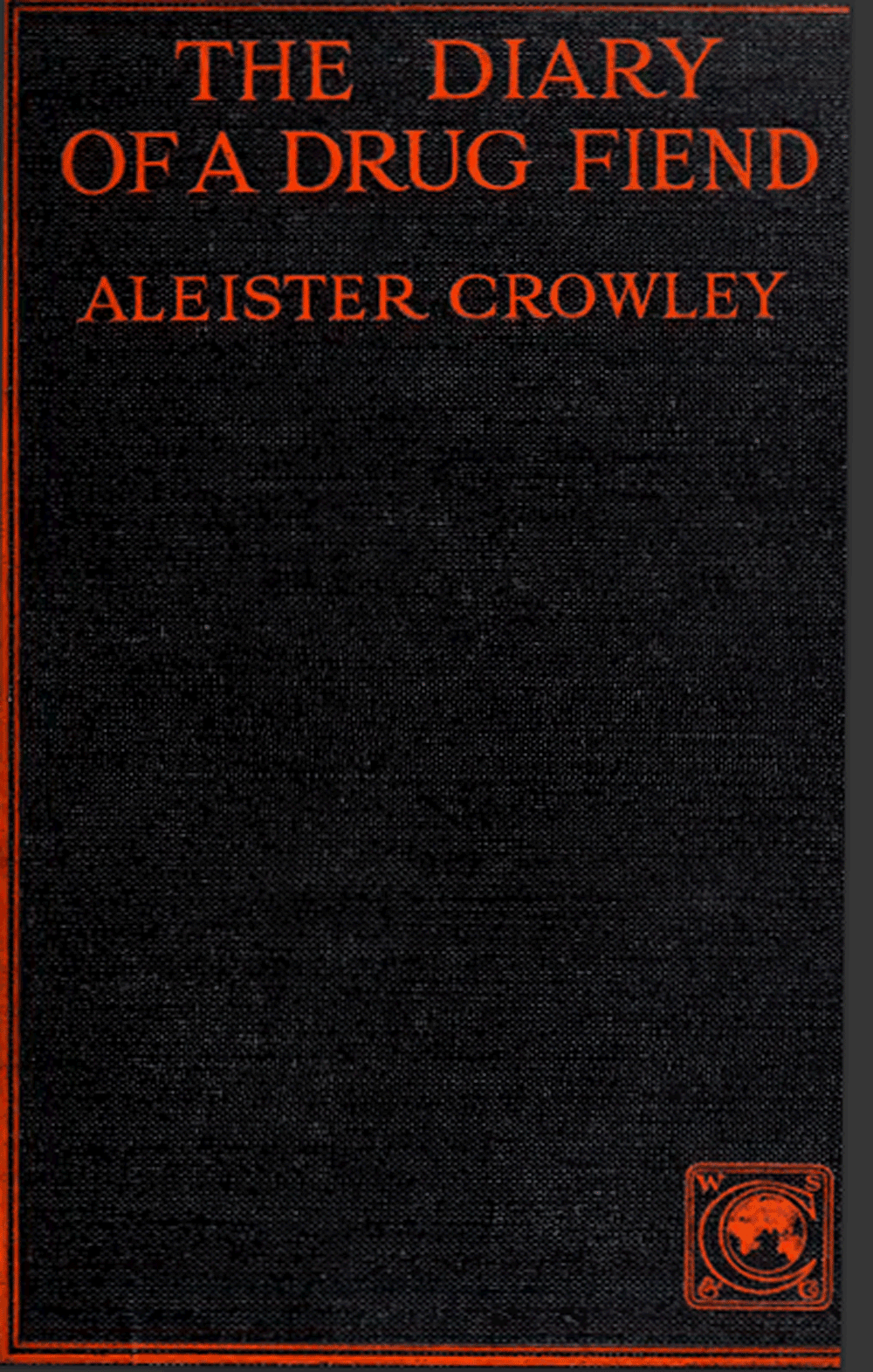
Diary of a Drug Fiend

This is the only full-cast recording of Aleister Crowley's 1922 classic paeon to common sense. It is the first book -- and so far almost the only book -- to stake out a philosophy of drug use that is compatible with human freedom, one in which we learn to use drugs as wisely as possible for the benefit of humanity. This recording was produced by the Drug War Philosopher and your purchases help support his effort to push back against the tragically counterproductive policy of drug prohibition, in the name of human freedom and of humanity's right to heal.

Purchase Your Copy


No cookies, no ads paid for by amoral and immoral billionaires (or trillionaires).


Unless otherwise indicated, no AI is used in the creation of site content. These essays represent the original ideas of their author and not the ideas that the author SHOULD have based on an algorithmic parsing of existing data. For more on this subject, consider the AI-related viewpoints to which the author subscribes as delineated in the New York Times opinion piece entitled "What 370,000 College Essays Tell Us About A.I.’s Effects on Creativity" by Rebecca Winthrop of the Brookings Institution.

The Partnership for a Death Free America is a proud sponsor of The Drug War Philosopher website @ abolishthedea.com.


Copyright 2026, Brian Ballard Quass Contact: quass@quass.com

tombstone for American Democracy, 1776-2024, RIP (up)