What America's class of 2026 can tell us about AI and drug prohibition
by Brian Ballard Quass, the Drug War Philosopher
September 11, 2026
When Eric Schmidt received boos for mentioning AI this year in his commencement address at the University of Arizona, it told us something about how drug prohibition will finally come to an end. Someday the disconnect will become so great between the ideas of the mainstream and those of the hoi polloi on this subject, that we will finally have a watershed cultural moment like that which occurred in Arizona this summer. Someday, some famous commencement speaker is going to mention the subject of drug prohibition just in passing and a sizable percentage of the audience is going to boo -- and the speaker will be just as taken aback as was Eric Schmidt in Arizona, or Gloria Caulfield in Florida, or Scott Borchetta in Tennessee, when their uncritical references to AI elicited boos from their respective audiences.
For more enlightenment on this topic, let us take a close look at the relevant portions of the 2026 commencement addresses of the latter trio, as highlighted by the following video clip posted on YouTube by the PBS NewsHour: "2026 graduates boo commencement speeches on AI." 1 After philosophically parsing the transcript of that video below, I will conclude this essay by explaining what drug prohibition has to do with the concerns raised by United States college grads about artificial intelligence.
Eric Schmidt
University of Arizona
The address by the ex-CEO of Google started out innocently enough.
Last December, Time magazine selected its Person of the Year for 2025.
So far, so good. Eric is following "best practices" here when it comes to choosing an opening line. He's got the kids' attention. They are all now asking themselves: "Who is this 'person of the year' of whom Eric is speaking?'" The problem was, of course, that Eric was assuming that the answer to that question would be uncontroversial.
This time, it was the architects of artificial intelligence. [booing] Interesting.
Interesting, indeed. Of course, what’s really interesting here is the fact that the audience is booing a statement that the speaker clearly considered to have been non-problematic, if not positively laudable. Nor has Eric fully grasped what‘s going on here yet. Taken aback by the heckling, he soldiers on as follows, loftily informing the seniors that:
Today we stand on this edge of another technological transformation, one that will be larger, faster, and more consequential than what came before. It will touch every profession, every classroom, every hospital, every laboratory, every person, and every relationship you have. [booing]
Every use of the word "every" in that latter sentence was a knife thrust directed at his audience's sensibilities. He was basically confirming his audience's worst fears: that AI was going to follow them to the ends of the earth, wherever they might go, and that they might as well make their peace with that fact, as if AI were a law of nature rather than a human creation, a fait accompli that was totally insusceptible to control by democratic institutions.
But Eric soon saw which way the wind was blowing. He realized that the address that he was giving was not sitting well with his auditors. He realized that it was time to go off-script.
I know what many of you are feeling about that. I can hear you.
So far, so good. Eric was now speaking to his real audience rather than the audience that he had imagined that he would be addressing today. This was not an audience full of would-be entrepreneurs eager to become one of the statistically rare winners as Silicon Valley introduces us to "the next big thing"; this was an audience with a whole different definition of the word "progress." Eric was going to have to think on his feet to win this audience -- or even to fight it to a draw. Unfortunately, ad-libbing is a risky strategy at the best of times, and Eric was already off-balance thanks to the totally unexpected pushback. But what could he do? Having committed to going off-script, Schmidt now had no way out but through.
If you don't care about science, that's OK, because AI is going to touch everything else as well. [booing] Whatever path you choose, AI will become part of how work is done.
Oh, Eric! Talk about adding fuel to fire. Schmidt is now telling his audience that they won't be able to get away from AI even if they wish to -- so there! -- and that those who wish to do so are uneducated Luddites, into the bargain! One can no doubt parse the above sentences less harshly, of course, but this would seem to be the message that Schmidt was conveying from the point of view of the disgruntled Arizona grads in attendance that day: "you can like it or lump it, kids, but AI is here to stay." The boos were rising before the speaker had even finished firing the first of these two uncompromising salvos.
Gloria Caulfield
University of Central Florida
One can only guess how far real-estate maven Gloria Caufield had proceeded in her address to the grads of UCF before she managed to pluck their last and final nerve with a reference to AI. (Well, one can only guess if, like myself, they are too lazy to search the web for longer versions of the address in question.) But she was clearly in full stride, warming up to her subject matter, when she unwittingly threw the following clinker into the works.
The rise of artificial intelligence is the next industrial revolution. [booing]
Oops, there it is. Gloria backed away from the podium as if dazed. She turned to her right and pointed, presumably at the master of ceremonies, as who should say, "It's not just me, is it? Does everybody else see how unreasonably I am being treated up here?"
To do her credit, Gloria was smiling broadly during this mute appeal to the wings for self-validation. She was trying to take things in stride, determined to find the humor in the situation. In fact, I felt sorry for her, for she was obviously a trifle nervous about giving the speech to begin with, a fact that made me wish that fate had chosen another professional role model to be the lightning rod for the student's contempt, however justified their grievances may have been when considered in the abstract. Yet she was not going to give up, not she. She soon returned to the mike, determined to continue, but still looking disoriented, as if she had just risen from a boxing ring after the ref had come dangerously close to counting all the way to 10.
[booing] What happened? Okay, I struck a chord.
Well done by Gloria here. Like Eric Schmidt, she acknowledged the student pushback, rather than attempting to simply bulldoze through it in solipsistic ignorance, thereby leaving a host of disaffected casualties in her wake.
May I finish? [booing]
By asking this question, Gloria revealed her intention to go on with her original address already in progress, notwithstanding the audience pushback. She had written the thing, and by golly, she was going to use it. And you can hardly blame her. Adlibbing is risky business, as Eric's speech at the University of Arizona has demonstrated. Foots can end up in mouths when words are chosen by a nervous and distracted speaker. Unvetted phrases are subject to misinterpretation. One can dig oneself in deeper in an attempt to extract oneself from a hole. The only problem is that Gloria's original speech was predicated on the inevitability of the AI monolith conquering all, which just happens to be the very assumption with which her audience was taking issue.
Only a few years ago, AI was not a factor in our lives. [cheering]
Poor Gloria. You know that you're in trouble as a speaker when your audience starts cheering where they should be booing and vice versa.
All right. Okay. We've got a bipolar topic here, I see. Okay.
Surely there was at least one friend of Gloria's in the audience who could have apologetically walked on stage at this point, in imitation of some backstage flunky fixing an audio problem, and discretely handed the speaker a note reading: "Ix-nay on the AI-yay."
And now, AI capabilities are in the palm of our hands. And... [booing]
Well, what can Gloria do? Her speech was all about the technology whose name must not be spoken!
Oh, I love it. Passion. Let's go. Okay.
Good for you, Gloria. When all else fails, try to convince your audience that you are on their side, at least in a sort of roundabout way, as regards their general impulses. Remind them that you yourself were once on the qui vive for false narratives.
Scott Borchetta
University of Tennessee
Social media rewrote the discovery model. AI is rewriting production as we sit here. [grumbled dissent]
Like Eric and Gloria, Scott was clearly blindsided by this disapprobation. Unlike them, however, he fired back, albeit not necessarily in a way that would endear him to his critics.
I know it. Deal with it.
Ouch. Read out of context, this is a very blunt comment indeed, Scott, nay, even a callous one. Thank goodness you then went on to humanize that statement with the following addenda.
Like I said, it's a tool.
That's more like it, Scott.
You can hear me now or you can pay me later.
As Cordelia said of the dazed King Lear when he was mumbling nonsense on his deathbed: "Still far wide!" Such words are not well calculated to inspire assent, Scott. Indeed, that latter statement of yours could even be read as a threat. "What's he trying to tell us," demands the graduating malcontent on behalf of his be-tassled cronies, "that the AI-powered movers-and-shakers are going to bleed us dry if we don't bother to get wise to the algorithmic shenanigans that they will be playing on us in the future?!"
Then do something about it, okay? It's a tool. Make it work for you.
Ah! That's more like it. This is the record-producing NASCAR racer that we've all come to know and love. Leave it to Scott to light a candle instead of cursing the darkness. And yet my heart misgives me, as the poet says. Can Scott really assure us that we can actually make AI work for us personally in the long run? I wonder. Why, it was just three days ago that Anthropic's Evan Hubinger warned humanity in a post on X that we had a 1 in 10 chance of being killed off entirely by AI within ten years. A one in ten chance. If those odds are anywhere close to reality, then surely we have no business using AI in the first place, Scott. To the contrary, we would have a moral duty to be shutting AI down even as we speak. But then maybe this talk of doomsday is all just hype. If Evan Hubinger really believed his own post, he would surely have already taken matters into his own hands by using a sledge hammer to deliver a series of strategically-placed blows to Anthropic infrastructure.
This brings me to the subject of responsibility. All of these prophecies of wrack and ruin are being predicted by the developers of AI themselves. They talk about the bad things that AI could do. AI could do this, AI could do that. They seem to be implying that they cannot be held accountable for what their systems do once those systems reach a certain level of complexity. That is simply wrong -- or at least it should be wrong. If companies like Anthropic build systems that they cannot control, that is a problem with Anthropic, not with AI. Suppose I were to write a complicated program for your wired house and the house started slamming doors in your face and turning on the dishwasher at 3 in the morning and nagging you about health matters instead of showing you commercials on television. Would I be excused from culpability because I told you that the program that I wrote for you was too unwieldy to be controlled should it once go awry? No, the coder is always to blame in such cases. It follows as corollary that no level of complexity should be added to any program that would make that program uncontrollable. We can and must do without topnotch AI if topnotch AI implies the existence of a complex system that is beyond the ability of humanity to control. We need search for no arbitrary limit for AI, other than to demand that the software always be susceptible to meaningful control.
This is just a reiteration of a basic law of civilized societies, one that is epitomized by the idea that one is responsible for the actions of their own dog. If a dog runs amok, bites the local children and urinates on Old Lady Finchley's prize poinsettias, then the owner is to blame. Just so with AI. Should AI run amok and destroy the human race, this will not be some inevitable catastrophe wrought by the autonomous whims of artificial intelligence, it will be a result of the immoral creation of software code that was inherently beyond the ability of human beings to control. But here we must somewhat arbitrarily end our discussion of AI and responsibility. This is because a full discussion of this topic would necessarily involve issues of geopolitics and would therefore be well outside the scope of this essay. Suffice it to say here that countries like China and Russia will be and are creating their own versions of AI. Even if democratic nations reign in their own AI projects in the interests of humanitarian values, it's not clear that other nations will do so, although one would hope that all nations would agree to put the survival of the human species ahead of all other political considerations whatsoever.
CHALLENGING TECH ASSUMPTIONS ABOUT HAPPINESS
The sirens of inevitability who were giving the graduation addresses in America this year were ignoring one simple fact: that there are cultures that can and do live without AI. It is actually possible to do so, and not just in a spirit of self-interested Ludditism, either. The Guna people of Panama won their right to maintain their tech-scorning lifestyle in 1925. They insisted on a lifestyle based on tradition, self-sustainability and a respect for nature. Were the Internet to shut down at this very moment, most of the Guna people would be unaware of the fact. And this ability to be happy without possessing "the next big thing" can be demonstrated on the personal level as well. I never thought of myself as uncomfortable as a child when visiting my grandmother's house in northern New Jersey in the summer despite the fact that the house lacked air-conditioning. Why not? Because I had never experienced air-conditioning. Give me a fan and a glass of lemonade back then, and I was "good to go." From such facts, we can derive a general conclusion: that technological improvements never increase the amount of happiness on an absolute scale; their adoption by societies and individuals merely alters the contents of the list of what those countries and persons consider to be the necessary preconditions for happiness, thereby rendering them happy or sad in proportion as they possess or lack those appurtenances.
THE ASSUMPTIONS OF TECHIES
The complaints of today's college graduates reminds us that the assumptions behind the hands-off status quo mindset of Silicon Valley toward Artificial Intelligence are highly debatable. Is AI hegemony really inevitable? Does democracy itself have to hand over the reins to AI, this despite the fact that the government is helping to finance the data centers that are poised to render the government superfluous? And then there are the questions that we should have started asking back in the days of cathode-ray iMacs and Bulletin Board Systems: is "efficiency" really the summum bonum in life? Do we really have to create technologies just because they are technically feasible and practically possible? Many moralists have covered the above territory before, warning us about the dangers of vanity, about the elusive nature of happiness, and about the ultimate uselessness of mere "things." Humanity has learned such lessons through the ages from such thinkers as King Solomon, Confucius, Seneca and Marcus Aurelius. But here's where the subject of "drugs" comes into the frame.
Such leaders have never openly acknowledged the role that psychoactive substances could play in making us take the truly "long view" when it comes to living; few of them have ever stated what turns out to be obvious for any person who has been so brazen as to actually read about drug effects rather than to confine their knowledge to the propaganda provided by government and a self-interested medical establishment: namely, the fact that the wise use of drugs can fast-track the improvements that these sages would have us acquire by dint of years and years of hard effort. I should point out that Marcus Aurelius was hypocritical in this regard, insofar as he was a fan of opium and might have done well to say so in his Meditations. If I myself could take but a few pulls on an opium pipe on a daily basis, it would clearly take my mind off any deprivations that I might find to be attendant upon adherence to a stoic lifestyle. But then Marcus lived well before it was customary to define people based on the substances that they had in their bloodstream. In his day, a person was judged by how they actually behaved in life. Little time was spent in an attempt to link the personality traits of one's fellows with the ingredients that they may or may not have ingested over the previous 24 hours of their life. One actually judged the person in those days, not their biochemistry.
Take myself, for instance. I feel no need to tell the reader that I imbibed a cup of Food Lion coffee this morning with a shot of agave syrup, and yet we can imagine a caffeine-hating age in which that confession would be seen as a regular eye-opener, with a reader of that era saying to themselves as they nodded their head knowingly: "Ah, I thought so, the rogue!" Of course, I am forever reminding the reader that I am "on" the dependence-causing "med" called Effexor, but I only do that in order to remind them of the idiocy of drug prohibition, a social policy which "saved me" from a godsend drug that even Freud himself knew would cure my depression, only to shunt me off onto an underperforming Big Pharma "med" which turned out to be harder to kick than heroin. The result: drug prohibition saved me from drugs by turning me into a drug user for life. Thanks for nothing, guys.
CONCLUSION
This is the point where I must compact the disparate insights that I have made above into a pithy takeaway message for the reader, and I don't mind telling you that I am finding it hard to do so. I have traipsed all around the barn in my effort to make hay out of the Senior Class Uprising of 2026 and now I am having to pay the price for that eclecticism. Perhaps the best exit strategy is to speculate on the meaning the the AI pushback in the hope of provoking follow-up discussions. Let us suppose then that the students' antipathy to AI represents a long-overdue protest against the self-interested fatalism of the Big Data pundits, the idea that if something can be done with AI technology, it should be done, it must be done, and what's more it will be done, no matter what we carbon-based life forms may think about it. Let us further suppose that the grads were telling the world that they did not want to be led off a cliff by the Pied Piper of Technology on the vague understanding that they were coming to some sort of ill-defined paradise up ahead. Let us finally suppose that they were telling the mainstream pundits, "You can no longer distract our attention from the job-busting power of AI by addicting us to free but time-wasting apps in the Google Play Store and talking about the future like a wild-eyed millennialist." Suppose, in short, that the 2026 graduates were finally getting in touch with the most basic of truths: namely, that flesh and blood are more important than chips and microprocessors.
AFTERWORD
Unfortunately, I can never leave well enough alone. Despite being a sucker for happy endings, I feel obliged to take this essay one step further. It will be remembered how I argued above that attitude is what ultimately matters in life, the way that we see and think about the world? Well, here's the thing. It follows from that conclusion that drug prohibition is the most grievous form of social control that a government can possibly devise for its people. Think about it. Thanks to drug prohibition, the government controls how and how much you can think and feel in this life. Maybe there are readers out there who can shrug that injustice off (probably just before reaching for another beer), but this is an unconscionable wrong in my view. As I've said before, I would rather live in a lousy economy and have a good attitude toward life than live in a highly efficient economy and wish that I were dead. To quote one of the many long-forgotten number-one pop hits of the musically challenged 1970s: "Take my heart, my soul, my money, but don't leave me here" with no psychoactive medicines whatsoever other than alcohol, cigarettes, coffee and these dependence-causing Big Pharma "meds" that have turned me into a ward of the healthcare state. Of course, I don't claim that the disgruntled graduates of 2026 would follow my arguments all the way to this prohibition-bashing conclusion, but I do claim that their willingness to speak truth to power on the subject of AI bodes well for their eventual ability to do just that.
Notes for essay entitled Booing Eric Schmidt: What America's class of 2026 can tell us about AI and drug prohibition:
Drug testing labs are the modern Inquisitors. We are not judged by the content of our character, but by the content of our digestive systems.
America takes away the citizen's right to manage their own depression by making opium and cocaine illegal. Then psychiatrists treat the resulting epidemic of depression and anxiety by damaging the patient's brain with shock therapy.
Prohibitionists have blood on their hands. People do not naturally die in the tens of thousands from opioid use, notwithstanding the lies of 19th-century missionaries in China. It takes bad drug policy to accomplish that.
It is evil to give the depressed drugs to help them die while barring them from using drugs that could make them wish to live.
The Drug War is based on a huge number of misconceptions and prejudices. Obviously it's about power and racism too. It's all of the above. But every time I don't mention one specifically, someone makes out that I'm a moron. Gotta love Twitter.
Why does no one talk about empathogens for preventing atrocities? Because they'd rather hate drugs than use them for the benefit of humanity. They don't want to solve problems, they prefer hatred.
Someday the world will realize that Freud's real achievement was his discovery of the depression-busting power of cocaine.
If MAPS wants to make progress with MDMA they should start "calling out" the FDA for judging holistic medicines by materialist standards, which means ignoring all glaringly obvious benefits.
The FDA should have no role in approving psychoactive medicine. They evaluate them based on materialist standards rather than holistic ones. In practice, this means the FDA ignores all glaringly obvious benefits.
Psychedelic retreats tell us how scientific they are. But science is the problem. Science today insists that we ignore all obvious benefits of drugs.
Break the ice with a sledgehammer: place this book on your coffee table.
This book features 150 annotated images, designed to force brainwashed Americans to confront the fact that drug prohibition is wrong. Here is what author Richard Parrish II says of the book's compiler: "The drug prohibition philosopher provides first-hand, principled, persuasive, and insightful arguments against the current drug prohibition regime..."
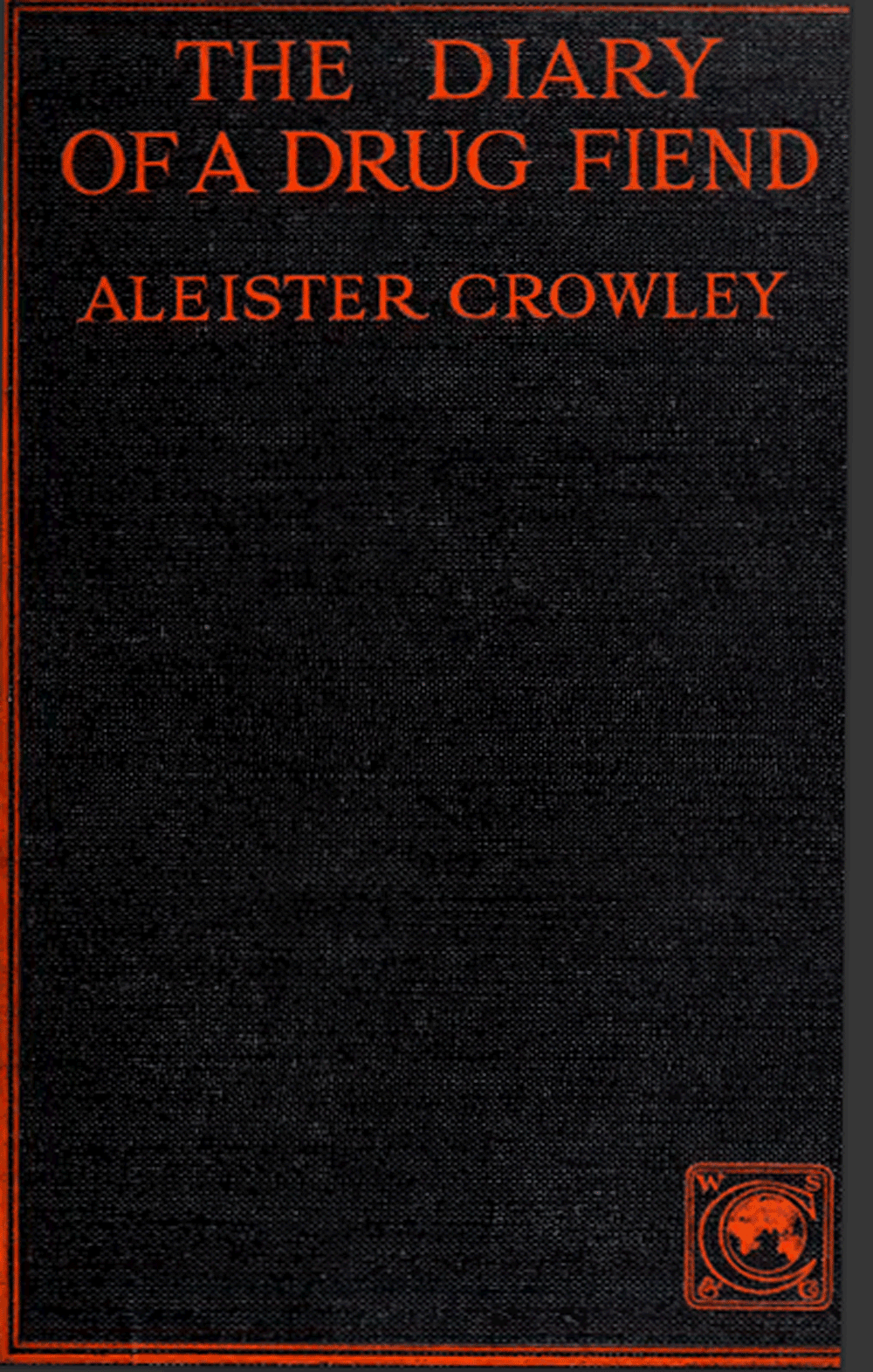
This is the only full-cast recording of Aleister Crowley's 1922 classic paeon to common sense. It is the first book -- and so far almost the only book -- to stake out a philosophy of drug use that is compatible with human freedom, one in which we learn to use drugs as wisely as possible for the benefit of humanity. This recording was produced by the Drug War Philosopher and your purchases help support his effort to push back against the tragically counterproductive policy of drug prohibition, in the name of human freedom and of humanity's right to heal.
No cookies, no ads paid for by amoral and immoral billionaires (or trillionaires).
Unless otherwise indicated, no AI is used in the creation of site content. These essays represent the original ideas of their author and not the ideas that the author SHOULD have based on an algorithmic parsing of existing data. For more on this subject, consider the AI-related viewpoints to which the author subscribes as delineated in the New York Times opinion piece entitled "What 370,000 College Essays Tell Us About A.I.’s Effects on Creativity" by Rebecca Winthrop of the Brookings Institution.








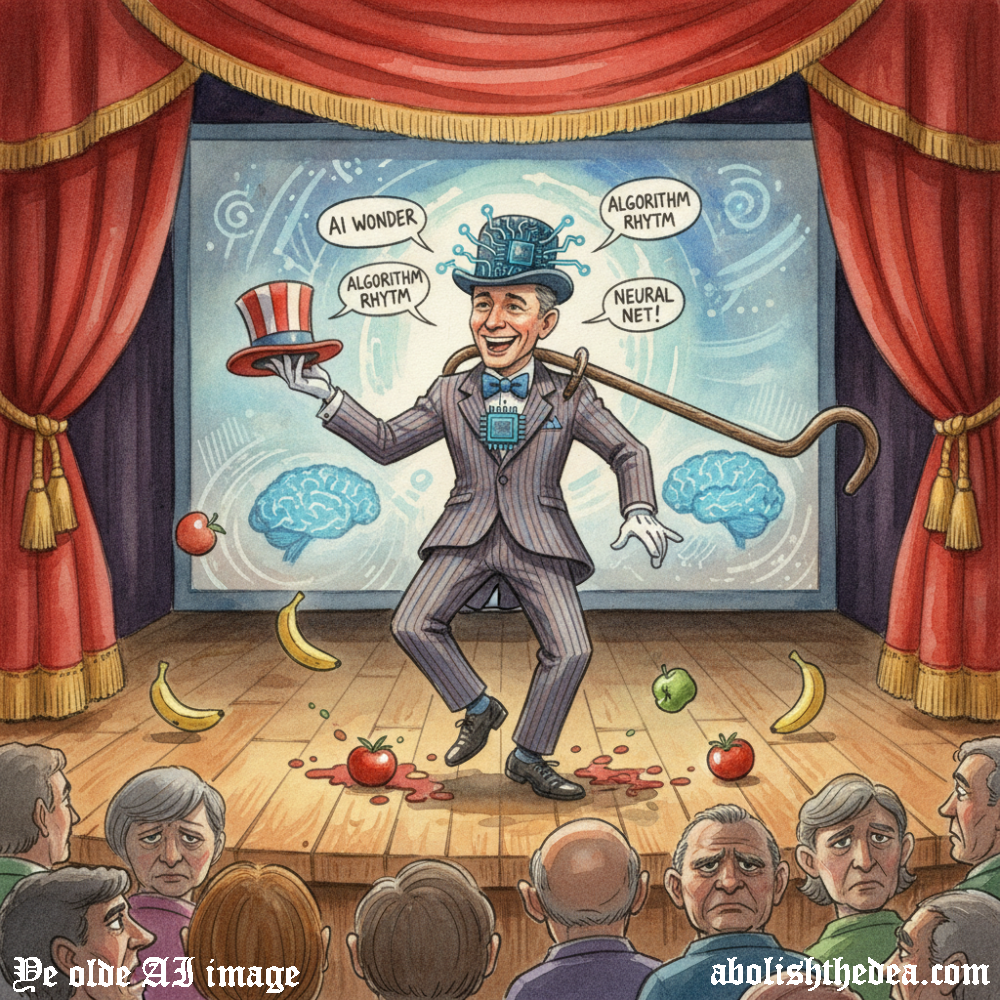 When Eric Schmidt received boos for mentioning AI this year in his commencement address at the University of Arizona, it told us something about how drug prohibition will finally come to an end. Someday the disconnect will become so great between the ideas of the mainstream and those of the hoi polloi on this subject, that we will finally have a watershed cultural moment like that which occurred in Arizona this summer. Someday, some famous commencement speaker is going to mention the subject of drug prohibition just in passing and a sizable percentage of the audience is going to boo -- and the speaker will be just as taken aback as was Eric Schmidt in Arizona, or Gloria Caulfield in Florida, or Scott Borchetta in Tennessee, when their uncritical references to AI elicited boos from their respective audiences.

 (up)
(up)