




Homepage of the Drug War Philosopher, Brian Quass
blog icon orange rss icon with stylized radio waves bird icon for twitter bird icon for twitter substack icon


back navigation arrow


Ketamine-producing fungi and consciousness without brains

drug-related Substack notes for the week of September 14-18

by Brian Ballard Quass, the Drug War Philosopher

September 14, 2026


First, I'd like to welcome all you readers who have come here from the future. Howdy. I hope the future is treating you well. You will no doubt notice that I am writing this just a couple of months before the regime in Washington, D.C., is slated to install a one-party system in America by accusing the opposition of a bunch of literally "Trumped-up" charges. ("Not good," as a notoriously laconic friend of mine would say.) As if that weren't enough to dissuade me from my purpose of evaluating drug attitudes from a philosophical point of view, there is yet a second sword of Damocles dangling over my head this morning. The guys at Anthropic AI are telling us that humanity has a 10% chance of being annihilated completely in the next ten years. Ten percent. Ten years. As the housewife asked the viewers in the sixties television commercial for Total breakfast cereal: "What's a mother to do?" -- or a philosopher for that matter?

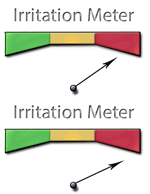
What should we do, indeed! Well, I don't have my Debrett's Handbook ready, but if memory serves, we're meant to stoically carry on in such cases, secure in the knowledge that good will ultimately triumph. I'm paraphrasing of course, but that was surely the gist of the advice for confronting existential threats such as ours in a manner that becomes a gentleman or a lady. (I'm thinking of the 2023 Coronation Edition, by the way. I can't answer for previous editions.) Fortunately for me, it is Notes Wednesday today, and that gives me just the excuse that I need to ignore current events for the nonce, at least long enough to reply to a handful of substack posts that caught my attention today, for better or for worse. And speaking of worse, we begin with a substack note that almost broke the needle on my irritation meter, so aggressively did it slam that indicator to the right.

Irritation Level: high
FROM: Neşe Devenot
NOTE:
“Even if psychedelics did ‘dissolve the ego,’ a trope that has outlived its truthfulness and usefulness, it isn’t the same as a constant, sober, painful surrender of one’s own power to serve others.”
COMMENT:
This quotation presupposes a false dichotomy: either you use drugs or you get out in the world and serve others. The fact is that many drugs, including ones that we call psychedelics, can help people to get out in the world and feel more compassionate. A psychedelic concoction inspired the creation of the Vedic, and hence the Hindu, religion. Besides, in the age of drug prohibition, only a relative handful of people are going to dare to talk favorably about drugs; we should not draw conclusions about the morality of drug users based on such a small sample size. We should not charge them with selfishness merely because we believe the drug-war party line that drug use is always a copout. That is a lie: the very lie that turned a chronic depressive like myself into a ward of the healthcare state, someone who was "saved" from drugs by being shunted off onto "meds" that turned out to be harder to kick than heroin.


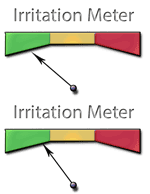
Irritation Level: low
FROM: Sammy Stoltz
NOTE:
The brain may work less like a generator of consciousness and more like a receiver of it.
COMMENT:
This was, in broad strokes, the position of Henri Bergson and William James. It has been championed recently in a physics paper by Maria Somme, published by the American Institute of Physics. The paper was retracted after complaints that her thesis could not be proved. The problem is that modern physics is predicated on the view that consciousness does not work that way. God could come down and tell physicists that Somme’s thesis is true, and they would still be dogmatically required to disbelieve it. They would tell God: "You have not yet provided 'proof' as we physicists define that term."


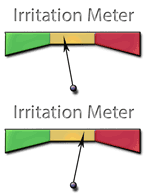
Irritation Level: medium
FROM: Andrew Weisse
NOTE:
Comments refer to Weisse's post entitled "It's Time to 'Redefine' Sober."
COMMENT:
Thanks for the common sense. I am a 67-year-old who was "saved" from drugs by being shunted off onto a "med" that turned out to be far harder to kick than heroin. I have just three points I'd like to add from my own perspective. I apologize for the length of this comment, but this stuff is basically my life story so I find it hard to stop myself.

1) I think one issue is that all drug terminology is essentially political in the age of drug prohibition. The term "drugs" itself is pejorative these days when used in contradistinction to the word "meds." This is why Americans can live with the fact that 1 in 4 American women are dependent on psychiatric meds for life (source: Julie Holland). Drug-hating Americans console themselves with the fact that these women are using "meds," not "drugs."

2) I agree with everything you say about abstinence. But in my view, the total abstinence from "all drugs" can only be defended on religious or metaphysical grounds. The west has only begun to learn of the extraordinary potential of psychoactive medicines; to renounce all potential benefits of such drugs now seems premature, to put it mildly. We already know that, when strategically used, certain drug use can greatly improve one's capacity to appreciate music and to appreciate nature and to focus the mind. At some point, when our kneejerk fears about drugs have subsided in the west, maybe 100 years from now, the mainstream will ask the total abstainers: "Why would you NOT want to improve your mind on occasion and open it up to new powers of appreciation and concentration?"

3) Finally, regarding fighting drugs with drugs. Good for you for mentioning this obvious protocol. I have been advocating this for years, but I find that common sense is in short supply in the behavioral health field these days. I believe, in fact, that the only hope I would have of getting off of Effexor, after the utter failure of a year-long tapering routine, would be to use a variety of drugs on a strategic basis to get me through the one or two hours of hell that was afflicting me off and on after I had reduced my daily intake of Effexor to 0mgs. When that mind-blackening hell hit unexpectedly at 2 in the morning, I felt I had just two options thanks to drug prohibition: suicide or a return to Effexor at high doses. It is just common sense (to me, at any rate) that the strategic use of some psychoactive substance(s) at such times, alone or in combination -- be it laughing gas and/or phenethylamines and/or tryptamines, and/or opiates, and/or cocaine -- could have gotten me through these stretches and given me a chance to renounce Effexor for life. I think one big problem here is that the depressed have never been considered stakeholders in the drugs debate.

Thanks again.


While I've been typing this, Andrew responded appreciatively to my comment above. He did, however, seem to express doubts about my ideas about getting off of Effexor, wherefore I responded as follows.

Agreed. Until drug prohibition is ended and we value fact over propaganda, it will be hard to know just how safe a given protocol would be for such a purpose. But the basic principle is sound: invoking ecstatic states has the potential to lift one out of one's gloom. I would also add that the abstract safety of the protocol is not the only consideration; if I feel "drugged" by Effexor and I want to be free of having to see a doctor 1/3rd my age every three months of my life for a refill on an underperforming and expensive "med," then my tolerance for risk will be relatively high. A calculated risk would be well worth it for me if the goal was to end my status as an eternal patient. Unfortunately, the behavioral healthcare field does not even see a problem with my lifetime dependency; they see nothing demoralizing about it. They call it 'taking care of my health.'


Well, guess what? Andrew has responded again, and in such a way as to silence my concerns.

Thanks for the intelligent feedback, Andrew. It's a nice change for me. My thoughts on these topics are usually ghosted or gaslighted.


Irritation Level: medium
FROM: Inoculate the World
NOTE:
A soil fungus naturally produces the world’s favorite dissociative in an effort to kill worms. The science behind its mechanism of action is nothing short of astonishing.
COMMENT:
Fascinating. And another reason why drug prohibition is insane. As our knowledge of the natural world increases, more and more of that world will be placed off-limits to us with the help of law enforcement, all because we have decided to arrest rather than to educate.


Irritation Level: low
FROM: Spirit Residue
NOTE:
Turning Off the Filter: A Deep Dive into DMT Entities DMT's recurring cast of characters and the unsettling possibility that the molecule isn't generating them, but letting us see what was already there...
COMMENT:
I have two questions for researchers (the lucky stiffs!)


Under the influence of peyote, I saw a sort of neon-green slide show of imagery seemingly copied from a Mesoamerican codex. What is the connection (if any) with the obviously more exotic visuals from a DMT experience?. Are these substance-aided experiences all part of a continuum, somehow related to each other, or are they different in kind?


We conclude with a comment in search of a post. To be honest, this comment of mine was originally written for a bona fide post: a post concerning the dangers of a drug called kambo, a psychoactive substance secreted by a toad. But I chickened out about sending my comment. The original post had been written by a substacker with whom I am in agreement on many subjects and I did not want to create any hard feelings by appearing to scruple at some of his conclusions. On the other hand, I had spent a good half-hour concocting that comment, and I fancied that it did make an interesting point or two. So I compromised. I decided not to post this comment in response to any identifiable party but rather to merely lay it out on the table for all to see, nothing up my sleeves, connected with nobody, after providing a quick introduction to the issues of which it treats. Having now provided that introduction, I invite the reader to decide for themselves if the comment in question is worth the time that I have spent fussing over it.


Now, I have no horse in the race as far as the salubrity of kambo is concerned. Yet in all such debates, we tend to lose track of the fact that drugs that may be problematic in the current drug-use environment (given the current generation of young people, their mindset, their usage practices) could still have benefits in other environments, at some dose, in some context, perhaps in combination with other drugs, etc. The link makes me fear that this otherwise drug-friendly author has fallen for the idea that drugs can be "bad" per se, rather than simply being ill-advised in certain usage situations. It makes me wonder if the author is not leaning over the DEA's shoulders as they look at kambo and saying, "You're right about this one, boys; you'd better outlaw it BUT GOOD!"

Even if kambo managed somehow to be "unsafe at any speed," a drug that was somehow bad regardless of details, a story about that supposed fact would still be off-topic as far as my own interests are concerned. The real story for me is that we will not know the whole necessarily nuanced story about kambo and its uses until we stop yielding to the Drug Warrior's strategy of divide-and-conquer. Their strategy is to sow confusion about drugs, to have us all debating futilely between ourselves as to what is a good drug and what is a bad drug. This is why every state and every country has its own drug laws: each political entity has looked at the pharmacopoeia, as if it were a Rorschach test, and seen their own set of villains and heroes in it.


read more essays here


Ten Tweets

against the hateful war on US


Reagan paid a personal price for his idiocy however. He fell victim to memory loss from Alzheimer's, after making a career out of demonizing substances that can grow new neurons in the brain!

Addiction was not a big thing until the drug war. It's now the boogie-man with which drug warriors scare us into giving up our freedoms. But getting obsessed on one single drug is natural in the age of choice-limiting prohibition.

I'm grateful to the folks who are coming out of the woodwork at the last minute to deface their own properties with "Trump 2024" signs. Now I'll know who to thank should Trump get elected and sell us out to Putin.

Even the worst forms of "abuse" can be combatted with a wise use of a wide range of psychoactive drugs, to combat both physical and psychological cravings. But drug warriors NEED addiction to be a HUGE problem. That's their golden goose.

It is consciousness which, via perception, shapes the universe into palpable forms. Otherwise it's just a chaos of particles. The very fact that you can refer to "the sun" shows that your senses have parsed the raw data into a specific meaning. "We" make this universe.

ME: "What are you gonna give me for my depression, doc? MDMA? Laughing gas? Occasional opium smoking? Chewing of the coca leaf?" DOC: "No, I thought we'd fry your brain with shock therapy instead."

His answer to political opposition is: "Lock them up!" That's Nazi speak, not American democracy.

Imagine someone starting their book about antibiotics by saying that he's not trying to suggest that we actually use them. We should not have to apologize for being honest about drugs. If prohibitionists think that honesty is wrong, that's their problem.

Being a lifetime patient is not the issue: that could make perfect sense in certain cases. But if I am to be "using" for life, I demand the drug of MY CHOICE, not that of Big Pharma and mainstream psychiatry, who are dogmatically deaf to the benefits of hated substances.

There would be almost no relapses for those trying to get off drugs if all drugs were legal. Then we could use a vast variety of drugs to get us through those few hours of late-night angst that are the bane of the recidivist.


Click here to see All Tweets against the hateful War on Us


back navigation arrow
Book Cover

Break the ice with a sledgehammer: place this book on your coffee table.

This book features 150 annotated images, designed to force brainwashed Americans to confront the fact that drug prohibition is wrong. Here is what author Richard Parrish II says of the book's compiler: "The drug prohibition philosopher provides first-hand, principled, persuasive, and insightful arguments against the current drug prohibition regime..."

Purchase Your Copy
Book Cover

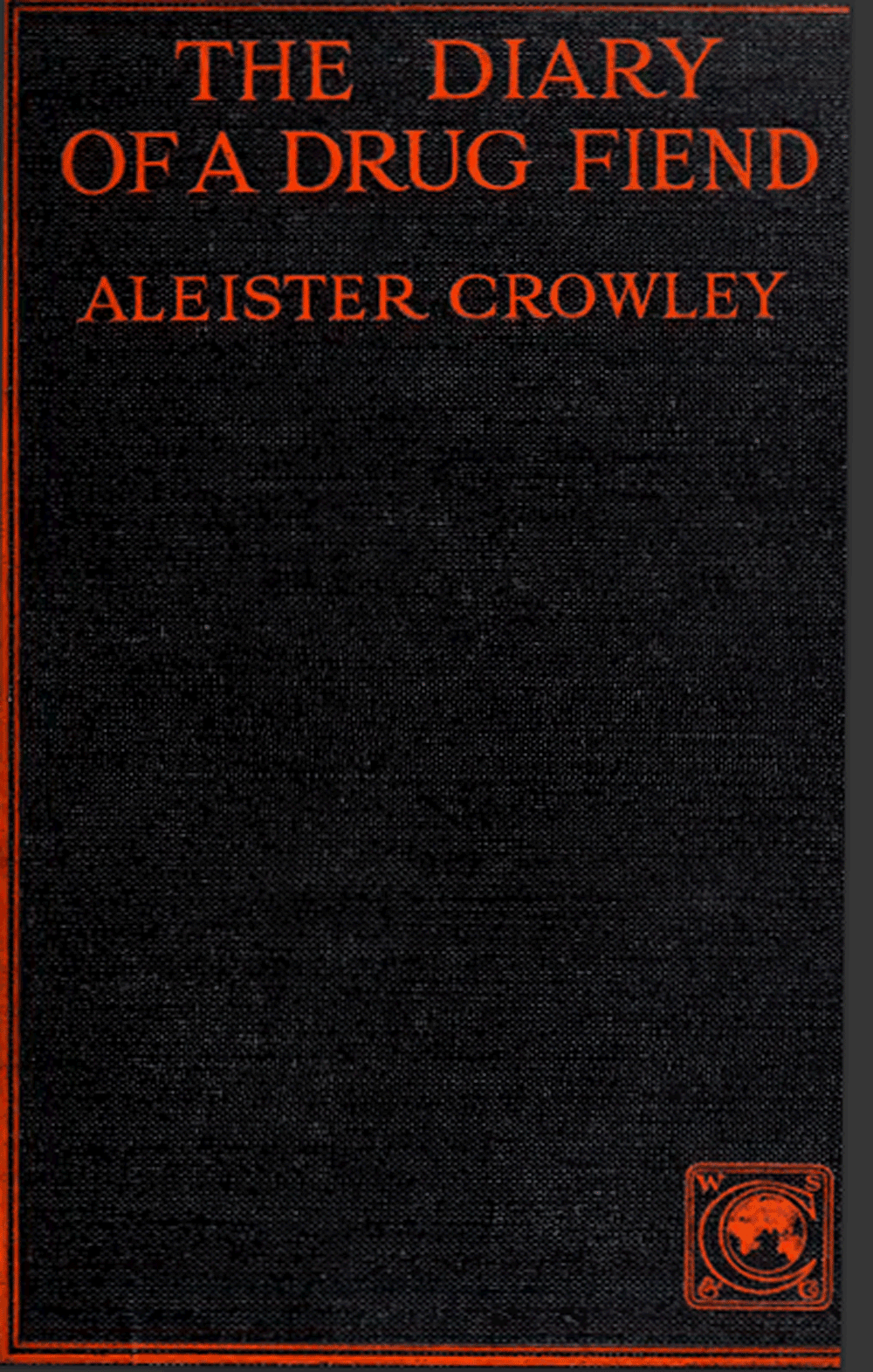
Diary of a Drug Fiend

This is the only full-cast recording of Aleister Crowley's 1922 classic paeon to common sense. It is the first book -- and so far almost the only book -- to stake out a philosophy of drug use that is compatible with human freedom, one in which we learn to use drugs as wisely as possible for the benefit of humanity. This recording was produced by the Drug War Philosopher and your purchases help support his effort to push back against the tragically counterproductive policy of drug prohibition, in the name of human freedom and of humanity's right to heal.

Purchase Your Copy


No cookies, no ads paid for by amoral and immoral billionaires (or trillionaires).


Unless otherwise indicated, no AI is used in the creation of site content. These essays represent the original ideas of their author and not the ideas that the author SHOULD have based on an algorithmic parsing of existing data. For more on this subject, consider the AI-related viewpoints to which the author subscribes as delineated in the New York Times opinion piece entitled "What 370,000 College Essays Tell Us About A.I.’s Effects on Creativity" by Rebecca Winthrop of the Brookings Institution.

The Partnership for a Death Free America is a proud sponsor of The Drug War Philosopher website @ abolishthedea.com.


Copyright 2026, Brian Ballard Quass Contact: quass@quass.com

tombstone for American Democracy, 1776-2024, RIP (up)
