the only country in which you can hurt a person's feelings by proxy
by Brian Ballard Quass, the Drug War Philosopher
June 10, 2026
I often find it difficult to perform research on the topic of drug attitudes -- simply because it is so infuriating to do so. Almost everything written on the subject in Drug War society is biased against drugs in one way or another. Even those articles that are true in every single statement that they make are yet highly misleading because they are all about "problem drug use," and such articles, considered in their totality, are sheer propaganda in an age in which it is impossible to publish articles about beneficial drug use: about the wise and beneficial use of cocaine, about the wise and beneficial use of opium, about the wise and beneficial use of phenethylamines, about the wise and beneficial use of laughing gas, and so forth.
Here's an example of how performing drug research can pluck my last and final nerve.
Today, I wanted to write about the connection between modern drug policy and human sacrifice at Teotihuacan, City of the Gods. That topic has been on my mind since I began playing the online game of that name with a sister of mine -- whose actual appellation I will withhold here for reasons of privacy. (Hint: she's the taller of my two sisters. The other one is not really into online games, anyway. [sigh] I fear I've practically given the identity away by now!)
My plan was to allude to the human sacrifices of the Teotihuacanos, especially to their sacrifice of foreigners to the Sun God Huitzilopochtli. I was going to point out that we make our own sacrifices today, only we moderns sacrifice to the God of Drug Hating, or in other words, to the Christian Science God of Mary Baker Eddy. We throw so many young people in jail today for drug use that the justice system cannot keep up. That's why "a fair trial by a jury of your peers" is a thing of the past in America: 97% of cases are now handled by plea deals. What this means, in practice, is that a prosecutor threatens a drug suspect with a long prison term if they are so stubborn as to demand their right to a fair trial by a jury of their peers.
We may not kill these millions of young people outright, but we make them long for death by taking away their freedom and shackling them with electronic ankle bracelets, as if they were so many head of cattle, while their every action and choice can be vetoed by a capricious parole officer whose directives cannot be questioned without a very justified fear of reprisal. We then send them to re-education camps to learn the Christian Science ideology of Mary Baker Eddy. We are not yet literally killing these sacrificial lambs, but that will soon change if the leader of the regime in Washington, D.C. has his way. He is a fan of Christian Science Sharia and thinks that we should be executing those who sell demonized plant medicines, not simply ruining their lives. Even if he fails to get his way, depressed westerners like Claire Brosseau will soon be sacrificed to the jealous God of Drug Demonization with the help of state-assisted suicide, unless healthcare "professionals" and "ethicists" finally acknowledge the fact that drug prohibition is the outlawing of her right to heal. For the moment, however, these revered experts find nothing wrong with keeping the suicidal from using the sorts of medicines that could make Claire wish to live.
But I like to know what I am talking about. So before I started drawing this analogy of mine, I thought I would perform some research on Teotihuacan, on both the game and on the culture that it represents. So thinking, I commenced an online search of these topics... and that was when the nerve plucking began. I soon discovered that immensely talented game designer Daniele Tascini (who had apparently created his game "Teotihuacan" in 2018) had been "dropped" by his publisher (Board & Dice) in 2021 after he created a Facebook post that was considered to have used racist language. Now, whatever Tascini posted, it is clear from his online comments that he is not a racist -- at least no more than are his critics -- and that his critics are judging him solely by the words that he used on Facebook in one single post, not by what he personally thinks or feels. The "get Daniele" bandwagon was concerned with what Daniele had said, not what he meant. Moreover, the people who are judging him are cavalierly doing so on behalf of the parties that they assume should be offended by what Daniele posted.
And this has everything to do with modern drug laws: legislators are not concerned with how people actually behave in the real world, they are interested only in what substances they have consumed. Whether we judge people only by the words that they say or by the substances of which they partake, we are ignoring the most important things: what they really mean and how they really behave.
To my surprise, almost everyone who posts about the issue seems to think that Tascini was justifiably kicked out by his publisher. I see the matter completely differently. I see Tascini's enemies as the real racists: they are the ones who have the nerve to speak for other cultures -- to become indignant based on what they assume people of other races and cultures feel, or should feel, given Tascini's comments. If Tascini deserves to be punished economically, we should leave it up to the offended individuals to say so. We are cavalier and presumptuous to demand that Tascini be punished because of the supposed sensibilities of races and cultures other than our own.
The discussion is all based on a Talmudic parsing of the words that Tascini used -- rather than any interest in what he really meant. Such a language-obsessed morality is dangerous in a country that values freedom. The inevitable result of such linguistic intolerance when taken to its logical conclusion is to outlaw the freedom of speech.
This reminds me, however, that America's mindset about drugs, as evil and consequence-riddled as it is, is but a symptom of a larger problem with America. Americans no longer believe in basic rights like the right of free speech. They think that there is a more important right: the right not to have one's feelings hurt. That idea is problematic in itself, but it becomes absurd when we find that the people who are deciding whether or not my ethnic or racial feelings have been hurt are those who belong to another ethnicity and another racial group than my own. Apparently minorities are not smart enough to realize when they have been collectively libeled online: they need white young people to express outrage on their behalf and to punish the offending parties by doing everything they can to destroy their financial careers. A murder suspect would have more rights than a person accused of using politically incorrect language in sensitive America: the only culture in which you can hurt a person's feelings "by proxy."
AFTERWORD
I now see why my site is so unpopular online. It is not just the fact that Google refuses to even index my essays -- which, by the way, is actually a good thing given the indoctrinated ignorance that Americans evince about drugs. It shows me that I am on the right path.
I am unpopular because our jaundiced attitudes about drugs are merely a symptom of a larger problem: the disinterest of Americans in basic principles and the desire for easy answers: Americans want to live in a world in which they can easily tell all they need to know about a person by a quick litmus test. In the case of modern progressives, the litmus test is the words that a person happens to use; in the case of Drug Warriors, it is the substances of which a person happens to partake.
Key Takeaways:
Almost everything written about drugs is biased.
Today we sacrifice young people to the Christian Science god of Mary Baker Eddy.
Depressed Canadian Claire Brosseau is on death row, waiting to be sacrificed to the god of Drug Demonization.
We judge people by the words that they write rather than what they mean; we judge people by the substances that they ingest rather than how they behave.
When we outlaw drugs, we are outlawing far more than drugs. We are suppressing freedom of religion and academic research.
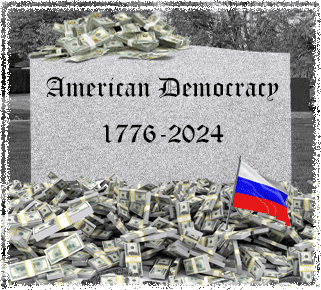
DEA Stormtroopers should be held responsible for destroying American Democracy. Abolish the American Gestapo.
That's so "drug war" of Rick: If a psychoactive substance has a bad use at some dose, for somebody, then it must not be used at any dose by anybody. It's hard to imagine a less scientific proposition, or one more likely to lead to unnecessary suffering.
The FDA will be accepting comments through September 20th on the subject of ways to fight PTSD.
PTSD@reaganudall.org
Ask them why they support brain-damaging shock therapy but won't approve drugs like MDMA that could make ECT unnecessary.
Self-medication is not a dirty word. It has always been a fundamental right to take care of one's own health -- until the medical establishment demonized the practice for obvious financial reasons.
Drug prohibition is superstitious idiocy.
It is based on the following crazy idea:
that a substance that can be misused by a white young person at one dose for one reason must not be used by anybody at any dose for any reason.
@HKSExecEd The use of Ecstasy brought UNPRECEDENTED peace and love to the British dance floors in the 1990s. When are political scientists going to acknowledge the potential for such substances to pull our species back from the brink of nuclear annihilation?
The government causes problems for those who are habituated to certain drugs. Then they claim that these problems are symptoms of an illness. Then folks like Gabriel Mate come forth to find the "hidden pain" in "addicts." It's one big morality play created by drug laws.
What is the end game of the drug warrior? A world in which no one wants drugs? That's not science. It's the drug-hating religion of Christian Science. You know, the American religion that outsources its Inquisition to drug-testing labs.
The drug war is a slow-motion coup against democracy.
Unless otherwise indicated, no AI is used in the creation of site content. These essays represent the original ideas of their author and not the ideas that the author SHOULD have based on an algorithmic parsing of existing data. For more on this subject, consider the AI-related viewpoints to which the author subscribes as delineated in the New York Times opinion piece entitled "What 370,000 College Essays Tell Us About A.I.’s Effects on Creativity" by Rebecca Winthrop of the Brookings Institution.









 (up)
(up)