








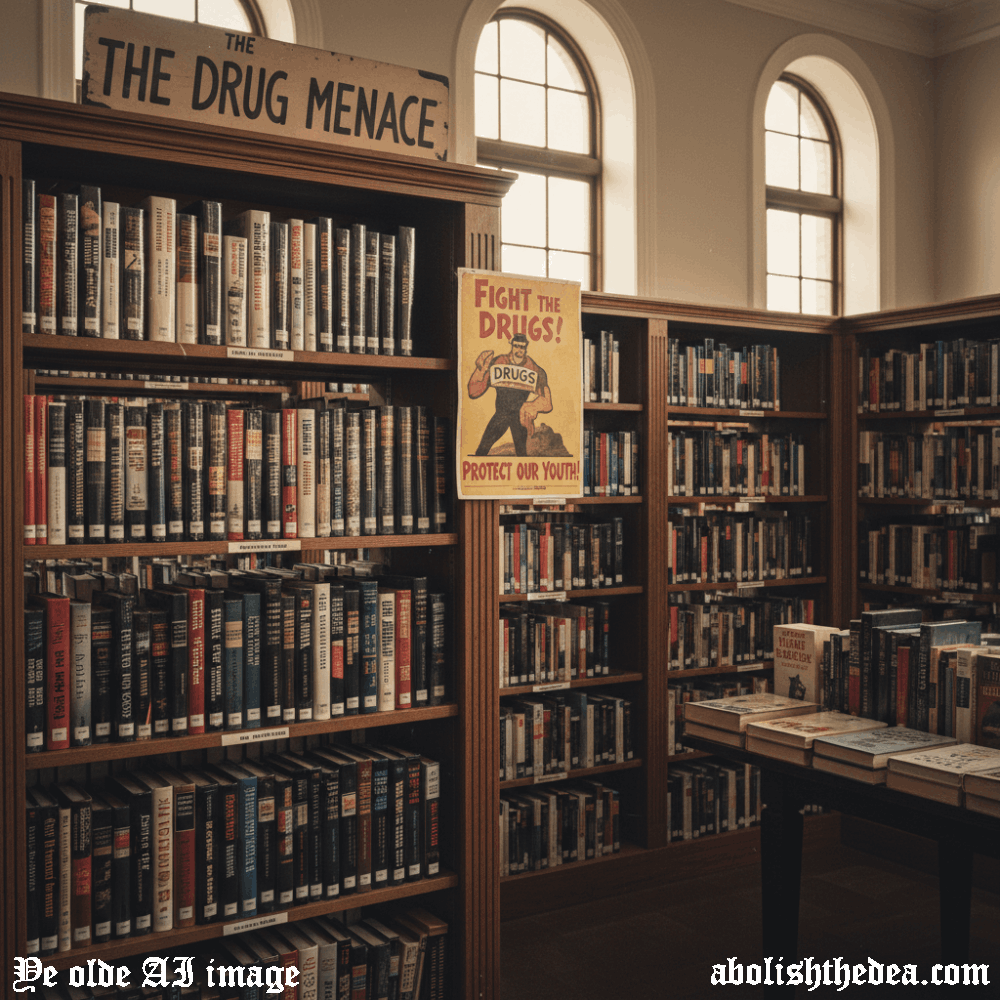
 Yesterday I traveled to Blue Plate Books in Winchester, Virginia, one of the largest used bookstores in the region. My plan was to buy books that would help me flesh out my understanding of drug-related issues. This was naive of me, however. Even though the store features tens of thousands of books, the vast majority of the authors of those books ignore the fact that drug prohibition even exists. The few books that treat of demonized drugs do so from the point of view of addiction and abuse. There are no books about how opium can improve your love of nature or about how phenethylamines can make the suicidal wish to live or about how the use of laughing gas can change your views of reality -- as the use of laughing gas eroded William James's dogmatic fealty to passion-scorning materialism and behaviorism.
No wonder conservatives are terrified of drugs. It is not safety that worries them, else they would demand education. They are terrified of new ways of seeing life. The outlawing of drugs is the outlawing of whole mindsets. It is a meta injustice.
After a long life, I have come to the conclusion that when all the establishment is united, it is always wrong. (Harold MacMillan)
News flash: certain mushrooms can help you improve your life! It's the biggest story in the history of mycology! And yet you wouldn't know it from visiting the websites of most mushroom clubs.
The MindMed company (makers of LSD Lite) tell us that euphoria and visions are "adverse effects": that's not science, that's an arid materialist philosophy that does not believe in spiritual transcendence.
There are neither "drugs" nor "meds" as those terms are used today. All substances have potential good uses and bad uses. The terms as used today carry value judgements, as in meds good, drugs bad.
The International Observer says the "core issues" causing Mexican drug violence are: "corruption, inequality, and the demand for narcotics in the U.S." Wrong, wrong, wrong. The core issue is DRUG PROHIBITION.
If fearmongering drug warriors were right about the weakness of humankind, there would be no social drinkers, only drunkards.
A law proposed in Colorado in February 2024 would have criminalized positive talk about drugs online. What? The world is on the brink of nuclear war because of hate-driven politics, and I can be arrested for singing the praises of empathogens?
If I have no right to mother nature's bounty, then I surely have no right to manmade guns. If hysterical fearmongering justifies the eradication of the Fourth Amendment, then the Second Amendment should go as well.
Videos about science and psilocybin are funny. They show nerds trying to catch up with common sense.
Yesterday I traveled to Blue Plate Books in Winchester, Virginia, one of the largest used bookstores in the region. My plan was to buy books that would help me flesh out my understanding of drug-related issues. This was naive of me, however. Even though the store features tens of thousands of books, the vast majority of the authors of those books ignore the fact that drug prohibition even exists. The few books that treat of demonized drugs do so from the point of view of addiction and abuse. There are no books about how opium can improve your love of nature or about how phenethylamines can make the suicidal wish to live or about how the use of laughing gas can change your views of reality -- as the use of laughing gas eroded William James's dogmatic fealty to passion-scorning materialism and behaviorism.
No wonder conservatives are terrified of drugs. It is not safety that worries them, else they would demand education. They are terrified of new ways of seeing life. The outlawing of drugs is the outlawing of whole mindsets. It is a meta injustice.
After a long life, I have come to the conclusion that when all the establishment is united, it is always wrong. (Harold MacMillan)
News flash: certain mushrooms can help you improve your life! It's the biggest story in the history of mycology! And yet you wouldn't know it from visiting the websites of most mushroom clubs.
The MindMed company (makers of LSD Lite) tell us that euphoria and visions are "adverse effects": that's not science, that's an arid materialist philosophy that does not believe in spiritual transcendence.
There are neither "drugs" nor "meds" as those terms are used today. All substances have potential good uses and bad uses. The terms as used today carry value judgements, as in meds good, drugs bad.
The International Observer says the "core issues" causing Mexican drug violence are: "corruption, inequality, and the demand for narcotics in the U.S." Wrong, wrong, wrong. The core issue is DRUG PROHIBITION.
If fearmongering drug warriors were right about the weakness of humankind, there would be no social drinkers, only drunkards.
A law proposed in Colorado in February 2024 would have criminalized positive talk about drugs online. What? The world is on the brink of nuclear war because of hate-driven politics, and I can be arrested for singing the praises of empathogens?
If I have no right to mother nature's bounty, then I surely have no right to manmade guns. If hysterical fearmongering justifies the eradication of the Fourth Amendment, then the Second Amendment should go as well.
Videos about science and psilocybin are funny. They show nerds trying to catch up with common sense.


 (up)
(up)