What the win for the plaintiffs in the case of K.G.M. v. Meta tells us about the drug prohibition mindset
by Brian Ballard Quass, the Drug War Philosopher
March 26, 2026
In this essay, I will be drawing a connection between the latest spate of lawsuits against Google and Meta and the policy of drug prohibition1. I was inspired to write this after reading the details in the case of K.G.M. v. Meta et al., in which a grown-up plaintiff successfully charged both companies with hooking her on online services as a kid2. But first, a quick disclaimer: I am no fan of Facebook or of Google; I think that Google, in particular, is a long-overdue candidate for being "broken up" by monopoly laws. I thought this already well over two decades ago. After all, if Google is not a monopoly, then surely monopolies do not exist. I even created a print-on-demand bumper sticker reading "Break Up Google" in the early 2000s. Yet, at the same time, I am highly hypocritical in saying this since I am a regular user of a variety of Google services and am benefiting because that monopoly status is being overlooked by Congress.
On the other hand, I am surely losing out thanks to that monopoly status in ways that I cannot even imagine, perhaps most importantly, the fact that Google writes the algorithms (or at least the algorithm-writing software) that decides whose views of the world are going to be promoted online and whose are going to be sidelined and buried under pages and pages of other hits. Google's ranking of search results is not a logical process of any kind, notwithstanding the naive sanguinity of modern tech pundits on this point, but is based on unspoken ideas about what constitutes display-worthy criteria. Google assumes that quality sites will have plenty of incoming links, which would be fine in a world where all the people were right all of the time, but any glance at history tells us that all the people have been wrong much of the time, in some country with respect to some policy and so forth. And Google's algorithms will be sure to bury those pages rather than make the public aware of their substance lest they might actually learn something new.
But enough about the subjectivity of algorithms. I merely wanted to make the point that I am not favorably disposed toward the tech giant and its fellow behemoths before I hold forth on the parental lawsuits that they are currently facing. Because despite that confession, I find real problems with the argument that Google is hooking kids on using their various platforms. The same goes for Facebook/Meta. I think that this is actually true, in a sense: these companies certainly use every trick in the book (and many high-tech tricks that have yet to be recorded in any book). But then that is what capitalism is all about: a business is supposed to do all it can to get customers, which in this case means getting eyes on the page. It seems odd to sue them for being really good at that job, as if they should have stopped at some point and said to themselves: "We're getting too many dedicated customers. Let's stop trying so hard and scale back our efforts a bit so that we will be slightly less successful than before, economically speaking."
Do not mistake me here. I believe that the parents have a point; but their real enemy is unfettered capitalism, not Google in particular. Have these parents watched any television commercials lately, especially those directed at young people? Those commercials are all about controlling the behavior of the young. They do everything they can to accomplish that goal, no matter how subtle, no matter how obvious, no matter how sly. That is not illegal: it is something that is actually called good business practice. If parents find this problematic, they should complain about the priorities of unbridled capitalism rather than singling out an easy (if ginormous) target like Google et al. as a kind of whipping boy for their parental frustration. Google is no more guilty of endangering children than is the Jim Beam company which promotes bourbon drinking on prime-time television in advertisements aimed at young people, or the many game manufacturers which sell so-called "hydration" games like "Chug O' War," in which the very goal is to use liquor as irresponsibly as possible.
There is another problem with blaming companies like Google for the effects of its services on particular young people. Such charges always beg the following question: why did hundreds of millions of other young people not have the same kind of life-destroying reaction to those services as did the plaintiff's child? It's a big world, after all, with over 8 billion people. It's a pretty big "ask" to demand that Google should provide services with which no kid in the world will ever find a way to have problems. Again, this is not to say that Google's services are moral, merely that they are legal -- indeed, not only legal but an example of best practices in the age of unfettered capitalism. Google as such is just the standard bearer for a host of companies that act in the same way all the time, though on a smaller scale.
What's the connection with drug prohibition?
Though originally inspired by pure racism and xenophobia in the early 20th century, drug prohibition has been supported ever since by parents who band together to encourage their legislatures to pass draconian laws based on bad cases, on statistically rare cases which, however, make for heartbreaking viewing on context-free documentaries on prime-time television shows like 48 Hours. Such parents like to find one particular villain that they can punish for a life gone wrong, failing to realize that such lives (whether of children or adults) are usually the result of a vast array of interacting forces and that it is arbitrary and naive (and, indeed, all too convenient) to pull out just one from the jam-packed line-up of plausible suspects and cry like Laertes in the play: "Thus didst thou!" This "array of interacting forces" includes, of course, the parents' role (witting or otherwise) in bringing about problematic outcomes, which is no doubt one reason why parents would not wish to "go there" and would prefer instead to limit their list of culprits to external sources.
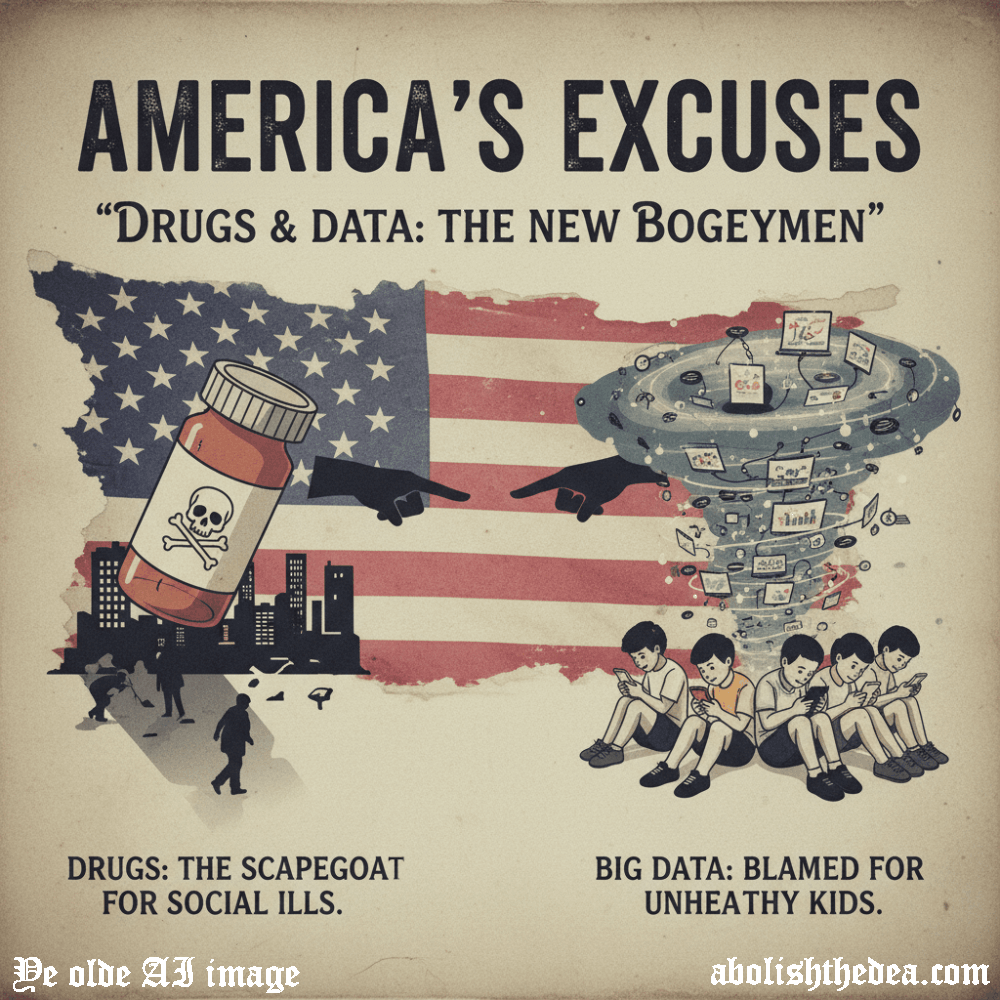
And this, of course, is the very M.O. by which outraged (generally white) parents band together to demonize drugs today in an effort to get Congress to "do something," which means, of course, to pass more draconian laws based on bad cases, thereby running roughshod over the rights of all other stakeholders in the drugs debate who might otherwise benefit from time-honored medicines, including the millions of chronic depressed like myself, who have been shunted off onto dependence-causing "meds" after being denied drugs that could cheer them up in a trice. And the pundits tell us there are many more such lawsuits on the way. While these cases may have nothing to do with drugs per se, they will all be motivated by the same parental mindset that fuels drug prohibition to this very day: the desire to punish a convenient scapegoat for the problems of growing up in an the age of unbridled capitalism.
Q: Where can you find almost-verbatim copies of the descriptions of religious experiences described by William James? A: In descriptions of user reports of "trips" on drugs ranging from coca to opium, from MDMA to laughing gas.
The drug war bans human progress by deciding that hundreds of drugs are trash without even trying to find positive uses for them. Yet scientists continue to research and write as if prohibition does not exist, that's how cowed they are by drug laws.
The DEA is still saying that psilocybin has no medical uses and is addictive. They should be put on trial for crimes against humanity for using such lies to keep people from using the gifts of Mother Nature.
Being less than a month away from an election that, in my view, could end American democracy, I don't like to credit Musk for much. But I absolutely love it every time he does or says something that pushes back against the drug-war narrative.
Pundits tell us that there are medical reasons not to "snort" cocaine. So what? There are medical reasons not to drive a car: you may have an accident. The question is: does cocaine use or car driving make sense in a given case! Details matter!
Opium and cocaine have a vast host of potential rational uses -- yet we all have to pretend otherwise in the age of the Drug War.
"When two men who have been in an aggressive mood toward each other take part in the ritual, one is able to say to the other, 'Come, let us drink, for there is something between us.' " re: the Mayan use of the balche drink in Encyc of Psych Plants, by Ratsch & Hofmann
Katie MacBride's one-sided attack on MAPS reminds me of why I got into an argument with Vincent Rado. Yes, psychedelic hype can go too far, but let's solve the huge problem first by ending the drug war!!!
It is evil to give the depressed drugs to help them die while barring them from using drugs that could make them wish to live.
My impression has been that the use of cocaine over a long time can bring about lasting improvement..." --Sigmund Freud, On Cocaine, 1884