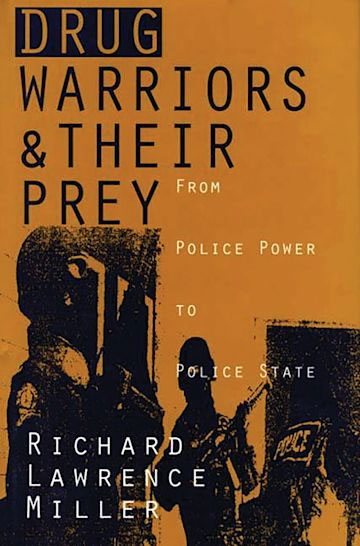
15 Infuriating Quotations from Drug Warriors and Their Prey by Richard Lawrence Miller
by Brian Ballard Quass, the Drug War Philosopher
March 27, 2026
In his 1996 book 'Drug Warriors and Their Prey: from police power to police state'1, historian Richard Lawrence Miller infuriates the freedom-loving reader with true stories revealing how drug prohibition has Nazified police forces around the country and incentivized the kinds of lawless forfeiture proceedings that make a mockery of the Bill of Rights. If the outrages revealed in this book were the only thing that we knew about drug prohibition, this book alone would constitute a knock-down case for ending drug prohibition and ending it now. You will find just a sample of the un-American madness below. But the moral of the book is clear: drug prohibition has destroyed our legal system and given police departments carte blanche to employ Gestapo tactics whenever drugs are involved in a case, a license that is increasingly being employed by the police in "non-drug" cases as well with the help of the awful legal precedents that have been established by despotic judges in the name of fighting the politically created boogieman called "drugs."
The population explosion of drug offenders in the penal system was caused by politics. Not partisan politics, but a political decision to make war on drug users.
Richard Lawrence Miller, Drug Warriors and Their Prey: From Police Power to Police State
Rev. Accelyne Williams, a slender 75-year-old man, spent his final moments doubled over, vomiting, his hands bound behind his back with a tight strip of plastic, totally confused about what was happening to him. ... He had literally been scared to death by shouting, storming anti-drug troops. No drugs were found.
Richard Lawrence Miller, Drug Warriors and Their Prey: From Police Power to Police State
Regarding a forfeiture against 80 Pennsylvania acres, FBI and drug agents openly boasted that they 'couldn't wait to use the defendant's property for deer hunting and other social activities.
Richard Lawrence Miller, Drug Warriors and Their Prey: From Police Power to Police State
If government can seize property having no link with drug use, why must seizures be limited to drug users? Why not take property from persons who abstain from illicit drug use? In fact, Drug Warriors have established legal principles allowing government to do exactly that.
Richard Lawrence Miller, Drug Warriors and Their Prey: From Police Power to Police State
When seizing an automobile under civil forfeiture statutes, prosecutors need only demonstrate its use in transporting an illicit drug. The amount of drug is irrelevant, as is an innocent owner's lack of knowledge that the car was used in this way.
Richard Lawrence Miller, Drug Warriors and Their Prey: From Police Power to Police State
There are three ways to survive: gainful employment, welfare, or crime. By losing the possibility of employment, drug users must resort to welfare or crime. Yet Drug Warriors seek even to cut off welfare, as through evictions from public housing in Missouri.
Richard Lawrence Miller, Drug Warriors and Their Prey: From Police Power to Police State
U.S. Attorney General Richard Thornburgh declared that over ninety percent of U.S. paper money contains illegal drug residue... Detroit police had a dog sniff money in a register. The dog reported that three of the one dollar bills smelled like cocaine. Police confiscated the store's receipts as a drug asset.
Richard Lawrence Miller, Drug Warriors and Their Prey: From Police Power to Police State
Through precedents established by the Drug War, an anonymous phone call alleging that a physician ordered unnecessary hospitalization of a patient is grounds for police seizure and examination of all records in the doctor's office as health fraud assets.
Richard Lawrence Miller, Drug Warriors and Their Prey: From Police Power to Police State
Forfeitures funded Florida's Law Enforcement Trust Fund, which in turn paid local police to promote forfeitures.
Richard Lawrence Miller, Drug Warriors and Their Prey: From Police Power to Police State
In Lakewood, Colorado, forfeiture money allowed police to hold holiday parties, buy amusement park tickets, and purchase a police aquarium.
Richard Lawrence Miller, Drug Warriors and Their Prey: From Police Power to Police State
After finding marijuana growing on a Michigan farm, the Florida deputies seized sixty-four horses plus the farmer's automobiles. When Detroit police arrived at a farm in Tennessee, they seized the farm itself.
Richard Lawrence Miller, Drug Warriors and Their Prey: From Police Power to Police State
The income that police receive through forfeiture is staggering. When drugs were found in raids of fraternity houses in Charlottesville, Virginia, police seized all the houses.
Richard Lawrence Miller, Drug Warriors and Their Prey: From Police Power to Police State
The Justice Department demanded forfeiture of estate because it could be imposed by prosecutors without judicial permission. It is a punishment authorized and administered by police. Punishment power wielded by police was condemned by Nuremberg Tribunal prosecutors.
Richard Lawrence Miller, Drug Warriors and Their Prey: From Police Power to Police State
A top U.S. Customs Service official admitted, "If the locals (police) have a guy with a ton of marijuana and no assets versus a guy with two joints and a Lear jet, I guarantee you they'll bust the guy with the Lear jet.'
Richard Lawrence Miller, Drug Warriors and Their Prey: From Police Power to Police State
Knowing the potential income, employees of airline and parcel companies routinely open packages for 'security inspection' in hopes of finding either drugs or items that match the drug offender profile. Police have not right to make such inspections, but they can act upon information received from company employees who do have such a right.
Richard Lawrence Miller, Drug Warriors and Their Prey: From Police Power to Police State
My thanks to Richard for documenting these disgraceful abuses by law enforcement and these inconvenient truths about drug prohibition in his 1996 book 'Drug Warriors and Their Prey: from police power to police state'2. This is a book that should be in the library of every freedom-loving American. If you wish to learn more about how drug prohibition has destroyed the American legal system, I also recommend the 2025 book by Colleen Cowles entitled "War on Us,"3 in which we see how prosecutors today pressure drug suspects into renouncing their rights to a trial by threatening them with long sentences if they refuse to accept a plea bargaining agreement. Cowles tells us that trials are basically a thing of the past for drug suspects. The vast majority of drug cases are "settled" with a plea deal, with suspects often confessing to crimes that they did not commit in order to avoid lengthy sentences.
Cowles quotes Judge William Young as follows from his opinion in the 2004 case of US v. Green:
"This is the essential key to an understanding of federal sentencing policy today. The [Justice] Department is so addicted to plea bargaining to leverage its law enforcement resources to an overwhelming conviction rate that the focus of our entire criminal justice system has shifted far away from trials and juries and adjudication to a massive system of sentence bargaining that is heavily rigged against the accused citizen."
AFTERWORD
While the majority of Miller's book is devoted to exposing the self-interested violation of civil rights by law enforcement in the name of fighting drugs, he introduces the topic by debunking the warped assumptions that are thought to justify such outrages in the minds of many Americans, especially the idea that drug users are wasters with nothing to contribute to society. He points to research in the 1980s in which "investigators repeatedly found heroin 4 addicts leading ordinary lives while steadily employed at middle-class jobs." Indeed, some of these ordinary users were cops. Miller quotes one D.C. police official as saying that over 100 officers were using heroin in 1971. "How did we learn about them?", asks the official. "Not because their performance was poor.... We took urine specimens."
It makes one wonder why we don't just let heroin users alone except for regulating their drug supply. Why don't we let them use their drug of choice in peace just as we now allow -- indeed, encourage -- the depressed to take Big Pharma meds every day of their life? We are certainly not really worried about drug dependency in a world where we keep encouraging troublesome people to "take their meds." Besides, if dependency is our concern, then we should be hating on antidepressants rather than on heroin. My former psychiatrist told me that the SNRI that I am "on" has been found to have a 95% recidivism rate 5 for long-term users. 95! Compare this to the fact that only 5% of the U.S. soldiers who used heroin regularly in Vietnam required help for getting off the drug after returning to the states.6
Of course, the real question is: why didn't Americans leave well enough alone and keep opium smoking legal in the first place? The answer, of course, is that we had a prior commitment to racial hatred. Politicians wanted to punish the Chinese for being Chinese and the only politically acceptable way to do that was to give a veneer of public health concerns to our rabid xenophobia. As Thomas Szasz wrote in Ceremonial Chemistry78:
The American war against the Chinese in the United States was a terrible tragedy— regardless of how often this drama continues to be enacted on the stage of history. Although “we” did not succeed in beating “them” down, at least “we” took away something that “they” treasured and that made life better for “them.” Envious persecutors must be thankful for small victories no less than for large.
Countless millions suffer needlessly in silence because of America's fearmongering about drugs.
In "How to Change Your Mind," Michael Pollan says psychedelic legalization would endanger young people. What? Prohibition forces users to decide for themselves which mushrooms are toxic, or to risk buying contaminated product. And that's safe, Michael?
The Drug War treats doctors like potential criminals and it treats the rest of us like children. Prohibition does not end drug risks: it just outsources them to minorities and other vulnerable populations.
We throw people out of jobs for using "drugs," we praise them for using "meds." The categories are imaginary, made up by politicians who want to demonize certain substances, but not cigs or beer.
Imagine a world in which we were told about both the potential benefits AND the potential harms of drugs like cocaine and opium.
Every time I see a psychiatrist, I feel like I'm playing a game of make-believe. We're both pretending that hundreds of demonized medicines do not exist and could be of no use whatsoever.
Opium is a godsend, as folks like Galen, Avicenna and Paracelsus knew. The drug war has facilitated a nightmare by outlawing peaceable use at home and making safe use almost impossible.
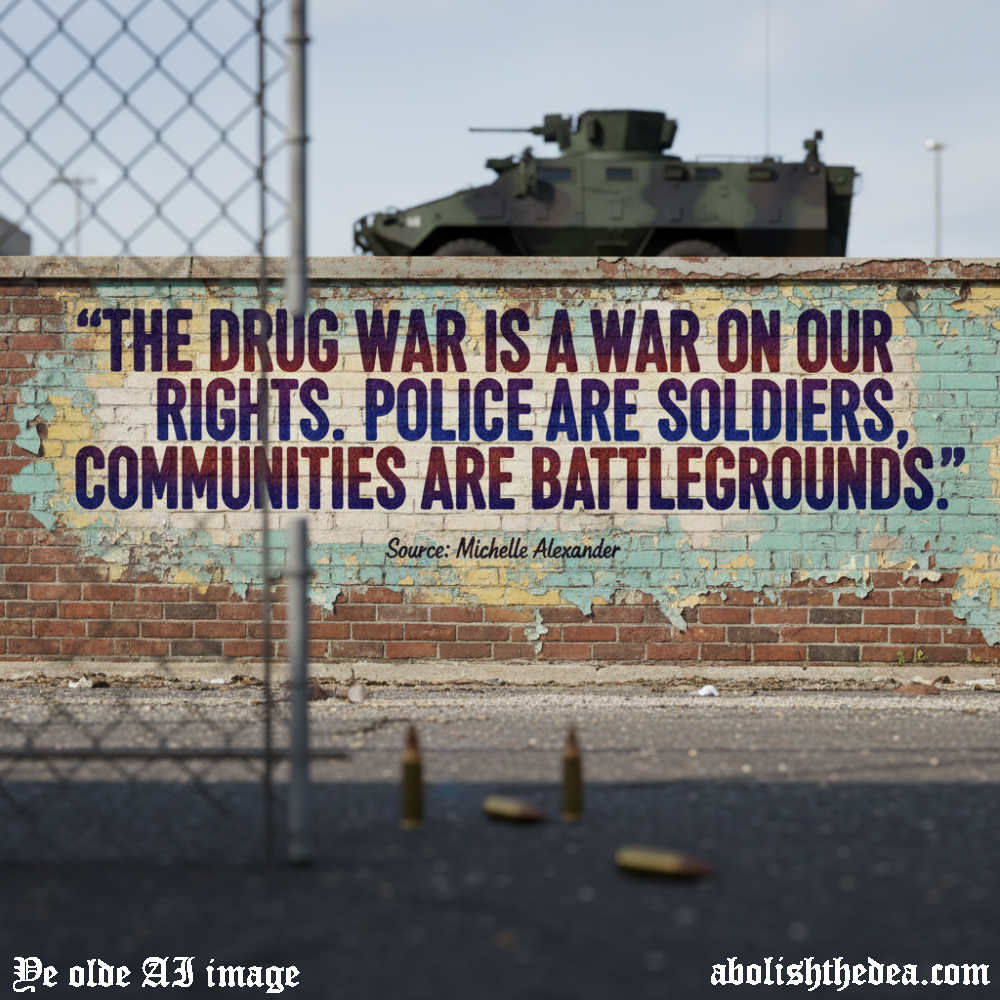
"Abuse" is a funny term because it implies that there's a right way to use "drugs," which is something that the drug warriors deny. To the contrary, they make the anti-scientific claim that "drugs" are not good for anybody for any reason at any dose.
If MAPS wants to make progress with MDMA they should start "calling out" the FDA for judging holistic medicines by materialist standards, which means ignoring all glaringly obvious benefits.
It wasn't until western prudery and racism came along that we started to judge people by the substances that they chose to ingest, rather than by their actual behavior in the world.
Break the ice with a sledgehammer: place this book on your coffee table.
This book features 150 annotated images, designed to force brainwashed Americans to confront the fact that drug prohibition is wrong. Here is what author Richard Parrish II says of the book's compiler: "The drug prohibition philosopher provides first-hand, principled, persuasive, and insightful arguments against the current drug prohibition regime..."
Drama lovers: collect full-cast recordings of classic plays
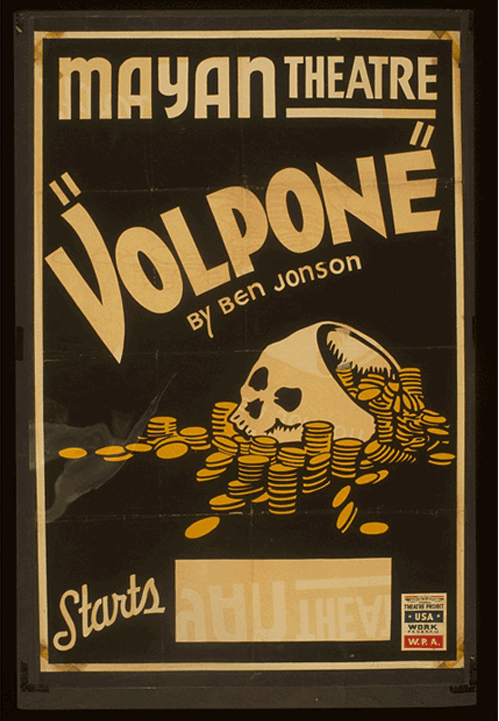
In my spare time, when I am not shaming drug warriors for their heartless drug policies, I create full-cast recordings of classic plays using the latest in synthetic voices licensed by the Natural Reader company. Snag your copy of my production of Volpone, by Ben Jonson... and follow me on Payhip for more where that came from, including classics like The Post Office, The Double Dealer and The Inspector General. -- Yours in all-too-justified outrage, the Drug War Philosopher @ abolishthedea.com.
No cookies, no ads paid for by amoral and immoral billionaires (or trillionaires).
Unless otherwise indicated, no AI is used in the creation of site content. These essays represent the original ideas of their author and not the ideas that the author SHOULD have based on an algorithmic parsing of existing data. For more on this subject, consider the AI-related viewpoints to which the author subscribes as delineated in the New York Times opinion piece entitled "What 370,000 College Essays Tell Us About A.I.’s Effects on Creativity" by Rebecca Winthrop of the Brookings Institution.











 (up)
(up)