




Homepage of the Drug War Philosopher, Brian Quass
blog icon orange rss icon with stylized radio waves bird icon for twitter bird icon for twitter substack icon


back navigation arrow forward navigation arrow


Communal visions versus personal experiences

why Americans have such diverse reactions to the use of psychedelics like Ayahuasca

by Brian Ballard Quass, the Drug War Philosopher

August 4, 2025


When I first partook of ayahuasca last year in Maine, I was surprised by the wide range of experiences reported by my 30 or so fellow participants1. The results were all over the map. I personally encountered a fascinating and colorful array of images that put me in mind of a carnival midway. And yet a former alcoholic, who started out sitting next to me, ended up on the back porch of the facility's premises, screaming incoherently for over an hour -- and this at the very time that participants like myself were struggling to remain relaxed and calm in the face of what for most of us was a brand-new experience! (I was even afraid that the Christian Science police would show up and arrest us as so many irreclaimable heretics.) The dozens of user reports from the subsequent debriefing session held on the following day occupied the vast middle ground between such extremely different outcomes as ours. One young woman reported having a conversation with her recently deceased grandmother, another reported a sense of bliss, a young man reported a sense of power, yet another reported a sense of restlessness, and at least one participant claimed to have experienced nothing at all.

These diverse outcomes have convinced me of a truth that I had already surmised based on other non-experiential considerations: namely, that there is no such thing as "the psychedelic experience" -- that the outcomes of such drug use are, in a very meaningful sense, a product of a variety of psychosocial factors, of which the consumption of the medicine is but one element, and not necessarily the decisive one at that. Of course, this is not an original statement on my part. Everyone has been talking about the importance of set and setting since the days when the government was harassing Timothy Leary 2 3 in upstate New York over his attempts to open a church based on the use of a sacrament other than alcohol4. And yet this ayahuasca experience demonstrated for me how the mindset that we take to such events can be overwhelming and decisive. We talk about the power of psychedelics to help one view the world productively -- but we need to remember that such medicines are not one-size-fits-all western nostrums, that we ourselves have to prepare our minds for these experiences to the extent possible -- if not to guarantee a therapeutic outcome of use, then at least to render such an outcome more probable than it might otherwise have been.

I have suggested that the drug employed is only one element responsible for the drug experience. This fact was brought home to me during the ayahuasca experience in Maine. In the latter half of that ritual, I started thinking of the music of curandero Taita Jhon as the drug itself, for it seemed to me that every time Jhon started singing or playing the drums, the ayahuasca effects would become pronounced, whereas the effects would seem to vanish altogether during the intermittent silences. As a westerner, I have always thought that you controlled the dosage of a drug by changing the quantity of the substance that you were consuming: and yet with ayahuasca, the "dosage" of the drug -- or at least its potency -- seemed to change as a result of the music, of how and how loudly it was played. Imagine that you had consumed a couple of beers at a dance hall -- and then found yourself getting more inebriated every time the band struck up a new tune, this despite the fact that you had ceased consuming alcohol altogether. That was how I felt in Maine. If someone had asked me at the time, "Have you consumed the right amount of ayahuasca?", I would have answered: "That depends. When the music stops, I think I might have consumed too little, whereas when the music rises again, I find myself speculating that I may have overdone it!"

This, of course, is why quantity-obsessed materialists are so incapable of judging holistic medicines of any kind. The materialist wants to limit variables so that they can pretend to omniscience on these topics, and yet it is precisely the complex interaction of a wide array of variables that accounts for the effects of such drugs. In other words, holism matters. The best that the materialist can do, therefore, is to tell us how these drugs affect lab rats -- not how they affect actual human beings whose very attitudes and upbringings contribute so fundamentally to the nature of the "drug experience" that our materialist scientists are purporting to study.

And so we can say of ayahuasca what Native American activist Albert Hensley once said of peyote:

"It is utter folly for scientists to attempt to analyze this medicine. Can science analyze God's body?"5


SHARED EXPERIENCE?

How then do we account for the fact that ayahuasca use in South America is said to create a shared experience among participants6? I think the answer is clear: the South American worshippers approach the drug with a shared understanding -- not just about the drug and its use but about the nature of the world in which they themselves live. The indigenous people of South America ascribe to a world view they call Cosmovision, according to which the world is deeply interconnected7. Cynicism and self-interested exploitation have no place in such a weltanschauung. When a group of people come together under such an unspoken understanding, it is easy to imagine them sharing the same experience when using ayahuasca. In fact, this very thought occurred to me in Maine during the height of my ayahuasca visions. It was clear to me that the whole group could rise as one, perhaps chanting and dancing as we did so, in such a way as to transform all the individual visions into a collective vision, one in which personal idiosyncrasies had been transcended by dint of the conscious energy fields awakened by drums and voices and environment -- and the fact that we had all been placed on the same philosophical page to begin with.


Notes:

1: Ayahuasca's Effects on Westerners DWP (up)
2: The One Thing that Timothy Leary Got Wrong: a philosophical review of The Politics of Ecstasy DWP (up)
3: Timothy Leary was Right DWP (up)
4: “Full Text of ‘the Politics of Ecstasy.’” 2026. Archive.org. 2026. https://archive.org/stream/ecstaspoliticsof00learrich/ecstaspoliticsof00learrich_djvu.txt. (up)
5: “Artificial Paradises - Mike Jay.” 1999. Mike Jay. May 18, 2025. https://mikejay.net/books/artificial-paradises/. (up)
6: “Blue Tide - Mike Jay.” 2025. Mike Jay. May 18, 2025. https://mikejay.net/books/blue-tide/. (up)
7: The Andean cosmovision as a philosophical foundation of the rights of nature Suran, Ilona , Notre Affaire a Tous, 2021 (up)


read more essays here


Ten Tweets

against the hateful war on US


News flash: certain mushrooms can help you improve your life! It's the biggest story in the history of mycology! And yet you wouldn't know it from visiting the websites of most mushroom clubs.

It's interesting that Jamaicans call the police 'Babylon,' given that Babylon denotes a society seeking materialist pleasures. Drug use is about transcending the material world and seeking spiritual states: states that the materialist derides as meaningless.

Countless millions suffer needlessly in silence because of America's fearmongering about drugs.

The International Observer says the "core issues" causing Mexican drug violence are: "corruption, inequality, and the demand for narcotics in the U.S." Wrong, wrong, wrong. The core issue is DRUG PROHIBITION.

That's the problem with prohibition. It is not ultimately a health question but a question about priorities and sensibilities -- and those topics are open to lively debate and should not be the province of science, especially when natural law itself says mother nature is ours.

Drug War censorship is supported by our "science" magazines, which pretend that outlawed drugs do not exist, and so write what amount to lies about the supposed intransigence of things like depression and anxiety.

There are neither "drugs" nor "meds" as those terms are used today. All substances have potential good uses and bad uses. The terms as used today carry value judgements, as in meds good, drugs bad.

Drug prohibition is a crime against humanity. It is the outlawing of our right to take care of our own health.

Freud found that cocaine CURED most people's depression and he "got off it" without trouble.

To say that psilocybin has not been proven to work is like saying that a hammer has not yet been proven to smash glass. Why not? Because the process has not yet been studied under a microscope.


Click here to see All Tweets against the hateful War on Us


back navigation arrow forward navigation arrow
Book Cover

Break the ice with a sledgehammer: place this book on your coffee table.

This book features 150 annotated images, designed to force brainwashed Americans to confront the fact that drug prohibition is wrong. Here is what author Richard Parrish II says of the book's compiler: "The drug prohibition philosopher provides first-hand, principled, persuasive, and insightful arguments against the current drug prohibition regime..."

Purchase Your Copy
Book Cover

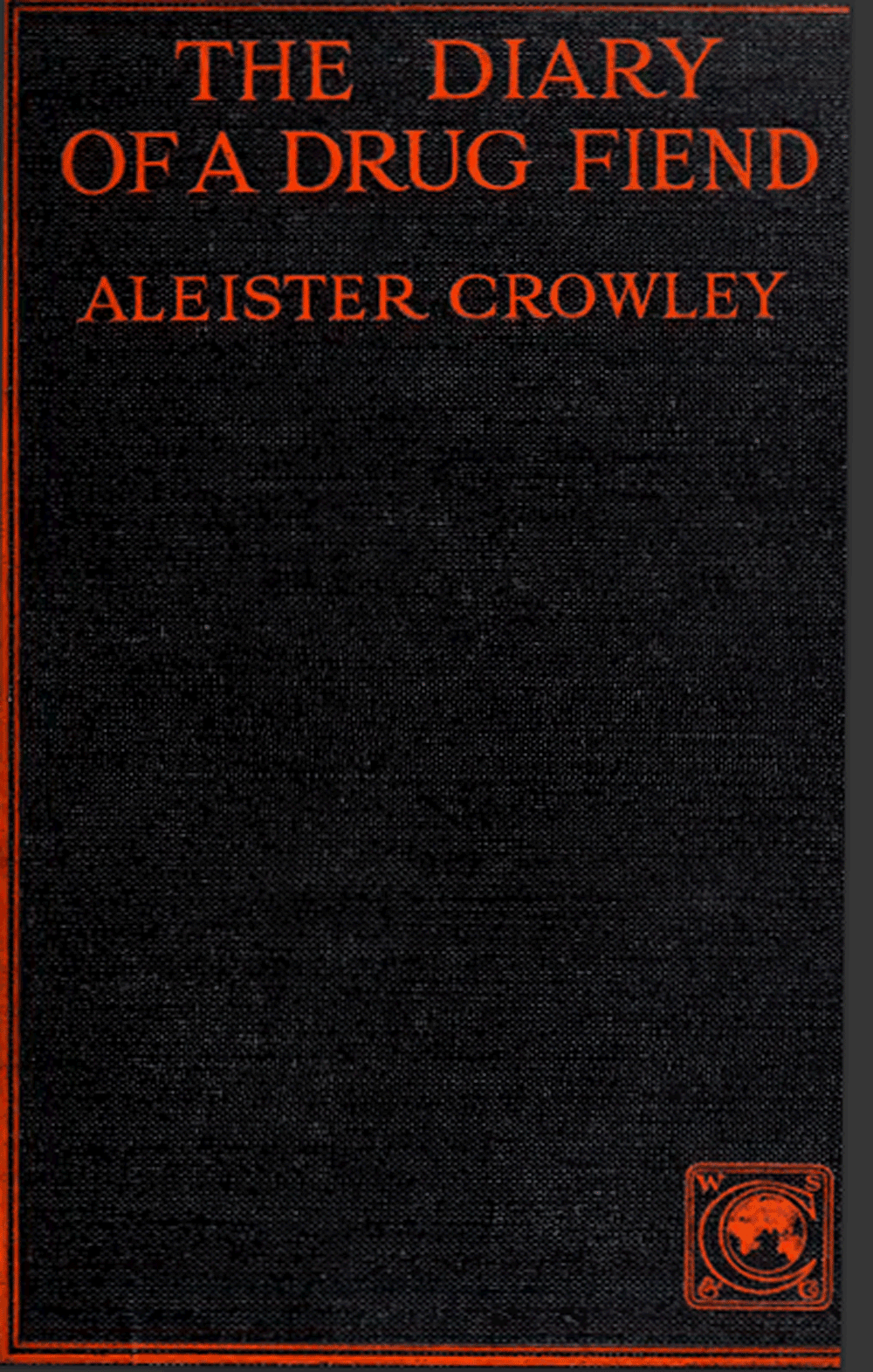
Diary of a Drug Fiend

This is the only full-cast recording of Aleister Crowley's 1922 classic paeon to common sense. It is the first book -- and so far almost the only book -- to stake out a philosophy of drug use that is compatible with human freedom, one in which we learn to use drugs as wisely as possible for the benefit of humanity. This recording was produced by the Drug War Philosopher and your purchases help support his effort to push back against the tragically counterproductive policy of drug prohibition, in the name of human freedom and of humanity's right to heal.

Purchase Your Copy


No cookies, no ads paid for by amoral and immoral billionaires (or trillionaires).


Unless otherwise indicated, no AI is used in the creation of site content. These essays represent the original ideas of their author and not the ideas that the author SHOULD have based on an algorithmic parsing of existing data. For more on this subject, consider the AI-related viewpoints to which the author subscribes as delineated in the New York Times opinion piece entitled "What 370,000 College Essays Tell Us About A.I.’s Effects on Creativity" by Rebecca Winthrop of the Brookings Institution.

The Partnership for a Death Free America is a proud sponsor of The Drug War Philosopher website @ abolishthedea.com.


Copyright 2026, Brian Ballard Quass Contact: quass@quass.com

tombstone for American Democracy, 1776-2024, RIP (up)