






Homepage of the Drug War Philosopher, Brian Quass
blog icon orange rss icon with stylized radio waves bird icon for twitter bird icon for twitter substack icon


back navigation arrow forward navigation arrow


Craven Disclaimers

How modern authors kowtow to drug war sensibilities

by Brian Ballard Quass, the Drug War Philosopher

November 17, 2026


All right, class, I trust that everybody brought their copy of the book that we'll be discussing today, namely LSD and the Mind of the Universe: Diamonds from Heaven 1. I was looking forward to going through the roll and grilling each of you on the book in order to embarrass those of you who were unprepared, but to be honest, I myself have not read the book yet. Or rather I have read just enough of the book to make my blood boil. I was taken aback by the very first sentence, in fact. As a result, I now feel the need to critique this book before even reading it, just so that I can "vent" on the problems that I find inherent in all books of this kind. You know what I mean: books that start with groveling disclaimers about the dangers of drugs and in which the author humbly nods to the authority of medical science when it comes to studying mood and mentation. I am still looking forward to actually reading the book for philosophical reasons, however. It has had rave reviews from people with whom I, as it were, share ontologies, shall we say? But I first need to protest those warped American drug attitudes whose existence are suggested by the disclaimer with which this book commences. Indeed, this entire essay cum university class will consist of the parsing of this one sentence and the subsequent revelation and denunciation of the mindset that it represents, i.e., the warped mindset of Americans when it comes to psychoactive substances.

In his "Notes to the reader," Christopher Bache bends the knee to the medical establishment and their monopoly when it comes to researching mind and mood medicine.

The information contained in this book should not be construed as advocating the use of psychedelic substances outside of the context of legally sanctioned scientific research and clinical supervision. 2


I do not often get the chance to employ the word 'pusillanimity' advisedly in an essay, but the term certainly came to mind after reading that disclaimer.

If Bache were writing a book about the joys of free-climbing, would he warn the reader that he was not advocating free-climbing? Were he writing about the joys of NASCAR, would he warn the reader that he was not advocating racing? Were he writing about cocktails, would he warn the reader that he was not advocating drinking? The answer is no, of course not. He would not do so because in those cases, he would consider his audience to be made up of grownups who were able to think for themselves. The fact that he does not make that assumption when it comes to the subject of drugs speaks to the success of the medical establishment and government in convincing us that we are all children when it comes to that subject. This is why a chronic depressive like myself has to see a doctor one-third my age every three months of my life for a "med" refill: because as far as the government and the medical establishment are concerned, I am a child when it comes to psychoactive substances. In fact, I am a notoriously untrustworthy child who is just waiting for a chance to "put one over" on his adult overseers. "We know that you've used this 'med' wisely for the last forty years, Brian," says my big grown-up doctor as he assumes pride of place behind his massive mahogany desk, "but how can we be sure that you will continue to use it wisely without our help in the forty FIRST year of your use?!"

To which I respond, looking up at his lordship from my spine-collapsing plush chair: "Oh, yeah. I never THOUGHT of that, daddy."

But this infantilization is not the only concern that Bache's boiler-plate disclaimer brings to mind. Like all writers who attempt to cover their posteriors in this way, he caves to Drug Warrior expectations without so much as complaining about having to do so. I understand that the above sentence was written for legal purposes, but that does not mean that Bache has to just cut-and-paste the script that the Drug Warriors have handed him without even criticizing it. Free speech is not completely lost in America, even when it comes to drugs. The disclaimer implies that scientists are the experts when it comes to psychoactive substances, which is ridiculous. By refusing to say so, by refusing to point out that drug-savvy users are the real experts, Bache is helping medical professionals to retain their ill-begotten claim to expertise when it comes to human behavior. It doesn't help matters that Ervin Laszlo then piles on in his forward to the book, telling us how science is now rendering a study of psychedelics acceptable after half a century of nothing. I am thinking to myself, "Where do scientists 'get off' calling the shots on holistic medicine? What can they be after but a one-size-fits-all pill with which to make more money for Big Pharma?" Think about it. Scientists are riding high here thanks to drug prohibition. First they collaborate with drug prohibition to confiscate my right to heal, and now to add insult to that injury, they set themselves up as the experts on the very substances that they are helping to keep me from using!

This is why I keep writing, class, because, amazingly, I am the only one who seems to be pointing this out: the fact that scientific materialists and drug prohibitionists are working together to outlaw our right to heal, to say nothing of our right to philosophize and to theologize and even to just plain relax at long last... Hence, my problems with the above disclaimer. Fair enough? It's a shame, too. I was really looking forward to reading Bache's book. I've actually had a used copy on hand for years, but I was finally inspired to read it after hearing it praised by author James Glattfelder in his interview with David Lorimer on the Galileo Commission website3. Little did I know that the very first page would pluck my last and final nerve. But omittance is no quittance, as the poet says. Now that I've made my misgivings a matter of record, I feel free to read the book with a good conscience. Incidentally, you notice how I cite relaxation as a drug benefit? That's the kind of thing that medical science cannot understand. You see, in the real world, relaxation helps, and not just because of the relaxation either. It is easier to endure the tough patches in life if one can look forward reliably to upcoming relaxation. This is all common sense psychology, but therein lies the problem: common sense psychology has been replaced by behaviorism in academia in order to turn the field of psychology into a "hard" science -- which means, I take it, a science that is hard on folks like myself who could so palpably benefit from the use of godsend medicines.

Finally, I have one big disclaimer of my own to make: this essay/class is not a criticism of Christopher Bache: it is a criticism of almost everybody who writes about drugs these days. You remember how King Lear said that "None do offend, I say none"? Well, I say that "All do offend, I say all..." at least when it comes to writing about drugs in the 21st century. Everybody thinks that drugs are dangerous in a way that nothing else in the world is dangerous -- and everybody thinks that science is going to decide for us which drugs can be of use and which we should continue to be unreasonably afraid of until the end of time...

[bell rings]

Hey, where are you guys going, I'm not through yet. Now, where was I? Let's see... until the end of time... Oh, yes. ...even if we have to turn the world into one big police state and kill hundreds of thousands in Mexico in order to force everyone to share our prehistoric superstition that drugs are evil!

[running out into hallway after students]

Do you HEAR me, class?! This will be on the test!


Key Takeaways:


keywords: Christopher Bache, Diamonds from Heaven, Ervin Laszlo, LSD and the Mind of the Universe, disclaimers, drug attitudes, drug philosophy, drug prohibition, drugs, infantilization, materialism, philosophy, philosophy of drugs, psychiatrists


Notes for essay entitled Craven Disclaimers: How modern authors kowtow to drug war sensibilities:

1: Bache, Christopher M. 2019. LSD and the Mind of the Universe. Park Street Press. https://www.goodreads.com/book/show/44321378-lsd-and-the-mind-of-the-universe. (up)
2: Bache, Christopher M. 2019. LSD and the Mind of the Universe. Park Street Press. https://www.goodreads.com/book/show/44321378-lsd-and-the-mind-of-the-universe. (up)
3: Glattfelder, James B. 2026. “What Is Syncretic Idealism?.” Medium. October 28, 2026. https://medium.com/@jnode/what-is-syncretic-idealism-8a56ad13f04e. (up)


read more essays here


Ten Tweets

against the hateful war on US


Imagine educational documentaries showing how folks manage to safely incorporate today's hated substances into their life and lifestyle.

SWAT raids have increased by 15,000 percent from the late 1970s to today, resulting in 50,000 to 80,000 SWAT raids annually in the US alone. --War On Us

Materialist puritans do not want to create any drug that elates. So they go on a fool's errand to find reductionist cures for "depression itself," as if the vast array of human sadness could (or should) be treated with a one-size-fits-all readjustment of brain chemicals.

Americans won't be true grown-ups until they learn to react to drug deaths the same way that they react to deaths from horseback riding and mountain climbing.

The reasons that people use drugs are psychologically obvious. Academics gaslight us on this topic and invent new diseases to explain away our desire to live large.

The front page of every mycology club page should feature a protest of drug laws that make the study of mycology illegal in the case of certain shrooms. But no one protests. Their silence makes them drug war collaborators because it serves to normalize prohibition.

People magazine should be fighting for justice on behalf of the thousands of American young people who are dying on the streets because of the drug war.

What I want to know is, who sold Christopher Reeves that horse that he fell off of? Who was peddling that junk?!

What prohibitionists forget is that every popular but dangerous activity, from horseback riding to drug use, will have its victims. You cannot save everybody, and when you try to do so by law, you kill far more than you save, meanwhile destroying democracy in the process.

Brits have a right to die, but they do not have the right to use drugs that might make them want to live. Bad policy is indicated by absurd outcomes, and this is but one of the many absurd outcomes that the policy of prohibition foists upon the world.


Click here to see All Tweets against the hateful War on Us


back navigation arrow forward navigation arrow
Book Cover

Break the ice with a sledgehammer: place this book on your coffee table.

This book features 150 annotated images, designed to force brainwashed Americans to confront the fact that drug prohibition is wrong. Here is what author Richard Parrish II says of the book's compiler: "The drug prohibition philosopher provides first-hand, principled, persuasive, and insightful arguments against the current drug prohibition regime..."

Purchase Your Copy
Book Cover

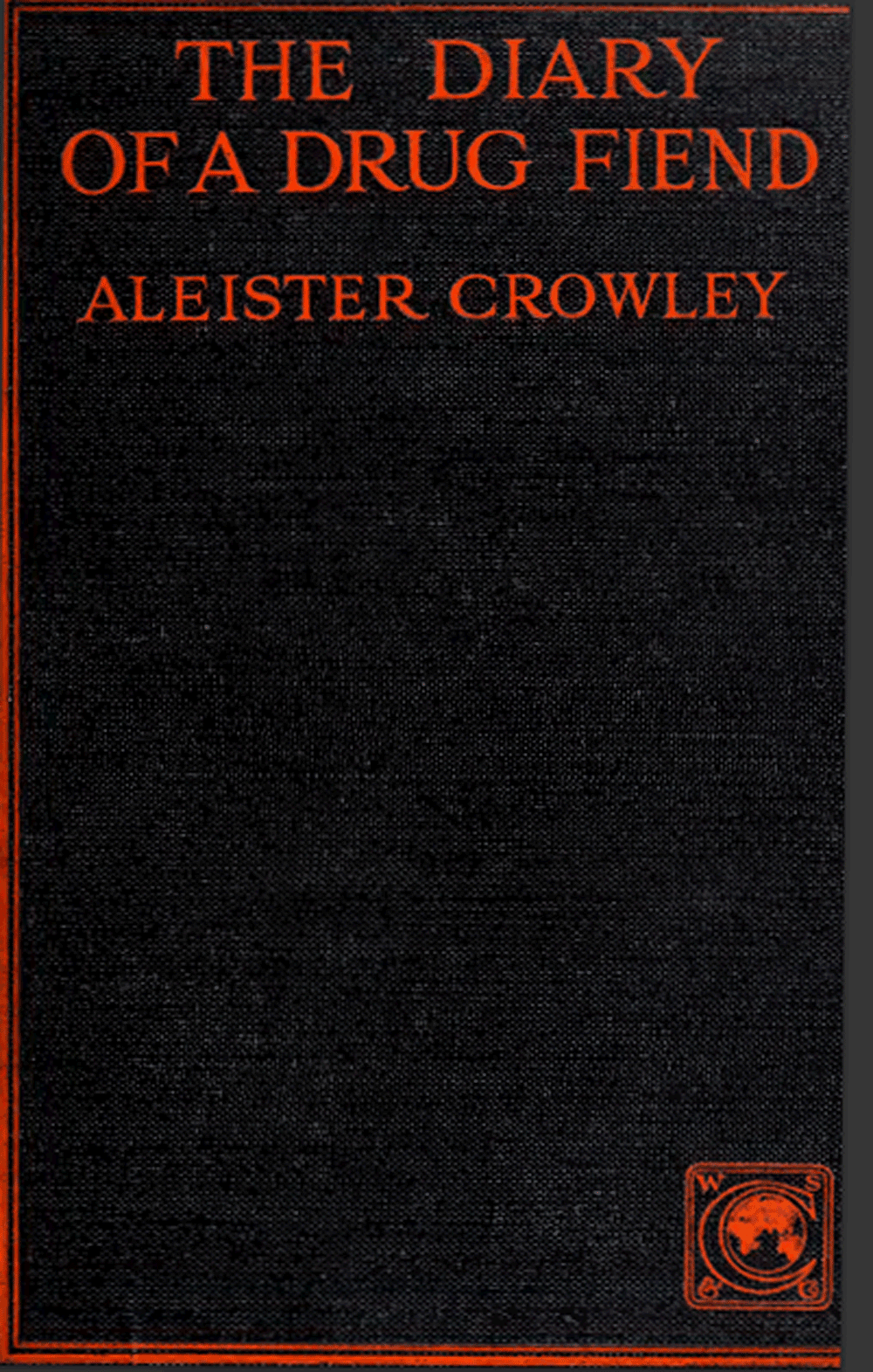
Diary of a Drug Fiend

This is the only full-cast recording of Aleister Crowley's 1922 classic paeon to common sense. It is the first book -- and so far almost the only book -- to stake out a philosophy of drug use that is compatible with human freedom, one in which we learn to use drugs as wisely as possible for the benefit of humanity. This recording was produced by the Drug War Philosopher and your purchases help support his effort to push back against the tragically counterproductive policy of drug prohibition, in the name of human freedom and of humanity's right to heal.

Purchase Your Copy


No cookies, no ads paid for by amoral and immoral billionaires (or trillionaires).


Unless otherwise indicated, no AI is used in the creation of site content. These essays represent the original ideas of their author and not the ideas that the author SHOULD have based on an algorithmic parsing of existing data. For more on this subject, consider the AI-related viewpoints to which the author subscribes as delineated in the New York Times opinion piece entitled "What 370,000 College Essays Tell Us About A.I.’s Effects on Creativity" by Rebecca Winthrop of the Brookings Institution.

The Partnership for a Death Free America is a proud sponsor of The Drug War Philosopher website @ abolishthedea.com.


Copyright 2026, Brian Ballard Quass Contact: quass@quass.com

tombstone for American Democracy, 1776-2024, RIP (up)