




Homepage of the Drug War Philosopher, Brian Quass
blog icon orange rss icon with stylized radio waves bird icon for twitter bird icon for twitter substack icon


back navigation arrow forward navigation arrow


Drug references in English literature

What public domain literature tells us about the drug attitudes of the west

by Brian Ballard Quass, the Drug War Philosopher

August 28, 2026


HG Wells


Under the Knife


“I do not think I saw, I do not think I heard; but I perceived all that was going on, and it was as if I both heard and saw...


Haddon's face was firm and his hand steady; but I was surprised to perceive ( how I know not) that he was feeling the gravest doubt as to his own wisdom in the conduct of the operation. Mowbray's thoughts, too, I could see...


I was no longer a denizen of the solar system: I had come to the outer Universe, I seemed to grasp and comprehend the whole world of matter...


The operation had not killed me. And I perceived, suddenly, that the dull melancholy of half a year was lifted from my mind.”


Comment:
HG Wells is here recounting his experience under chloroform. I was going to write that he was recounting the EFFECTS of chloroform, but that would be misleading. We can no more attribute extrasensory perception and remote viewing to chloroform than we can attribute them to glue sniffing or inhaling laughing gas. It is clear that such substances are not creating these powers and visions by themselves. Why should a simple chemical substance give one such powers and visions, powers and visions that appear to be wildly extravagant and ridiculously irrelevant from the point of view of a supposedly goal-free evolution? No, these substances seem instead to be overriding our mental filter whereby our minds typically choose conservatively from among the stuff that is "out there." By default, our minds select and interpret those aspects of "what's out there" (be it atoms or vibratory 'strings') based on the utilitarian needs of a member of the species Homo sapiens here on planet earth. Our perceptions are limited to these sorts of things. The effects associated with these seemingly mundane substances, like chloroform, make far more sense if we consider such substances to be catalysts that remove the perceptive veils that keep us from seeing reality from a non-utilitarian perspective, or at least a perspective that has no immediate utilitarian value, though it may be suggestive of ideas with great potential value in 'the real world.'


If we think otherwise, we would eventually have to create a glossary of household products that would look very odd indeed. Beside the mundane uses for the substances, like cleaning desktops, we would have to list things like, "And can give you views of the world from the point of view of an inhabitant of Proxima Centauri B, and could be harnessed to serve as an excellent antidepressant into the bargain."


It's amazing to me how these substance-produced benefits are completely ignored by psychiatrists, psychologists and philosophers, except in throwaway lines designed to express their patriotic contempt for 'drugs,' as who should say, "Hey, guys, I hate them just as much as you do, if not more!" But then I view such catalysts from a special point of view. I view them from the point of view of a 67-year-old chronic depressive who has been "on" dependence-causing Big Pharma drugs for over 40 years now. I view them as someone who has been shunted off onto underperforming and expensive "meds" thanks to drug prohibition, meds that are far harder to kick than heroin and for which I have to see a doctor one-third my age every three months of my life in order to qualify for a refill on a drug that I do not even wish to be taking.


Charlotte Bronte


Villette 1


“Ah! the sedative had been administered. In fact, they had given me a strong opiate... I know not whether Madame had overcharged or under-charged the dose; its result was not that she intended. Instead of stupor, came excitement. I became alive to new thought to reverie peculiar in colouring. A gathering call ran among the faculties, their bugles sang, their trumpets rang an untimely summons. Imagination was roused from her rest, and she came forth impetuous and venturous. With scorn she looked on Matter, her mate. Rise! she said. Sluggard! this night I will have my will; nor shalt thou prevail. Look forth and view the night! was her cry; and when I lifted the heavy blind from the casement close at hand with her own royal gesture, she showed me a moon supreme, in an element deep and splendid. To my gasping senses she made the glimmering gloom, the narrow limits, the oppressive heat of the dormitory, intolerable. She lured me to leave this den and follow her forth into dew, coolness, and glory.”


Comment:
Charlotte does not identify the opiate here, but I found the following passage in a book on Project Gutenberg entitled World's Best Literature edited by one Charles Dudley Warner:

On being asked once how she could describe so accurately the effects of opium as she does in 'Villette,'2 she replied that she knew nothing of opium, but that she had followed the process she always adopted in cases of this kind. She had thought intently on the matter for many a night before falling asleep; till at length, after some time, she waked in the morning with all clear before her, just as if she had actually gone through the experience, and then could describe it word for word as it happened.3


I hate to be a cynic, but I have to respond to this citation by adopting a wry smile and saying: "If you say so, Charlotte." Personally, I wonder if Charlotte had not actually partaken. Given the public attitude about the drug at the time, she would hardly wish to admit to such a deed in public. And why should she? Even the critics who asked her the question seem to have assumed that she would never in a million years have learned about the effects of opium by acquiring firsthand experience of the drug. To which I can only add, "Or WOULD she? On what basis do we assume that Charlotte Bronte would hew to a Christian Science understanding of psychoactive substances?" Charlotte's brother, Branwell, was notorious for his overuse of the opium derivative known as laudanum, after all. Why do we assume that Charlotte, who was clearly far wiser than her hapless sibling, would never have thought to use laudanum wisely for herself, which is to say, on a variety of chronologically spaced occasions, as a way to inspire herself with interesting visions that might someday prove useful to her in her literary career? Why might she NOT have used laudanum? Perhaps she partook of the drug "in a series of quarterly carouses," as did the poets of the 19th century according to author Richard Middleton in his supernatural short story entitled 'The Last Adventure'? 4 She might indeed have used laudanum. Who shall say?


Richard Middleton


The Last Adventure 5


“He took life as young poets take opium : in a series of magnificent quarterly carouses.”


Comment:
Here we see a 19-century author alluding to the wise use of opium for wise purposes. Imagine that! Amazingly, modern westerners can see nothing but evil in this drug that has such vast potential for inspiring a user. I would add "when used wisely" to that sentence, but such caveats would be taken for granted in a world in which we were not all programmed to associate drug use with death and sorrow. Programmed how, you ask? By the media's ruthless censorship of all reports of wise and beneficial drug use, that's how. Indeed, so crazed is America's Christian Science hatred of drug use that Drug Czar William Bennett reserved his most venomous scorn for those individuals who used drugs wisely, under the bizarre assumption that in doing so, they were setting a bad example for our poor vulnerable young people.


Fitz-James O'Brien


What Was It? 6


“Those hours of opium happiness which the Doctor and I spent together in secret were regulated with a scientific accuracy. We did not blindly smoke the drug of paradise, and leave our dreams to chance. While smoking, we carefully steered our conversation through the brightest and calmest channels of thought.”


Comment:
Here is yet another 19th-century author speaking of the wise and strategic use of opium. If America and the world ever outgrows its childish fear of drugs (and the caveman attitude on which it is based), we will someday see book titles such as the following:

How to get the most out of opium smoking with your friends and loved ones, safely and without addiction."


Someday even that latter stipulation, "safely and without addiction," will no longer even be necessary. As Aldous Huxley reminds us in "The Human Situation,"7 a book published posthumously by his wife Laura in 1977, there are "naturally occurring drugs which open up the consciousness to the visionary experience and which appear to be relatively harmless to the physiology and not to be addictive in any way."8 Did you catch that? He's talking about inspiring drugs that are not addictive in any way. And Huxley lived decades before Alexander Shulgin9 revealed how the chemistry of these natural drugs could inspire a theoretically endless raft of synthetics in the form of phenethylamines and tryptamines, each with its own unique propensities for bringing about a wide variety of highly desirable mental and emotional states. My point here is that opium need never be the only drug in one's household pharmacy. Much of the fear about opiate addiction is predicated on the idea that opiates are the only game in town, but in a free world, there would be a wide variety of pharmacologically assisted ways to attain self-transcendence. There would therefore be no need for any but the grossly uninformed to become addicted to any one drug in particular, especially in a world in which we no longer had a superstitious taboo against the common sense practice of "fighting drugs with drugs."


Edgar Allan Poe
10


A Tale of the Ragged Mountains 11


“In the meantime the morphine had its customary effect- that of enduing all the external world with an intensity of interest. In the quivering of a leaf- in the hue of a blade of grass- in the shape of a trefoil- in the humming of a bee- in the gleaming of a dew-drop- in the breathing of the wind- in the faint odors that came from the forest- there came a whole universe of suggestion- a gay and motley train of rhapsodical and immethodical thought.”


Comment:
Well, okay, morphine is not exactly opium, but it is one of opium's primary psychoactive alkaloids. Besides, one cannot be picky when looking for quotations referring to the positive use of opium in English literature. And clearly the above citation represents a positive use of morphine, at least in the eyes of any reader with any poetic propensities whatsoever. Imagine seeing nature in this way, as inspiring us with a whole universe of suggestion. Would it not make us a sort of Walt Whitman for a day? The narrator is describing the effect of morphine on an eccentric young man named Augustus Bedloe, the protagonist of Poe's short story entitled 'A Tale of the Ragged Mountains'. 12 The story is set in the forested mountains to the southwest of Charlottesville, Virginia. I ask the reader to forget their kneejerk fear of the drug just long enough to recognize the astonishing mindset that it has facilitated in the user. It is no wonder that Drug Warriors do not wish us to read such literature, because it begs an enormous question about our healthcare system, especially in the minds of a chronic depressive like myself: namely, why are our scientists telling us that depression is such a tough nut to crack, one requiring many more well-funded scientific studies, when such substances as these exist in the world?

But here I need to stop and add a qualification that will be unnecessary once Americans finally grow up when it comes to drugs. I need to explicitly say what should be obvious to any adult, that this wondrous outcome of morphine use of which Poe is writing here presupposes an educated and imaginative user to begin with. If you give a cynical and poorly educated dullard a shot of morphine, they are not going to suddenly start rejoicing in the shape of a trefoil or the humming of a bumble bee. It is far more likely that they will spend the motivational power supplied by the drug on their customary avocations: things like beating their wives, kicking house pets, and wrecking the joint when a convenience store refuses to sell them liquor after midnight. Nor should this come as a surprise. The effects of psychoactive drugs are created by a joint partnership between the user and the drug itself. This, indeed, is one of many reasons why reductionist scientists cannot "wrap their heads" around such substances. A "real" drug, as far as they're concerned, causes the same effect in everybody who takes it. This, in fact, was the rationale behind the creation of the one-size-fits-all antidepressants on which 1 in 4 American women are now dependent for life.


Edgar Allan Poe


The Fall of the House of Usher


“I looked upon the scene before me — upon the mere house, and the simple landscape features of the domain — upon the bleak walls — upon the vacant eye-like windows — upon a few rank sedges — and upon a few white trunks of decayed trees — with an utter depression of soul which I can compare to no earthly sensation more properly than to the after-dream of the reveller upon opium — the bitter lapse into every-day life — the hideous dropping off of the veil.”


Comment:
Here is the quotation that Drug Warriors were waiting for: a citation that shows that drugs are evil. “Yes!” they shout to themselves as they jerk down their fists in glee. “That’s all we’ve ever been saying, yo!” Well, I hate to interrupt their victory party, but I must point out that Poe is writing here about the excessive use of opium. He is writing about what the Victorians would have referred to as an “opium debauch.” He is not referring to the effects of the occasional smoking of opium, or even of the daily smoking of opium in moderate amounts. He is also apparently writing about the effects of “eating” opium, and then in large doses, not smoking it. Eating opium, as William Brereton reports, is a different thing from smoking it as regards the effects experienced by the user:


The fifth fallacy is, that opium smoking and opium eating are equally hurtful. The fact being that there is the widest difference in the world between the two practices, as I shall hereafter conclusively prove to you. Upon this point, I may tell you, that Mr. Storrs Turner, in the appendix to his book, gives numerous extracts from evidence taken on various occasions as to opium eating, which has no relevancy to opium smoking; not that I am even disposed to admit that even opium eating in moderation is a baneful practice, the medical evidence on the subject being at present very conflicting. And here I may appropriately say, that although an overdose of opium may cause death, the mere smoking of the drug in any quantity will not do so.


The use of which Poe is writing here has little to do with the nightly smoking of opium as practiced by the Chinese under British rule. As Dr. Ayres, the last and longest-serving British Surgeon General of Hong Kong, testified in the late 19th century:


My opinion of it is that [opium smoking] may become a habit, but that that habit is not necessarily an increasing one. Nine out of twelve men smoke a certain number of pipes a day, just as a tobacco smoker would, or as a wine or beer drinker might drink his two or three glasses a day, without desiring more. I think the excessive opium smoker is in a greater minority than the excessive spirit drinker or tobacco smoker. In my experience, the habit does no physical harm in moderation.


To claim otherwise would be like saying that the nightly drinker of a wine cooler is going to pay for their indulgence by seeing pink elephants and going through the DTs.


Mark Twain


Goldsmith's Friend Abroad Again 13


“SAN FRANCISCO, 18—. DEAR CHING-FOO: I stepped ashore jubilant! I wanted to dance, shout, sing, worship the generous Land of the Free and Home of the Brave. But as I walked from the gangplank a man in a gray uniform—[Policeman] —kicked me violently behind and told me to look out—so my employer translated it. As I turned, another officer of the same kind struck me with a short club and also instructed me to look out. I was about to take hold of my end of the pole which had mine and Hong-Wo's basket and things suspended from it, when a third officer hit me with his club to signify that I was to drop it, and then kicked me to signify that he was satisfied with my promptness. Another person came now, and searched all through our basket and bundles, emptying everything out on the dirty wharf. Then this person and another searched us all over. They found a little package of opium sewed into the artificial part of Hong-Wo's queue, and they took that, and also they made him prisoner and handed him over to an officer, who marched him away. They took his luggage, too, because of his crime, and as our luggage was so mixed together that they could not tell mine from his, they took it all. When I offered to help divide it, they kicked me and desired me to look out.”


Comment:
This snippet comes from an article by Twain published in Galaxy magazine in 1870. We see here that American immigration and custom officials were already assuming the role of noxious busybodies decades before they had been egged on to new heights of inhumanity by the unprecedented wholesale outlawing of psychoactive substances, first at the state level and then at the federal level. But as this epistolary story reveals, bad-tempered border guards are the least of an immigrant's worries when traveling to America. The story consists of the letters that an ambitious Chinaman named Ah Song Hi is writing to his friend back home in order to demonstrate how the former's search for freedom and opportunity is progressing in the Land of the Free. Scarcely has Ah Song Hi "cleared customs," however, when he is attacked by a fierce dog that has been sicced upon him by a couple of young anti-immigrant hoodlums, out for a good time. A police officer finally arrives on the scene thanks to help from a good Samaritan, but this is only after the Chinaman has been reduced to "rags and blood from head to foot." When the benefactor asks the young men why they are abusing the man in this way, they answer as follows:

This Ching divil comes till Ameriky to take the bread out o' dacent intilligent white men's mouths, and whir they try to defind their rights there's a dale o' fuss made about it.


The good Samaritan soon realizes that the growing crowd of bystanders was on the side of the hooligans, and so he slinks way, after which the police officers charge Ah Song Hi with disturbing the peace.

It is quite the indictment of America that such a story should be as relevant as ever today, 150 years later, on the 250th anniversary of our birth as a country. But it does remind us of something that Americans refuse to recognize: the fact that drug prohibition is an impulse that comes from the dark side of humanity, the impulse to find scapegoats. As Thomas Szasz warns us in Our Right to Drugs:

Lacking the usual grounds on which people congregate as a nation, we [Americans] habitually fall back on the most primitive yet most enduring basis for group cohesion, namely, scapegoating. 14
Thomas Szasz -- Our Right to Drugs


Notes for essay entitled Drug references in English literature: What public domain literature tells us about the drug attitudes of the west:

1: Brontë, Charlotte. n.d. “Villette.” Https://Www.Gutenberg.Org/Files/9182/9182-h/9182-h.Htm. Accessed August 26, 2026. https://www.gutenberg.org/cache/epub/9182/pg9182-images.html. (up)
2: Brontë, Charlotte. n.d. “Villette.” Https://Www.Gutenberg.Org/Files/9182/9182-h/9182-h.Htm. Accessed August 26, 2026. https://www.gutenberg.org/cache/epub/9182/pg9182-images.html. (up)
3: Project Gutenberg. 2019. “Project Gutenberg.” Project Gutenberg. 2019. https://www.gutenberg.org/. (up)
4: “The Collected Supernatural and Weird Fiction of Richard Middleton by Richard Middleton.” 2026. SciFier.com. 2026. https://scifier.com/the-collected-supernatural-and-weird-fiction-of-richard-middleton-forty-one-short-stories-of-the-strange-and-unusual-inc (up)
5: “The Collected Supernatural and Weird Fiction of Richard Middleton by Richard Middleton.” 2026. SciFier.com. 2026. https://scifier.com/the-collected-supernatural-and-weird-fiction-of-richard-middleton-forty-one-short-stories-of-the-strange-and-unusual-inc (up)
6: Great Ghost Stories O'Brien, Fitz-James , Dodd, Mead and Company, Inc., 1918 (up)
7: “The Human Situation : Lectures at Santa Barbara, 1959 : Huxley, Aldous, 1894-1963 : Free Download, Borrow, and Streaming : Internet Archive.” 2026. Internet Archive. 2026. https://archive.org/details/humansituationle00huxl/page/n5/mode/2up?view=theater. (up)
8: “The Human Situation : Lectures at Santa Barbara, 1959 : Huxley, Aldous, 1894-1963 : Free Download, Borrow, and Streaming : Internet Archive.” 2026. Internet Archive. 2026. https://archive.org/details/humansituationle00huxl/page/n5/mode/2up?view=theater. (up)
9: Shulgin, Alexander T, and Ann Shulgin. 2019. Pihkal : A Chemical Love Story. Berkeley, Ca: Transform Press. (up)
10: “Edgar Allan Poe Society of Baltimore - Works - Tales - A Tale of the Ragged Mountains (Text-02A).” 2026. Eapoe.Org. 2026. https://www.eapoe.org/works/tales/raggeda.htm. (up)
11: “Edgar Allan Poe Society of Baltimore - Works - Tales - A Tale of the Ragged Mountains (Text-02A).” 2026. Eapoe.Org. 2026. https://www.eapoe.org/works/tales/raggeda.htm. (up)
12: “Edgar Allan Poe Society of Baltimore - Works - Tales - A Tale of the Ragged Mountains (Text-02A).” 2026. Eapoe.Org. 2026. https://www.eapoe.org/works/tales/raggeda.htm. (up)
13: Project Gutenberg. 2019. “Project Gutenberg.” Project Gutenberg. 2019. https://www.gutenberg.org/. (up)
14: Szasz, Thomas. 1992. Our Right to Drugs. Praeger. (up)


read more essays here


Ten Tweets

against the hateful war on US


The front page of every mycology club page should feature a protest of drug laws that make the study of mycology illegal in the case of certain shrooms. But no one protests. Their silence makes them drug war collaborators because it serves to normalize prohibition.

Materialist puritans do not want to create any drug that elates. So they go on a fool's errand to find reductionist cures for "depression itself," as if the vast array of human sadness could (or should) be treated with a one-size-fits-all readjustment of brain chemicals.

Malcolm X sensed an important truth about drugs: the fact that it was always a self-interested category error for Americans to place medical doctors in charge of mind and mood medicine.

This is why we would rather have a depressed person commit suicide than to use "drugs" -- because drugs, after all, are not dealing with the "real" problem. The patient may SAY that drugs make them feel good, but we need microscopes to find out if they REALLY feel good.

This is why I call the drug war 'fanatical Christian Science.' People would rather have grandpa die than to let him use laughing gas or coca or opium or MDMA, etc. etc.

Americans think that fighting drugs is more important than freedom. We have already given up on the fourth amendment. Nor is the right to religion honored for those who believe in indigenous medicines. Pols are now trying to end free speech about drugs as well.

When people tell us there's nothing to be gained from using mind-improving drugs, they are embarrassing themselves. Users benefit from such drugs precisely to the extent that they are educated and open-minded. Loudmouth abstainers are telling us that they lack these traits.

Self-medicating has always been the most basic of human rights, until the medical industry demonized the practice for obvious financial reasons.

Drugs that sharpen the mind should be thoroughly investigated for their potential to help dementia victims. Instead, we prefer to demonize these drugs as useless. That's anti-scientific and anti-patient.

How would we even KNOW that outlawed drugs have no positive uses? We first have to incorporate them in a sane, empathic and creative way to find that out, and the drug war makes such a sensible approach absolutely impossible.


Click here to see All Tweets against the hateful War on Us


back navigation arrow forward navigation arrow
Book Cover

Break the ice with a sledgehammer: place this book on your coffee table.

This book features 150 annotated images, designed to force brainwashed Americans to confront the fact that drug prohibition is wrong. Here is what author Richard Parrish II says of the book's compiler: "The drug prohibition philosopher provides first-hand, principled, persuasive, and insightful arguments against the current drug prohibition regime..."

Purchase Your Copy
Book Cover

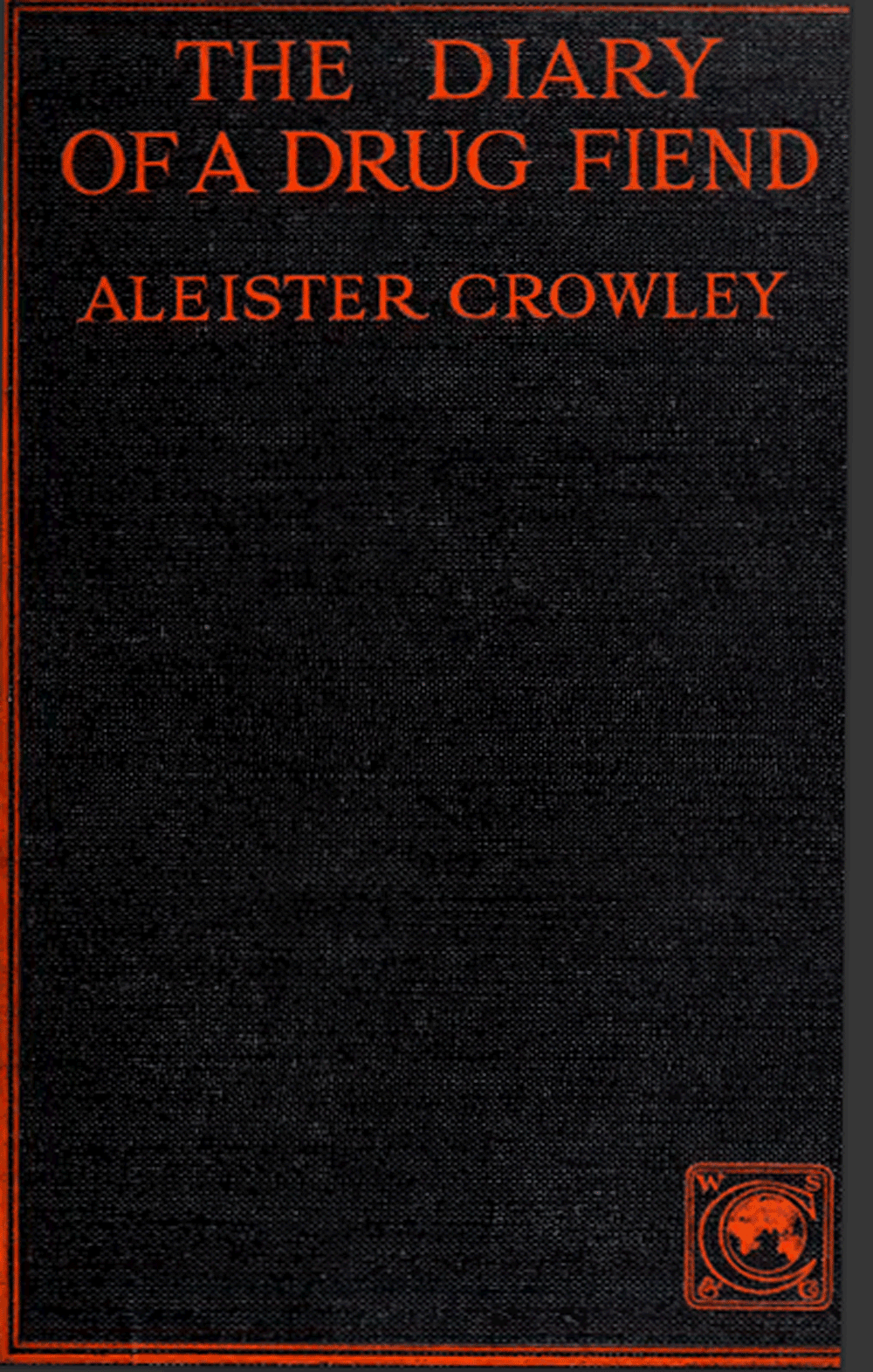
Diary of a Drug Fiend

This is the only full-cast recording of Aleister Crowley's 1922 classic paeon to common sense. It is the first book -- and so far almost the only book -- to stake out a philosophy of drug use that is compatible with human freedom, one in which we learn to use drugs as wisely as possible for the benefit of humanity. This recording was produced by the Drug War Philosopher and your purchases help support his effort to push back against the tragically counterproductive policy of drug prohibition, in the name of human freedom and of humanity's right to heal.

Purchase Your Copy


No cookies, no ads paid for by amoral and immoral billionaires (or trillionaires).


Unless otherwise indicated, no AI is used in the creation of site content. These essays represent the original ideas of their author and not the ideas that the author SHOULD have based on an algorithmic parsing of existing data. For more on this subject, consider the AI-related viewpoints to which the author subscribes as delineated in the New York Times opinion piece entitled "What 370,000 College Essays Tell Us About A.I.’s Effects on Creativity" by Rebecca Winthrop of the Brookings Institution.

The Partnership for a Death Free America is a proud sponsor of The Drug War Philosopher website @ abolishthedea.com.


Copyright 2026, Brian Ballard Quass Contact: quass@quass.com

tombstone for American Democracy, 1776-2024, RIP (up)