



Homepage of the Drug War Philosopher, Brian Quass
blog icon orange rss icon with stylized radio waves bird icon for twitter bird icon for twitter substack icon


back navigation arrow


Some Harsh Words about Winslow's Soothing Syrup

What the patent medicine tragedy tells us about drug attitudes

by Brian Ballard Quass, the Drug War Philosopher

August 28, 2026


Some thoughts on Richard Parrish's article entitled "Before the Line," posted today on his substack as the 'second in a series adapted from Permission Required: The 1951 Law That Decides Which Drugs You Can Buy, and Why No One Can Justify It.'1

Richard begins this thought-provoking article by relating the tragic story of the patent medicine known as Winslow's Soothing Syrup, a product that was used by mothers from the mid-19th century until 1930 to quiet colicky infants. 2 The product worked, alas all too well. These mothers were unaware of a crucial fact: the fact that the syrup contained morphine and alcohol. It is generally agreed that the use of the syrup caused a large number of infant deaths in both the United States and the United Kingdom, with some estimates placing the death toll in the thousands. These deaths were a direct result of the fact that mothers literally did not know what medicine they were giving their children when they gave them a teaspoonful or more of Winslow's Soothing Syrup. They therefore had no idea about what dosage regimen made sense. Nor did it help matters that the vendors of the concoction, as the Pharmacy Times reports, recommended use of the drug "in high doses." 3

I fully agree that there was a real problem here. I agree that the sale of such patent medicines under such circumstances would and should provoke an indignant cry for common-sense regulation. I agree that a purchaser should know what medicine they are buying and that they should be provided with medically sound advice about dosing and about the potential for addiction. Check, check, and check. And yet...

Now that I have come out on the side of Mom and apple pie, permit me to add the following extended caveat on this topic.

My concern -- or rather my fear -- is that the animus toward these substances in the early 1900s and before was not due exclusively to the fact that these patent medicines were unidentified and hence not provided with reliable information about dosing and addiction potential; these substances seem to have been scorned for merely being what they turned out to be, namely, "drugs" in the pejorative sense of that word, in contradistinction to societally blessed "medicines." Many of the anachronistic complaints from our armchair critics of today about the patent medicines of the past concern no other charge against these concoctions except for the fact that they contained such substances as morphine, laudanum, cocaine and/or cannabis. The argument is not about dosage or even about the failure to identify ingredients. Instead, there is an unspoken assumption on the part of these critics that certain substances are "unsafe at any speed," or in this case, "at any dosage." If this sounds familiar, it should. This is the drug prohibition algorithm: the idea that a substance that can cause problems for one demographic when used at one dose for one reason in one context, must not be used by any demographic at any dose for any reason in any context. If morphine causes problems for babies, then it must not be used by full-grown adults. This is the way that drug prohibition works in practice.

I want to make it clear that I am completely sympathetic to grieving mothers. To repeat, I fully agree that there was a real problem back then with patent medicines. But I have to raise some points that I fear no one else has ever raised on these topics.

The GreenMed Info website, for instance, tells us that NSAIDs are linked to 160,000 deaths each year and over a million cases of hospitalization.4 I am not raising this factoid in order to cavil and nitpick. I recognize moreover that such a claim is not even directly comparable to the story of the syrup. But I still believe that we can learn a lot about drug attitudes by answering the following question: namely, why are we not up in arms about the fact that 165,000 deaths each year are linked to NSAIDS? I think the answer is clear. It is because we consider NSAIDs to have valid uses; moreover, we recognize that the world is a big place, and although 165,000 is a big number in and of itself, it is still small considering the number of people who use such drugs. Again, I am not trying to compare apples and oranges here. I am not trying to imply that we should ignore the infant deaths that were caused over a hundred years ago by the failure to identify the ingredients contained in patent medicines; I am objecting rather to the fact that the complaints about that status quo went (and today continue to go) far beyond the call for proper drug identification as to dosage and the potential for addiction; such patent medicines are also pilloried (today as they were yesterday) merely for being what they are, the assumption being that drugs like morphine, laudanum, opium and cocaine are unsafe at any speed, i.e., at any dosage, and indeed for any person when used for any purpose in any circumstance whatsoever.

And what do these drugs have in common, these drugs that are considered to be "unsafe at any speed," or at any dosage? They are all the kinds of substances that do not qualify as "rational therapeutics."5 That term may have been of later origin, but the mindset behind "rational therapeutics" was already well established in the early 1900s. This was the belief that a drug should cure a specific, nameable and visible illness. There was no understanding, then or now, that drugs that improve one's attitude toward life could have powerful but indirect health benefits: that, for instance, their wise use might persuade a lazy person to exercise or cause a procrastinator to finally finish reading that book on their coffee table that they've been meaning to read for the last five years. In order for Americans to believe that a given drug "works," it has to cure a specific bodily illness -- and it has to do so in a way that can be seen, appreciated and acknowledged both by the patient and the doctor. It follows from this mindset that drugs that "merely" expand the mind or improve mood would be pilloried. Well, I say it "follows," but it really only follows in a country with a specific kind of mindset. In a country with an holistic mindset, the population might not have so much difficulty figuring out how improved mood and mentation could conduce to better health by dint of producing a wide variety of beneficial 'knock-on effects.'

I hope I have made it clear that I am not one of those philosophers whose devotion to abstract principles renders them callous to human suffering. I bring up these sidelines to the story of Winslow's Soothing Syrup not to depreciate past suffering, but rather to prevent future suffering that will surely come about if we overshoot the mark in our attempts to prevent a tragic healthcare incident from happening again.

I have one other caveat to add here and that concerns the difficulty of finding unbiased sources online when researching these topics. There is such a bias against drugs like morphine that many of the articles one finds about patent medicines simply bristle with the indignation of their authors at the fact that a company was actually selling morphine to the public to begin with. That is taken to be a damning indictment in and of itself. Any talk about improper labeling is mere "gravy" for such drug bashers. They definitely have an axe to grind in favor of the Christian Science tenets of Mary Baker Eddy. This bias puts drug researchers in a tough spot. We have to "trust but verify." Going to mainstream sources for information on patent medicines in Drug War America is kind of like going to "the boy who cried wolf" to learn about the prevalence of wolf attacks in the Black Forest. What the boy says may indeed be true, but one always has to double-check.


Notes for essay entitled Some Harsh Words about Winslow's Soothing Syrup: What the patent medicine tragedy tells us about drug attitudes:

1: Parrish, Richard Henry II. 2026. “Before the Line.” Substack.Com. Richard Henry Parrish II. August 28, 2026. https://richardhenryparrish2.substack.com/p/before-the-line (up)
2: “Mrs. Winslow’s Soothing Syrup.” 2022. Wood Library-Museum of Anesthesiology (WLM). June 23, 2022. https://www.woodlibrarymuseum.org/museum/mrs.-winslows-soothing-syrup/. (up)
3: Berger, Karen. 2019. “Pharmacy’s Past: The Soothing Syrup Known for Causing Death in Thousands of Babies.” Pharmacy Times. March 21, 2019. https://www.pharmacytimes.com/view/pharmacys-past-the-soothing-syrup-known-for-causing-death-in-thousands-of-babies- (up)
4: GMI Research Group. 2024. “1 Million+ Hospitalizations and 165,000 Deaths Every Year Linked to NSAIDs.” GreenMedInfo. July 26, 2024. https://greenmedinfo.com/content/1-million-hospitalizations-and-165000-deaths-every-year-linked-nsaids. (up)
5: Parrish, Richard Henry. 2003. “Defining Drugs How Government Became the Arbiter of Pharmaceutical Fact.” Google Books. Transaction Publishers. 2003. https://www.google.com/books/edition/Defining_Drugs/IDkfTQjEYtIC?hl=en. (up)


read more essays here


Ten Tweets

against the hateful war on US


When scientists discuss suicide without mentioning the fact that their government has outlawed drugs, it is like scientists discussing deaths from bacterial infection without mentioning the fact that their government has outlawed antibiotics.

The drug war is a slow-motion coup against democracy.

Psychiatrists keep flipping the script. When it became clear that SSRIs caused dependence, instead of apologizing, they told us we need to keep taking our meds. Now they even claim that criticizing SSRIs is wrong. This is anti-intellectual madness.

The outlawing of opium eventually resulted in an "opioid crisis"? The message is clear: people want self-transcendence. If we don't let them find it safely, they will find it dangerously.

M. Pollan says "not so fast" when it comes to drug re-legalization. I say FAST? I've gone a whole lifetime w/o access to Mother Nature's plants. How can a botanist approve of that? Answer: By ignoring all legalization stakeholders except for the kids whom we refuse to educate.

The depressed Canadian Claire Brosseau wants the state to kill her. This is the same state that refuses to let her use drugs that could make her want to live. https://abolishthedea.com/drug_use_is_not_worse_than_death

The real value of Erowid is as a research tool for a profession that does not even exist yet: the profession of what I call the pharmacologically savvy empath: a compassionate life counselor with a wide knowledge of how drugs can (and have) been used by actual people.

We don't need people to get "clean." We need people to start living a fulfilling life. The two things are different.

I'm told that most psychiatrists would like to receive shock therapy if they become severely depressed. That's proof of drug war insanity: they would prefer damaging their brains to using drugs that can elate and inspire.

I should have added to that last post: "I in no way want to glorify or condone drug demonization."


Click here to see All Tweets against the hateful War on Us


back navigation arrow
Book Cover

Break the ice with a sledgehammer: place this book on your coffee table.

This book features 150 annotated images, designed to force brainwashed Americans to confront the fact that drug prohibition is wrong. Here is what author Richard Parrish II says of the book's compiler: "The drug prohibition philosopher provides first-hand, principled, persuasive, and insightful arguments against the current drug prohibition regime..."

Purchase Your Copy
Book Cover

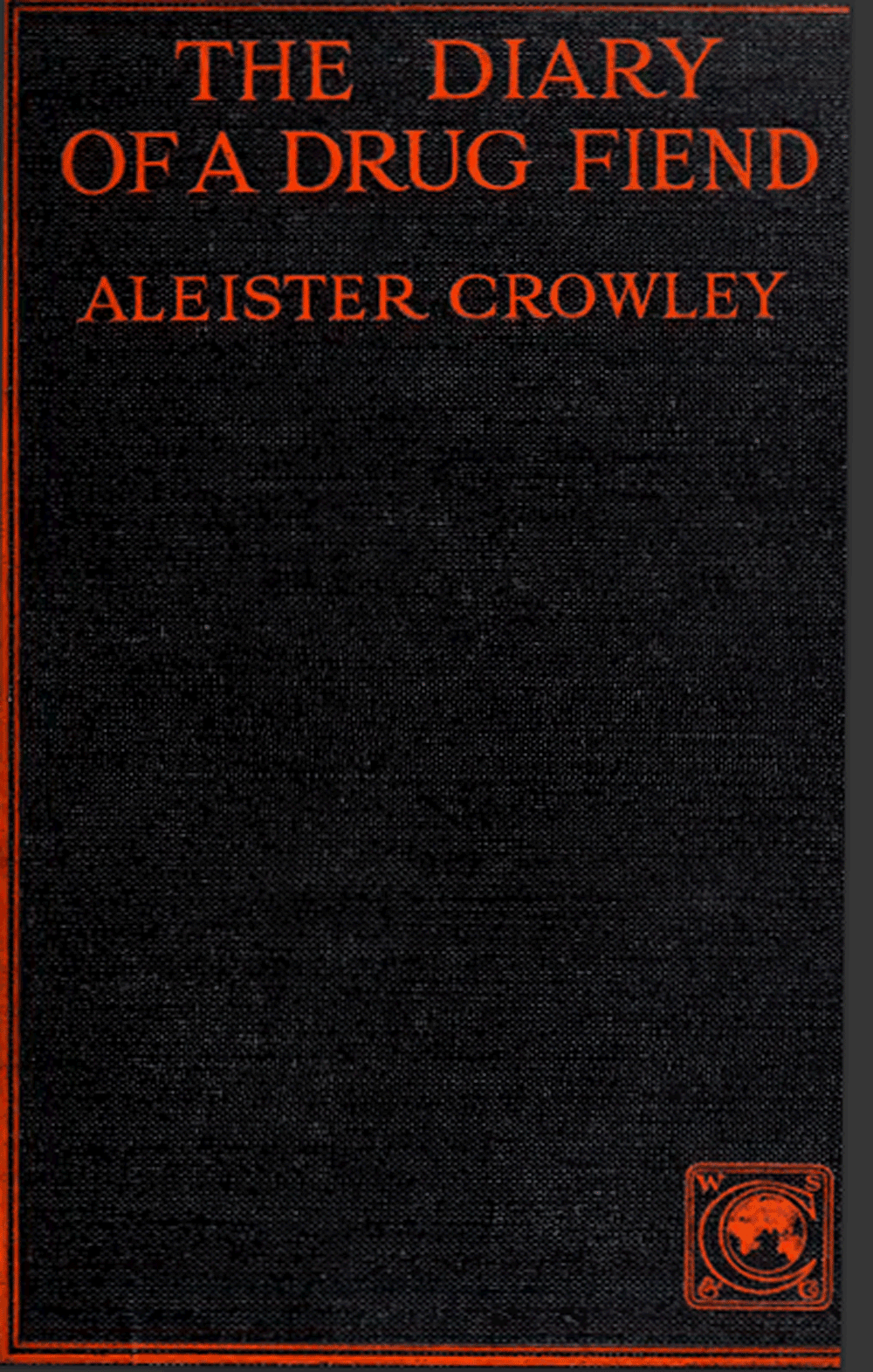
Diary of a Drug Fiend

This is the only full-cast recording of Aleister Crowley's 1922 classic paeon to common sense. It is the first book -- and so far almost the only book -- to stake out a philosophy of drug use that is compatible with human freedom, one in which we learn to use drugs as wisely as possible for the benefit of humanity. This recording was produced by the Drug War Philosopher and your purchases help support his effort to push back against the tragically counterproductive policy of drug prohibition, in the name of human freedom and of humanity's right to heal.

Purchase Your Copy


No cookies, no ads paid for by amoral and immoral billionaires (or trillionaires).


Unless otherwise indicated, no AI is used in the creation of site content. These essays represent the original ideas of their author and not the ideas that the author SHOULD have based on an algorithmic parsing of existing data. For more on this subject, consider the AI-related viewpoints to which the author subscribes as delineated in the New York Times opinion piece entitled "What 370,000 College Essays Tell Us About A.I.’s Effects on Creativity" by Rebecca Winthrop of the Brookings Institution.

The Partnership for a Death Free America is a proud sponsor of The Drug War Philosopher website @ abolishthedea.com.


Copyright 2026, Brian Ballard Quass Contact: quass@quass.com

tombstone for American Democracy, 1776-2024, RIP (up)