




Homepage of the Drug War Philosopher, Brian Quass
blog icon orange rss icon with stylized radio waves bird icon for twitter bird icon for twitter substack icon


back navigation arrow


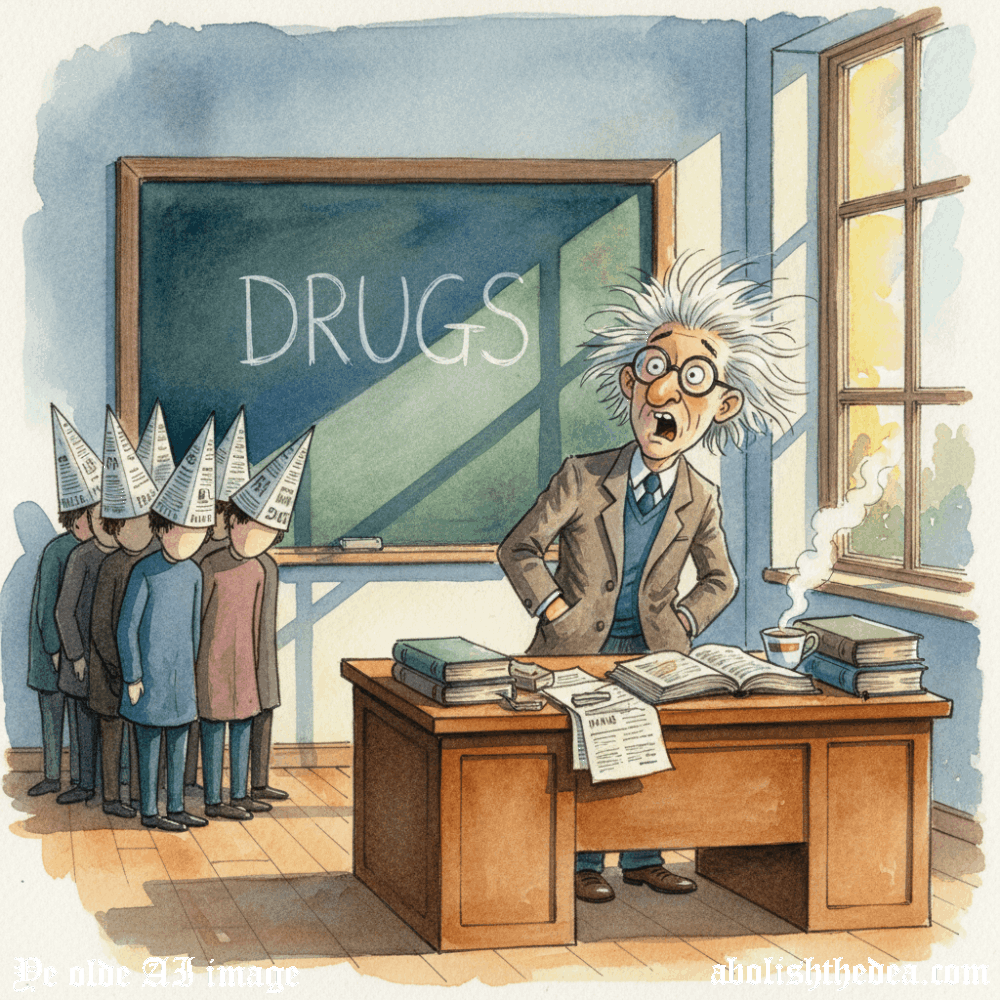
You CAN fool everybody all of the time...

at least when it comes to the subject of drugs

by Brian Ballard Quass, the Drug War Philosopher

August 29, 2026


It finally occurred to me why performing research on drug attitudes is so irritating to me. It is because almost everything that has ever been written about drugs in the west is biased in favor of viewing drugs as a problem. Everyone seems to think that we would have been better off as Earthlings if psychoactive substances had never been placed on Planet Earth, with a few obvious exceptions, of course. We were doing fine with our good-old booze, after all, who needs anything else? It seemed to us that God must have made a mistake of some kind, as if we secretly expected him to return to the Earth one day and say: "Sorry about that, folks. I clearly made a mistake by surrounding you guys with all these psychoactive substances. I guess I got carried away, what with creating the universe and all. Here, let me take back everything that I gave you in that quarter, with the obvious exception of the grains, fruits and vegetables used in the production of liquor, of course."

This anti-drug bias has been around for centuries. It can be found in the early criticisms of patent medicines in the late 1800s and the early 1900s. Critics of the time complained about far more than the failure of entrepreneurs to label their nostrums honestly as to identity, dosage and addiction potential. They complained as well that the potions being peddled had no positive uses whatsoever -- no, not at any dose, in any circumstance, for anybody. This was not a scientific argument, however, but rather the expression of a sort of Christian Science disdain for the kinds of drugs that merely worked as far as the user was concerned. What did a user know, after all? Any drug could "work." A "real" drug had to work in the eyes of science, it was said; otherwise it was mere junk. Humph! Such was the tacit reasoning of that time -- and of this time, too, if we're to be honest. Of course, we all know the names of the drugs that were demonized in the name of this belief: drugs like cocaine, opium, morphine, heroin and cannabis.

In light of this bias on the part of the mainstream with respect to drugs, the researcher seeking unbiased facts about the drug attitudes of the western world has to constantly be on his or her guard. One has to constantly remember that the statistics and characterizations that one is reading are being marshaled in order to support a metaphysical belief: namely, the idea that substances that benefit users only indirectly, via the improvement of mood and mentation, have no beneficial uses whatsoever, not for anyone, at any dose, ever. Of course, the mere existence of this bias does not prove that the information one is reading is false, but it does raise a caution flag, reminding us that almost all researchers have a conflict of interest when it comes to drugs, given their belief in the metaphysical claim that drugs are "bad" in and of themselves.

Almost everyone has an axe to grind when it comes to the supposed evil of drugs. This is why it's so depressing and frustrating to research our country's use of opium laws to punish the Chinese in America in the 19th and early 20th centuries. Even historians who are the direct descendants of the Chinese victims of American drug policy cannot complain about that sad history as wholeheartedly as they should. They are, after all, in total agreement with the racist-driven drug policies that were used to justify that mistreatment at the time. This is why it's depressing to research our country's use of drug laws to punish Blacks in America to this very day. Black leaders themselves believe that drugs are evil and so they can offer only halfhearted rebukes about the way that drug prohibition is decimating their communities, chiefly by incentivizing extreme gun-fueled violence. This is why I say that drug prohibition is the perfect racist crime. It not only punishes minorities, but it makes those minorities complicit in their own victimization.

BLACK ADVOCATE: Why are you killing my people?

GOVERNMENT: We're fighting drugs!

BLACK ADVOCATE: Oh, okay. Just asking. In that case, how can I help you? I know. What if I start referring to our young Black drug dealers as vampires in public speeches? I could accuse them of sucking the lifeblood out of their communities. Then when you shoot them for committing a crime that was created out of whole cloth by racist politicians, nobody will waste a single tear on the bastards.


The point of this essay, as I hope I have already made clear, is to show how performing research on the topic of drugs is a very fraught business in the age of drug prohibition. Americans on all sides of the drugs debate (to the extent that such a debate even exists in America these days) are basing their ideas on assumptions about drugs, assumptions that have never been subjected to the least bit of philosophical scrutiny. This is because, unlike myself, they do not have any "skin in the game" (or rather, they have yet to realize that they do). I, on the other hand, as a chronic depressive, have gone almost an entire biblical lifetime now without godsend medicines that grow at my feet, all thanks to the prohibitionist mentality which sought to save me from cocaine by shunting me off onto underperforming and expensive "meds" that turned out to be far harder to kick than heroin. According to a study by Lee Robins, tens of thousands of American soldiers used heroin while in Vietnam and yet only 1% returned to the drug after returning to the States.1 Had those soldiers been using Effexor instead, I fear that the present-day survivors would still be using Effexor to this very day. But that's not the real headline here. The real headline is the fact that the medical industry would be praising them for doing so! Speaking of disempowerment, I had my tri-monthly virtual office visit yesterday to qualify for another refill of Effexor, the expensive and underperforming drug that I've been stuck on for 30 years now. The doctor, who was clearly less than half my age, asked me the following question: "Have you been hearing voices?" to which I was greatly tempted to respond: "No. Why? Have YOU?"

Let us now consider one example of the sorts of unexamined assumptions that are held by almost all westerners on the topic of drugs: the idea that cocaine is horrible and cannot possibly be used wisely, notwithstanding the fact that many, if not most of us, know someone who has managed to do just that. Imagine drawing such a cocaine-bashing conclusion in a world in which no one will even dare to say that cocaine has benefits, for fear of being ostracized, fired from their job, and investigated by the DEA. Researchers on this topic are like despots who ask the people at gunpoint what is wrong with their dictator, only to take the resulting silence as an affirmative vote in favor of the status quo. Fortunately, at least a handful of people are standing up for sanity. There are at least two celebrity cocaine users who refuse to doff the hat to the supposed damnability of the drug. We have Carl Hart on this side of the Pond, author of "Drug Use for Grown-Ups", and then there is Graham Norton in England, a sort of gay Johnny Carson, who once told tabloid reporters that cocaine was great, thank them very much! Can you believe the nerve of that guy! After all the trouble our doctors had gone to, writing op-ed pieces to demonize the drug every which way but Sunday. Unfortunately, Carl and Graham are the exceptions that prove the rule. There remains a fear-inspired silence on the subject of drug benefits, especially when it comes to cocaine, a silence that Drug Warriors are happy to misinterpret. "See?" cries Mr. and Mrs. Mainstream. "You never hear about beneficial cocaine use, do you? Of course you don't. That's because 'beneficial drug use' is a contradiction in terms! Yes! Score one for drug prohibition!" They fail to realize, of course, that the dearth of positive news stories about cocaine use is prudential in origin, that very few people are in a position to run the risk of being honest on that subject. Besides the media would never publish their stories if they were. What do the hoi polloi know about such things? The real "experts" on drugs are academic researchers who write well-annotated papers about serotonin, dopamine and uptake inhibitors and place them behind paywalls at sites like Springer, Wiley, and Taylor & Francis.

I was sorry to see that David Musto himself toed this demonizing line about cocaine. I was expecting better from him after having read a variety of citations from his work in various substacks and journals. David seems, upon closer investigation, to be one of the many proponents of "Drug War Lite," the idea that drugs are indeed horrible but that we should be helping the victims of drugs, not punishing them -- a viewpoint that is so full of misconceptions and false presuppositions that it would take an entire essay to even begin to address them. But let us descend to specifics here. In his 1987 preface to a revised edition of The American Disease, Musto claims that America slowly came to learn the truth about drugs like cocaine.2 "Oh, did we, David?" I said to myself. "Yes, and whose truth did we come to learn, David? Whose truth? Answer. We learned the truth from self-interested doctors as publicized in op-ed pieces in the New York Times -- doctors who never said one single word about the benefits that coca and cocaine could have for the hundreds of millions of depressed persons in the world: not one single word, David. And who would profit from such a jaundiced view of cocaine, David? In whose interest was it to spread this doom and gloom, this fatalism, this idea that the human will is powerless in the face of Mother Nature's medicines? It was in the interests of the doctors, David! Doctors!"

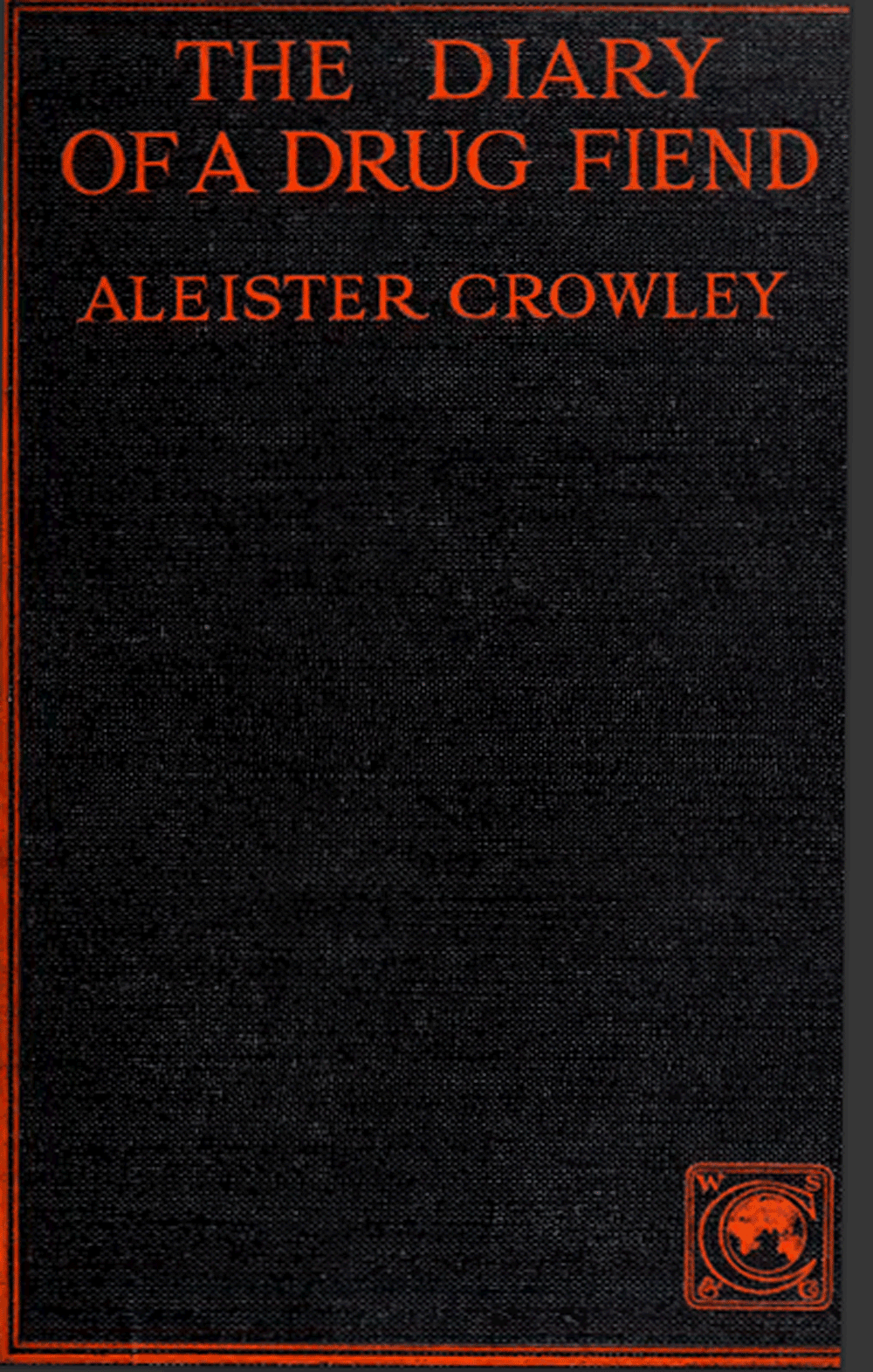
And so I say with King Lamus, the eccentric rehab coach who teaches willpower and the wise use of drugs in "The Diary of a Drug Fiend" by Aleister Crowley:

We have tamed the wild lightning, after all ; shall we run away from a packet of powder ? " 3
Aleister Crowley, The Diary of a Drug Fiend

The answer of our doctors is yes, we should run away! The answer of our doctors is, "Be afraid! Be very afraid!" And if we ask these doctors how afraid we should be, they will answer as follows: "Why, just as afraid as cavemen used to be when it came to fire!"

Let us consider now this highly pertinent section of my January 2026 essay entitled No one would need assisted suicide if we ended drug prohibition: what Claire Brosseau's case tells us about the warped mindset of the west when it comes to drugs.

(It's no doubt bad form to quote oneself on these matters, but what else can one do when they are so far ahead of the mainstream as to have left literally everybody else behind... except for the ghost of Thomas Szasz, perhaps?)


A good poster child for this lopsided reporting about drugs is Social Psychologist Henry Lennard, author of a 1972 New York Times article entitled Freud's Disaster With Cocaine.4 The op-ed piece contains the kind of argumentation that could only impress a child -- or else an adult who has been brainwashed since grade school in the substance-demonizing ideology of the Drug War. For one searches the article in vain for proof that Freud's interest in cocaine was a mistake, let alone a disaster. Lennard merely cites the fact that a patient of Freud's (one who was already addicted to morphine) used the drug irresponsibly and became psychologically dependent upon it.

That's it, that's the proof that Freud's advocacy of cocaine was a "disaster."

Now, I ask the reader, have you ever offered a drink to someone who eventually became an alcoholic? If so, did you commit a big mistake -- a disaster, even -- or did you merely provide a potentially beneficial substance to someone who turned out to be incapable of using it wisely, like the vast majority of OTHER drinkers?

And yet the intoxiphobic Lennard perversely tortures this one incident in Freud's life into a supposedly "knock-down" argument, not just against the use of cocaine, but against drug use in general for the treatment of conditions like depression. Not only should we not use cocaine, according to Lennard, but we should apparently not use psilocybin, nor opium, nor phenethylamines, nor beta-carbolines, nor even laughing gas -- no, not even if we're desperately depressed like some relatives of mine, on the verge of suicide, and visiting the ER at 3 in the morning in the naive hope of getting some unequivocal relief. As someone who is intimately acquainted with the downsides of neurotic sobriety, I find this drug-hating attitude of Lennard's to be condescending and naive in the extreme. Did Lennard not understand that in some people, the so-called "sober" state is counterproductive, that it works against our interests in life, and that it promotes personal failure through the subtle transmission of defeatist thoughts to the brain? It matters not whether such thoughts are a product of upbringing, genetics, society, or biochemistry, or -- which is much more likely -- a hopelessly entangled admixture of all four factors. The point is that there exist drugs like cocaine that can clearly help the afflicted to transcend such nefarious and ever-present influences, in light of which fact, Lennard is cruel to support drug prohibition. Cruel! Such a stance on his part amounts to his saying: "I can get along just fine without drugs, thank you very much. Everyone else should be able to do so as well."

But this is mere know-nothing solecism. There is, in fact, no logical reason for Lennard's belief. It is rather a conclusion based (consciously or otherwise) on the drug-hating ideology of Mary Baker Eddy. And it is an anti-indigenous viewpoint into the bargain. Had Lennard been conversant in the field of ethnobotany, he would have known that all indigenous societies have used drugs for the benefit of humanity. Being surrounded by untrammeled nature, they were well aware of the psychoactive potential of their environment and were determined to exploit it for the use of their people. Only in the long-since bulldozed world of the west do we deem such interest in psychoactive medicines to be pathological and even criminal. And so we pass laws that help to normalize the imperial intolerance of the Francisco Pizarros of the world with respect to native medicine, thereby giving the lie to our politically correct protestations against the colonialist practice of interfering in the affairs of sovereign countries.


As Sigmund Freud reminded us:

The Spaniards did not believe in the marvellous effects of the [coca] plant, which because of its role in the religious ceremonies of the conquered people they suspected of being the devils work. 5
Sigmund Freud, On Cocaine

It's no wonder that doctors wanted to demonize cocaine. Consider the following conclusions that Freud drew about cocaine use based on his own personal and vocational use of the substance as published in On Cocaine6.

1) His patients could "get off" cocaine on their own.
2) Cocaine improved one's ability to "get things done."
3) Cocaine did not make one feel like they were on drugs: it made one feel normal.
4) Cocaine did not leave the user with a hangover or depression.

My impression has been," wrote Freud by way of summary, "that the use of cocaine over a long time can bring about lasting improvement." 7

In The Diary of a Drug Fiend, Aleister Crowley presents us with the poster child (or rather with the two poster children) of drug misuse, the characters Peter Pendragon and Lou, both of whom spend a few months in the story consuming as much Heroin and Cocaine as humanly possible, as if they had enrolled in the narcotic equivalent of a hot-dog eating contest. In reading about the aftermath of that ravenous consumption in Crowley's lengthy three-book tome, it eventually becomes clear that getting off cocaine was not a real problem for the couple. To be sure, heroin had its challenges, but not cocaine. They did have the occasional desire to use the substance whenever things got boring and they had enough free time to think about that boredom, but there was no craving, properly so called, only a desire to take a drug -- any drug -- that would end that boredom.

Crowley and his rehab coach clearly saw how doctors were peddling fatalism to drum up business. Each of the doctors of Crowley's time had a completely different philosophy for treating the so-called addiction to cocaine, but all the rehab doctors agreed on one thing: that human beings are powerless in the face of drugs and can only survive with the help of a doctor, probably one that would be required to be on hand for the rest of their lives. "Once a drug addict, always a drug addict," said the doctors, by which they really meant: "Once my client, always my client." Crowley, in the person of King Lamus, had the rare vision to notice the self-interest of the doctor in convincing human beings that they were powerless. That insight seems to be common sense to me, but it seems to have gone completely over the head of almost every other drug pundit in America.

At this point, Drug Warriors will tell me something like this: "That's all well and good, Brian, but you have not heard the piteous groans and sighs of someone who is psychologically hooked on cocaine!" To which I respond, "Yes, and you have not heard the piteous groans and sighs of the millions who, even as we speak, are contemplating suicide because America refuses to let them benefit from the plants that grow at their very feet."

Let me return to that contention of David Musto in his preface, where he basically says that we, as Americans, have learned that drugs were evil, only to have forgotten that fact with the passage of a few generations. But not so fast, David. All the "evil" that you are ascribing to drugs can easily be shown to be caused by drug prohibition itself: indeed, that's one of the key points that my hundreds of essays are written to explain: how drug prohibition causes all of the problems that it purports to solve, and then some. Nor does Musto stop to think who is creating these "narratives" about drug use to which he is referring in his preface. These narratives are not being created by the grassroots; they are being created by self-interested parties in the media, in politics, and above all in the medical field, all of which parties have deep pockets. Their whole job is to "educate" Americans as to who is the villain of the piece when it comes to the ongoing drama of daily life. And once we have identify these narrative makers as self-interested plutocrats, how are we going to take them seriously when they tell us that they are acting out of an interest in public health? These are the same people who do not think there can be enough guns in the country. These are the same people who refuse to publish stories that would place liquor in a bad light. These are the same people who sign off on the sale of "meds" that are harder to kick than heroin and who permit these "meds" to be sold on prestigious websites like that of the Mayo Clinic, where the advertisers do not even bother to mention the fact that the use of such substances like Effexor will turn the user into a patient for life.

Let me end with a few words of advice to all drug pundits and scientists who write or say anything on the subject of drugs. Before writing any sentence that might be read as implying that drug prohibition is warranted, please read the following three sentences.

1) Consider what a depressed person would think about what you're about to say, a depressed person who has been denied the use of godsend medicines for an entire lifetime thanks to drug prohibition and who has been shunted off instead onto a big pharma drug that is harder to kick than heroin.

2) Consider the philosophers who would like to follow up on the claims of William James with respect to other forms of consciousness but who are afraid to do so for fear of being arrested for ingesting or inhaling the kinds of substances that are known to facilitate such visions.

3) Consider the religious seekers who wish to partake of the kinds of substances that inspired the Vedic, and hence the Hindu, religion: namely, those psychoactive substances which inspire and elate, or in other words, the same kinds of substances that the FDA and the DEA target for demonization and criminalization, thereby outlawing not just a religion, but the religious impulse itself.

You have no idea how much easier my research would become if pundits took these three considerations to heart before they started pronouncing ex cathedra on "drugs." For starters, I would no longer be infuriated by every other sentence that I read!

But who am I kidding? These sorts of considerations are completely off the radar of almost every drug researcher in the world. But one can always dream... provided, of course, that one does not ingest a dream-enhancing oneirogen prior to doing so (which see my comments on "drugs of the dreaming" entitled Pity the Ethnobotanist (or view on Substack)).

Drug pundits, drug pundits! To what shall I compare thee? Drug pundits are like... Oh, wait I've got it:

Drug pundits are like the Queen of Hearts in Alice in Wonderland. Whenever she saw a problem, she shouted, "Off with his head! Off with HER head!" Whenever drug pundits see a problem, they shout, "Outlaw this drug! Outlaw THAT drug!"


Notes for essay entitled You CAN fool everybody all of the time...: at least when it comes to the subject of drugs:

1: Hall, Wayne, and Megan Weier. 2016. “Lee Robins’ Studies of Heroin Use among US Vietnam Veterans.” Addiction 112 (1): 176–80. https://doi.org/10.1111/add.13584. (up)
2: Musto, David F. 2026. “Google Books.” Google.Com. 2026. https://www.google.com/books/edition/The_American_Disease/7VrQy2d8PxYC?hl=en&gbpv=1&dq=david+musto&pg=PR9&printsec=frontcover. (up)
3: Arthur Crowley. “Full Text of ‘the Diary of a Drug Fiend.’” 1922. Archive.org. 2017. https://archive.org/stream/b29826433/b29826433_djvu.txt. (up)
4: Lennard, Henry L. 1972. “Freud’s Disaster with Cocaine.” The New York Times, July 22, 1972, sec. Archives. https://www.nytimes.com/1972/07/22/archives/freuds-disaster-with-cocaine.html. (up)
5: “Freud on Cocaine : Freud, Sigmund, 1856-1939 : Free Download, Borrow, and Streaming : Internet Archive.” 2023. Internet Archive. 2023. https://archive.org/details/freudoncocaine0000freu/page/n5/mode/2up?view=theater. (up)
6: “Freud on Cocaine : Freud, Sigmund, 1856-1939 : Free Download, Borrow, and Streaming : Internet Archive.” 2023. Internet Archive. 2023. https://archive.org/details/freudoncocaine0000freu/page/n5/mode/2up?view=theater. (up)
7: “Freud on Cocaine : Freud, Sigmund, 1856-1939 : Free Download, Borrow, and Streaming : Internet Archive.” 2023. Internet Archive. 2023. https://archive.org/details/freudoncocaine0000freu/page/n5/mode/2up?view=theater. (up)


read more essays here


Ten Tweets

against the hateful war on US


Getting off antidepressants can make things worse for only one reason: because we have outlawed all the drugs that could help with the transition. Right now, getting off any drug basically means becoming a drug-free Christian Scientist. No wonder withdrawal is hard.

The Drug War is a religion. The "addict" is a sinner who has to come home to the true faith of Christian Science. In reality, neither physical nor psychological addiction need be a problem if all drugs were legal and we used them creatively to counter problematic use.

Problem 2,643 of the war on drugs: It puts the government in charge of deciding what counts as a true religion.

Psst! Drug use has benefits too. Pass it on!

SWAT raids have increased by 15,000 percent from the late 1970s to today, resulting in 50,000 to 80,000 SWAT raids annually in the US alone. --War On Us

Antidepressants might be fine in a world where drugs were legal. Then it would actually be possible to get off them by using drugs that have inspired entire religions. In the age of prohibition, however, an antidepressant prescription is usually a life sentence.

Drugs like opium and cocaine should come with the following warning: "Outlawing of this product may result in inner-city gunfire, civil wars overseas, and rigged elections in which drug warriors win office by throwing minorities in jail."

The New York Times gets it wrong again. Yes, kratom, like all drugs, has downsides. The problem is not kratom, it's drug prohibition which limits choice. Nor are young people the only stakeholders in the debate, as the Times always assumes.

Musk and co. want to make us more robot-like with AI, when they should be trying to make us more human-like with sacred medicine. Only humans can gain creativity from plant medicine. All AI can do is harvest the knowledge that eventually results from that creativity.

Mad in America publishes stories of folks who are disillusioned with antidepressants, but they won't publish mine, because I find mushrooms useful. They only want stories about cold turkey and jogging, or nutrition, or meditation.


Click here to see All Tweets against the hateful War on Us


back navigation arrow
Book Cover

Break the ice with a sledgehammer: place this book on your coffee table.

This book features 150 annotated images, designed to force brainwashed Americans to confront the fact that drug prohibition is wrong. Here is what author Richard Parrish II says of the book's compiler: "The drug prohibition philosopher provides first-hand, principled, persuasive, and insightful arguments against the current drug prohibition regime..."

Purchase Your Copy
Book Cover

Diary of a Drug Fiend

This is the only full-cast recording of Aleister Crowley's 1922 classic paeon to common sense. It is the first book -- and so far almost the only book -- to stake out a philosophy of drug use that is compatible with human freedom, one in which we learn to use drugs as wisely as possible for the benefit of humanity. This recording was produced by the Drug War Philosopher and your purchases help support his effort to push back against the tragically counterproductive policy of drug prohibition, in the name of human freedom and of humanity's right to heal.

Purchase Your Copy


No cookies, no ads paid for by amoral and immoral billionaires (or trillionaires).


Unless otherwise indicated, no AI is used in the creation of site content. These essays represent the original ideas of their author and not the ideas that the author SHOULD have based on an algorithmic parsing of existing data. For more on this subject, consider the AI-related viewpoints to which the author subscribes as delineated in the New York Times opinion piece entitled "What 370,000 College Essays Tell Us About A.I.’s Effects on Creativity" by Rebecca Winthrop of the Brookings Institution.

The Partnership for a Death Free America is a proud sponsor of The Drug War Philosopher website @ abolishthedea.com.


Copyright 2026, Brian Ballard Quass Contact: quass@quass.com

tombstone for American Democracy, 1776-2024, RIP (up)