





Homepage of the Drug War Philosopher, Brian Quass
blog icon orange rss icon with stylized radio waves bird icon for twitter bird icon for twitter substack icon


back navigation arrow


I am the expert on my own mental states

Why scientists should not be deciding what drugs we can use

by Brian Ballard Quass, the Drug War Philosopher

August 31, 2026


During my philosophical study of drug attitudes over the last seven years, I've had plenty to say about the shortcomings of science. I'm no doubt starting to sound like a broken record on the topic. A hasty reader might even conclude that I am a science denier. But let me assure you that this is far from the truth. I praise science for helping us to come up with vaccines that protect human beings like myself from scourges like polio. I praise science for helping us to erect skyscrapers that are works of art. I praise science for helping us to explore outer space. But while we're giving scientists a well-deserved pat on the back for these wonderful "pluses," we must remember that science has also helped us to come up with a long string of negatives as well. Science has helped us to come up with nuclear weapons. Science has helped us to come up with a type of AI that can destroy our crucial online data at will. And science has most recently helped us to come up with a new technology called DEW, "direct energy weapons," whereby governments can remotely target the very body parts of specifically selected citizens whose words and/or deeds are deemed to have run afoul of government orthodoxy. 1

Notice, however, that I do not say that science has created these potential evils. I do not say that science has come up with nuclear weapons or that science has come up with potentially destructive technologies like AI and DEW. I only say that science has HELPED us to come up with these negatives; the real villains here are the opportunistic political leaders who all-too-eagerly picked up the gauntlet thrown down by scientific discoveries. They were the ones who weaponized scientific knowledge by promoting -- or at least permitting -- the development of such dangerous technologies. It was individual people (like Edmund Teller in the 1950s) who decided that America should go ahead with the development of thermonuclear weapons, with a shortsightedness that seems criminal to some of us today. It's as if these nuclear hawks lacked the imagination to see that such technology would eventually be possessed by a wide variety of our country's enemies, thereby placing not only the United States but the entire globe itself under a nuclear sword of Damocles. In the case of AI and DEW, the villains will only be apparent to us in retrospect, for they will be the political leaders who failed to act in time to ward off disaster. They will be the procrastinators and the buck passers. In all such worst-case scenarios, however, individual people will ultimately be to blame, not science.

And yet I still have a good mind to bring charges against Science for "aiding and abetting" evil. One could ask whether scientific work should even proceed in cases where progress is clearly going to lead to the temptation to create destructive technologies. Is it not better for society to willingly forego all manner of potential scientific benefits rather than to obtain those benefits at the price of placing the entire world on the brink of destruction and/or rendering the government capable of controlling individual citizens in unspeakably evil ways? Is there no point at which scientists should look at what they're doing and shout, "Stop"? The Guna people of Panama seem to be getting along quite well without having put their science-minded citizens to work on projects designed to ruin the health of their neighbors by remote control. Such geopolitically innocent lives can be led. But then I suppose that this discussion comes back to the role that individuals play in setting government policy, though that doesn't necessarily leave our scientists in the clear. Our best and brightest scientists (like the J. Robert Oppenheimers of the future) are under no compunction to make things worse by voluntarily undertaking the kind of work that they know is leading the world in an existentially dangerous direction. They can still say no to job offers, no matter how lucrative those offers may be and no matter how demonized they may become for refusing them. Even if the scientists know that there are dozens of contenders in the wings ready to take their place, they need not personally play a role in leading the world off the edge of a cliff. Their personal choices matter, whatever they may think about the inevitability of an upcoming doomsday.

Let's be generous, however, and conclude that the jury is still out regarding the culpability of Science for creating the danger-filled status quo. No harm, no foul. Let's even say that Science is free to go -- as long as it does not leave town, of course. But before the fans of the defendant start planning a victory party for tonight at the local Chili's, I have some bad news for them.

I am now going to file some new charges against the defendant that I believe that I can actually get to "stick" when the matter comes to court: namely, the fact that science today is poking its dispassionate and data-obsessed nose into places where it does not belong. I am referring here to the subject of the mood and mentation of real-life human beings. We live in a world in which we rely on "science" to tell us if a psychoactive drug should be approved, failing to realize that this is what British philosopher Gilbert Ryle would call a "category error." Scientists operate via the scientific method, after all, and that method consists of limiting variables, and that is a presumptuous approach, to put it mildly, when dealing with human emotions. Every human action, feeling and thought is the result of an incalculable number of factors, many of which we cannot even imagine. When we limit variables in these cases, we are presupposing the falsity of the philosophy of holism. We are assuming that life can be picked apart arbitrarily for our scientific convenience while yet leaving us with meaningful results that are relevant to a full-blooded individual living in its native sociocultural environment far from our thoroughly disinfected research labs. But I need not launch into a philosophical treatise here about materialism, idealism and the theory of immanence put forth by Alfred North Whitehead. I need merely point out what that latter philosopher tells us in The Concept of Nature, namely, that "the substantial reason for rejecting a philosophical theory is the 'absurdum' to which it reduces us." 2

And guess what? The unstated philosophical theory upon which we are leading our lives today in America is producing absurd results even as we speak. And I can justify that statement by pointing out the effects of that philosophy on my very own life. You'd think that I would know what's best for me in this life of mine, what state of mind I should have, what state of mood I should have, right? But no, scientists are supposed to know better than I do how I should think and feel in life. We leave it to them to figure out what drugs I should be allowed to use -- and you can trust me when I say that they are in no hurry whatsoever to approve of drugs that actually work. None... what... so... ever. Indeed, I've waited for a half century now just for them to tell me that I might actually benefit from the plants and fungi that grow at my very feet. No, they still can't bring themselves to sign off on that proposition. Sure, God said his creation was good, but the FDA will be the judge of that, thank him all the same. Seriously. Just consider the glacial way in which clueless science is trying to figure out what's best for me as a chronic depressive.

Our scientists today cannot even figure out if laughing gas could help the depressed.3 Laughing gas! I will not even attempt to explain the many direct and indirect ways in which laughing gas could help the depressed, lest our scientists should think that they have successfully gaslighted me, even for a moment, into believing otherwise. A five-year-old child could see how laughing gas could help the depressed. Only someone with a medical degree could doubt it, only someone who has been indoctrinated in the ideas of biochemical determinism, only someone who has been taught that drug efficacy is to be found by looking under a microscope, rather than asking actual users how they feel about a drug. In such a Bizarro world, I can be laughing my head off and making all sorts of plans for the morrow, having been inspired by substance use into getting off my duff at long last and starting to accomplish something in the real world -- and yet at the exact same time the scientists can be telling me, through the mouthpiece of my psychiatrist, that I'm not "really" happy no matter what I may think, that the molecules in my brain are not moving about in ways that would constitute a "real" cure. To which I would respond, of course: "Who says that I need a real cure? Should we all stop having a 'cold one' at the end of the day and find a 'real' cure instead for the harried way that we feel after coming home from work? These 'real cures' of yours sound suspicious to me, especially coming from a psychiatrist; it sounds like these real cures consist of the kinds of drugs that one has to take every day of their life for a lifetime, thereby turning oneself into a ward of the healthcare state and, I need hardly add, a lifetime client for psychiatrists like yourself."

QED, Your Honor. The unspoken philosophy behind the status quo is bosh.

But lest the scientists in the audience leave the courtroom feeling crushed in light of this admittedly devastating critique, I have some good news for them. I will be concluding this essay by pointing out the important role that scientists SHOULD play when it comes to psychoactive medicines. We're talking jobs for scientists, folks, at least in the post-prohibition world. (I thought so. NOW I've got their attention.) It's like this: The world is full of psychoactive substances, as we westerners are only belatedly starting to find out. This means that self-experimentation is going to play an ever larger role in determining drug benefits, both in nature and in the synthetics lab. This exploratory drug use needs to be performed as safely as possible. That's where you lab coats come in. Such research should ideally be performed with the help of a western scientist to monitor physiological effects in the drug-using experimenter, effects that might prove problematic at times, especially after long-term use of a given substance. Unfortunately, this can only happen, at least on a broad scale, when Americans acknowledge and effectively deal with a certain gorilla in the room: the fact that science today is hopelessly biased by politics and Big Money -- to say nothing of drug prohibition, of course. The Founding Fathers (unlike the current regime in Washington, DC) recognized that it was dangerous to mix politics with religion and they took measures -- albeit apparently insufficient ones -- to keep that from happening. What they failed to see was that there was a similar need to separate science from both the profit motive and from politics. The failure to do so has left scientists with zero credibility on the subject of drugs.

When they tell us, for instance, that the use of an outlawed psychoactive substance has "this" potential downside and "that" potential downside, we are always left with the never-answered question: "Yes, but how does this compare with the potential downsides of imbibing alcohol or of popping antidepressant pills? Are these drug dangers that you are enumerating for us big or small in comparison to those associated with America's favorite poisons?" It is this failure to put dangers in any meaningful context that destroys the credibility of scientists on the subject of drugs. Their failure to do so makes us suspect that they are holding psychoactive substances to a very different safety standard than that which they apply to Big Pharma drugs and liquor. Nor are our suspicions appeased when we learn that Big Pharma companies are paying 75% of The FDA’s Drug Division budget.4 (That latter factoid cries out for a Constitutional amendment all by its lonesome, by the way!) When we combine these shortcomings with the fact that our scientists can tell us nothing about drug benefits thanks to the subjectivity of the drug experience, we realize that the scientific deck is stacked, that all that science can do is to demonize drugs outside of context. It is not so much the numeric data of the scientists that we are questioning here (though even that data becomes suspect in a world in which the wolf is guarding the sheep); it is the lack of context in which those seemingly objective facts are retailed to the world by the conglomerate media, as if the context-free downsides constituted a knock-down argument for drug prohibition, when, for all the public knows, those same downsides may apply "in spades" to the use of alcohol and Big Pharma "meds."

This is just a roundabout way of saying, "Cheer up, scientists. Your drug-related services will still be required in a drug-neutral world, as we put you to work on finding new and improved ways to monitor the individual health of the experimenter." I'm not talking about ways for government, healthcare employees and police to monitor individual health, by the way: I'm talking about devices that will help us -- we, ourselves, the actual drug users -- to monitor our own health, eventually to the point that any negative trend in the condition of vital organs and processes will be flagged. I am not thinking here of creating the ideal Christmas gift for the hypochondriac in your life; I am thinking specifically of the health of self-experimenters, or anyone who's using a newly discovered substance and wishes to monitor the long-term effects of doing so. How about that, Scientists? Does that sound like a job that you'd be up for?

Wait a minute, not so fast. The local Chili's restaurant isn't going anywhere.

Scientists like yourself will have a second job opportunity as well in a world in which drug prohibition is just a bad dream. You will be tasked with the job of synthesizing new godsend medicines based on the chemical makeup of Mother Nature's psychoactive plants, animals and fungi. Fair enough? How's that for a job: looking for godsends in the same manner as did Alexander and Ann Shulgin in early 1990s. Believe me, that is a consummation devoutly to be wished, as anyone knows who has read the user reports in Pihkal that were generated by the couple's research, including, "I acknowledged a rapture in the very act of breathing," and "No more axes to grind. I can be free." Just think of it. When your kids ask you what you do for a living, you can tell them: "Oh, I help keep people from committing suicide, honey. I remind them that there are whole new worlds out there and that their mind and consciousness have powers that they have never dreamed of!"

But, of course, we are getting into fraught territory here with synthetic drugs. Some will argue that one needs to use Mother Nature's psychoactive substances in their original forms, and in their original sanctified formats, in order to derive maximum profit therefrom. One remembers the lament of Maria Sabina, the curandero of the Mazatec people in Oaxaca, Mexico. She regretted having given R. Gordon Wasson some psilocybin mushrooms to take back to the States.5 She felt that her "little ones" had lost their sacred power after having become associated with hippies and New Age beliefs. I do not personally consider this to be a knockdown argument against synthesizing drugs, however; I see it rather as a reminder of a truth that the west has yet to wrap its head around: the idea that attitudes and expectations are not something that we should try to eliminate from drug use, even in drug trials, but rather that attitudes and expectations always work together with such substances to produce a given result. This brings us back to the folly of studying such substances via the scientific method. We think we are being scientific when we ask the question: "What effects does this psychoactive substance produce when we have ensured that none of the users have any particular expectations about the outcomes of their drug consumption?" But that's kind of like asking: "What will these churchgoers get out of church when we ensure that they go there without any expectation of receiving any blessings or grace whatsoever?" In both cases, our attempts to rule out the placebo effect have rendered the outcome of our experiments meaningless: in both cases, these outcomes tell us the results of a use case that simply does not obtain in real life.

It's as if a would-be self-experimenter were to tell his scientific friend: "Look, I want you to spike a drink of mine with psilocybin sometime over the course of the coming month. I don't want to have any idea that you have done so. In that way, I can find out what psilocybin REALLY does rather than what I think it does based on the placebo effect." Of course, that is a mad request. Why? Because expectations and belief SHOULD guide the drug experience. Positivists may complain all they want, but one's subjective belief about the likely effects of a given drug, especially a psychedelic, is all-important. This is because the drug does not do all the heavy lifting; the mind has its own powers that are excited by the drug, sometimes so greatly, indeed, that the mind can experience the expected drug effects even though the user has been secretly given a placebo. Unfortunately, our scientists misinterpret this so-called non-result. It does not tell us that the drug was unnecessary, as scientists would assume; it rather tells us that the mind has great powers, powers that drugs can help us to realize, sometimes thanks to the drug's reputation alone. Yes, the drug's very reputation matters. Alexander Shulgin writes in Pihkal about how he underwent surgery painlessly without anesthetic, thanks to the fact that he believed that a strong anesthetic had been adminstered.6 To reiterate then: Our beliefs, in exceptional cases, can materialize the full effects of a psychoactive drug. This misnamed placebo effect thus activated is actually a sign of the power of the human mind. It reminds us that the outcome of drug use is a joint production of both drug and mind, even when the only thing that the drug is contributing to that partnership is its reputation.

This reminds me of an incident that took place in my late teens when I was the organist for a Baptist Church. I was playing the introduction to the first hymn of the day, I think it was Faith of Our Fathers. Scarcely had the congregation started singing, when I noticed that something was wrong. The hymnal was telling me that the piece I was playing was in G Major, which meant that there should be only one black key, namely F-sharp. And yet when I looked down at my hands, I saw that my fingers were all over the black keys. For some unknown reason, I was playing the piece in E Major with a key signature of FOUR sharps. This was probably my least favorite key in the world and yet I was now committed to following through for four long verses. But here's the point: I was doing fine as long as I believed that I knew what I was doing. Even when I was not actually playing in the key of G, the mere belief that I was doing so kept me calm and collected. The key of G was my friend, after all. How hard could it be? As long as I expected things to work out, they did. After that, well... Ditto for drugs. Expectations count when it comes to psychoactive drug use, to the point that it would be unethical to perform double blind experiments on such drugs. That's a recipe for "bad trips." But then why would one even bother to do such experiments? They would merely tell us what the consumption of a given drug would bring about in a situation that never happens in real life, one in which the user has no expectations of what's going to happen. At best, such experiments would be relevant only to those cases in which someone has "slipped us a mickey."

TSee? I told you that I wasn't a science hater. That's two job opportunities for you boffins when we finally end drug prohibition. Now you guys can be helpful for a change, rather than gumming up the works by holding a position for which you have no qualifications whatsoever: i.e., deciding what's right for the likes of me when it comes to mind and mood medicine. Yes, I will be the judge of that henceforth in a free world, thank you all the same. Now then, off you go to Chili's or whatever. I'll let you know if I ever decide to bring those charges against your buddy for aiding and abetting.


Notes for essay entitled I am the expert on my own mental states: Why scientists should not be deciding what drugs we can use:

1: Substack. 2026. “Alisa Valdes-Rodriguez.” Substack.Com. 2026. https://substack.com/@alisavaldes. (up)
2: Alfred North, Whitehead. 1920. Review of The Concept of Nature. Project Gutenberg. Project Gutenberg. 1920. https://www.gutenberg.org/ebooks/18835. (up)
3: Glatter, Robert. 2021. “Can Laughing Gas (Nitrous Oxide) Help People with Treatment-Resistant Depression?” Forbes, June 9, 2021. https://www.forbes.com/sites/robertglatter/2021/06/09/can-laughing-gas-nitrous-oxide-help-people-with-treatmentresistant-depre (up)
4: LaMattina, John. n.d. “Why Is Biopharma Paying 75% of the FDA’s Drug Division Budget?” Forbes. https://www.forbes.com/sites/johnlamattina/2022/09/22/why-is-biopharma-paying-75-of-the-fdas-drug-division-budget/. (up)
5: Wasson, Gordon. 2006. “The Divine Mushroom.” ThriftBooks. February 20, 2006. https://www.thriftbooks.com/w/soma-divine-mushroom-of-immortality_r-gordon-wasson/468400/. (up)
6: Shulgin, Alexander T, and Ann Shulgin. 2019. Pihkal : A Chemical Love Story. Berkeley, Ca: Transform Press. (up)


read more essays here


Ten Tweets

against the hateful war on US


The evidence has been in for well over a century now: people want to use psychoactive substances to transcend the rational mind. It's about time we stopped punishing them for that.

This is why the foes of suicide are doing absolutely nothing to get laughing gas into the hands of those who could benefit from it. Laughing is subjective after all. In the western tradition, we need a "REAL" cure to depression.

There's a run of addiction movies out there, like "Craving!" wherein they actually personify addiction as a screaming skeleton. Funny, drug warriors never call for a Manhattan Project to end addiction. Addiction is their golden goose.

The Partnership for a Drug Free America should be put on trial for having blatantly lied to Americans in the 1980s about drugs, while using our taxpayer money to do so!

Drug war pundits need to stop using the word "snorts" when it comes to cocaine. We "take" our "meds," and yet we "snort" cocaine, just like a pig. That is NOT neutral language, folks!

It's funny to hear fans of sacred plants indignantly insisting that their meds are not "drugs." They're right in a way, but actually NO substances are "drugs." Calling substances "drugs" is like referring to striking workers as "scabs." It's biased terminology.

After watching my mother suffer because of the drug war, I hate to hear people tell me that the problem is drugs. WRONG! That's a western colonialist viewpoint. God loved his creation (see Genesis). He did not make trash. We need to use entheogenic medicines wisely.

We need a scheduling system for psychoactive drugs as much as we need a scheduling system for sports activities: i.e. NOT AT ALL. Some sports are VERY dangerous, but we do not outlaw them because we know that there are benefits both to sports and to freedom in general.

That's so "drug war" of Rick: If a psychoactive substance has a bad use at some dose, for somebody, then it must not be used at any dose by anybody. It's hard to imagine a less scientific proposition, or one more likely to lead to unnecessary suffering.

I'm going to get on the grade-school circuit, telling kids to say no to horses. "You think you can handle horses, kids? That's what Christopher Reeves thought. The fact is, NOBODY can handle horses!!!"


Click here to see All Tweets against the hateful War on Us


back navigation arrow
Book Cover

Break the ice with a sledgehammer: place this book on your coffee table.

This book features 150 annotated images, designed to force brainwashed Americans to confront the fact that drug prohibition is wrong. Here is what author Richard Parrish II says of the book's compiler: "The drug prohibition philosopher provides first-hand, principled, persuasive, and insightful arguments against the current drug prohibition regime..."

Purchase Your Copy
Book Cover

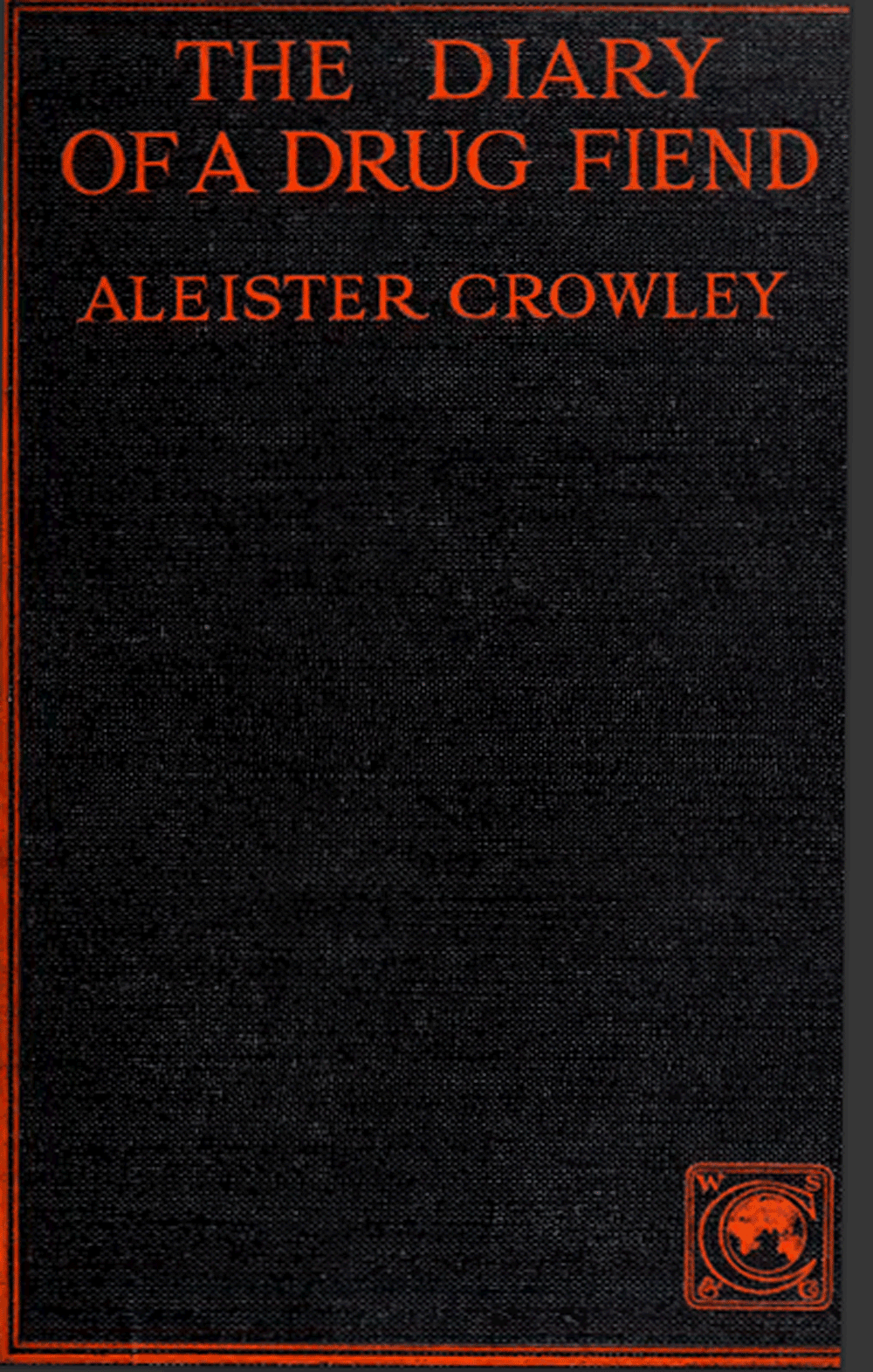
Diary of a Drug Fiend

This is the only full-cast recording of Aleister Crowley's 1922 classic paeon to common sense. It is the first book -- and so far almost the only book -- to stake out a philosophy of drug use that is compatible with human freedom, one in which we learn to use drugs as wisely as possible for the benefit of humanity. This recording was produced by the Drug War Philosopher and your purchases help support his effort to push back against the tragically counterproductive policy of drug prohibition, in the name of human freedom and of humanity's right to heal.

Purchase Your Copy


No cookies, no ads paid for by amoral and immoral billionaires (or trillionaires).


Unless otherwise indicated, no AI is used in the creation of site content. These essays represent the original ideas of their author and not the ideas that the author SHOULD have based on an algorithmic parsing of existing data. For more on this subject, consider the AI-related viewpoints to which the author subscribes as delineated in the New York Times opinion piece entitled "What 370,000 College Essays Tell Us About A.I.’s Effects on Creativity" by Rebecca Winthrop of the Brookings Institution.

The Partnership for a Death Free America is a proud sponsor of The Drug War Philosopher website @ abolishthedea.com.


Copyright 2026, Brian Ballard Quass Contact: quass@quass.com

tombstone for American Democracy, 1776-2024, RIP (up)