



Homepage of the Drug War Philosopher, Brian Quass
blog icon orange rss icon with stylized radio waves bird icon for twitter bird icon for twitter substack icon


back navigation arrow


The False Consciousness of Karl Marx

Looking for freedom in all the wrong places

by Brian Ballard Quass, the Drug War Philosopher

September 2, 2026


Today I am going to follow through on my recent threat to opine on the subject of what Karl Marx can (or cannot) tell us about the drug attitudes of the west. I have for this purpose read over a dozen online papers on the topic over the last week and have even gotten at least a quarter way through the hefty tome by Marx and Engels entitled "The German Ideology,"1 in which the Teutonic duo take their country's Hegelians to task for failing to recognize the role of the material world in bringing about social arrangements, inequality, and even consciousness itself. Let me preface my critique by stressing that I am not purporting to give the final word on Marx here, not even in terms of what I myself think of his ideas. I reserve the right to modify my views going forward. I will try in this essay, however, to draw only those conclusions that I feel will stand the test of time, at least in my own opinion, and are not likely to be gainsaid by any subsequent research that I may perform.

YES...

First, let me start with praise. I am very much in favor of Marx's end goal. Marx tells us that the division of labor necessarily leads to specialization, but that in a Communist society, where "society regulates the general production," Marx would be able "to do one thing today and another tomorrow, to hunt in the morning, fish in the afternoon, rear cattle in the evening, criticise after dinner, just as I have a mind, without ever becoming hunter, fisherman, shepherd or critic." Yes! That is a goal that we should fight for. In fact, Marx does not put his case strongly enough. For in his age as in ours, most workers are neither hunting, fishing, shepherding nor criticizing. They are instead engaged in highly repetitive and specialized tasks for which they are only a cog in a machine whose ultimate purpose is not necessarily even known to them. Nor is this merely the fate of blue- and white-collar workers in our time: our engineers and scientists find themselves in a gig economy where they are called upon to provide answers to specific problems that arise in the process of developing weaponry and surveillance systems of whose very existence they are forbidden to learn on grounds of corporate and/or national security. Few workers are performing jobs for which they can see the end result of their efforts, as hunters might see the venison on the dinner table or fishermen the fish.

BUT...

But we have already run into a problem here as far as I'm concerned. Notice how Marx is talking about what he, personally, could do under Communism, about what he, personally, would be able to do with all of that free time that it would purportedly bring about for him. And he was no doubt right. I can well believe that a highly intelligent human being like Marx would, indeed, have a ball in such a world. The problem here is that most people would not. If you give most people free time, they will eventually end up moping and perhaps overdrinking. This is why retirement in the United States is positively correlated with depression and suicide. After retiring from a job, one quickly realizes that there is something worse than working at a job that one does not enjoy; and that is doing absolutely nothing. Sure, retirees could theoretically do anything after retirement, but they soon find that they lack the imagination and motivation to take advantage of that fact. New retirees soon discover that even repetitive work had had a benefit for them that they had never noticed: it had basically hypnotized them into focusing on the here and now, thereby keeping their minds off of existential questions like "Why am I here?" and "What's the meaning of my life?" or, most importantly, "What should I really be doing with my life, what work would leave me with a feeling of satisfaction?"

This is, in fact, the problem with most utopias. The evangelists forget that the human beings who are following them to Eden will still be human beings when they get there. They are still going to need meaning in their lives, even if they lack the self-awareness to consciously recognize that fact. As the French philosopher Jean de la Bruyère wrote in "Les Caractères: "Tout notre mal vient de ne pouvoir être seuls."2 All our evil comes from the fact that we cannot be alone, that we cannot live with ourselves. We cannot sit still and just be. We cannot enjoy the present moment as the oenophile enjoys a fine wine. And so we go out in the world and raise hell, wasting time, gas and money and committing every sin in the book, and then some. This is why gringos in South America are notorious for demanding their "cuenta" at the very moment that they finish eating their meal; the gringo wants constant diversion: there is no time set aside in their tourist scheduleto simply sit still and enjoy the moment.

NOTE 1

I will now suggest the answer to this problem, but first I must provide a sort of "editorial note" about my terminology in this essay. I make a habit of referring to psychoactive substances as "godsend medicines." I do this in protest of the westerner's superstitious use of the word 'drugs' as meaning 'a substance for which there are no positive uses for anybody, ever'. I look at it like this: if brainwashed westerners can get away with implicitly deriding such substances with the use of what has come to be a pejorative term like "drugs," then I have a right to implicitly praise such substances by employing a flattering term like "godsend" instead. Now, back to the solution of the Marxian riddle already in progress: namely, how can we make sure that "the workers" -- and everybody else, for that matter -- will appreciate the Eden toward which our utopians are leading them?

NOTE 2

But here I feel constrained to add a second editorial note before holding forth. This is because all readers in the west (and alas in the east as well these days) have been trained by media censorship to associate illegal drugs with nothing but abuse and misuse and addiction. I ask them to recognize this fact as they read what follows, to recognize this propaganda as such and to consider its biasing propensities before prematurely bridling at what they are about to read. I urge them to consider the following two facts in particular while reading the remainder of this essay: First, the use of opium in Hong Kong under British rule was not the enormous health problem that British and American missionaries made it out to be from the comfort of their social halls thousands of miles away. Second, there are potentially endless drugs, both extant and synthesizable, that can inspire a wide range of beneficial emotional and mental states, many of which substances are inherently non-addictive. I will not go into a detailed defense of those two statements here. The reader is encouraged to research the cutting edge of ethnobotany and pharmacology to learn more. As to the first claim, they might wish to view The Truth About Opium by William H. Brereton 3. As to the second, I highly recommend PIHKAL: A Chemical Love Story by Alexander Shulgin 4, and especially the drug user reports it contains, which include such testimony as: "I acknowledged a rapture in the very act of breathing," "Beauty was everywhere enhanced," and, especially fitting for our purposes here, "I now know that the mind has a remarkable ability to control the particular place the psyche is in."

OPIUM

That latter quotation says it all, really. There are a potentially endless number of godsend medicines that can help one control their mental space and to see life in productive ways, ways that get us outdoors and into nature, ways that help us relax and appreciate the world, ways that even seem to tell us something about the nature of ultimate reality itself: ways, in short, that allow us to successfully be alone à la Jean de la Bruyère, that allow us to live with ourselves. The ignorance of Marx and Engels about such substances is understandable, of course. They grew up before the existence of the field of ethnobotany, before pharmacological pioneers like Richard Schultes, Terence McKenna, and R. Gordon Wasson had returned from Mesoamerica to astound their fellow westerners with the benefits of the psychoactive pharmacopoeias that they had discovered there. And yet for all their insights into the way that the powers-that-be control the narrative in a capitalist society, Marx and Engels failed to realize that the supposed evil of opium smoking was not a fact, but rather a viewpoint foisted upon westerners by parties that had a religious, political and imperialist interest in having us adopt it. That attitude is encouraged to this very day by western governments, though we are now encouraged to reserve some of that hate for cocaine and the plant from which it is derived. For over one hundred years now, westerners have outlawed the divine plant of the Inca as being a sort of existential threat to the west; even as I write this, the United States and its all-too-obedient toadies are enforcing a worldwide ban on the leaf, an act of injustice that makes Francisco Pizarro look like a provincial amateur when it comes to xenophobic intolerance. The result is a great irony. Marx had the same opinion about opium as did the anglophone missionaries of his time.

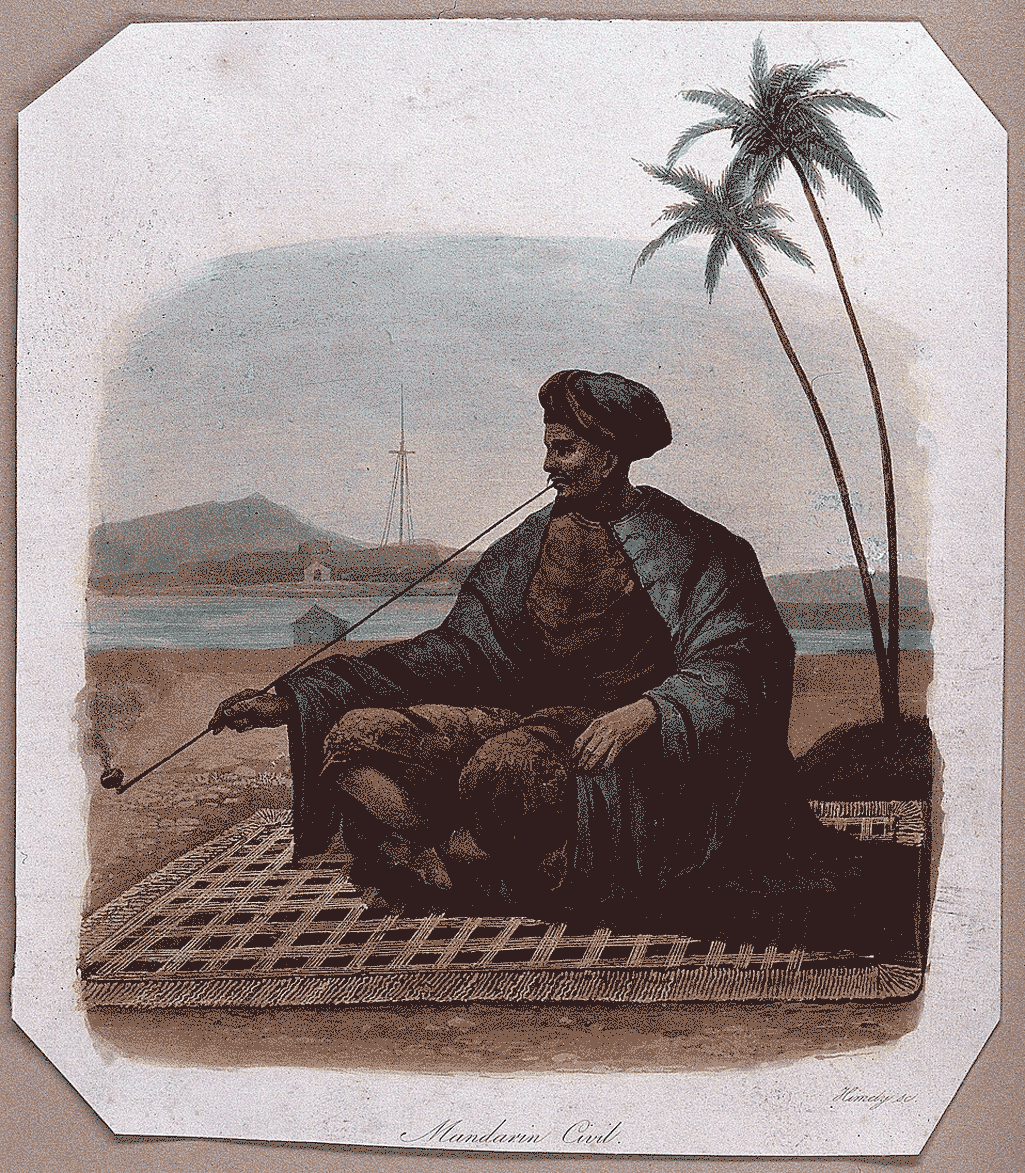
The result is a great irony. Marx had the same opinion about opium as did the anglophone missionaries of his time. They both agreed that Chinamen should put down their opium pipes. The difference is that Marx wished them to pick up a revolutionary tract instead, whereas the missionaries wanted them to pick up a Christian bible. Marx was hoping for a revolution in what he called the "living fossil" of China. He failed to see, however, that Chinamen had already found the freedom that he wished to give them. They had found freedom from their spiteful Mandarin overseers in the Emperor's employ. They had found freedom from the thousand natural shocks that flesh is heir to. They had found this freedom in the one place that it really mattered for them: in their own minds. With the wise use of a nightly opium pipe, they were able to shrug off the malfeasance and bureaucratic nonsense around them, while imagining whole new worlds. They were able to discuss the most abstract philosophies with their fellow smokers, or just appreciate a sunset, while silently triumphing over the machinations of officialdom. I would argue, in fact, that this is one of the main reasons why the emperors of the Qing Dynasty launched a propaganda campaign against opium smoking. It wasn't just the fact that the government did not wish to do business with a hated foreigner, i.e. Great Britain; it was also because an opium smoking population cannot be brought to "feel" the rule of their government. They may technically be subject to all of its injustices in the Confucian legal code, but that is of little consolation to an insecure tyrant. "What's the point of having power," asks the Emperor, "if my citizens are going to take all of my edicts in stride? I don't just want them to obey my laws, I want them to FEEL them!"

MATERIALISM

Let me now address a criticism that I have received on the philosophical front. I am told that scientific materialism is obviously true insofar as we live in a material world, a world full of discrete objects. My answer is that we are all materialists in the practical world. None of us would try to walk through a wall while telling our astonished friends: "Who needs a door when you're an idealist?" But Marx was a metaphysical materialist: he believed that all that existed in the world were concrete objects. And this position is highly debatable. What we see in the world is a matter of what our five senses allow us to see, and that's only if we're lucky to have all five of our senses in working order at the same time. These senses are uniquely customized for the Homo sapiens species. Meanwhile, only 5% of the "stuff" in the universe is visible to us, with 95% of "what's out there" being composed of a combination of dark matter and dark energy. Even things in the nearby world are veiled from our sight. Bees can see patterns in flowers, patterns that we cannot see because unlike them, our species has not been gifted with the ability to see ultraviolet light.5 We can only guess how much is out there that we simply do not have the equipment to see, the sense to perceive, at least not in a so-called sober state. 6 Even things that we are sure we DO see are not always perceived through our senses, properly speaking. As human beings, we have poor peripheral vision; so poor that our minds are forced to take educated guesses as to what we "should" be seeing in our peripheral vision at any given moment and to fill that area in for us with a sort of real-time Photo-Shopping, a fact that helps account for a variety of otherwise inexplicable visual allusions experienced by human beings. We do not perceive such peripheral information at all; instead our brains cobble together a picture of what it believes that we SHOULD be perceiving if only we had enough neurons devoted to the task of generating an image. This, indeed, is the big takeaway from Kant's critiques, the fact that human beings are "wired" to understand the world in a certain way and that we simply do not know, and indeed cannot know, "what is really out there" in a metaphysical sense of that phrase. In the words of ASK AI:

What we call objective reality is always an intricately synthesized product of external data meeting the internal, structural scaffolding of human consciousness. 7
From ASK AI: attributed to the Stanford Encyclopedia of Philosophy

This is why drug prohibition is the outlawing of academic freedom, because it forbids us from using the kinds of substances that give human beings new ways of perceiving "what's out there," thereby increasing our ability to judge the merits of Kant's claims about the limits of metaphysics. Kant's categories, it will be remembered, presuppose a one-size-fits-all consciousness, whereas the subsequent investigations of William James suggest that there are many kinds of consciousness, each with the potential to provide us with new ways of perceiving "what's out there."8 Nor can such visions simply be dismissed as madness, except by the premature fiat of a metaphysical materialist, since, as James told us, the ontological status of those visions is the whole point at issue here. My use of peyote in Arizona in 2017 gave me waking visions of a neon-green slide show of images that appeared to have been downloaded from a Mesoamerican codex. Such results suggest that there is much more going on here than my own mind's ability to "mess with me," especially considering that the consumption of the substance took place on territory historically populated by a variety of Native American tribes, including Hopi, Zuni, Apache and Navajo. As a materialist, Marx would have to say that such visions are meaningless nonsense, but this is an assumption on his part. Worse yet, it is an assumption encouraged by the powers-that-be who wish to deride the aboriginal way of seeing the world as invalid and superstitious. They want us to use Big Pharma pills, after all, not native medicines used by superstitious primitives. For my part, however, such visions give me the same sort of feeling that Wordsworth had when he revisited the banks of the Wye River on July 13, 1798, "a sense sublime of something far more deeply interfused," convincing me (through feeling rather than words) that there is much more to the world than physical objects -- and that even these objects are, in the final analysis, capable of being imagined in multiple ways, depending on how we are currently experiencing the world and what sort of consciousness we are, as it were, "bringing to the table."

DIALECTICS

I am not claiming that Dialectical Materialism has no beneficial uses. To the contrary, it is an approach that keeps us from being gulled by the self-serving arguments of a corrupt status quo. It keeps us from being hoodwinked. It keeps us from buying swampland in New Jersey. It can help me, in particular, to better understand what's really going on when private companies like Elsevier, Wiley, and Taylor & Francis charge what has justifiably been called "extortionate" prices for access to academic papers. This bothers me because the pill-mill mentality which has disempowered me for a lifetime now is ultimately "justified" by appeal to the sorts of dense, heavily annotated papers that these companies are essentially holding for ransom. I had already been shut out of the healthcare field's discussion about antidepressants and depression because they do not want to hear from mere "patients." It adds insult to injury when I cannot even learn what my "betters" are talking about behind my back without paying through the nose to find out.

FALSE CONSCIOUSNESS

I fear that confirmed Marxists have long since lost their patience with me, but I have to make two more itty-bitty criticisms before signing off. I see how the idea of "false consciousness" can be useful. But two points: First, I believe that Marx himself had false consciousness with respect to psychoactive substances. Second, I think that this approach can be misused. It can render us deaf to valid arguments because we have just said to ourselves, "Oh, that person has a false consciousness, so what can they know?" This sort of dogmatic prejudgment of people that was popularized by the concept of "false consciousness" is now running riot in publishing circles. As a recent article in The Nation reported,9 book publishers are beginning to look askance at any would-be author who wishes to write about a class of people to whom they do not personally belong, this despite the fact that the best book about Americans was written by a Frenchman and the most impactful book about slavery was written by a white American woman. The idea is basically this: "What could THEY know? They're not Black, or Hispanic, or Chinese, or Gay, etc." The answer, of course, is: they could know a lot, not just in spite of, but sometimes because of their status as an outsider. Any fan of Gordon Ramsay's restaurant-related TV shows knows that one of the major causes of restaurant failure is a refusal on the part of management to listen to the ideas of outsiders.

Nor is the idea of "false consciousness" the only way that Marx, in my opinion, excuses himself from the task of listening openly to his well-meaning critics. In "The German Ideology," Marx and Engels use the term "petty" over 100 times. That may not be a problem in itself, but he uses the term in two different senses, mostly as part of a phrase like "petty bourgeois" or "petty bourgeoisie," but often also as meaning "small" in the pejorative sense of that word, as meaning "mean" or "calculating." As a result, every single use of the term "petty" reads pejoratively. Every time that Marx and Engels allude to "petty bourgeoisie," they seem to be assuming the point that they should be trying to prove: namely, that those who belong to the class are, in some sense, lowly and niggling. By repeating that phrase over and over again throughout the work in implicitly pejorative contexts, their goal would seem to be to inspire hatred rather than to make a logical argument. In the following citation from "The German Ideology," the twosome use the term "petty bourgeois" three times in one sentence, as they compare a philosophical critic of theirs, Max Stirner, to Sancho Panza of 'Don Quixote' fame.

In actual content he is, therefore, the defender of the practical petty bourgeois, but he combats the consciousness that corresponds to the petty bourgeois, a consciousness which in the final analysis reduces itself to the idealising ideas of the petty bourgeois about the bourgeoisie to whom he cannot attain.


This is not just an issue with translation. As I understand it, Marx and Engels saw a sort of philosophical link between the petty bourgeoisie and petty-mindedness. The double entendre for the word "petty" was mirrored in the original German version of this work as well. This amounts, in my view, to the use of argumentum ad hominem on their part. By the end of "The German Ideology," the duo needs merely to mention the word "petty bourgeois" and their audience is primed to snarl. This seems to be the effect that the authors were "shooting for." There is a law of propaganda that says if you repeat a lie long enough, people will believe it. Marx and Engels seem to be practicing a variation of that tactic here. They seem to believe that if they make the same snide insinuation often enough, people will believe it. This in my view makes "The German Ideology" read like a "hate document," a sort of pep rally to inspire contempt and a feeling of superiority toward a class to which the reader does not happen to belong.

CONCLUSION

Marx famously said that religion is the opium of the masses. He would have hit on a far more meaningful soundbite had he not been biased by the western world's disdain for psychoactive substances in general and for opium in particular. Had he not been endowed with that false consciousness by the xenophobic powers-that-be, he would have been known today for a very different maxim, indeed, namely, that opium is -- and opium should be -- the opium of the masses -- opium and/or any of the potentially endless other psychoactive substances that can help us to live with ourselves, to be at home in our own skin, and to enjoy freedom where it counts, in our minds, no matter what the rich and powerful are trying to do to oppress us.


Notes for essay entitled The False Consciousness of Karl Marx: Looking for freedom in all the wrong places:

1: “Full Text of ‘Marx & Engles The German Ideology.’” 2026. Archive.Org. 2026. https://archive.org/stream/Marx-Engles-German-Ideology/Marx%20&%20Engels-Collected%20Works%20Vol.%2005-Karl%20Marx%20&%20Frederick%20Engles-The%20German%20Ideology_djvu.txt. (up)
2: La Bruyère, Jean de, 1645-1696. 2026. “Les Caractères.” Gutenberg.Org. 2026. https://www.gutenberg.org/cache/epub/17980/pg17980-images.html. (up)
3: The Truth About Opium by William H. Brereton DWP (up)
4: Shulgin, Alexander T, and Ann Shulgin. 2019. Pihkal : A Chemical Love Story. Berkeley, Ca: Transform Press. (up)
5: “What Is Dark Matter - and What Is Dark Energy?” 2024. Neutrino Energy Group. 2024. https://neutrino-energy.com/science/what-is-dark-matter/. (up)
6: joseklo. 2018. “Bees Senses.” Slideshare. November 29, 2018. https://www.slideshare.net/slideshow/bees-senses/124409809. (up)
7: Grier, Michelle. 2018. “Kant’s Critique of Metaphysics (Stanford Encyclopedia of Philosophy).” Stanford.Edu. 2018. https://plato.stanford.edu/entries/kant-metaphysics/. (up)
8: “The Varieties of Religious Experience : William James : Free Download, Borrow, and Streaming : Internet Archive.” 2021. Internet Archive. 2021. https://archive.org/details/the-varieties-of-religious-experience_202109. (up)
9: https://www.thenation.com/authors. 2026. “The Rise of the Sensitivity Reader.” The Nation. May 27, 2026. https://www.thenation.com/article/culture/adam-szetela-sensitivity-reader/. (up)


read more essays here


Ten Tweets

against the hateful war on US


Any self-respecting mycologist should denounce the criminalization of mushrooms.

The term "hard" is just our modern term for the kinds of drugs that doctors of yore used to call panaceas

If I want to use the kind of drugs that have inspired entire religions, fight depression, or follow up on the research of William James into altered states, I should not have to live in fear of the DEA crashing down my door and shouting: "GO! GO! GO!"

If we cared about the elderly in 'homes', we would be bringing in shamanic empaths and curanderos from Latin America to help cheer them up and expand their mental abilities. We would also immediately decriminalize the many drugs that could help safely when used wisely.

The drug war tells us that certain drugs have no potential uses and then turns that into a self-fulfilling prophecy by outlawing these drugs. This is insanely anti-scientific and anti-progress. We should never give up on looking for positive uses for ANY substance.

"Like Christians burning mosques and temples to spread the word of Jesus, modem drugabuseologists burn crops to spread the use of alcohol." -- Ceremonial Chemistry, p. 48

If I have no right to mother nature's bounty, then I surely have no right to manmade guns. If hysterical fearmongering justifies the eradication of the Fourth Amendment, then the Second Amendment should go as well.

We need a Controlled Prohibitionists Act, to get psychiatric help for those who think that prohibition makes sense despite its appalling record of causing civil wars overseas and devastating inner cities.

Mad in America publishes stories of folks who are disillusioned with antidepressants, but they won't publish mine, because I find mushrooms useful. They only want stories about cold turkey and jogging, or nutrition, or meditation.

Morphine can provide a vivid appreciation of mother nature in properly disposed minds. That should be seen as a benefit. Instead, dogma tells us that we must hate morphine for any use.


Click here to see All Tweets against the hateful War on Us


back navigation arrow
Book Cover

Break the ice with a sledgehammer: place this book on your coffee table.

This book features 150 annotated images, designed to force brainwashed Americans to confront the fact that drug prohibition is wrong. Here is what author Richard Parrish II says of the book's compiler: "The drug prohibition philosopher provides first-hand, principled, persuasive, and insightful arguments against the current drug prohibition regime..."

Purchase Your Copy
Book Cover

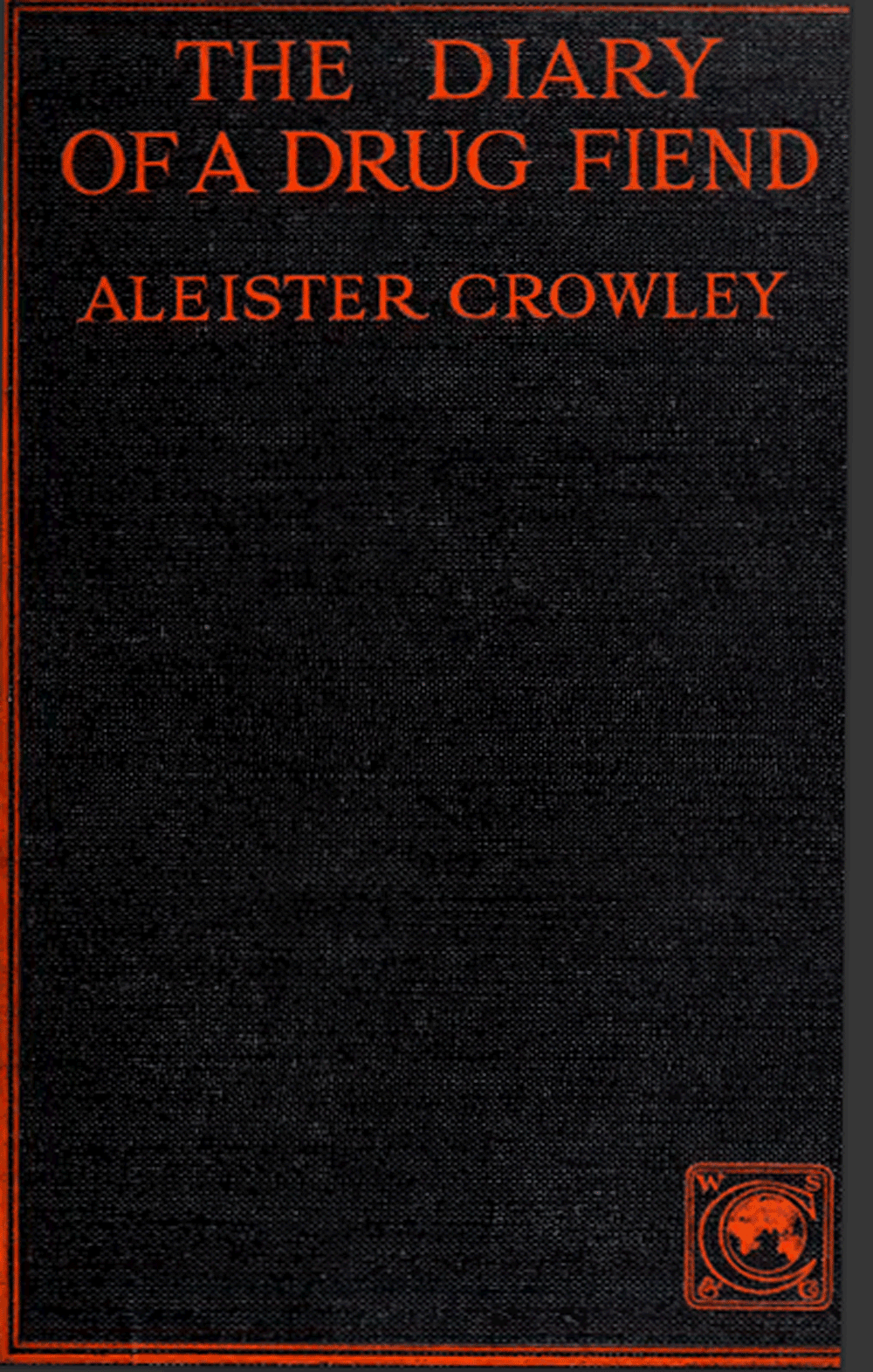
Diary of a Drug Fiend

This is the only full-cast recording of Aleister Crowley's 1922 classic paeon to common sense. It is the first book -- and so far almost the only book -- to stake out a philosophy of drug use that is compatible with human freedom, one in which we learn to use drugs as wisely as possible for the benefit of humanity. This recording was produced by the Drug War Philosopher and your purchases help support his effort to push back against the tragically counterproductive policy of drug prohibition, in the name of human freedom and of humanity's right to heal.

Purchase Your Copy


No cookies, no ads paid for by amoral and immoral billionaires (or trillionaires).


Unless otherwise indicated, no AI is used in the creation of site content. These essays represent the original ideas of their author and not the ideas that the author SHOULD have based on an algorithmic parsing of existing data. For more on this subject, consider the AI-related viewpoints to which the author subscribes as delineated in the New York Times opinion piece entitled "What 370,000 College Essays Tell Us About A.I.’s Effects on Creativity" by Rebecca Winthrop of the Brookings Institution.

The Partnership for a Death Free America is a proud sponsor of The Drug War Philosopher website @ abolishthedea.com.


Copyright 2026, Brian Ballard Quass Contact: quass@quass.com

tombstone for American Democracy, 1776-2024, RIP (up)