




Homepage of the Drug War Philosopher, Brian Quass
blog icon orange rss icon with stylized radio waves bird icon for twitter bird icon for twitter substack icon


back navigation arrow


The Missing Ingredient in the Marxist Utopia

on the psychological naivete of reformers

by Brian Ballard Quass, the Drug War Philosopher

September 4, 2026


"O God, I could be bounded in a nut shell and count myself a king of infinite space, were it not that I have bad dreams." 1 -- Hamlet, Scene II

In my recent essay entitled The False Consciousness of Karl Marx 2, I warned the reader that my views on Marx were subject to future elaboration, qualification, and perhaps even positive change. Well, here we are just two days after publication, and I already feel the need to elaborate and qualify, although I am not aware that my views of Marx have changed in any way in the last 48 hours. I do this because I now see that, in my attempt to meet a self-imposed deadline on the original essay, I presented some of my viewpoints rather starkly, without adding the sort of philosophical cushioning that might have made them less objectionable to true believers and less aesthetically jarring to any open-minded reader whomsoever. I am thinking, for instance, of the way that I jumped without segue from a thumbs-up for the utilitarian value of the dialectical method straight into a seeming denunciation of the concept of "false consciousness" as being both divisive and presumptive: divisive because the term implicitly questions (or rather denies) the wisdom of one's political opponents and presumptive because it assumes that those opponents can have nothing to tell us about the topic with which we're dealing: inequality in the case of Marx and drug prohibition in mine.

What I failed to note, however, is that there are, indeed, cases in which almost everybody in the world has gotten the wrong end of the stick. There are subjects upon which almost everybody does indeed have false consciousness. As former British Prime Minister Arthur Balfour remarked:

If I have learned one thing in a long life, it is this: that in any matter in which everyone is agreed, it is a hundred to one that everyone is wrong. 3
Arthur Balfour

Certainly, Marx was right to speak of "false consciousness" given the way that he defined the problems of social and economic injustice and their solution in ultimate Communism. My problem with Marx's use of the phrase is twofold, however: First, in my view, he himself had false consciousness because he had taken to heart the western mindset according to which drugs can have no positive uses whatsoever. Second, the solution to the problem of injustice, once one has ruled out the approach that I propose, is not so clearcut, philosophically speaking, that one should go about calling names, as it were, by dismissing all who disagree with one as having a "false consciousness." Marx should have stuck to the job of making that case, proving that his opponents had a false consciousness, rather than implying through the continual repetition of the phrase that this supposed fact was beyond all possible doubt. In this way, he seems to have used the term "false consciousness" as a rhetorical truncheon, a way to knock down the arguments of his opponents before they even opened their mouths, as who should say, "He has a false consciousness, what can HE know?"

And yet a Marxist critic of that last paragraph of mine still has plenty of ammunition. They will tell me, quite rightly, that Marx was writing to bring about action, not simply to make a philosophical point. The repetitive use of the term "false consciousness" by Marx, they will say, just like his repetitive use of the term "petty," is part of a rhetorical strategy to make a certain impression on the average reader, to define the situation in terms of "them" and "us." Although this strategy may "rub me the wrong way" as a philosopher, it is a strategy that obviously worked from a rhetorical point of view, albeit not in Marx's own lifetime. It eventually got the hoi polloi to stand up and take notice. Most importantly, it endowed them with the indignation that Marx and Engels wished them to feel toward the status quo. The problem, however is this: the propriety of this posthumous rabble-rousing (or this posthumous consciousness raising, if you prefer) depends entirely upon whether Marx's views about history were true. I think it's clear that they were not, no matter how loyalists try to account for each missed prediction with ad hoc explanations. Moreover, there have been developments that Marx could have never imagined. What would he say about the recent call from Silicon Valley for a Universal Basic Income, and especially the fact that the proposed policy is supported by everyone from a far-right trillionaire to organizations like the Green Party and the Left Alliance? How does that square with the contempt that we are implicitly told to hold for the rich?

Actually, we have an answer to that latter question -- or at least one possible answer -- thanks to some recent guesswork performed with the help of artificial intelligence.

Academic scholar Dr. Thomas Domjahn "interviewed" Karl Marx on these topics with the help of Chat GPT and Perplexity in February 2026. The AI-generated answers that Marx supplied are not only interesting but they are quite "telling" as well. When asked what he thought about Universal Basic Income, the supposititious Marx responded as follows:

A universal basic income can reduce the social pressures created by technological change in the short term. But it does nothing to change the fundamental power imbalance between capital and labour because ownership structures remain untouched. If capital continues to siphon off the productivity gains from AI, a basic income will ultimately become nothing more than a state-funded subsidy for low wages. 4
Do we need a universal basic income, Mr Marx?

This does, indeed, sound like an answer that Marx would have given to such a question. It may even be correct in and of itself. My problem, as I noted in my previous essay, is with Marx's utopian assumption that the world will become Eden once the alleged power imbalance is ended by Communism. I believe that this a psychologically naive conclusion. Anyone who stops to think about these things will surely conclude with me that they would rather live in an economically unjust society while having a good attitude about life than to live in a just society while wishing that they were dead. As Henry Thoreau tells us in Walden:

The mass of men lead lives of quiet desperation.5


To the extent that this is true of men (and women) in western society today, I would suggest that it is true for the following reason: Westerners have questioned the very basis of morality, its supposed ontological grounding in historical Christianity. Unlike tribal societies with rituals that bring the people together in one unified understanding of ultimate reality, each and every westerner has to set out to re-invent the ontological wheel, to find for him or herself their reason for living. As Albert Camus says in his essay on the Myth of Sisyphus:

There is only one really serious philosophical problem, and that is suicide. 6
Albert Camus on suicide, absurdity, and the meaning of life (in The Myth of Sisyphus)

(Camus might have added that he was not necessarily speaking for indigenous societies here.)

Here is where the benefits of drug use -- about which westerners seem to know absolutely nothing -- become so important to our discussion. If I believed with almost everyone else in the western world that drugs had no positive uses, then I might be tempted to call myself an existentialist, take my iPad down to Starbucks, and affect a hip pessimism about life. But just as an eyewitness of a crime cannot "unsee" what they have seen, I cannot "unfeel" what I have felt. I know from personal experience that there are substances whose use conduces to an ability to make one's peace with life and to enjoy life -- yes, even in a world where economies are blatantly unjust and the system prejudicially biased against the various classes to which one may be seen as belonging.

And here I must make a very important point, indeed: I am not saying that such injustices do not require remedying. I am simply saying that politics comes in second place to how one feels about the world around them.7 This indeed is why drug prohibition is so evil. It is a sort of meta crime. In previous ages, tyrants sought to control what we could read and thereby limit our knowledge. In the age of drug prohibition, politicians control our very minds to limit how we can think and feel about what we read. By outlawing drugs, they limit how much mental focus and determination we can muster in order to push back against oppression and to stand up for our rights. Thus drug laws represent the punishment of a pre-crime , or rather they represent the punishment in advance of a non-crime: it punishes our attempts to improve our mind and mood. As Thomas Szasz wrote in Our Right to Drugs:

The right to chew or smoke a plant that grows wild in nature... is anterior to and more basic than the right to vote. 8
p xvi
Thomas Szasz, Our Right to Drugs

When the violence-loving Sartre parted ways with the peace-loving Camus, the former criticized the latter for failing to offer a viable alternative to revolution. Had Camus known of the benefits of drugs, he might have answered his one-time friend as follows: "Let's create a world in which entheogens are legal so that we all have the chance to see the humanity in 'the other'." It is noteworthy in this connection that western politicians had nothing but contempt for the Summers of Love on both sides of the Atlantic in the 20th century. US Politicians demonized the acid-fueled Summer in 1960s America just as UK politicians would later demonize the ecstasy-fueled Summer in 1990s England. In judging the drugs thus employed, the government completely ignored the fact that the substance use in both cases had helped bring the world together. Ecstasy brought dancers of all colors and religions together as one on the dance floor, a truly unprecedented achievement in British history. But that was never considered to be a benefit at Westminster. The fact that the drug was indirectly associated with a mere handful of deaths was all that the government needed to ban its use altogether. As a result, the peaceful British dance floors soon devolved into shooting galleries, as the drug of choice switched from ecstasy to alcohol. That was more like it, as far as the government was concerned. "We can handle blood baths," says the MP to his cronies at the local pub, "but what are you gonna do when there is interracial cuddling and compassion all over the dance floor? I mean, pardon me, but that is just so... I don't know... icky!"

Speaking of which, let me make one final important point, one additional caveat to my philosophical position. There are some government injustices that cry out for immediate protest regardless of what drug laws are in effect. I mean to say that I am not advocating passive indifference to world events; I am merely suggesting that we can respond more effectively to our problems when our heads are screwed on straight. That's all. And there is no story that better illustrates the necessity for "immediate action" against a social evil than the upcoming Supreme Court case of Targeted Justice, Incorporated, Et Al. V Merrick B. Garland, Et Al. 9

This is a case in which the government is alleged to be using a relatively new technology called 'directed-energy weapons' to cause pain by remote control to American citizens listed on the Terrorist Screening Database, this despite the fact that one can be placed on that list at the mere suggestion of an FBI agent. Once added to the list, there is no procedure in place to remove one's designation as a "terrorist." Even in the absence of DEW, anyone on the Terrorist Screening List becomes a marked person everywhere they go. You are henceforth treated like an abomination by law enforcement and potential employers and are even denied timely medical care in public by local police. When they learn of your status as a "terrorist," they are spooked into insisting that the Feds arrive before anyone looks at your injuries and/or illnesses. A lawsuit was filed in January 2023 on behalf of 18 alleged victims of punishment via directed-energy weapons, all of whom had been placed on the Terrorist Screening Database inappropriately, without having met the established standards for that designation. Of course, targeting any American citizen with pain and disfigurement by remote control is unconscionable regardless of their designation, no matter what lists they may have been placed on by a demagogic regime. To learn more about the court case, here is an excerpt from the legal brief dated November 1, 202410:

Most Petitioners also alleged to be afflicted with Havana Syndrome, a condition that has been found to be caused by radio frequency energy pulsations to the brain fired by directed energy weapons. The only agency in the United States that operates directed energy weapons in the homeland is the Department of Defense, the same agency that has now granted permission to use lethal force on Petitioners and others equally situated. Both the district court and court of appeals incorrectly concluded that Petitioners attributed to Respondents the directed energy weapons they suffer. Instead, Petitioners alleged that Respondents prepare and maintain the TSDB [Terrorist Screening Databsae] list where they were improperly placed, causing them to suffer directed energy weapons attacks even though they have not been accused, tried, or convicted of a terrorist offense in violation of the Eighth Amendment of the U.S. Constitution. With the stroke of a pen, the FBI classifies as “domestic terrorists” individuals that do not meet the reasonable suspicion terrorist criteria for exerting their First Amendment protected activities. Consequently, innocent Americans such as Petitioners, whistleblowers, parents protesting at school board meetings, pro-lifers, and Catholics attending Latin mass, are placed on two hidden categories of the TSDB reserved for those that do not represent a threat to national security yet are condemned to a life of torture. 11
Targeted Justice, Incorporated, Et Al. V Merrick B. Garland, Et Al.

Lest this focus on the evil potential for directed-energy weapons be construed by the reader as a digression on my part, let me point out that I have chosen this timely story for a purpose: I wanted to make it as clear as possible that I am not calling for a kind of "drugged-out quietism" on the part of citizens of a democratic (or would-be democratic) society. There are some injustices that require immediate action. My point regarding the use of godsend medicines is simply the following: that the only utopias with staying power will be those in which the citizens are living lives to the full without being hobbled by the petty kneejerk fears and concerns that follow them around in life, like so many miniature cases of PTSD, thanks to their upbringing, their genetics, their personality quirks, and ad infinitum on the causal front. A truly achievable utopia (as opposed to the utopia imagined by Marx which few would actually appreciate as such) would be a world in which citizens can be as happy as possible with merely being alive. In such a world, we would use substances as wisely as possible to improve mind and mood, to improve our appreciation of music, to improve our appreciation of nature, to better understand our place in the universe and perhaps even to be therapeutically humbled by that understanding. Of course, this will all sound fantastical to the many drug virgins in the west who have been good little boys and girls and avoided reading any of the forbidden books on drug effects; but some of us know better, by dint of our personal experience and research.

I do not insist that everyone needs to use psychoactive substances in order to screw their heads on straight; some people do indeed seem to come, so to speak, with "batteries included." Yet when someone tells me that they would never need drugs, I find that rather premature, given the fact that human beings have scarcely become acquainted with the size and power of the psychoactive pharmacopoeia that is available both in nature and in the laboratory. It seems premature to foreswear a whole world of medicine that we have scarcely even begun to realize exists, let alone to investigate for its healing potential. I ask myself: how can they say no to all drugs when they have no idea of the benefits that those substances can bring -- especially when they're already drinking alcohol and coffee and taking a Big Pharma med every day of their life? If a drug could drastically increase their ability to think, or to enjoy music, or to appreciate the intricacies of nature, or to give them a firm conviction about the ultimate meaning of life, are they really going to tell me that such experiences would never be of any use to them, ever, not even on their deathbed? Besides, THEY may think that they do not need drugs, but their neighbors may disagree, subject as they are to the abstainer's malicious caviling as a nature-scorning Christian Scientist.

I hope that this essay has placed my criticism of Karl Marx in a broader context. I decided to write this second essay on Marx, by the way, after I received a reply last night to a sort of "friend request" that I sent by email to a former associate of Thomas Szasz. In that message, I explained how I was following up the work of the Hungarian-American philosopher from the point of view of someone who had been turned into a med-dependent patient thanks to drug prohibition. I told this "former associate" that I was the first person to examine the important connections between Szasz's views on psychiatry and his views on drugs. My idea was that any associate of Thomas Szasz would be interested in such an approach and would be happy to chat with me concerning how to pursue and promote such a novel investigation. Well, imagine my surprise when the associate in question responded curtly, telling me that he knew nothing about drugs and that he considered it hopeless to try to do anything about the status quo of drug prohibition. That's right, hopeless! "Interesting," I say to myself. So I took this line with him in my subsequent reply: "So I should do nothing then, is that it?" Meanwhile I'm thinking to myself: "Really? Is this guy telling me to just shut up and take my meds like everybody else? I went on to explain how I was not going to give up complaining about a drugs policy that has turned me into a ward of the healthcare state, while simultaneously serving to "justify" murder on the high seas, i.e., the killing of suspected drug traffickers without trial, nay, without so much as the leveling of any charges whatsoever. I haven't received such an unexpected response from a marginally famous person since I wrote a heartfelt letter to Rick Strassman eight years ago, only to receive a curt response telling me that I had exceeded some character limit or other as a first-time correspondent. I have subsequently realized that Rick is a drug prohibitionist in any case, so I think I can manage to survive without any philosophical advice from him, thank him just the same.

As for that implicit advice for me to "give up" from that former Szasz associate, I looked at it this way. "Such self-satisfied curmudgeons would have said the same sort of thing to Marx and Engels back in the mid-19th century when they were writing The German Ideology. "Give it up, already!" they would have cried. "You can't change city hall, fellas, let alone the flippin' Kremlin!" And that's when it occurred to me: Karl Marx and I had something in common. Despite our differences in priorities, we have both engaged in a battle against a firmly entrenched and unjust status quo. I reflected moreover that The German Ideology was not even published in Marx's lifetime. Despite his dislike for religion, Marx had to have faith, at very least, in his power to make a difference in spite of evidence to the contrary. It reminded me that what we write in this life might tank on Google Analytics and yet eventually make a real difference in the world. Someone has to keep the faith in human effort or humanity will never come to its senses on the subject of medicines and all of our sciences and freedoms will be hobbled accordingly. In this sense then, Marx has inspired me, ironically enough, to "keep the faith." Of course, adducing such an indirect benefit to my reading of his theories is not going to endear me to my critics among the true believers, but it is a benefit all the same. It reminds me of what I've been trying to tell myself over the years every time I get depressed by looking at my site statistics: that I am not writing for the existing generation, but rather for futurity, in the hope that reason will finally prevail in the west. I have to trust that a time will come when westerners will finally realize that no drug is good or bad in itself, that all substances have positive potential uses at some dose, when used for some reason by somebody in some circumstance, and that saying things like "Drugs kill!" is philosophically equivalent to shouting "Fire bad!" In both cases, we seek to demonize dangerous substances rather than learning how to use them as wisely as possible for the benefit of humanity.

AFTERWORD:

In researching this article, I was bothered to see how Wikipedia, despite the upcoming Supreme Court case mentioned above, is all but ignoring the threat that directed-energy weapons pose to citizens in our new age of fascism, a time when the regime in Washington, D.C., has made it clear that they are ready to use any means necessary to punish "enemies of the state," as they define that phrase, of course. 12 That regime now has the power to inflict what substacker Alisa Valdes-Rodriguez refers to as "Gaslighting Pain" on dissenters.13 And yet the Wikipedia entry reads like a promotional piece for the DEW technology, uncritically emphasizing the ways that the military and law enforcement will be adding the technology to their arsenal, as if it were just another appliance, like bullet-proof vests and assault rifles. It was interesting, by the way. On that "talk" page, there was actually a comment that criticized the passing reference to Havana Syndrome at the bottom of the lengthy Wikipedia article. Even that passing reference was deemed too much by one critic. The writer feared that the article was thereby catering to conspiracy theorists. "Strange," I thought to myself. "Strange how the policies of a tyrant who thrives on conspiracy theories are now being shielded from scrutiny by the white middle-class suburban writers who are constantly injecting their bleak materialistic philosophy into supposedly factual Wikipedia articles, and why? It's all in the name of suppressing conspiracy theories, of course!

With this hypocrisy in mind, I posted the following comments to the Wikipedia Talk page for the article on Directed-Energy Weapons.

This Wikipedia article ignores the great potential for misuse of directed-energy weapons in an age when the government has made it clear that it will stop at nothing to punish its "enemies." The article is factually incorrect about the Havana Syndrome. The NIH has acknowledged that such a condition does exist. 14. Claims of remote-control pain infliction would only qualify as a conspiracy theory if there were no known way to cause injuries at a distance by remote control. Since the government now has the power to do just that with DEW technology, there is nothing fantastical about claims that the technology is being misused. In fact, it is naive to think that the technology will not be misused by a government that is already remotely murdering drug suspects without trial, without even charging them with a crime. It is only logical to assume that the current regime in Washington would use this technology on Americans, especially when the government's critics can be placed on the Terrorist Screening Database list (TSDB) at the whim of an FBI agent. This Wikipedia article reads like a promo for the golly-gee aspect of DEW; it does everything it can to ignore the existential threat that the existence of such a technology poses for the future of freedom and democracy around the globe. 15


Notes for essay entitled The Missing Ingredient in the Marxist Utopia: on the psychological naivete of reformers:

1: hylton, jeremy. 2023. “The Complete Works of William Shakespeare.” Shakespeare.Mit.Edu. May 10, 2023. https://shakespeare.mit.edu/. (up)
2: The False Consciousness of Karl Marx DWP (up)
3: Wikipedia Contributors. 2019. “Arthur Balfour.” Wikipedia. Wikimedia Foundation. February 25, 2019. https://en.wikipedia.org/wiki/Arthur_Balfour. (up)
4: “Do We Need a Universal Basic Income, Mr Marx?” 2026. KOF Swiss Economic Institute. February 12, 2026. https://kof.ethz.ch/en/publications/kof-insights/articles/2026/02/do-we-need-a-universal-basic-income-mr-marx.html. (up)
5: “The Henry D. Thoreau Mis-Quotation Page.” n.d. The Walden Woods Project. Accessed September 4, 2026. https://www.walden.org/what-we-do/library/thoreau/mis-quotations/. (up)
6: Hendricks, Scotty. 2018. “The Meaning of Life: Albert Camus on Faith, Suicide, and Absurdity.” Big Think. March 1, 2018. https://bigthink.com/personal-growth/the-meaning-of-life-albert-camus-on-faith-suicide-and-absurdity/. (up)
7: This is why I disagree fervently with the Marxist notion that the personal is political. That is the origin of political correctness and cancel culture. It is a mindset that spoils everyday life by keeping one on pins and needles, fearful that an unfortunate choice of words will cause one to be subjected to a self-righteous tongue lashing in public. (up)
8: Szasz, Thomas. 1992. Our Right to Drugs. Praeger. (up)
9: “Targeted Justice, Incorporated, Et Al. V Merrick B. Garland, Et Al..” 2024. SupremeCourt.Gov. The Supreme Court of the United States of America. November 1, 2024. (up)
10: Yolanda Jones King Invented and Patented the Technology Making Directed Energy Weapons Possible (up)
11: “Targeted Justice, Incorporated, Et Al. V Merrick B. Garland, Et Al..” 2024. SupremeCourt.Gov. The Supreme Court of the United States of America. November 1, 2024. (up)
12: “Directed-Energy Weapon.” 2020. Wikipedia. November 27, 2020. https://en.wikipedia.org/wiki/Directed-energy_weapon. (up)
13: Valdes-Rodriguez, Alisa. 2026. “Alisa Valdes-Rodriguez (@Alisavaldes).” Substack. August 30, 2026. https://substack.com/@alisavaldes/note/c-325729548. (up)
14: “NIH Studies Find Severe Symptoms of ‘Havana Syndrome,’ but No Evidence of MRI-Detectable Brain Injury or Biological Abnormalities.” 2024. National Institutes of Health. United States Government. March 18, 2024. https://www.nih.gov/news-events/news-releas (up)
15: “Directed-Energy Weapon.” 2020. Wikipedia. November 27, 2020. https://en.wikipedia.org/wiki/Directed-energy_weapon. (up)


read more essays here


Ten Tweets

against the hateful war on US


Capitalism naturally results in disease-mongering by a self-interested medically establishment -- and disease-mongering requires the suppression of medicines that work holistically.

Do drug warriors realize that they are responsible for the deaths of young people on America's streets? Look in the mirror, folks. People were not dying en masse from opium overdoses when opiates were legal. It took your prohibition to accomplish that! Stop arresting, start teaching safe use!

High suicide rates? What a poser! Gee, I wonder if it has anything to do with the fact that the US has outlawed all substances that elate and inspire???

I'm told antidepressant withdrawal is fine because it doesn't cause cravings. Why is it better to feel like hell than to have a craving? In any case, cravings are caused by prohibition. A sane world could also end cravings with the help of other drugs.

Our government treats drugs like uranium and spends hundreds of billions of dollars trying to scare us about them.

Med-dependent patients of the world, unite -- to end drug prohibition, that is. You have nothing to lose but your prescription bottles and your status as a ward of the healthcare state.

My cousin says we should punish drug dealers. I say we should punish those politicians who created those drug dealers out of whole cloth by passing unprecedented laws against the use of Mother Nature's bounty.

There are no merely recreational drugs. All drugs that elate have obvious potential uses for the depressed.

Typical materialist protocol. Take all the "wonder" out of the drug and sell it as a one-size-fits all "reductionist" cure for anxiety. Notice that they refer to hallucinations and euphoria as "adverse effects." What next? Communion wine with the religion taken out of it?

Almost every article about suicide is shallow because it takes drug prohibition as a natural baseline, even though drug prohibition outlaws substances that could so clearly elevate mood.


Click here to see All Tweets against the hateful War on Us


back navigation arrow
Book Cover

Break the ice with a sledgehammer: place this book on your coffee table.

This book features 150 annotated images, designed to force brainwashed Americans to confront the fact that drug prohibition is wrong. Here is what author Richard Parrish II says of the book's compiler: "The drug prohibition philosopher provides first-hand, principled, persuasive, and insightful arguments against the current drug prohibition regime..."

Purchase Your Copy
Book Cover

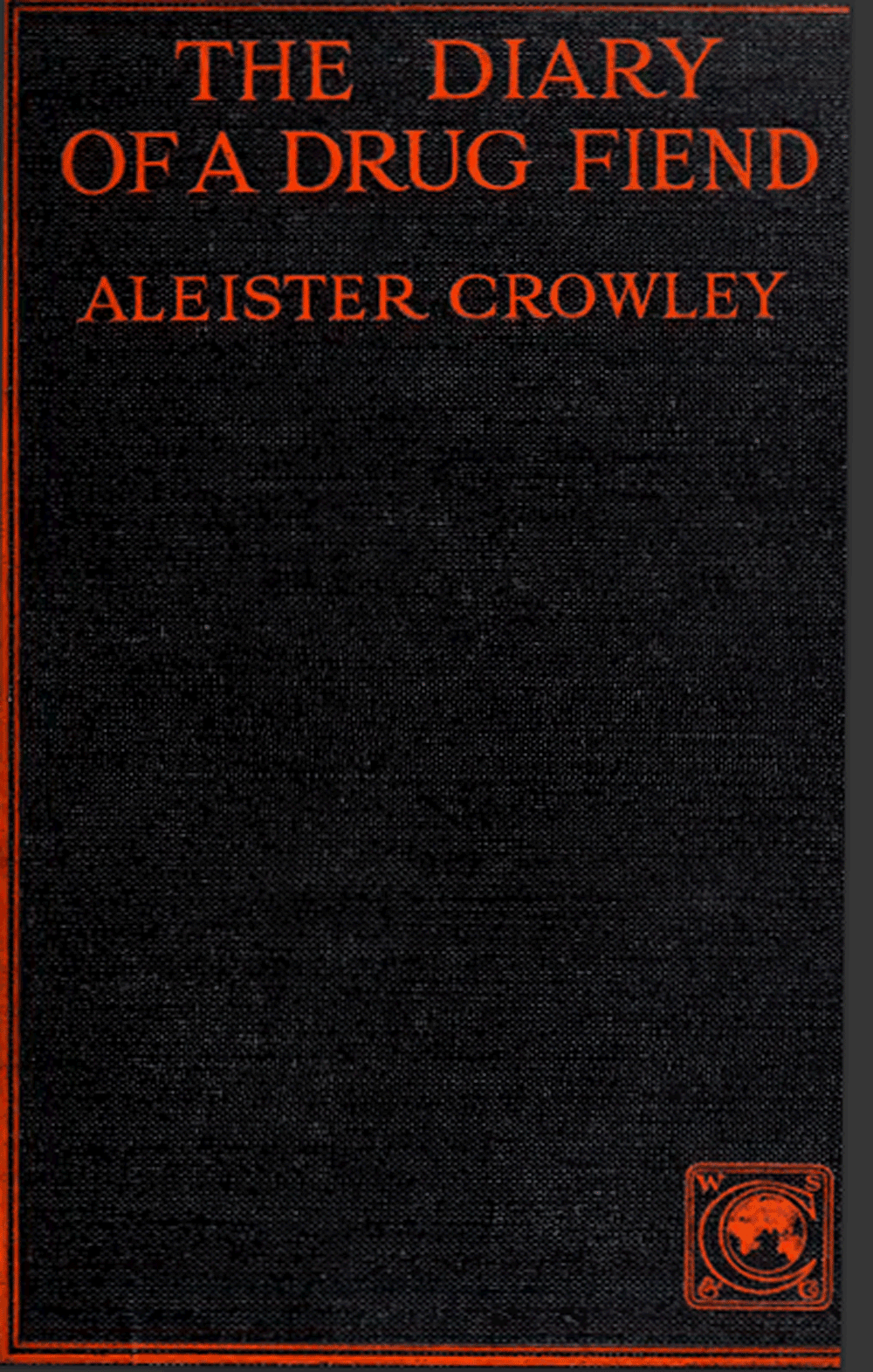
Diary of a Drug Fiend

This is the only full-cast recording of Aleister Crowley's 1922 classic paeon to common sense. It is the first book -- and so far almost the only book -- to stake out a philosophy of drug use that is compatible with human freedom, one in which we learn to use drugs as wisely as possible for the benefit of humanity. This recording was produced by the Drug War Philosopher and your purchases help support his effort to push back against the tragically counterproductive policy of drug prohibition, in the name of human freedom and of humanity's right to heal.

Purchase Your Copy


No cookies, no ads paid for by amoral and immoral billionaires (or trillionaires).


Unless otherwise indicated, no AI is used in the creation of site content. These essays represent the original ideas of their author and not the ideas that the author SHOULD have based on an algorithmic parsing of existing data. For more on this subject, consider the AI-related viewpoints to which the author subscribes as delineated in the New York Times opinion piece entitled "What 370,000 College Essays Tell Us About A.I.’s Effects on Creativity" by Rebecca Winthrop of the Brookings Institution.

The Partnership for a Death Free America is a proud sponsor of The Drug War Philosopher website @ abolishthedea.com.


Copyright 2026, Brian Ballard Quass Contact: quass@quass.com

tombstone for American Democracy, 1776-2024, RIP (up)