Homepage of the Drug War Philosopher, Brian Quass
blog icon orange rss icon with stylized radio waves bird icon for twitter bird icon for twitter substack icon


back navigation arrow


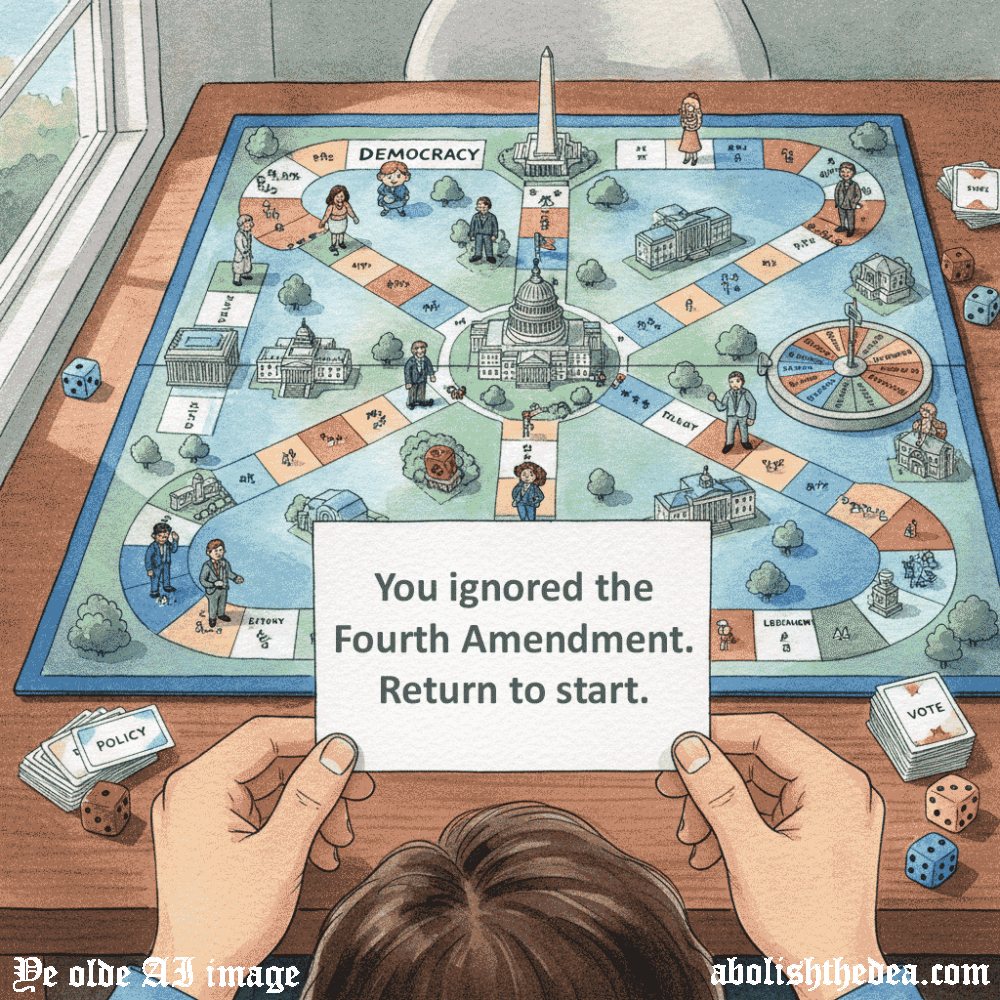
Let's play another game of Democracy!

but this time let's pretend that the Constitution and the Bill of Rights really matter

by Brian Ballard Quass, the Drug War Philosopher

September 8, 2026


If I have learned one thing in a long life, it is this: that in any matter in which everyone is agreed, it is a hundred to one that everyone is wrong. 1
Arthur Balfour

If you want to know what it feels like to argue in favor of drug re-legalization in America, perform the following thought experiment. Imagine that horses had been outlawed in the United States, ostensibly because of the established fact that horseback riding is the number-one cause of sports-related traumatic brain injury in our nation.2 Imagine further that this ban has been in effect for over 100 years and that our government is now spending $51 billion a year to convince Americans that horses are dangerous.3 Imagine also that no mainstream media outlets will publish any stories about "beneficial horse use," not in magazines, not in books, not in music, not on television or in the movies. Imagine that horses are scarcely ever made available even for scientific study, and that even when they are, our scientists have to be licensed by the government to perform such work and that they have to have their work overseen by a several armed bureaucrats from the HEA, the Horse Enforcement Administration. Imagine that we have a National Institute on Horse Dangers but no National Institute on Horse Benefits. Imagine that we send the police to grade schools to teach kids that horses are dangerous and that, if they see a friend riding a horse, they should call law enforcement, not only to save the kid, but also so that law enforcement can find out who peddled that junk to the kid in the first place.4 Imagine that anyone whose body evinces signs of "saddle burn" or bowlegs could be removed from the American workforce without trial. Imagine a state in which academics are afraid to say anything positive about horses, for fear of being drummed out of their jobs.

Have you got that backstory in mind?

Now, sit down in front of your computer screen and try to figure out a way to convince your readers that horses can have good uses as well as bad. Good luck. The minute you even mention the subject, your readers will think of Christopher Reeves and broken necks and trampled bodies of children and racetrack bystanders and farriers who were kicked violently by a horse and so maimed for life. Just you try to tell people that horses can be great for riding a trail and looking at a sunset and being out in nature and feeling at one with nature and your mount. If you get any response at all, it will be delivered from a high horse as an inveterate Horse Warrior attempts to shame you with such indignant remonstrances as: "You wouldn't say such things if YOU had a child who had been trampled to death by a horse" or "You wouldn't say such things if your father was a farrier who had been kicked in the face by a horse that he was trying to shoe!" etc. etc.

Of course, we cannot imagine such a world because horse-hating does not appeal to any preexisting prejudice on the part of westerners. But there is a sort of preexisting scientistic and puritanical prejudice against psychoactive substances in the west, so we are more than happy to go along with the absurd logic of prohibition and work ourselves up into a scapegoating lather on the subject of substance use.

In an attempt to understand this modern prejudice and the hateful algorithm that it sets working, I re-read "The Ethics of Addiction" by Thomas Szasz this morning in the hope of enlightenment. The most depressing takeaway was that all laws outlawing drugs nationwide in the United States -- at least in the late '60s and early '70s -- were passed unanimously. Unanimously. Not one representative found anything odd with outlawing Mother Nature, outlawing godsends, and giving doctors a monopoly on deciding whether or not any one of us in particular could benefit from the use of a psychoactive medicine. Apparently, not one of these representatives had even heard of William James, who said that philosophers should study the different forms of consciousness inspired by such medicines;5 apparently not one of these representatives had heard of the Vedic religion, which owes its existence to the consumption of a psychoactive concoction known as Soma;6 apparently, none of these representatives had enough historical knowledge to realize that opium had been considered a panacea from the time of Galen and that to outlaw the drug was therefore tantamount to a crime against humanity.

As Jim Hogshire wrote in Opium for the Masses: Harvesting Nature's Best Pain Medication:

'The poppy's central and indispensable position in our civilization makes access to it important, and thus forbidding public access to the poppy is staggeringly cruel.' 7
Jim Hogshire, Opium for the Masses: Harvesting Nature's Best Pain Medication

Szasz wrote the following about this cowardly drug-bashing consensus on the part of our representatives:

To me, such unremitting unanimity on this issue can mean one thing only: an evasion of the actual problem and an attempt to master it by attacking and overpowering a scapegoat: dangerous drugs and drug abusers. There is an ominous resemblance between the unanimity with which all reasonable men, especially politicians, physicians, and priests, formerly supported the protective measures of society against witches and Jews and now support them against drug addicts and drug abusers. Finally, those repeated unanimous votes on far-reaching measures to combat drug abuse are bitter reminders that when the chips are really down, that is, when democratic lawmakers can preserve their intellectual and moral integrity only by going against certain popular myths, they prove to be either mindless or spineless. 8
Thomas Szasz, The Ethics of Addiction

Even Oliver Wendell Holmes considered opium to be the drug of drugs, a drug whose use makes so many other drugs unnecessary. I must remind the reader, in this regard, that opiate use skyrocketed in the long run thanks to the very fact that we did not leave well enough alone. We outlawed the least toxic form of opiates, smokable opium, and thereby popularized the use of far more powerful opiates, like heroin, morphine, oxy, etc. Even the opiate addictions that existed prior to 1914 would have been far fewer and far less problematic had we encouraged the smoking of the drug instead of despising that practice in the name of xenophobic prejudices; many habitues were receiving more powerful opiates from their doctor merely because it would never occur to the relief seeker to smoke the drug like a detested "Chinaman."

It is hard to believe that Americans are so uneducated on this topic that not one single representative saw the problems with the laws that they were voting in. It is much more likely that many of these representatives knew better -- they knew that drugs were not evil in and of themselves -- but that they were fearful: they were voting with the next election in mind. They did not want to vote in a way that would offend the simple-minded prejudices of the public with regard to drugs. And this brings us to a whole new disturbing question: Is democracy a flawed form of government insofar as it is susceptible to the creation of just these types of laws: laws that play on the basic ignorance of the hoi polloi when it comes to nuanced truths?

This problem arises even when drugs are not the topic. Any time a conservative wants to pass a bill to crack down on crime of any sort in a democracy, all they need to do is to take advantage of the fact that the hoi polloi cannot appreciate nuance. Then they can frame the debate as being between those who love death and suffering and those who think that we should oppose it. One such nuanced truth that is off the radar of the average American is the fact that many laws end up destroying freedom for everybody, not just the targeted group, thereby changing the nature of the very democracy in which we live, or even eliminating that democracy altogether in the case of drug laws. It will be argued that America dealt with this possible eventuality by creating Amendments to the Constitution, thereby raising basic rights like access to Mother Nature above the power of a temporarily outraged citizenry to abolish those rights. This is true, but here's the problem: Americans decided in the 20th century, with a little strategic prodding of racist politicians, that there were some problems that they hated so much that it was permissible to ignore the Constitutional amendments that stood in the way of cracking down on them wholeheartedly. This erosion of Constitutional protections began with the outlawing of drugs in the early 20th century, but this devolution of American values gained speed when the Reagan administration convinced Americans that they had to test employee urine for drugs and to hell with the 4th amendment.

This is where Americans went wrong when it came to democracy: they refused to take their own Constitution and Bill of Rights seriously. They behaved as if our rights therein are no longer guaranteed if the citizenry becomes sufficiently outraged enough on a given issue thanks to the strategic demagoguery of racist politicians. If the American dream of freedom is to survive, we need a reboot, one that construes amendments in the way they were always meant to be understood, as connoting lines that simply could not be crossed in the name of expediency, as Reagan urged us to do, in the same decade that he was giving us the Stalinist advise to turn in our own loved ones for using substances of which politicians disapprove. Let me put this in the form of an extended metaphor: If world history were a children's game, I would summon the kids to our local hangout and shout as follows: "Hey, guys, I've got an idea. Let's play Democracy again, but this time let's pretend that the Bill of Rights has to be taken seriously, okay? No Amendments can be ignored, period, full stop!"

Let me conclude with another quote from the individual who, in my opinion, is the person in the western world to come closest to being sane on the subject of drugs -- and one of the very few who understands that when we outlaw drugs for recreational use, guess what... we also outlaw drugs for therapeutic use -- a fact that is clear enough to myself at least given the fact that drug prohibition turned me into a med-dependent "patient" by giving a monopoly on mind and mood medicine to the medical field, who promptly used that privilege to turn me into a patient for life by prescribing me "meds" that turned out to be far harder to kick than heroin. Speaking of which, here's a related insight from the Szasz essay to which I referred above:

The opiate habit, like the cigarette habit or the food habit, can be broken, usually without any medical assistance provided the person wants to break it. Often he doesn't. And why indeed should he if he has nothing better to do with his life? Or as happens to be the case with morphine, if he can live an essentially normal life while under its influence? 9
Thomas Szasz, The Ethics of Addiction

Let me conclude by contradicting my earlier decision to conclude with a quote from Thomas Szasz. I've decided to conclude instead with a satirical chat with Mr. Edd of TV sitcom fame on the subject of the evils of horseback riding.

DWP: Hello, Mr. Edd!

MR. EDD: Oh, Hi, Wilbur.

DWP: Well, the name's actually Brian, but close enough.

MR. EDD: You say potato, I say broccoli with sprouts, Wilbur.

DWP: Be that as it may, I believe you have something important to tell the boys and girls.

MR. EDD: That's right, Wilbur.

DWP: Are you listening, kids? Here comes an important message that you're gonna want to take to heart.

MR. EDD: All right, stop fussing, Wilbur, I've got the floor right now, thank you very much.

DWP: Oh, I'm sorry.

MR. EDD: Kids, I want you to do your pal Mr. Edd a big favor right now and just say neighhhhhhhhh to all equestrian sports whatsoever.

DWP: You hear that, kids?

MR. EDD: Wilbur?

DWP: Just say no to horses.

DWP: Wilbur?

DWP: As in, ix-nay on the orses-hay!

MR. EDD: Wilbur?

DWP: What?

MR. EDD: Are you quite done?

DWP: Oh, yes, sorry about that.... Well, go ahead?

MR. EDD: You promise not to cut me off again?

DWP: No, go ahead, I'm done, you've got this.

MR. EDD: That's more like it. Ahem, ahem. This message brought to you by the Partnership for a Death Free America.

DWP: Remember, folks, Mr. Edd himself tells you to "Just say NeighhhhhH!"

MR. EDD: Wilbur!

DWP: And remember, kids, you got it straight from the horse's mouth!

MR. EDD: Wilburrrrrrrrrrrrrrrrr!


Notes for essay entitled Let's play another game of Democracy!: but this time let's pretend that the Constitution and the Bill of Rights really matter:

1: Wikipedia Contributors. 2019. “Arthur Balfour.” Wikipedia. Wikimedia Foundation. February 25, 2019. https://en.wikipedia.org/wiki/Arthur_Balfour. (up)
2: Equestrian Sports Are The Leading Cause of Sports-Related TBI Neurologic Rehabilitation Institute at Brookhaven Hospital, 2016 (up)
3: “War on Us – the War on Drugs Is a War on All of Us.” 2019. Waronus.com. 2019. http://waronus.com/. (up)
4: Why Drug Free Zones are Dangerous and Unconstitutional DWP (up)
5: James, William. 2016. The Varieties of Religious Experience. Goodreads. https://www.goodreads.com/book/show/28820.The_Varieties_of_Religious_Experience. (up)
6: “Blue Tide - Mike Jay.” 2025. Mike Jay. May 18, 2025. https://mikejay.net/books/blue-tide/. (up)
7: Opium for the Masses: Harvesting Nature’s Best Pain Medication Hogshire, Jim (up)
8: “Full Text of ‘The Ethics Of Addiction.’” 2026. Archive.Org. 2026. https://archive.org/details/382239100-the-ethics-of-addiction. (up)
9: “Full Text of ‘The Ethics Of Addiction.’” 2026. Archive.Org. 2026. https://archive.org/details/382239100-the-ethics-of-addiction. (up)


read more essays here


Ten Tweets

against the hateful war on US


Freud's real discovery was that drugs like cocaine could make psychiatry UNNECESSARY for the vast majority of people. The medical establishment hated the idea -- so they judged the drug based on its worst possible use!

Even when laudanum was legal in the UK, pharmacists were serving as moral adjudicators, deciding for whom they should fill such prescriptions. That's not a pharmacist's role. We need an ABC-like set-up in which the cashier does not pry into my motives for buying a substance.

When folks die in horse-related accidents, we need to be asking: who sold the victim the horse? We've got to crack down on folks who peddle this junk -- and ban books like Black Beauty that glamorize horse use.

I'm going to get on the grade-school circuit, telling kids to say no to horses. "You think you can handle horses, kids? That's what Christopher Reeves thought. The fact is, NOBODY can handle horses!!!"

We know that anticipation and mental focus and relaxation have positive benefits -- but if these traits ae facilitated by "drugs," then we pretend that these same benefits somehow are no longer "real." This is a metaphysical bias, not a logical deduction.

Reagan paid a personal price for his idiocy however. He fell victim to memory loss from Alzheimer's, after making a career out of demonizing substances that can grow new neurons in the brain!

Drug prohibition represents the biggest power grab by government in human history. It is the state control of pain relief and mental states.

Self-medication is not a dirty word. It has always been a fundamental right to take care of one's own health -- until the medical establishment demonized the practice for obvious financial reasons.

High suicide rates? What a poser! Gee, I wonder if it has anything to do with the fact that the US has outlawed all substances that elate and inspire???

Today's war against drug users is like Elizabeth I's war against Catholics. Both are religious crackdowns. For today's oppressors, the true faith (i.e., the moral way to live) is according to the drug-hating religion of Christian Science.


Click here to see All Tweets against the hateful War on Us


back navigation arrow
Book Cover

Break the ice with a sledgehammer: place this book on your coffee table.

This book features 150 annotated images, designed to force brainwashed Americans to confront the fact that drug prohibition is wrong. Here is what author Richard Parrish II says of the book's compiler: "The drug prohibition philosopher provides first-hand, principled, persuasive, and insightful arguments against the current drug prohibition regime..."

Purchase Your Copy
Book Cover

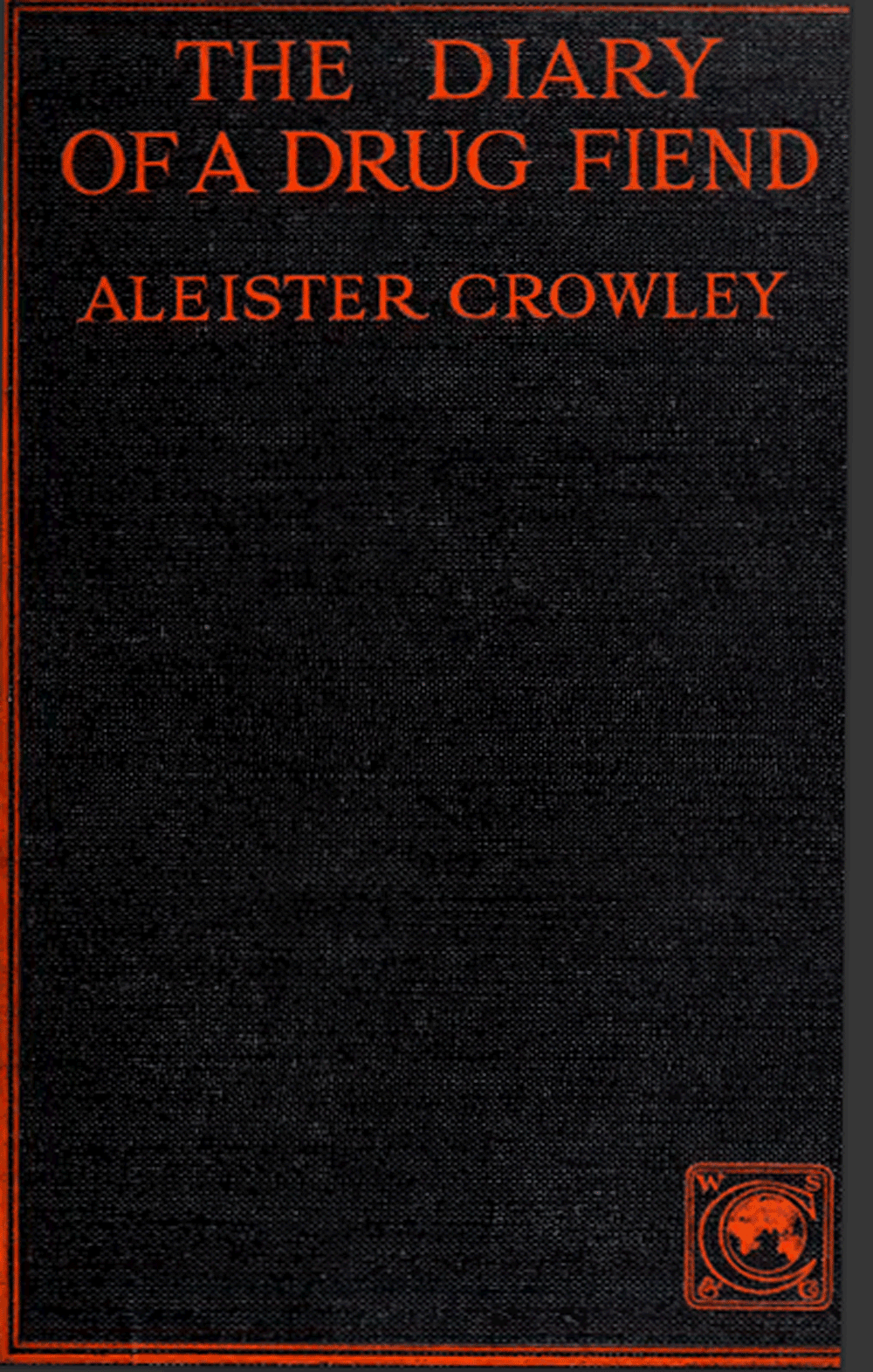
Diary of a Drug Fiend

This is the only full-cast recording of Aleister Crowley's 1922 classic paeon to common sense. It is the first book -- and so far almost the only book -- to stake out a philosophy of drug use that is compatible with human freedom, one in which we learn to use drugs as wisely as possible for the benefit of humanity. This recording was produced by the Drug War Philosopher and your purchases help support his effort to push back against the tragically counterproductive policy of drug prohibition, in the name of human freedom and of humanity's right to heal.

Purchase Your Copy


No cookies, no ads paid for by amoral and immoral billionaires (or trillionaires).


Unless otherwise indicated, no AI is used in the creation of site content. These essays represent the original ideas of their author and not the ideas that the author SHOULD have based on an algorithmic parsing of existing data. For more on this subject, consider the AI-related viewpoints to which the author subscribes as delineated in the New York Times opinion piece entitled "What 370,000 College Essays Tell Us About A.I.’s Effects on Creativity" by Rebecca Winthrop of the Brookings Institution.

The Partnership for a Death Free America is a proud sponsor of The Drug War Philosopher website @ abolishthedea.com.


Copyright 2026, Brian Ballard Quass Contact: quass@quass.com

tombstone for American Democracy, 1776-2024, RIP (up)