introduction to the Drug War Philosopher website at abolishthedea.com
blog icon orange rss icon with stylized radio waves bird icon for twitter bird icon for twitter substack icon


back navigation arrow


Fighting Drugs with Drugs

in response to 'Tonic, Fuel, and Food' by Cecil G. Helman

by Brian Ballard Quass, the Drug War Philosopher

July 5, 2026


Good morning, Richard. 1 I received your message on my website.

I am looking around for free access to the paper that you recommended. 2 I would be very interested in reading it, though I am afraid it might prove to be a bit of a button-pusher from my point of view – which is great, because that tends to get my thoughts flowing. As I see it, drug use involves the attempt to facilitate "useful" or "desirable" states of mind as the unique drug user would define those terms. To understand the reasons for use, we would have to know the user's life story, their genetics, their goals in life, their default biochemistry, their situation in life at the time of use, their risk tolerance, their level of satisfaction with sobriety as they experience it given their past upbringing, etc. etc. In other words, we would have to make an inventory of the human condition, and even then we would necessarily leave out a host of factors about which we know nothing – and perhaps CAN know nothing given the perceptual limits of human beings. So I am skeptical of an attempt to throw all drug users into three categories. We risk imposing our own unconscious biases on a diverse field.

The abstract ends with the words: "It is hoped this classification will be useful to clinicians and others working in this field." 3 One wonders whether this classification, being just one of many imaginable classifications, might not prejudice clinicians rather than enlighten them. I think in this connection of the introduction to The Book of the Damned, in which Charles Fort argues that science never investigates anything, properly speaking, but rather that they seek to fit phenomena into some existing classification system, and that if they are unable to do so, the phenomena in question is simply ignored, i.e. "damned." 4 And so, for instance, the PEAR group's findings about telekinesis are damned by modern science 5, as are the results of the studies of William James "on" laughing gas 6, or indeed of any transcendent experiences whatsoever that are achieved with the help of so-called "drugs." 7

Also, the researcher seems to be ignoring drug use for religious purposes – though he or she probably subsumes such use under the category of "tonic." That is a schema, however, with which a Vedic imbiber of the Soma juice might have begged to differ. 8 Finally, the abstract sounds like it was written by a "normal" scientist who was setting out to study another species, as if abstention were a baseline human trait rather than merely a condition prescribed by law in Drug War America. I also wonder if the nightly tippler, the morning coffee drinker, and the hourly cigarette smoker are subjected to the scrutiny of the researcher.

But these are all speculative qualms that could conceivably be silenced by the author in the paper itself, though it would be a rare author indeed who could demonstrate to my satisfaction that he or she had not been biased by America's campaign to demonize drug use at every turn. I am especially prejudiced by the fact that this paper was published at the beginning of the 1980s, the decade in which Reagan and the Bushes were employing Stalinist tactics to persecute drug users. This was the decade when our presidents were encouraging kids to turn in their own parents for using substances of which racist politicians disapproved. It was the decade in which our government began outsourcing drug-user surveillance to Big Business, encouraging employers to drug-test their employees for reasons other than impairment, to go, as it were, on a fishing expedition in their bodily fluids. In so doing, the government had found the perfect way to punish drug users without so much as a trial, a way to remove them from the U.S. workforce without so much as filing a single charge against them.

But even if the paper by CG Helman should turn out to lack the shortcomings that I have imputed to it above, I have a complaint about the abstract that I think I can stand by even before reading the remaining text. I am referring here to the fact that Helman, like almost all researchers, is reckoning without drug prohibition. He speaks of "the problem of psychological dependence on these drugs," failing to mention that America has outlawed all drugs that could easily help people get over mere psychological dependence. 9 I believe that this is a fact that is just too obvious for scientists to grasp in the age of behaviorism and reductive science. Let me give a couple of examples, as I can speak from experience, having been dependent for over a decade on Valium some 30 years ago now and having lately lost the battle in my attempt to end my long-term use of Effexor.

FIGHTING FIRE WITH FIRE

QUESTION: Why do people have trouble getting off drugs?

ANSWER: Basically, they have moments during withdrawal – usually short-lived and sporadic – when they feel like crap and are all too ready to ascribe that feeling to a lack of their customary drug.

Now then, anyone who has even a passing familiarity with the beneficial effects of drugs knows that there are substances that could get a withdrawing individual through these bouts of panic – and not just by making those episodes tolerable, either, but even by making those episodes enjoyable, educational, and even, in some cases, spiritually enlightening. Of course, I am talking about something that is unthinkable from the Drug Warrior's point of view, namely, fighting fire with fire: i.e., fighting drugs with drugs. I would claim, however, that this is really common sense to most people – or that it would be if they were not brainwashed to believe that drugs cannot have any positive uses whatsoever. I write from personal experience, too. I am certain that I could get off the Big Pharma SNRI known as Effexor (aka Venlafaxine) – and that I could ONLY get off Effexor – if I was able to use other drugs on a strategically timed basis to obfuscate and transcend the sporadically hellish effects of withdrawal that are discovered at the end of the most scientifically correct tapering schedule for that "med." After a year of the generally successful tapering of Effexor, I had one single morning in which I was suddenly in hell. It was blazingly clear to me, even at that time, that the real-time use of cocaine 10 or laughing gas 11 or a wisely chosen phenethylamine synthesized by Alexander Shulgin 12 could have kept me from running back to the medicine cabinet for more Effexor. And yet, thanks to drug prohibition, I ended up "relapsing." This is one of the endless downsides of drug prohibition that literally no one seems to notice.

In this case of Effexor, we are clearly talking about a kind of insidious long-term physical or biochemical dependence, not just psychological dependence, and yet I insist that it is a matter of "common psychological sense" that I could get through the downsides of even this "worst of all possible" withdrawal processes with the help of drug-facilitated vacations from the side effects involved, regardless of whether those side effects were due to a physical or psychological cause, or some combination of the two. Of course, here is the point where the mainstream tries to shut me down by claiming that I am giving medical advice without a license, but this is philosophy, not medical advice. Besides, it is America's naive trust in licensed doctors that has created the invisible dystopia of our times, according to which 1 in 4 American women are dependent on Big Pharma "meds" for life. 13 Our medically licensed doctors are collaborating with drug prohibition because they know that it guarantees them patients for life. Otherwise, they would be crying out loudly and clearly for the end of drug prohibition on behalf of their patient's right to heal -- on behalf of their patient's right not to BE a patient in the first place.

The medical industry will stop at nothing to legitimize their monopoly status when it comes to mind and mood. They have long since convinced Americans that it is a cardinal sin to self-medicate, whereas self-medication -- i.e., taking care of one's health -- has been the most basic of human rights throughout the ages. 14 Today they tell us that merely to talk about the positive use of outlawed substances (i.e., of the medical industry's competition) is the same as "giving medical advice," or practicing medicine without a license. The threat is clear: "Continue pushing back against our dominance in the mental health field and we will plump for laws that restrict your freedom of speech... and maybe even invent a new illness for the DSM called 'Improper Protest Syndrome,' diagnose you with the same, and then lock you up for your own good."

Having thus "called out" the institutional bullies who would outlaw my very right to disagree with them, I proceed with my enumeration of the potential beneficial uses of the drugs for the purpose of fighting drugs.

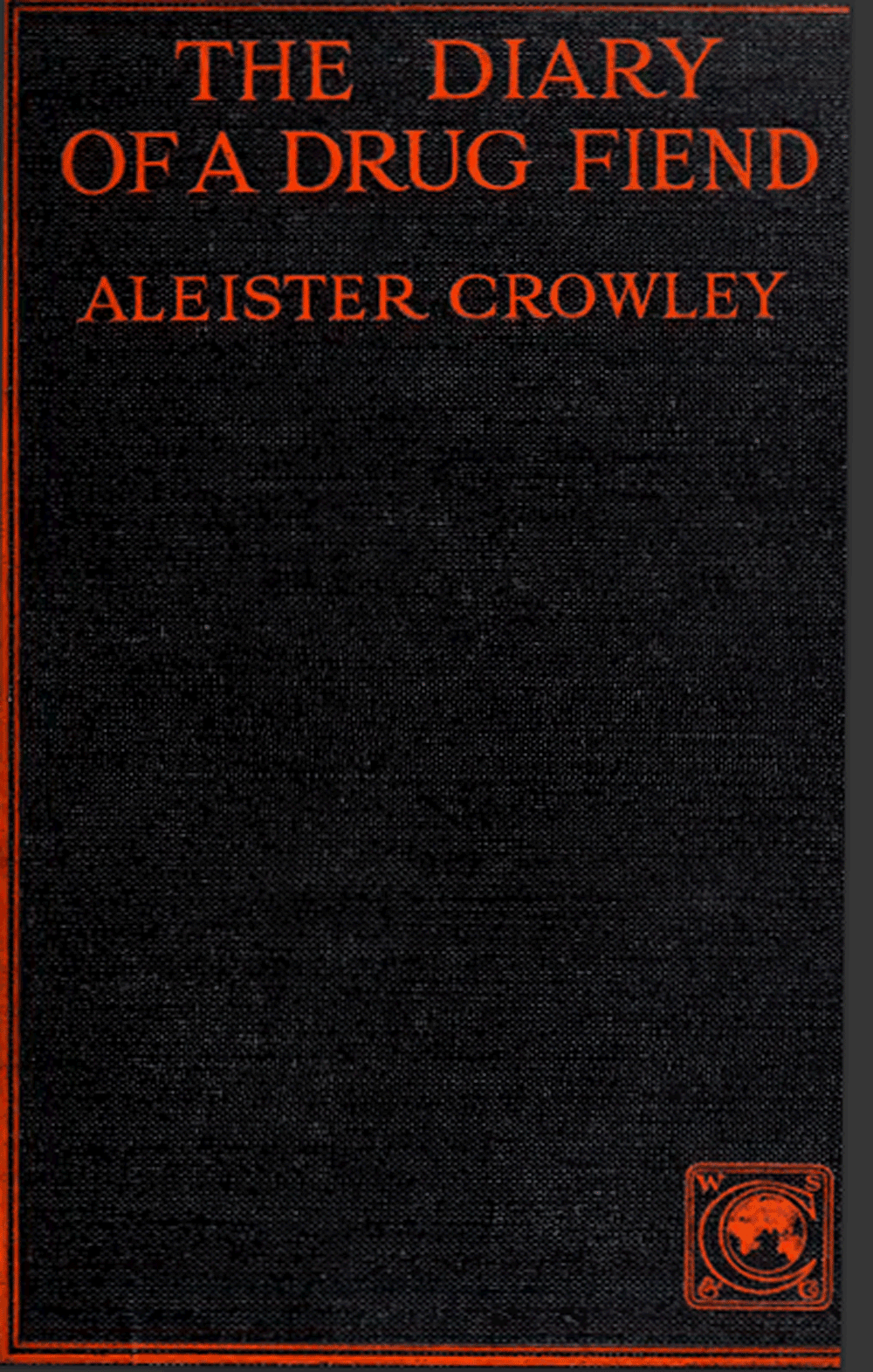
One of endless potential protocols: The individual who encounters difficulties with a withdrawal process could inhale a large pipeful of opium and then dream their way through the next few hours that they would have otherwise spent in hell. They may even learn something during the process. As we learn through the as-yet uncensored literature of opium smokers like Poe, Crowley and Lovecraft, the drug has the miraculous ability to turn our illnesses and dispositions into metaphors. As the latter author writes in his short story The Crawling Chaos:

Suddenly my pain ceased, and I began to associate the pounding with an external rather than internal force... I fancied the pounding was that of the vast, inscrutable sea as its sinister, colossal breakers lacerated some desolate shore after a storm of titanic magnitude. 15
HP Lovecraft -- The Crawling Chaos

Jim Hogshire sheds light on this curious drug effect when he writes in Opium for the Masses:

As a deadening agent, opium has almost no effect. If measured purely for its ability to alleviate the sensation of pain, morphine, opium, or any of the others would score no better than aspirin. It is the perception of pain that opium alters, and that makes all the difference in the world. 16
Jim Hogshire -- Opium for the Masses: Harvesting Nature's Best Pain Medication

Of course, "mileage may vary," as they say in the ads. Psychoactive drugs do not have the one-size-fits-all effects that western scientists always demand of "real medicines." A person who has done little reading, has little imagination, and is only interested in utilitarian affairs is going to have a very different experience "on opium" than will a Lovecraft or Poe or Alistair Crowley. Scientists will notice this fact and cry triumphantly that opium does not really work. What they fail to realize is that mind matters and that the effective use of psychoactive drugs is a result of a collaboration between substance and user. Indeed, sometimes the mere reputation of a drug to bring about a certain effect is such a powerful "trigger" for a user that it can bring about the desired effect without the actual use of the drug; the user needs merely to THINK that they have used the drug and they acquire the drug's protective abilities, as if by magic. Scientists call this amazing outcome the "placebo effect" and claim that it proves that the drug was not needed in the first place. This is a shallow conclusion, however. The drug was definitely needed. It's just that what was needed was not the physical drug itself, but rather the drug's aura of power, its promise to produce a certain effect; the user required a belief in the power of that drug. The would-be user may experience the desired effects without taking the physical drug, but the point is this: that they would NOT feel the effects except for the existence of that drug in which they believe. If we were to convince them that such a drug does not exist, they will not experience the powerful effect.

Christian Scientists look at the placebo effect and say, "See? We do not really NEED drugs!" To which we might answer, "Yes, and we don't really need fireproof shoes to walk over hot coals, either. And yet for all that, a non-yogi is going to feel great pain when they walk over those coals, no matter how hard they may be saying to themselves, 'I think I can! I think I can! I think I can!'"

The real lesson from the placebo effect, then, is that our minds are far more potentially powerful than we believe -- and that "belief," in some sense of the word, is needed to unlock those powers. This, in turn, reminds us of the Platonic doctrine that all knowledge is remembering, that at some level, we all have access to incredible powers of understanding. This is why William James urged his followers to study altered states, not because he wanted to "get high" and party until dawn, but because he wanted to investigate what we could learn from a mind that can transcend utilitarian concerns and see new aspects of "what's out there." Not only do I sign off on that goal, but I would extend James' remit to include the use of psychoactive substances to sound the very limits of our mental powers. There is already plenty of anecdotal evidence ("damned" evidence in the Fortean sense of that word) that drugs can give the user vastly improved mentation and a seemingly surreal power to see patterns in nature, real patterns that are hidden to the sober eye. If we really want to learn about who we are and why we are here on planet Earth, we have an obligation to see whence these powers spring, what their limits are (if any!), and how we can use these powers as wisely as possible for the benefit of our species.

A word about opiate addicts. If the researcher in this paper raises this topic, he will be doing so while reckoning without drug prohibition. In the absence of drug prohibition, however, we could encourage an opiate "addict" to take up the nightly habit of smoking an opium pipe -- if we were more interested in their health than in merely getting them off of opiates. It is interesting to note in this connection that the west, led by our protestant missionaries, first demonized opium, then criminalized it, and finally created its own drugs designed to render the west impervious to its charms. At no point did we ever allow ourselves to even think that people actually want the benefits that opiates bring and that we should therefore seek to encourage the safest possible use for those who are determined to partake.

CONCLUSION

In a sane world, I believe we would learn from actual users as to which substances tend to work best for which people in specific circumstances like these, so that psychologically dependent people can choose wisely among their options. But we do not have to work out all the details for "best practices" before admitting that there is a prima facie case for the protocol of fighting drugs with drugs and thereby solving the problem of psychological withdrawal in most cases. The scientists, of course, will tell us that we will need endless well-financed clinical trials to see if such protocols could work, but all we really need is a bit of psychological common sense -- combined with a willingness to learn about Mother Nature's bounty rather than to demonize it a priori at the behest of demagogue politicians. The first step is to undo the unconstitutional practice of drug prohibition, which has outlawed the human being's right to heal while militarizing local police forces and creating gunfire, cartels and wars out of whole cloth.


Notes:

1: Substack. 2026. “Richard Henry Parrish II.” Substack.com. 2026. https://substack.com/@richardhenryparrish2. (up)
2: Helman, Cecil G. 2002. “‘Tonic,’ ‘Fuel’ and ‘Food’: Social and Symbolic Aspects of the Long-Term Use of Psychotropic Drugs.” Social Science & Medicine. Part B: Medical Anthropology 15 (4): 521–33. https://doi.org/10.1016/0160-7987(81)90026-0. (up)
3: Helman, Cecil G. 2002. “‘Tonic,’ ‘Fuel’ and ‘Food’: Social and Symbolic Aspects of the Long-Term Use of Psychotropic Drugs.” Social Science & Medicine. Part B: Medical Anthropology 15 (4): 521–33. https://doi.org/10.1016/0160-7987(81)90026-0. (up)
4: Charles, Fort. 2025. “The Book of the Damned.” Gutenberg.Org. 2025. https://www.gutenberg.org/cache/epub/22472/pg22472-images.html. (up)
5: “Princeton Engineering Anomalies Research.” 2026. Icrl.Org. 2026. https://pearlab.icrl.org/experiments.html. (up)
6: “The Varieties of Religious Experience : William James : Free Download, Borrow, and Streaming : Internet Archive.” 2021. Internet Archive. 2021. https://archive.org/details/the-varieties-of-religious-experience_202109. (up)
7: “Erowid.” 2019. Erowid.org. 2019. https://www.erowid.org/. (up)
8: “Soma: The Nectar of the Gods.” n.d. History of Ayurveda. https://www.historyofayurveda.org/library/soma. (up)
9: Forbidden Quotations about the beneficial use of drugs DWP (up)
10: “Freud on Cocaine : Freud, Sigmund, 1856-1939 : Free Download, Borrow, and Streaming : Internet Archive.” 2023. Internet Archive. 2023. https://archive.org/details/freudoncocaine0000freu/page/n5/mode/2up?view=theater. (up)
11: Why the FDA should not schedule Laughing Gas DWP (up)
12: Shulgin, Alexander T, and Ann Shulgin. 2019. Pihkal : A Chemical Love Story. Berkeley, Ca: Transform Press. (up)
13: Richard Louis Miller. 2017. Psychedelic Medicine : The Healing Powers of LSD, MDMA, Psilocybin, and Ayahuasca. Rochester, Vermont: Park Street Press. (up)
14: Restoring our Right to Self-Medication: how drug warriors work together with the medical establishment to prevent us from taking care of our own health DWP (up)
15: “‘The Crawling Chaos’ by H. P. Lovecraft with Winifred V. Jackson.” 2026. Hplovecraft.Com. 2026. https://www.hplovecraft.com/writings/texts/fiction/crc.aspx. (up)
16: Opium for the Masses: Harvesting Nature’s Best Pain Medication Hogshire, Jim (up)


read more essays here


Ten Tweets

against the hateful war on US


The Drug War is based on two HUGE lies: 1) that prohibition has no downsides, & 2) that drug use has no upsides.

Every time I see a psychiatrist, I feel like I'm playing a game of make-believe. We're both pretending that hundreds of demonized medicines do not exist and could be of no use whatsoever.

If religious liberty existed, we would be able to use the inspiring phenethylamines created by Alexander Shulgin in the same way and for the same reasons as the Vedic people of India used soma.

"All these anti-opium articles... are based upon the same model. They assume certain statements as existing and acknowledged facts which have never been proved to be such, and then proceed to draw deductions from those alleged facts." --William Brereton

The FDA says that MindMed's LSD drug works. But this is the agency that has not been able to decide for decades now if coca "works," or if laughing gas "works." It's not just science going on at the FDA, it's materialist presuppositions about what constitutes evidence.

Opium is a godsend, as folks like Galen, Avicenna and Paracelsus knew. The drug war has facilitated a nightmare by outlawing peaceable use at home and making safe use almost impossible.

Kids should be taught in grade school that prohibition is wrong.

The government makes psychoactive drug approval as slow as possible by insisting that drugs be studied in relation to one single board-certified "illness." But the main benefits of such drugs are holistic in nature. Science should butt out if it can't recognize that fact.

They drive to their drug tests in pickup trucks with license plates that read "Don't tread on me." Yeah, right. "Don't tread on me: Just tell me how and how much I'm allowed to think and feel in this life. And please let me know what plants I can access."

Outlawing substances like laughing gas and MDMA makes no more sense than outlawing fire.


Click here to see All Tweets against the hateful War on Us


back navigation arrow


No cookies, no ads.


Unless otherwise indicated, no AI is used in the creation of site content. These essays represent the original ideas of their author and not the ideas that the author SHOULD have based on an algorithmic parsing of existing data. For more on this subject, consider the AI-related viewpoints to which the author subscribes as delineated in the New York Times opinion piece entitled "What 370,000 College Essays Tell Us About A.I.’s Effects on Creativity" by Rebecca Winthrop of the Brookings Institution.

The Partnership for a Death Free America is a proud sponsor of The Drug War Philosopher website @ abolishthedea.com.


Copyright 2026, Brian Ballard Quass Contact: quass@quass.com

tombstone for American Democracy, 1776-2024, RIP (up)