Here's an idea: Let's use drugs for human benefit!
Reeducating Americans about the common-sense benefits of substance use
by Brian Ballard Quass, the Drug War Philosopher
May 18, 2026
It is difficult for me to write essays these days on the subject of American drug attitudes, not simply because drug prohibition has ensured that depressives like myself have no access to motivating godsends that could put me to work in a moment, will-I nil-I, but because many of the insights that I have to communicate are so common sensical in nature that I have trouble believing in the importance of my own essays. I really have to stop and remind myself that no one else is saying these things before I can justify putting time and effort into the task of trying to convince a race of apparently indoctrinated Americans of common sense, of the fact that two plus two IS actually equal to four, yes, even when the subject of drugs is broached. For I have found that even the smartest Americans are like Don Quixote when it comes to drugs. They may be geniuses on every other subject in the world, but when you mention their pet subject (in this case, drugs) they begin talking utter nonsense -- or what is more likely, they clam up entirely, thereby silently "signing off" on a host of childish and demonstrably false ideas that supposedly "justify" drug prohibition in the first place.
Today I focus on just one of the simple truths about drugs that has yet to be acknowledged by otherwise intelligent Americans: namely, that drug use has benefits. And enormous benefits at that.
It is interesting how scientists in particular have contrived to avoid acknowledging this fact. They have done so by insisting that drug efficacy -- for any psychological purpose whatsoever -- has to be established by an analysis of brain chemicals. If the brain chemicals of a drug user fail to move about in a way predicted by biochemical theory, then the drug that they are using is deemed to have no efficacy, or at least no proven efficacy, regardless of history, anecdote, and common sense. The Don Quixotes of our time (in other words, the laypeople who should know better) use these negative "scientific" conclusions as an excuse for their own refusal to acknowledge any benefits of drug use. And so hitherto common-sense ideas, like the idea that "laughter is the best medicine," are dismissed as non-scientific, as scientists tell us (implicitly and otherwise) that substances like laughing gas have no beneficial uses for the depressed. Laughing gas! 12
Now, I ask you: if your loved one was intent on killing themselves, would it not be your moral duty to cheer them up in real-time, were such a thing possible? I mean, stat, as in right now? Suppose your loved one -- like mine -- had visited an ER in the wee hours of the morning because she needed help and was determined that she would otherwise kill herself? Would you want something that would work for her right now, this minute? Or would you prefer to start her on a course of dependence-causing pills which, with a lifetime of talk therapy, might eventually convince her that life was perhaps worth living after all? Surely, the caring person would want to act right now, not sign the sufferer up for a distant hypothetical cure! You see? It sounds like I am being condescending here, because what I am saying is just Psychology 101, in the chapters on basic motivation in the class textbook. It's even EMPATHY 101, when it comes to that. And yet I have to point out the obvious because these are the very details that our modern Don Quixotes ignore in their determination to associate psychoactive substances with nothing but death and destruction.
Of course, the safety and sustainability of any given kind of drug use is an important topic -- but Drug Warriors would have us believe that it is the ONLY topic, so much so that they would rather that the suicidal loved one in the preceding example kill themselves rather than to use substances like laughing gas, or coca, or opium, or phenethylamines, etc. For proof of that latter claim, I invite you to read any and all articles about the case of depressed Canadian Claire Brosseau.34 She is demanding her right to assisted suicide, and literally none of the principals in her case are even mentioning the fact that drug prohibition has outlawed substances that could help make her wish to live. None of them. They do not see that the propriety of assisted suicide for the depressed cannot be ethically debated without also debating the propriety of drug prohibition. So we find ourselves in a strange world, one in which the government will use drugs to kill a depressed person, but they won't let that depressed person use drugs that might make them wish to live!
And why not? It can only be because they actually believe that drugs have not been scientifically "proven" to help in such cases. And this is why I have to write to them as if they were children, because they have jettisoned all common sense on this issue, all basic psychology. In order to toe the party line about drugs, they have embraced the biochemical determinism and reductionism of modern science, giving them the pretext of an excuse to ignore common sense. One has to explain to them the most basic psychological ideas, like the fact that happiness is a health-provoking thing, and that looking forward to the occasional use of a substance like laughing gas has an antidepressant value in and of itself thanks to the simple therapeutic value of anticipation. One has to explain to them that the experience of bliss and joy is educational for the depressed, for it reminds them that their unremittingly bleak view of the world is not the only way to experience life, and that there is therefore hope for them yet to live an endurable life, if not a fulfilling one. These are the home truths from Psychology 101 that I am forced to reiterate in our age of willful ignorance about otherwise obvious drug benefits.
It's funny. Nobody had to go around Woodstock and explain to the hippies why drugs might be of benefit to them. Everybody understood that. The concert-goers wanted to feel good, they wanted to appreciate the music as much as possible, and they knew that drugs existed that could help them achieve that laudable goal. No drug peddler needed to take them aside and say: "See, it's like this. The drug opens your eyes to the beauty of the world around you, especially as revealed through music. It makes you feel compassion for your fellows and so relate empathically with the crowd around you. It makes you 'turn on,' so to speak, to the world around you. It thereby helps you to really experience the music and not just enjoy it, as it were, from an intellectual point of view." A guy who lectured hippies like that in 1969 in upstate New York would have been deemed a pedantic madman, without one ounce of common sense, but this is just the way that we are required to talk to modern Americans today, thanks to their blind faith in science to tell us all we need to know about drugs.
The idea that drugs have no benefits is, in fact, the complete opposite of the truth. My reading on the subject over the last seven years convinces me that there are drugs whose common-sense strategic use could, in an ideal world5, help people with almost any psychological condition imaginable. I do not have to be a medical doctor to state justifiably that a prima facie case can be made for the use of opium in psychotherapy, for instance. As a user and a "healer" both relax on the drug, their conversation could be guided toward productive channels of thought, thereby leading to healing. An example of this kind of drug use is found in the 1859 short story by Fitz-James O'Brien entitled "What Was It?"
Those hours of opium happiness which the Doctor and I spent together in secret were regulated with a scientific accuracy. We did not blindly smoke the drug of paradise, and leave our dreams to chance. While smoking, we carefully steered our conversation through the brightest and calmest channels of thought.
Imagine that, a therapy session in which everyone's relaxed and ready to deal with true feelings and concerns from a whole new angle. For this is the benefit of opium, as discussed by Jim Hogshire in "Opium for the Masses"7, it lets you perceive the world in a new way. As Jim writes:
If measured purely for its ability to alleviate the sensation of pain, morphine, opium, or any of the others would score no better than aspirin. It is the perception of pain that opium alters, and that makes all the difference in the world.
In other words, opium can help us see our problems in a new light -- and that is nothing less than the ultimate goal of a therapist, to help us see our problems in a new light! So we see that the smoking of opium has obvious therapeutic potential, practically by definition, at least for specific people in specific cases at specific times; in fact, the potential is so obvious that it could only be denied by someone with a medical degree -- or a layperson who uncritically embraces the pharmacological verdicts of such an academic.
But, of course, to recommend opium psychotherapy is a twofold heresy in the age of the Drug War. First, it is claiming that drugs have benefits without citing any biochemical research on the subject; second, it is pointing out positive uses for demonized substances and thereby giving medical advice, as it were, without a license. Both these charges are bogus, however. We do not need a biochemist to tell us that feeling good has benefits. And the idea that only self-interested doctors can speak authoritatively about drugs is just a little too convenient to be true: that claim is a way of letting doctors control the debate on a subject in which they have a supreme financial interest: for their very business model depends on drug prohibition and the disempowerment of the patient. That's why they have made a sin out of self-medicating, which has always been one of the most basic rights of a human being, to take care of their own health without the approval of the government or the medical industry. Doctors have an obvious financial interest in making self-medicating the one unforgivable sin, just as they have an obvious financial interest in demonizing godsends like opium, coca and cocaine. If you want to understand this disempowering status quo, just "follow the money."
We will be spoiled for therapeutic options once we put the government out of the business of criminalizing Mother Nature.
Someday, when we have successfully told Big Mother Government "Thanks, but no thanks for micromanaging our lives," we will sit down as rational human beings and answer a question that nobody has dared to even ask so far in drug-hating America: How, in a free world8, can a free people use any psychoactive substance or substances whatsoever from anywhere in the world (from nature or from the laboratory), alone or in combination, to help specific people with specific issues, with or without shamanic oversight as appropriate? We have never asked that question yet, mainly because we cannot envision a world in which medicine is not jealously controlled and criminalized by our so-called democratic government. I say "so-called" because it is hard to consider a country democratic after it has outlawed the most fundamental of human rights: namely, the right to take care of one's own health.
Speaking of opium, one has to search hard to find modern discussions of beneficial opium use because it is tantamount illegal to mention positive uses for the drug. History books will not help, since you're unlikely to be told by your historian of choice that historical figures like Ben Franklin, Avicenna or Marcus Aurelius were big fans of opium. Even if you are brave enough to speak truth on the subject, your comments will not be published or even indexed by search engines on the grounds that you are giving medical advice. This is how we make censorship palatable in the modern age, by claiming that honesty about drug benefits constitutes medical advice. Meanwhile, Drug Warriors distort history about drugs like opium, in the same way that they distort the field of psychology, in such a way as to instill a hatred of outlawed substances in their readers. And so John Halpern writes a book entitled "Opium: How an Ancient Flower Shaped and Poisoned Our World,"9 the very title of which reflects his prejudicial bias against time-honored medicines. Again, this is something that I should not have to tell grown-ups, but plants are not moral agents, John. Although plants may be poisonous, they only poison people when misused -- and misuse is a social problem, not a botanical one. To imply otherwise is what they used to call being superstitious, that is, projecting human attributes onto non-human entities.10
I will end this essay with some quotes about the beneficial use of opium in my efforts to undo the damage caused by the work of the John Halperns of the world who have dedicated themselves to the task of making us blame inanimate substances for social problems. But first I remind the reader that I am writing about drug benefits in general in this essay and that I used opium only as an example. We are spoiled for choice in therapeutic drug selection once we have the freedom to actually use any substance that might actually help! (Imagine that!) But let us imagine how the mood-lifting power of the currently known classes of modern drugs could be leveraged to help the would be-suicide who arrives at the ER at 3:00 in the morning. Knowing that drugs were actually legal in our country, we free Americans would rush the sufferer at once to the laughing gas department of the hospital, or give them a dose of cocaine, or of opium, or place them on the kind of phenethylamines that inspired user reports like the following in the book "Pihkal" by Alexander Shulgin:
A glimpse of what true heaven is.
I was completely at peace, in a beautiful, benign, and placid place.
I acknowledged a rapture in the very act of breathing.11
Of course, the question of which particular drug-aided therapy to provide in any given case will depend entirely on all the details of that case. It will depend, that is, on all the details that Drug Warriors ignore in their anti-scientific and superstitious effort to categorically demonize substances without regard for context.
Quotes from "The Truth About Opium" by William Brereton12
Nine out of twelve men [in China] smoke a certain number of pipes a day, just as a tobacco smoker would, or as a wine or beer drinker might drink his two or three glasses a day, without desiring more.
Dr. Ayres, Colonial Surgeon of Hong Kong
I came to the conviction that here one of the most interesting therapeutical problems had been solved in the most ingenious and at the same time in the most safe manner. I held in my hand a power well-known and used largely by Eastern races, yet its use neglected, ignored, denounced, and despised by the entire Western world.
Dr. J. L. W. Thudichum, Lecturer to St. George’s Hospital
Opium is undoubtedly the most important and valuable remedy of the whole Materia Medica. For other medicines we have one or more substitutes, but for opium none,—at least in the large majority of cases in which its peculiar and beneficial influence is required.
Dr. Pereira, in Materia Medica
No China resident believes in the terrible frequency of the dull, sodden-witted, debilitated opium smoker met with in print...
I only wish we could turn our drunkards into opium smokers. If the change would only save those wretched wives and their helpless children from ill-treatment by their husbands and fathers, we should have secured one valuable end...
I feel persuaded that those who habitually drink wine or spirits are far more liable to abuse and become enslaved to the habit than the smoker of opium.
William H. Brereton
Key Takeaways:
Drug prohibition outlaws motivational medicine.
Americans are like Don Quixote when it comes to drugs.
Drug use actually has benefits.
Scientists ignore drug benefits by pretending they do not exist unless they can be proven by reductionist science, with proof under a microscope.
The suicidal need real medicine now -- not pills that might eventually help some years down the road.
Assisted suicide cannot be discussed advisedly without discussing drug prohibition.
Scientists ignore basic psychology about the therapeutic value of happiness and anticipation of happiness.
Opium could be used in therapy, given its ability to help the user see the world from a new perspective.
Medical personnel have a vested interest in drug prohibition and in demonizing the time-honored right to self-medicate.
History books ignore the positive use of drugs by historic figures.
Authors like John Halpern would have readers blame plants for social problems.
Notes for essay entitled Here's an idea: Let's use drugs for human benefit!: Reeducating Americans about the common-sense benefits of substance use:
There is an absurd safety standard for "drugs." The cost/benefit analysis of the FDA & co. never takes into account the costs of NOT prescribing nor the benefits of a productive life well lived. The "users" are not considered stakeholders.
Guess who's in charge of protecting us from AI? Chuck Schumer! The same guy who protected us from drugs -- by turning America into a prison camp full of minorities and so handing two presidential elections to Donald Trump.
I just asked New York Attorney General Letitia James how much she was getting paid to play Whack-a-Mole. I pointed out that the drug war created the gangs just as liquor prohibition created the Mafia.
Scientists hold holistically working drugs to reductionist standards, thereby practicing a sort of pharmacological colonialsm.
Alexander Shulgin is a typical westerner when he speaks about cocaine. He moralizes about the drug, telling us that it does not give him "real" power. But so what? Does coffee give him "real" power? Coke helps some, others not. Stop holding it to this weird metaphysical standard.
The term "drugs" is no more objective than the term "scabs." Both are meant to defame the things that they denote.
Drugs that sharpen the mind should be thoroughly investigated for their potential to help dementia victims. Instead, we prefer to demonize these drugs as useless. That's anti-scientific and anti-patient.
It's funny to hear fans of sacred plants indignantly insisting that their meds are not "drugs." They're right in a way, but actually NO substances are "drugs." Calling substances "drugs" is like referring to striking workers as "scabs." It's biased terminology.
This hysterical reaction to rare negative events actually creates more rare negative events. This is why the DEA publicizes "drug problems," because by making them well known, they make the problems more prevalent and can thereby justify their huge budget.
Opium and cocaine have a vast host of potential rational uses -- yet we all have to pretend otherwise in the age of the Drug War.
Break the ice with a sledgehammer: place this book on your coffee table.
This book features 150 annotated images, designed to force brainwashed Americans to confront the fact that drug prohibition is wrong. Here is what author Richard Parrish II says of the book's compiler: "The drug prohibition philosopher provides first-hand, principled, persuasive, and insightful arguments against the current drug prohibition regime..."
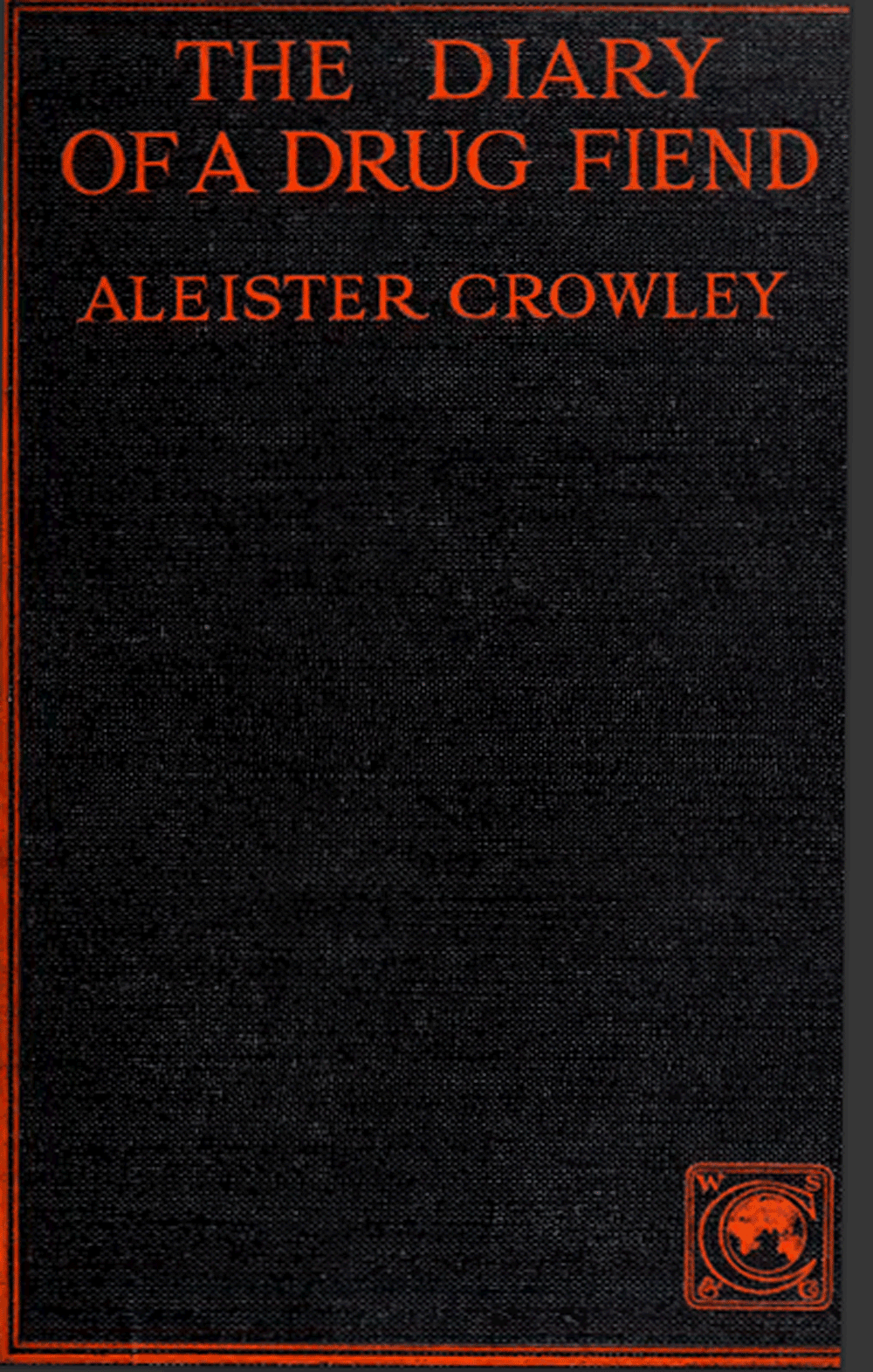
This is the only full-cast recording of Aleister Crowley's 1922 classic paeon to common sense. It is the first book -- and so far almost the only book -- to stake out a philosophy of drug use that is compatible with human freedom, one in which we learn to use drugs as wisely as possible for the benefit of humanity. This recording was produced by the Drug War Philosopher and your purchases help support his effort to push back against the tragically counterproductive policy of drug prohibition, in the name of human freedom and of humanity's right to heal.
No cookies, no ads paid for by amoral and immoral billionaires (or trillionaires).
Unless otherwise indicated, no AI is used in the creation of site content. These essays represent the original ideas of their author and not the ideas that the author SHOULD have based on an algorithmic parsing of existing data. For more on this subject, consider the AI-related viewpoints to which the author subscribes as delineated in the New York Times opinion piece entitled "What 370,000 College Essays Tell Us About A.I.’s Effects on Creativity" by Rebecca Winthrop of the Brookings Institution.











 (up)
(up)