








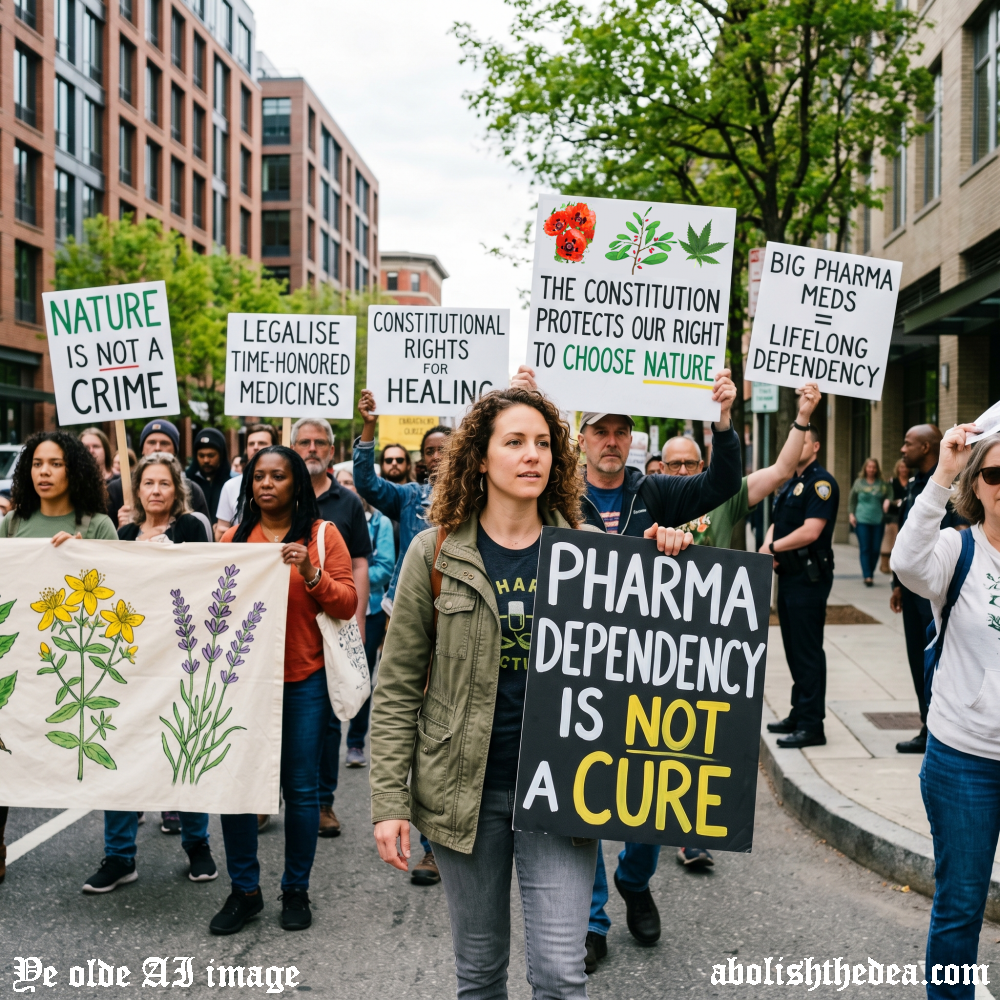
 I have yet to hear any drug pundit have a kind word to say about heroin. And yet they'd surely change their tune if they shared my backstory. As a chronic depressive, I was placed on a Big Pharma drug 30 years ago, one that turned out to be far harder to kick than heroin. Far harder. When I mentioned my desire to get off the drug, a former psychiatrist of mine told me of an NIH study that found there was a 95% recidivism rate 1 for long-term users who attempted to kick the drug. 95%. Compare this to the Lee Robins study of American soldiers in Vietnam, where heroin use was rife among the rank and file. Robins found that only 5% of those soldiers sought help getting off the drug when they returned to the States. 5%. 2
There is more hope in dope than there is in the psychiatric pill mill.
The FDA uses reductive materialism to justify and normalize the views of Cortes and Pizarro with respect to entheogenic medicine.
Timothy Leary's wife wrote: "We went to Puerto Rico and all we did was take cocaine and read Faust to one another." And there is ABSOLUTELY NOTHING WRONG with that!!! The drug war is all about scaring us and making illegal drug use as dangerous as possible.
Almost all addiction services assume that the goal should be to get off all drugs. That is not science, it is Christian Science.
The drug war is a slow-motion coup against democracy.
I have nothing against science, BTW (altho' I might feel differently after a nuclear war!) I just want scientists to "stay in their lane" and stop pretending to be experts on my own personal mood and consciousness.
The proof that psychedelics work has always been extant. We are hoodwinked by scientists who convince us that efficacy has not been "proven." This is materialist denial of the obvious.
Anyone who has read Pihkal by Alexander Shulgin knows that the drug warriors have it exactly backwards. Drugs are our friends. We need to find safe ways to use them to improve ourselves psychologically, spiritually and mentally.
I can't believe people. Somebody's telling me that "drugs" is not used problematically. It is CONSTANTLY used with a sneer in the voice when politicians want to diss somebody, as in, "Oh, they're in favor of DRUGS!!!" It's a political term as used today!
Scientists are so used to ignoring "drugs" that they don't even realize they're doing it. Yet almost all books about consciousness and depression (etc.) are nonsense these days because they ignore what drugs could tell us about those topics.
I have yet to hear any drug pundit have a kind word to say about heroin. And yet they'd surely change their tune if they shared my backstory. As a chronic depressive, I was placed on a Big Pharma drug 30 years ago, one that turned out to be far harder to kick than heroin. Far harder. When I mentioned my desire to get off the drug, a former psychiatrist of mine told me of an NIH study that found there was a 95% recidivism rate 1 for long-term users who attempted to kick the drug. 95%. Compare this to the Lee Robins study of American soldiers in Vietnam, where heroin use was rife among the rank and file. Robins found that only 5% of those soldiers sought help getting off the drug when they returned to the States. 5%. 2
There is more hope in dope than there is in the psychiatric pill mill.
The FDA uses reductive materialism to justify and normalize the views of Cortes and Pizarro with respect to entheogenic medicine.
Timothy Leary's wife wrote: "We went to Puerto Rico and all we did was take cocaine and read Faust to one another." And there is ABSOLUTELY NOTHING WRONG with that!!! The drug war is all about scaring us and making illegal drug use as dangerous as possible.
Almost all addiction services assume that the goal should be to get off all drugs. That is not science, it is Christian Science.
The drug war is a slow-motion coup against democracy.
I have nothing against science, BTW (altho' I might feel differently after a nuclear war!) I just want scientists to "stay in their lane" and stop pretending to be experts on my own personal mood and consciousness.
The proof that psychedelics work has always been extant. We are hoodwinked by scientists who convince us that efficacy has not been "proven." This is materialist denial of the obvious.
Anyone who has read Pihkal by Alexander Shulgin knows that the drug warriors have it exactly backwards. Drugs are our friends. We need to find safe ways to use them to improve ourselves psychologically, spiritually and mentally.
I can't believe people. Somebody's telling me that "drugs" is not used problematically. It is CONSTANTLY used with a sneer in the voice when politicians want to diss somebody, as in, "Oh, they're in favor of DRUGS!!!" It's a political term as used today!
Scientists are so used to ignoring "drugs" that they don't even realize they're doing it. Yet almost all books about consciousness and depression (etc.) are nonsense these days because they ignore what drugs could tell us about those topics.


 (up)
(up)