








"We have thus managed to replace racial, religious, and military coercions and colonialisms, which now seem to us dishonorable, with medical and therapeutic coercions and colonialisms, which now seem to us honorable. Because these latter controls are ostensibly based on Science and aim to secure only Health, and because those who are so coerced and colonized often worship the idols of medical and therapeutic scientism as ardently as do the coercers and colonizers, the victims cannot even articulate their predicament and are therefore quite powerless to resist their victimizers6."
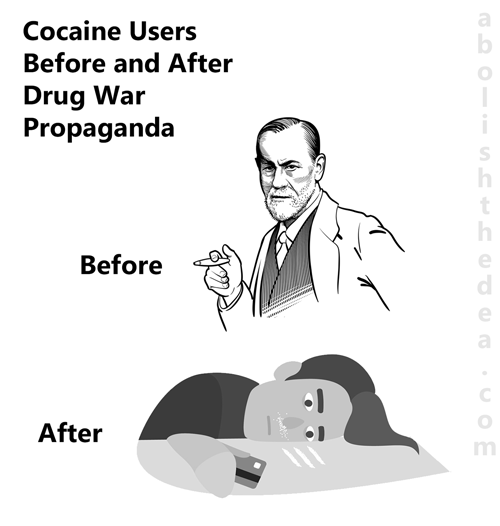
"Imagine how many people would have benefited during the past half-century had the government respected their autonomy and their right to self-medicate.12"
"No doubt one of the reasons why such policies might be attractive to modern people everywhere, and perhaps especially in the United States, is because they allow them to be childish and dependent on authorities, while continuing to regard themselves as remaining "politically independent.'14"

"In Galenic practice the most useful medicine was a theriaca, or antidote, named Electuarium theriacale magnum, a compound composed of several ingredients, among them opium 18 and wine." -- Thomas Szasz, Ceremonial Chemistry19
A company will be put out of business if someone happens to die while using "drugs," even if the drug was not really responsible for the death.
Guess who's in charge of protecting us from AI? Chuck Schumer! The same guy who protected us from drugs -- by turning America into a prison camp full of minorities and so handing two presidential elections to Donald Trump.
The drug war is the defeatist doctrine that we will never be able to use psychoactive drugs wisely. It's a self-fulfilling prophecy because the government does everything it can to make drug use dangerous.
Almost every article about suicide is shallow because it takes drug prohibition as a natural baseline, even though drug prohibition outlaws substances that could so clearly elevate mood.
It's always wrong to demonize drugs in the abstract. That's anti-scientific. It begs so many questions and leaves suffering pain patients (and others) high and dry. No substance is bad in and of itself.
Prohibitionists will me that we're all children when it comes to drugs, and can never -- but never -- use them wisely. That's like saying that we could never ride horses wisely. Or mountain climb. Or skateboard.
Countless millions suffer needlessly in silence because of America's fearmongering about drugs.
Using the billions now spent on caging users, we could end the whole phenomena of both physical and psychological addiction by using "drugs to fight drugs." But drug warriors do not want to end addiction, they want to keep using it as an excuse to ban drugs.
David Chalmers says almost everything in the world can be reductively explained. Maybe so. But science's mistake is to think that everything can therefore be reductively UNDERSTOOD. That kind of thinking blinds researchers to the positive effects of laughing gas and MDMA, etc.
I looked up the company: it's all about the damn stock market and money. The FDA outlaws LSD until we remove all the euphoria and the visions. That's ideology, not science. Just relegalize drugs and stop telling me how much ecstasy and insight I can have in my life!!


 (up)
(up)