








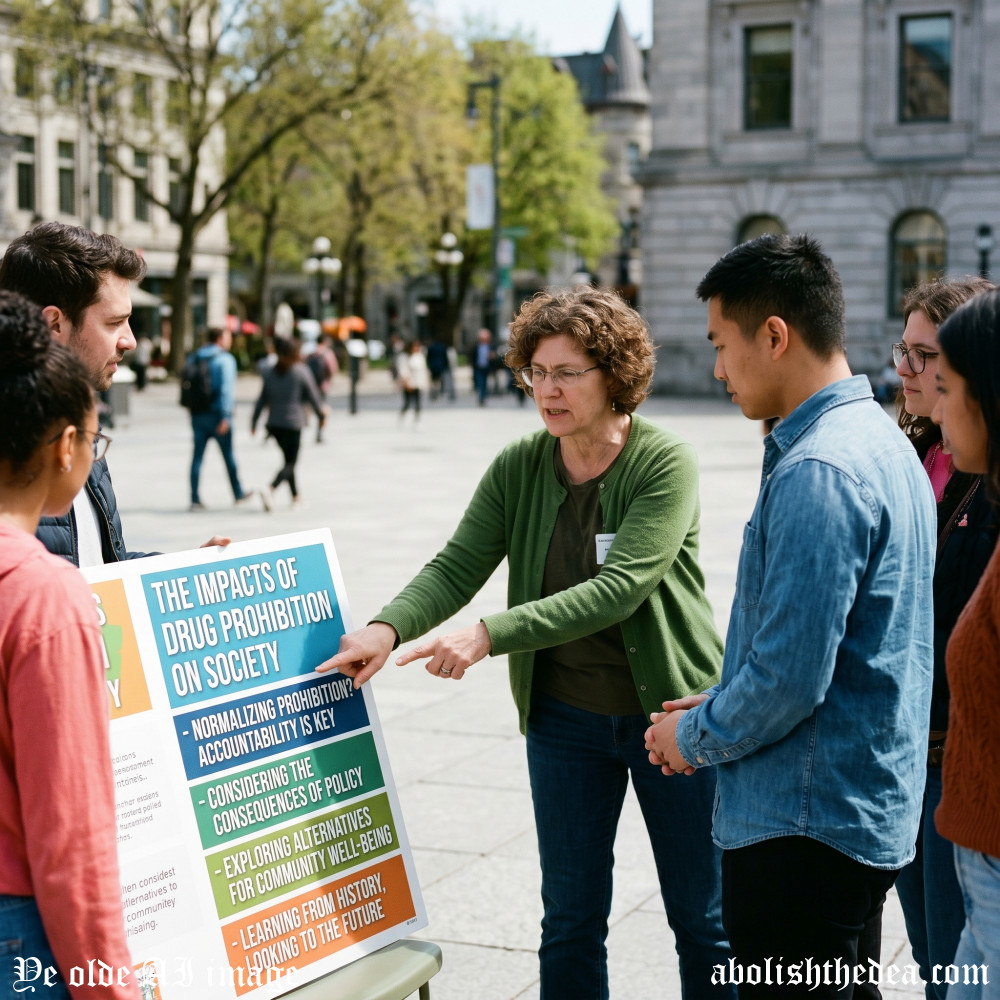
 Any regular reader of this site -- all two of them, in fact -- will know that I am constantly complaining about the failure of movers-and-shakers in the mainstream world to engage with the endless philosophical issues that I raise in my essays. But I have recently discovered that there are at least two things worse than being ghosted on this subject, and that is being told, 1, that one has no standing on these issues, that board-certified healthcare professionals and academics are the real experts, and 2, that one is not raising particularly compelling arguments in the first place.
The drug war is the defeatist doctrine that we will never be able to use psychoactive drugs wisely. It's a self-fulfilling prophecy because the government does everything it can to make drug use dangerous.
Here's one problem that supporters of the psychiatric pill mill never address: the fact that Big Pharma antidepressants demoralize users by turning them into patients for life.
Some outlawed drugs grow new neurons in the brain. To refuse to use them makes us complicit in the dementia of our loved ones!
Saying "Fentanyl kills" is philosophically equivalent to saying "Fire bad!" Both statements are attempts to make us fear dangerous substances rather than to learn how to use them as safely as possible for human benefit.
Here is a sample drug-use report from the book "Pihkal":
"More than tranquil, I was completely at peace, in a beautiful, benign, and placid place."
Prohibition is a crime against humanity for withholding such drug experiences from the depressed (and from everybody else).
Harm Reduction is not enough. We need Benefit Production as well. The autistic should be able to use compassion-enhancing drugs; dementia patients should be able to use drugs that speed up and sharpen mental processes.
"Judging" psychoactive drugs is hard. Dosage counts. Expectations count. Setting counts. In Harvey Rosenfeld's book about the Spanish-American War, a volunteer wrote of his visit to an "opium den": "I took about four puffs and that was enough. All of us were sick for a week."
Musk vies with his fellow materialists in his attempt to diss humans as insignificant. But we are not insignificant. The very term "insignificant" is a human creation. Consciousness rules. Indeed, consciousness makes the rules. Without us, there would only be inchoate particles.
Med-dependent patients of the world, unite -- to end drug prohibition, that is. You have nothing to lose but your prescription bottles and your status as a ward of the healthcare state.
No drug causes addiction after one use. From this fact alone, it follows that even drugs like meth and crack and Fentanyl can be used wisely -- on an intermittent basis.
Any regular reader of this site -- all two of them, in fact -- will know that I am constantly complaining about the failure of movers-and-shakers in the mainstream world to engage with the endless philosophical issues that I raise in my essays. But I have recently discovered that there are at least two things worse than being ghosted on this subject, and that is being told, 1, that one has no standing on these issues, that board-certified healthcare professionals and academics are the real experts, and 2, that one is not raising particularly compelling arguments in the first place.
The drug war is the defeatist doctrine that we will never be able to use psychoactive drugs wisely. It's a self-fulfilling prophecy because the government does everything it can to make drug use dangerous.
Here's one problem that supporters of the psychiatric pill mill never address: the fact that Big Pharma antidepressants demoralize users by turning them into patients for life.
Some outlawed drugs grow new neurons in the brain. To refuse to use them makes us complicit in the dementia of our loved ones!
Saying "Fentanyl kills" is philosophically equivalent to saying "Fire bad!" Both statements are attempts to make us fear dangerous substances rather than to learn how to use them as safely as possible for human benefit.
Here is a sample drug-use report from the book "Pihkal":
"More than tranquil, I was completely at peace, in a beautiful, benign, and placid place."
Prohibition is a crime against humanity for withholding such drug experiences from the depressed (and from everybody else).
Harm Reduction is not enough. We need Benefit Production as well. The autistic should be able to use compassion-enhancing drugs; dementia patients should be able to use drugs that speed up and sharpen mental processes.
"Judging" psychoactive drugs is hard. Dosage counts. Expectations count. Setting counts. In Harvey Rosenfeld's book about the Spanish-American War, a volunteer wrote of his visit to an "opium den": "I took about four puffs and that was enough. All of us were sick for a week."
Musk vies with his fellow materialists in his attempt to diss humans as insignificant. But we are not insignificant. The very term "insignificant" is a human creation. Consciousness rules. Indeed, consciousness makes the rules. Without us, there would only be inchoate particles.
Med-dependent patients of the world, unite -- to end drug prohibition, that is. You have nothing to lose but your prescription bottles and your status as a ward of the healthcare state.
No drug causes addiction after one use. From this fact alone, it follows that even drugs like meth and crack and Fentanyl can be used wisely -- on an intermittent basis.


 (up)
(up)