Homepage of the Drug War Philosopher, Brian Quass
blog icon orange rss icon with stylized radio waves bird icon for twitter bird icon for twitter substack icon


back navigation arrow forward navigation arrow


Immanuel Kant on Drugs

aka how the drug war censors philosophy

by Brian Ballard Quass, the Drug War Philosopher

February 20, 2024


In his excellent lectures on Immanuel Kant recorded in 2011, the late American philosopher Daniel N. Robinson draws his students' attention to the satirical writings of the Scriblerus Club, a group of five Tory wits (including Alexander Pope and Jonathan Swift) who ridiculed pretentious erudition in the Augustan age. The Oxford professor laments that such writers are no longer around to refresh the turbid springs of philosophical debate and to "call foul" whenever philosophers try to pass off presumptuous dogma as gospel truth.

I was saddened to learn of the professor's death in 2018, for I would have liked to share my theory with him regarding the reason for this lack of wit in modern times, for its source, I believe, is very evident to anyone who recognizes the fact that the Drug War imposes unnatural restrictions on human thought. The trouble is that our science writers have yet to recognize the Drug War (and its accompanying laws) as the censorship that it most clearly is and so they continue to write endless seemingly authoritative papers on subjects ranging from depression to the nature of human consciousness, all of which are necessarily pretentious because they are written in a kind of willful ignorance of the existence of psychoactive drugs and what the effects of their use might tell us about the topics in question. Such papers, in short, are written from the point of view of a drug-hating Christian Scientist and the fact that researchers never own up to this bias, even in a fine-print disclaimer, means that such research is not simply pretentious, but it is dishonest as well. Unfortunately, modern science writers get away with this, however, because their audience is composed of what you might call stealth Christian Scientists who have been taught from birth to fear psychoactive medicine. These infantilized readers1 may have never heard of the drug-hating religion of Mary Baker-Eddy, but they are convinced of its chief precept that drugs are dangerous and unnecessary, at least when it comes to those that affect mood and mentation.

You simply cannot have a real Scriblerus Club in the age of the Drug War - unless the members thereof are brave enough to attack the Drug War itself, something that very few academics are prepared to do, as I have discovered many times over the past five years as I have tried in vain to pry open the tenure-conscious mouths of prominent anglophone professors on this topic.

That said, a modern Scriblerus Club could have a field day in exposing the unacknowledged Christian Science bias of modern thinkers, for most non-fiction writers today reckon without the Drug War. They write as if mind-expanding and mind-improving medicines simply do not exist, while pretending that there are simply no downsides to substance prohibition whatsoever.

See that book on El Chappo? The author glorifies the hunt for a monster, never acknowledging the fact that prohibition created such monsters out of whole cloth. See that research paper about a new kind of shock therapy for depression? The author tells us that depression has been a seemingly insoluble problem for decades, when in reality MDMA and laughing gas 2 (not to mention coca and opium 3 ) could cheer up a depressive in real-time and for all our fearmongering are clearly better expedients than doing nothing for the sad sack and so sitting idly by as she or he self-harms and/or commits suicide. See that article about the meaninglessness of the universe? The author attempts to logically justify pessimism, while failing to even mention the fact that the consumption of many plants and fungi (and synthetics derived therefrom) routinely results in ontological epiphanies for the user, in a new feeling (indeed, a new conviction) that there is a "meaning" to life after all, albeit one that cannot be spoken in words.

Then there are the endless magazines at the checkout counter of your local food store, whose flashy articles give you a set of "easy-to-follow" steps that promise to make you a happy person in a politically correct way, that is while ignoring all the medicines that could help you achieve that goal -- none of which have to be habit-forming, by the way, if used wisely (a common-sense fact which, however, has to be stated explicitly in an age in which readers have been taught from birth to consider the safe use of psychoactive drugs as an impossibility). Such self-help articles remind me of Steve Martin's advice for becoming a millionaire: "First," he says, "get yourself a million dollars."

This is not to say that eating a healthy diet, and/or jogging, and/or getting adequate sleep (etc.) can make no positive difference in a human being's life, but rather that these activities all presuppose the motivation to do them rather than supplying that motivation, as would medicines that Mother Nature has provided as if specifically for that very purpose.

Of course, Immanuel Kant 4 wrote more than a century before drug laws officially censored science, but one imagines that the western viewpoint toward psychoactive drugs has never been positive, and so a kind of self-censorship has long been in force, whose chief effect has been to refer drug-induced experience to pathology and to deny it any revelatory power viz ultimate reality. This viewpoint stands in sharp contrast to the history of tribal peoples, all of whom, as ethnobotanist Richard Schultes tells us, have used drugs for healing, religion, and the fostering of social cohesion.

It is interesting to note, however, that psychoactive drug use could play a decisive role in "proving" Kant's ideas about the world of noumena, not by proving its existence in any logical way, of course, which is a task for which the human being, as Kant reminds us, is simply not constructed. We can, however, use drugs in such a way as to become viscerally convinced of the existence of such an ineffable world. Of course, even that experience will not bring understanding of the noumenal world, but it may at least hint at the deeper nature of truths that are well beyond our human powers to formulate. This idea about the ineffability of ultimate reality is a theme running through the writings of all the saints and has been echoed many times by the participants in the psychedelic-fueled rituals at Eleusis, not to mention the drug-user reports of researchers like Stanislav Grof and James Fadiman. Given their potential role in corroborating Kantian metaphysics (at least to the limited extent that such a corroboration is possible), such substances should be used by anyone who wishes to earn the title of "philosopher" in academia. Who knows? Someday philosophers may be required to FAIL a drug test to become tenured at any self-respecting institution of higher learning.

Meanwhile, we should recognize that Drug War ideology does not censor science impartially but rather it privileges the philosophy of materialism 5. It does this by outlawing precisely those substances whose use might make us doubt such a world view. In this way, the Drug War suppresses potential evidence in favor of the viewpoints of the philosophers from Berkeley to Bergson who have grounded our reality in qualities and perceptions rather than in the organized data of quantitative physics.

These are just some of the points I would have made in an effort to convince Professor Robinson that a revised Scriblerus Club would have its work cut out for it, for we live in a Dark Ages, wherein we are blind to endless possibilities that would be readily apparent to us were we to simply stop pretending that psychoactive substances do not exist. I would, in short, have advocated the creation of a new Scriblerus Club and humbly have nominated myself as a member.

EPILOGUE: Whenever you think that an idea is too crazy to have been tried, check the Internet. No doubt someone has tried it. I started this article under the assumption that I was the first to contemplate reviving the Scriblerus Club for our times; however, a Google search reveals that the task has already been accomplished, at least nominally speaking, at the dot-com domain known as Martin Scriblerus, the name of the putative author of the 18th-century memoirs of Jonathan Swift and company. Unfortunately, the modern authors ignore the Drug War like everybody else, which is a shame, because they could clearly benefit from using MDMA 6 in order to calm themselves the f--- down and stop hating on immigrants and refugees - especially the ones at the Mexican border who are there because of the Drug War itself.

I cannot quite decide what the site is about, partly because the headlines broach such a wide variety of unrelated topics, and partly because the writing does not interest me enough to justify my prying deeper. Let's put it this way: the Jonathan Swifts of the world have nothing to worry about. The authors were obviously raised on The Simpsons and/or Rick & Morty and have come to believe that snarkiness is the ne plus ultra of human achievement.

There was one serious article on the front page, however, concerning the tragic death of a raccoon named Anna on the 18th of August 2017. (I think we all remember where we were when THAT happened.)


Notes:

1: How Drug Prohibition has turned academics into children DWP (up)
2: Forbes Magazine's Laughable Article about Nitrous Oxide DWP (up)
3: The Truth About Opium by William H. Brereton DWP (up)
4: What drug use could tell us about the rationalist triumphalism of Immanuel Kant DWP (up)
5: How materialists lend a veneer of science to the lies of the drug warriors DWP (up)
6: How the Drug War killed Leah Betts DWP (up)


read more essays here


Ten Tweets

against the hateful war on US


Prohibitionists think that they merely have to use the word "drugs" to win an argument.

The problem with blaming things on addiction genes is that it whitewashes the role of society and its laws. It's easy to imagine an enlightened country wherein drug availability, education and attitudes make addiction highly unlikely, addiction genes or no addiction genes.

There are plenty of "prima facie" reasons for believing that we could eliminate most problems with drug and alcohol withdrawal by chemically aided sleep cures combined with using "drugs" to fight "drugs." But drug warriors don't want a fix, they WANT drug use to be a problem.

Researchers insult our intelligence when they tell us that drugs like MDMA and opium and laughing gas have not been proven to work. Everyone knows they work. That's precisely why drug warriors hate them.

Your drug war has caused the disappearance of over 60,000 Mexicans over the last 20 years. It has turned inner cities into shooting galleries. It has turned America into a penal colony. It has destroyed the 4th amendment and put bureaucrats in charge of deciding if our religions are "sincere."

Drug War propaganda is all about convincing us that we will never be able to use drugs wisely. But the drug warriors are not taking any chances: they're doing all they can to make that a self-fulfilling prophecy.

"Now, now, Sherlock, that coca preparation is not helping you a jot. Why can't you get 'high on sunshine,' like good old Watson here?" To which Sherlock replies: "But my good fellow, then I would no longer BE Sherlock Holmes."

That's so "drug war" of Rick: If a psychoactive substance has a bad use at some dose, for somebody, then it must not be used at any dose by anybody. It's hard to imagine a less scientific proposition, or one more likely to lead to unnecessary suffering.

Scientists are making entire livings from trying to figure out what's best for ME as a chronic depressive. They owe their jobs to drug prohibition.

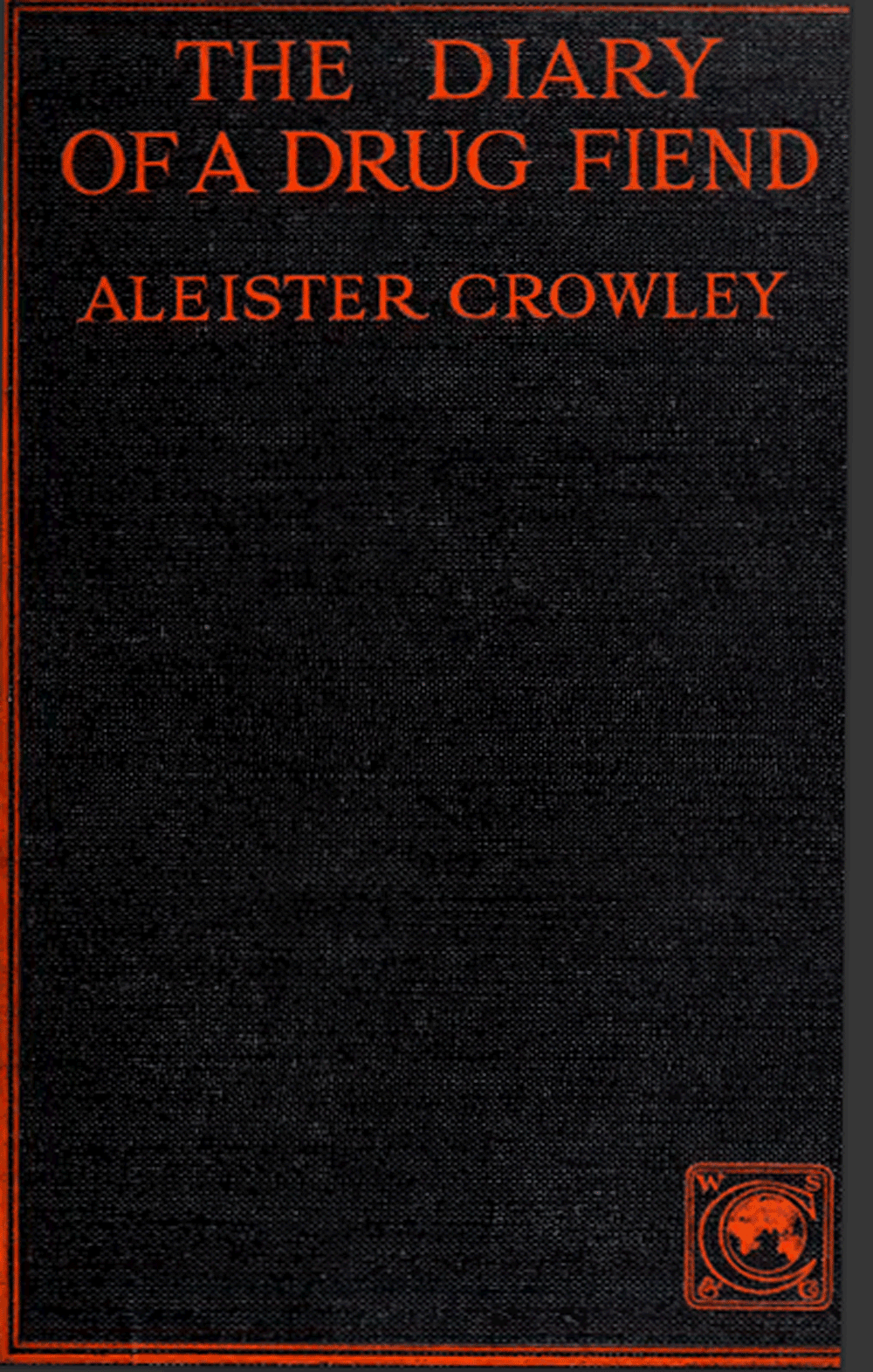
Aleister Crowley actually TRIED to get addicted to drugs and found he could not. These things are not inevitable. The fact that there are town drunkards does not mean that we should outlaw alcohol.


Click here to see All Tweets against the hateful War on Us


back navigation arrow forward navigation arrow
Book Cover

Break the ice with a sledgehammer: place this book on your coffee table.

This book features 150 annotated images, designed to force brainwashed Americans to confront the fact that drug prohibition is wrong. Here is what author Richard Parrish II says of the book's compiler: "The drug prohibition philosopher provides first-hand, principled, persuasive, and insightful arguments against the current drug prohibition regime..."

Purchase Your Copy
Book Cover

Drama lovers: collect full-cast recordings of classic plays

In my spare time, when I am not shaming drug warriors for their heartless drug policies, I create full-cast recordings of classic plays using the latest in synthetic voices licensed by the Natural Reader company. Snag your copy of my production of Volpone, by Ben Jonson... and follow me on Payhip for more where that came from, including classics like The Post Office, The Double Dealer and The Inspector General. -- Yours in all-too-justified outrage, the Drug War Philosopher @ abolishthedea.com.

Purchase Your Copy


No cookies, no ads paid for by amoral and immoral billionaires (or trillionaires).


Unless otherwise indicated, no AI is used in the creation of site content. These essays represent the original ideas of their author and not the ideas that the author SHOULD have based on an algorithmic parsing of existing data. For more on this subject, consider the AI-related viewpoints to which the author subscribes as delineated in the New York Times opinion piece entitled "What 370,000 College Essays Tell Us About A.I.’s Effects on Creativity" by Rebecca Winthrop of the Brookings Institution.

The Partnership for a Death Free America is a proud sponsor of The Drug War Philosopher website @ abolishthedea.com.


Copyright 2026, Brian Ballard Quass Contact: quass@quass.com

tombstone for American Democracy, 1776-2024, RIP (up)