no access Let's Hear It for Quacks
Homepage of the Drug War Philosopher, Brian Quass
blog icon orange rss icon with stylized radio waves bird icon for twitter bird icon for twitter substack icon


back navigation arrow


Let's Hear It for Quacks

what America's attitudes about patent medicines tell us about drug prohibition

by Brian Ballard Quass, the Drug War Philosopher

July 24, 2026


Get thee to a quackery, go!
William Quackspeare

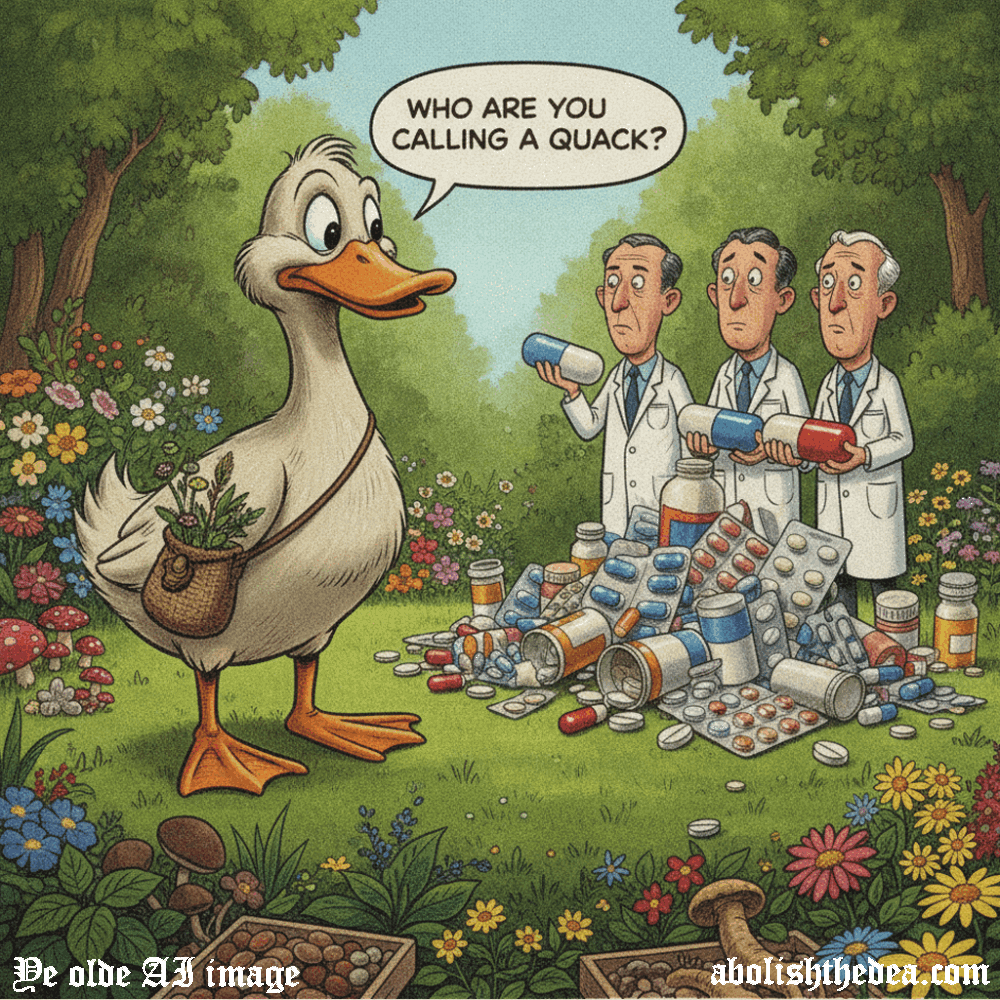
If you want a good dose of smugness and scientific triumphalism, just enter the words "quack cures" in your favorite search engine. You will be regaled with a host of snarky diatribes by the Monday morning quarterbacks of medical history, know-it-all pseudoscientists scoffing at the dangerous idiocy of the quacks of yore who sold cocaine and heroin right out in the open and who promised cures to multiple illnesses in real-time. You will see bottles of "Sulphate of Morphine" sold by NYQ & C Works of New York, bottles of heroin sold by the Antikamnia Chemical Company of St. Louis, and bottles of Mrs. Winslow's Soothing Syrups for kids supposedly compounded by Winslow herself in her hometown of Bangor, Maine. You will even see packages of Cocaine Cough Drops from Lloyd Manufacturing company of Albany, advertised for children and promising instantaneous cures: "available at all druggists" for just 15 cents! "Oh, weren't we silly back then," the viewer is supposed to think. "Good job that we cracked down on that nonsense and that we now leave all curing up to the good old doctors who are motivated by nothing more than impartial science!"

Let's first be clear: morphine and heroin and cocaine are NOT quack cures. They really work: though they often do so like God, in mysterious ways. They can cure a wide variety of physical and psychological problems temporarily -- or better yet, make those problems seem irrelevant to the inebriate, which amounts to the same thing. We can argue about the best ways to use them wisely, but let us not lie and say that they do not work. Indeed, if failure to work is a sign of quackery, then the entire medical system is loaded with quacks today. I have been turned into a ward of the healthcare state by under-performing and dependence-causing "meds" that are harder to kick than the heroin once sold by NYQ & C Works. Meanwhile, modern "meds" do not "work" according to my definition of that term. They do not "cure" my depression according to my definition of that term. And let me tell you right now, I would much rather be an eternal customer of "quacks" than to be an eternal "patient" of doctors: doctors who are one-third my age and whom I have to see every three months of my life in order to get a refill on a "med" that I don't even want to be taking in the first place! And yet I looked in vain for images of antidepressant bottles when searching images for "quack cures." It seems that blatant drug inefficacy is easily forgiven as long as one can couch the failure in scientific terms. One can even cause lifetime dependency and not be a quack, again, as long as one can couch the problem in scientific terms.

Of course, the psychiatrists in the audience will remind me that I am simply treating the symptoms with drugs like cocaine and opium -- but that is really a silly statement. It presupposes that there is -- or even COULD be or even SHOULD be -- a one-size-fits-all cure for human sadness and that we should use such a thing even if it were known to exist. The whole problem with modern depression treatment is that Big Pharma and psychiatrists claimed, with amazing hubris, to have found a "real" cure for human sadness. And what is the result of their popularizing that "cure"? One in four American women are dependent for life on Big Pharma "meds" that were created as a result of this Quixotic quest to cure human sadness. It is amazing that I ever "fell" for this line about "symptoms" versus "cures." The very idea of a "cure" for human sadness is unintelligible to me now. It suggests that someone has clearly defined what some universal quality called "human sadness" is on some molecular level -- and, not only that, but they have found a way to create a new molecular reality that will somehow constitute a "cure." But if I need a cure for my depression, then surely the nightly beer drinker must need a cure for the angst and fatigue that they are treating when they "throw back a cold one" at the end of a busy day. That's just treating the symptoms, after all. They need to be "really" cured of this daily ennui, right? Please.

/newpics/quackery/batemansdrops.png_l I have another word for you psychiatrists in particular, God love ya. That's right, you lot over there in aisle seven or whatever. Pardon me, but you guys pay short shrift to the psychological potential of symptomatic treatments. Let me give you an example of what I mean. Now, I am one of those unlucky people in whom nature is at war with nurture when it comes to certain aspects of my life. Take public speaking, for instance. Nature has clearly given me some talents in that line, if I do say so myself. I inherently possess at least a modicum of creativity wherewith to keep an audience engaged. I'm not bragging, mind, I'm just being ruthlessly honest. And yet nurture -- oh, nurture! -- nurture, on the other hand, has instilled in me a reticence that says, in effect: "Not so fast, Brian! I'm not entirely sure that you DESERVE to succeed on that stage of yours. In fact, do you know what? If I were you I'd start glancing about me nervously and wondering if I were not possibly making a complete FOOL of myself up there! Yes, that's what I would do, Brian! Now, I don't know if that helps you out or not, but that's my sincere advice to you, for what it's worth."

You can imagine what will happen when I start thinking like that on stage. I start to self-destruct. The breakdown may be subtle from the audience's point of view, but its effects are very real for all that. I suddenly lack that certain "je ne sais qua" that we moderns refer to as "the X factor." In other words, my audience is suddenly thinking to themselves: "Next!!!"

Now, then, let's suppose that I consumed some cocaine before going onstage.

Listen to you guys gasping out there: the DEA has really put the fear of God into you folks on this subject. But come on. We may as well use the word "cocaine" as much as we can while it's still legal to do so. In any case, I'm speaking hypothetically here, of course.

And yet if I DID consume "you-know-what" prior to appearing onstage, I guarantee you that the naysaying voice of Nurture would be silenced at once and forever! I would rock the house, and what's more, I would have a great time doing it. If I even thought of my former reticence, it would merely prompt me to laugh out loud at how silly it was -- which, I might add, would be an incredibly therapeutic outcome of use, could psychiatrists only allow themselves to see it. I would basically be looking at destiny and fate and saying: "Yes, I win, you lose! I am the champion, my friend! Ha ha!" I obviously wouldn't be saying these words out loud; I write this way merely to give you an idea of the feeling that I would have in realizing that I have "pulled one over" on fate by vetoing the maladaptive "givens" of my upbringing. I'd be like, "Yes, in your face, destiny! Hah!" And yet I know what you're thinking. You're probably going to tell me, "Cocaine may help you somewhat, but that wouldn't be the real YOU up there on stage, Brian," to which I would respond as follows with incensed rapidity: "That is merely a metaphysical opinion on your part as to what constitutes the 'real' person, an opinion that could be easily gainsaid, by the way, so don't even get me started." The real me, indeed. Listen to what Aleister Crowley had to say about the real "HIM" after his first use of cocaine:

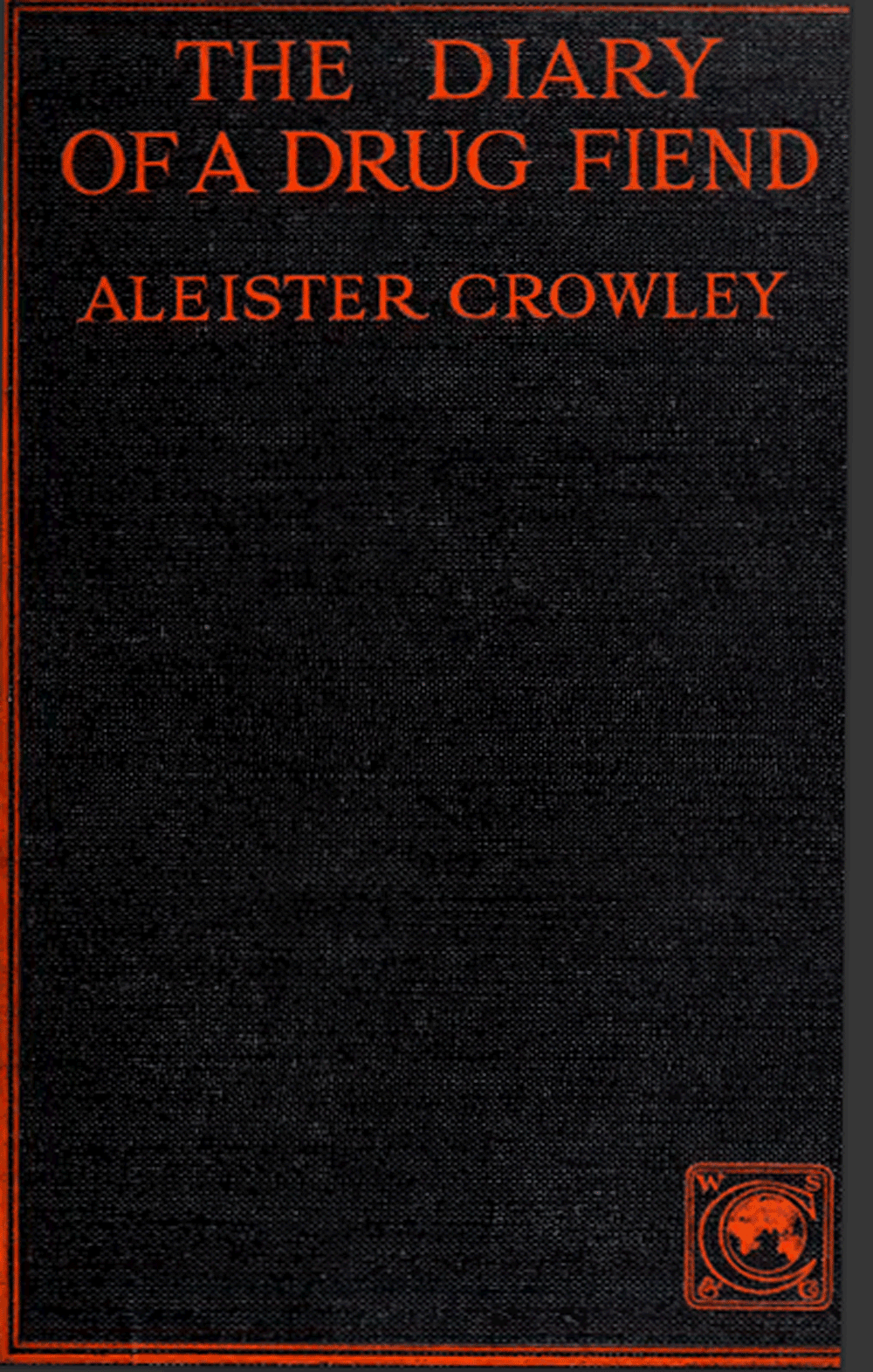
For the first time in my life I was being absolutely myself, freed from all the inhibitions of body, intellect, and training which keep us, normally, in what we call sane courses of action. 1
Aleister Crowley -- The Diary of a Drug Fiend

Cocaine brought out the real "him."

Besides, if success on stage is not destined for the real me, then so much the worse for the real me. I'd rather live life as the fake me, and the sooner the better. But here's my real point: you drug haters assume that the benefits of cocaine are over after the drug wears off. But not a bit of it. Cocaine has helped me to succeed on stage, remember, but that's just the beginning of the benefits. I carry around the knowledge of that success with me everywhere I go on the subsequent days. I am now kinder to the cashier at the local grocery store and I am patient with slow cars in front of me on route 263 or whatever. I don't even THINK of kicking the cat when I walk in the door merely because she has gotten in my way once again and almost made me drop the groceries. I feel that I am a success in life after all, and so I have the energy to be patient and even magnanimous with my fellow creatures. In other words, the cocaine-added success has knock-on effects that improve my life overall -- and these are the sorts of effects that you lot never take into account when you get busy demonizing drugs.

It's beyond parody, really. The Gabor Mates are sitting back scratching their heads, asking, "Now, why on earth would a guy who has everything want to use drugs like that? Why, bless me, it must be because he has a deep pain down inside that he is trying to cover up and so he feels a need for escape." And I'm like, "Um, no, Gabby, I just want to succeed in life and feel good about myself like everybody else!" To be sure, I have deep hidden pains like everybody else, but that has nothing to do with the price of tea in China. And yet psychiatrists and counselors, like all Americans, insist on pretending that drug use can have no benefits; they therefore have no choice but to walk around me like Diogenes with his lantern, looking for deeply rooted pathologies in the dark corners of my mind that would account for my use of substances of which our racist politicians disapprove.

/ai_images/sulphate.png_l It's instructive to read some of the literature cranked out by our triumphalist science worshipers as they loftily descant on the silly errors of the past. I found slides for a seventh-grade class in which the teacher warns her kids to "be especially skeptical if a product is promoted to cure multiple problems." That statement, properly considered, is xenophobic. It implies that the holistic viewpoint adopted in indigenous healing is wrong and that materialists are right in thinking that human beings are a compilation of disconnected parts and disconnected feelings, each of which has to be addressed separately, given its own label, and studied independently of each other, preferably with the help of sizable corporate and governmental grants. In such a world, a pill for anxiety must be different than a pill for depression, which must in turn be different than a pill for claustrophobia, and so on. Hmm. That sounds like just the sort of worldview that I'd want to adopt if I were selling and creating "meds." Imagine the money to be made in treating hundreds, perhaps thousands, of psychological conditions, rather than just treating the human being as a complex entity that is somehow connected with the entire world. One can easily see why the sellers and "pushers" of modern "meds" are in no hurry whatsoever to end drug prohibition. Drug prohibition is the cash cow that pays their mortgages and makes the payments on their unnecessarily oversized cars.

To put this another way, the quacks of yore were not really lying when they claimed that the cocaine and opiates that they were selling, often under fanciful names, cured a wide range of illnesses and indispositions. Those claims were actually true, even if the vendors themselves failed to recognize that fact. Nor should this come as a surprise to any Americans who have been so counterrevolutionary as to actually read about historic drug use, rather than accepting the half-truths and lies that the Drug Warriors pass off as gospel truth on radio, tv, film screens, etc. Cocaine has extraordinary therapeutic potential, as Aleister Crowley makes clear in "Diary of a Drug Fiend": “Incidents which in the ordinary way would check one or annoy one, become merely material for joyous laughter." Imagine that, one cannot only transcend their neurotic negativism, but they can actually laugh at it. As for opium, Thomas Szasz reminds us that it has been considered a panacea, from the time of Galen to the 19th century, when anglophone missionaries started libeling the drug in their effort to get Asian men to put down their opium pipes and pick up a bible instead.

I am not suggesting here that those who sold drugs openly in the interregnum between drug freedom and state control in America were consciously aware of this backstory. They were no doubt just trying to make a living, like the doctors whom they supposedly outraged in doing so. It is likely that neither side fully appreciated their place in history, the fact that they were living in an age when the well-heeled leaders of the west were coming to terms with the fact that their world was full of psychoactive substances and that this necessarily had consequences in a world of free speech. The sad thing is that the powers-that-be were able to convince us that the enemy in this confrontation was the patent medicine itself and our freedom to choose freely among healthcare options. It never seems to have occurred to anyone that the real enemy was a lack of education and a failure to clearly label products as to content. Any widespread usage problems that should remain after the rectification of those conditions should be read as a commentary on the state of American society and not an excuse to outlaw medicines created from Mother Nature's bounty.

The American drug prohibitionist is like a fanatic who wants to outlaw hammers worldwide because everyone in his own society uses hammers to kill. This would be a case of clear denial, of course. There is no problem with hammers; the problem is with the society that cannot learn to use hammers as wisely as possible for the benefit of humanity. Just so with drugs. I should not have to suffer for a lifetime from depression because the parents down the street cannot raise their kids properly. The rights of their kids cannot be invoked in denying me the right to the bounty of Mother Nature.

/ai_images/winslow.png_l This is the first time that I have written directly about America's attitudes about "quackery" and what they have to tell us about America's attitudes about drugs. Indeed, it appears to be the first time that ANYBODY has written on this subject, at least from the point of view of the supposed quacks. There's no doubt that many of them were charlatans -- but my point is that even those who considered themselves to be such were too hard on themselves. They were selling cures that worked for people as far as people were concerned. Scientists insisted that we use only drugs that worked as far as scientists were concerned. This may indeed be a reasonable demand in the discussion of drugs with little or no psychoactive effect, but it is an obvious category error to think that scientists have the training to decide for us how and how much we should feel in this life, and that is the task that we give them when we ask them to opine on the utility of drugs like opium and cocaine. Scientists are only qualified to tell us about the risks of such drugs in the abstract. After doing so, a human being should be left alone to make their own choices about what psychoactive substances to use for what purposes based on a vast array of considerations of which they alone are aware: their own risk tolerance, their goals in life, their upbringing, their genetics, their acculturation, ad infinitum.

I hope that I have laid the ground for some long-overdue philosophical discussion on these matters. If health freedom is to return to America and Mother Nature is to be free once again, we will have to transcend the simple-minded narrative about quackery that seems to be literally everywhere online these days: the idea that patent medicines were poisons from which impartial scientists rode in like so many white knights in order to save us. The truth is very different, partly because the very use of the word "quack" is political in the age of the Drug War. When we call a vendor a quack for selling medicines derived from Mother Nature, that is a very fraught business, implying certain ideas about what constitutes a justifiable cure. Given the time-honored status of opium as a panacea dating back to the time of Galen, one could call a modern doctor a quack for refusing to acknowledge that the drug could have any positive uses whatsoever. As Thomas Szasz wrote about the age of patent medicines in "Our Right to Drugs":

Although there is no evidence that the American consumer ever complained about the free market in drugs, there is plenty of evidence that his self-appointed protectors complained bitterly and loudly." 2
Thomas Szasz -- Our Right to Drugs

The last word on these topics has yet to be spoken. Some uncomfortable questions have yet to be asked, let alone addressed, as for instance: who is the real quack: the vendor who sells a time-honored panacea or the doctor who insists that the panacea has no obvious uses whatsoever?


Notes:

1: Arthur Crowley. “Full Text of ‘the Diary of a Drug Fiend.’” 1922. Archive.org. 2017. https://archive.org/stream/b29826433/b29826433_djvu.txt. (up)
2: Szasz, Thomas. 1992. Our Right to Drugs. Praeger. (up)


read more essays here


Ten Tweets

against the hateful war on US


The government makes psychoactive drug approval as slow as possible by insisting that drugs be studied in relation to one single board-certified "illness." But the main benefits of such drugs are holistic in nature. Science should butt out if it can't recognize that fact.

Wade Davis wrote in Rolling Stone that cocaine was outlawed because 400 people consumed toxic doses worldwide. SO WHAT?! 178,000 people die from alcohol every year in America alone.

71% of the depressed have relapses after getting off their meds. Doctors blame this on depression, but increasing evidence suggests that these people are having withdrawal problems.

Problem 2,643 of the war on drugs: It puts the government in charge of deciding what counts as a true religion.

The DEA should be tried for crimes against humanity. They have been lying about drugs for 50 years and running interference between human beings and Mother Nature in violation of natural law, depriving us of countless potential and known godsends in order to create more DEA jobs.

Why does no one talk about empathogens for preventing atrocities? Because they'd rather hate drugs than use them for the benefit of humanity. They don't want to solve problems, they prefer hatred.

This is why the foes of suicide are doing absolutely nothing to get laughing gas into the hands of those who could benefit from it. Laughing is subjective after all. In the western tradition, we need a "REAL" cure to depression.

Drug testing labs are the modern Inquisitors. We are not judged by the content of our character, but by the content of our digestive systems.

Using the billions now spent on caging users, we could end the whole phenomena of both physical and psychological addiction by using "drugs to fight drugs." But drug warriors do not want to end addiction, they want to keep using it as an excuse to ban drugs.

Doc to Franklin: "I'm sorry, Ben, but I see no benefits of opium use under my microscope. The idea that you are living a fulfilled life is clearly a mistake on your part. If you want to be scientific, stop using opium and be scientifically depressed like the rest of us."


Click here to see All Tweets against the hateful War on Us


back navigation arrow


No cookies, no ads.


Unless otherwise indicated, no AI is used in the creation of site content. These essays represent the original ideas of their author and not the ideas that the author SHOULD have based on an algorithmic parsing of existing data. For more on this subject, consider the AI-related viewpoints to which the author subscribes as delineated in the New York Times opinion piece entitled "What 370,000 College Essays Tell Us About A.I.’s Effects on Creativity" by Rebecca Winthrop of the Brookings Institution.

The Partnership for a Death Free America is a proud sponsor of The Drug War Philosopher website @ abolishthedea.com.


Copyright 2026, Brian Ballard Quass Contact: quass@quass.com

tombstone for American Democracy, 1776-2024, RIP (up)