




Homepage of the Drug War Philosopher, Brian Quass
blog icon orange rss icon with stylized radio waves bird icon for twitter bird icon for twitter substack icon


back navigation arrow


Resolved: that nature is all about diversity, not survival

On the presumptuous and self-serving simplicity of Darwinian metaphysics

by Brian Ballard Quass, the Drug War Philosopher

November 4, 2026


Welcome, Nancy. You're just in time. Would you please close the door behind you on your way in? I'm going to speak critically about evolutionary theory today and I don't want the faculty to know about it. Modern scientists are so intolerant these days that they might denounce me as a heretic and demand my immediate ouster from Drug War University, before I've so much as gotten tenure. Susan G. and her Guerilla Skeptics may even write me up as a "pseudoscientist" on Wikipedia1. Her team of materialist idealogues operates a 24/7 wrecking service for online reputations. But then it looks like I've got problems closer to home judging by the way that several of you went bug-eyed in response to my threat to criticize evolutionary theory today. Don't worry, I am not a madman. I believe in God the Father Almighty, maker of Heaven and Earth, and in Jesus Christ his only son our Lord, who was conceived by the Holy Spirit, born of the Virgin Mary and so forth. I am simply going to be pointing out some implications of the evolutionary ideology of which we should be aware, that's all. Fair enough? I will not be criticizing Darwin in any case, although I may have a word or two to say about those who came AFTER Darwin. As for Darwin himself, I agree with the assessment of Alfred North Whitehead when he opined as follows in the Lowell Lectures on "Science and the Modern World":

Darwin’s own writings are for all time a model of refusal to go beyond the direct evidence, and of careful retention of every possible hypothesis. But those virtues were not so conspicuous in his followers, and still less in his camp-followers. 2


Do me a favor and keep an eye on the glass partition in the top of the door there. If you see anyone peeking in, raise your hand and I'll immediately change the subject. I think I can trust every student in this room, but don't forget: if you tell anybody that I gave this lecture, I will find you and I will kill you. Speaking of which, please place your cell phone on my desk if you have not already done so. Come on, people, I see 20 students and only 19 cell phones up here. Who's the holdout? Nancy? Are you forgetting something, my dear? That's it, pass Nancy's phone up to the front, guys. Why, Nancy, I'm surprised at you! Just kidding, I'm sure it was an oversight... Or AM I?!

No, seriously.

Let me begin by quoting from an academic paper from Joseph Heinrich, Steven J. Heine and Ara Norenzayan. It was published in 2010 in the journal of Behavioral and Brain Sciences with the interrogatory title of "The Weirdest People in the World?"3 The word WEIRD, by the way, is used by the authors as an acronym for "Western, Educated, Industrialized, Rich, and Democratic," to which they should have added "CAPITALISTIC" in my view, for reasons that shall appear, but then that would have limited their choice of acronyms to meaningless combinations such as CD WIRE and CREW ID. These authors argue that the field of psychology tends to use "WEIRD" people as the subjects of its psychological trials and questionnaires and that this tendency is problematic. This is because westerners are often statistical outliers compared to the rest of the world's cultures when it comes to the results that they generate in psychological studies. WEIRD people, for instance, tend to assign more importance to being independent than do study respondents from other cultures. They also tend to have a "self-centric bias" when it comes to estimating their own capacities. And the problem here is obvious. When we conclude from psychological studies that "people are like this and people are like that," what we are really concluding is that "WEIRD people are like this and WEIRD people are like that." That's an insightful finding and the paper deserves a lecture in itself. It's about time that we learned what human beings are like qua human beings without stacking the deck in favor of one particular demographic, videlicet our own.

And yet that is not my topic for today. I mention this article merely because it contains a couple of sentences that will illustrate -- or at least suggest the existence of -- a philosophical problem with evolutionary analysis as used today in academia.

But soft, you shall hear. The authors write as follows:

Evolutionary theory is a powerful tool for generating and eliminating hypotheses. However, despite its power (or perhaps because of it), it is often overly fecund, as it generates multiple competing hypotheses, with predictions sometimes dependent on unknown or at least debatable aspects of ancestral environments. 4


Joseph Heinrich and his colleagues have hit on a real problem here, albeit one that they are only motivated to treat parenthetically: the fact that evolutionary theory explains way too much and and that it does so way too easily. A determined naturalist will always be able to find survival value for any action or asset of any beast -- just as a freshman student in lit class will always be able to find deep meanings in everything ever written, forgetting, as Freud is said to have reminded us, that a cigar is sometimes just a cigar. But let's pull back here, as who should cry "Whoa, Nellie!", and ask a forbidden question, namely, couldn't one make the argument that survival is not the law of life, that the key goal of species development is to diversify and to test out new ways of being in the world, as if almost for the fun of it? Ah, never thought of that, eh? From the survivalist's point of view, the cockroach is the most successful creature in the world, but from this new perspective, human beings win that title hands-down -- not because of what they actually are in the world today but because of the amazing (if so far largely untapped) potential afforded them by dint of their self-awareness, which allows them to change the very rules of the evolutionary game. What do you think? Diversity uber alles rather than a struggle for survival?

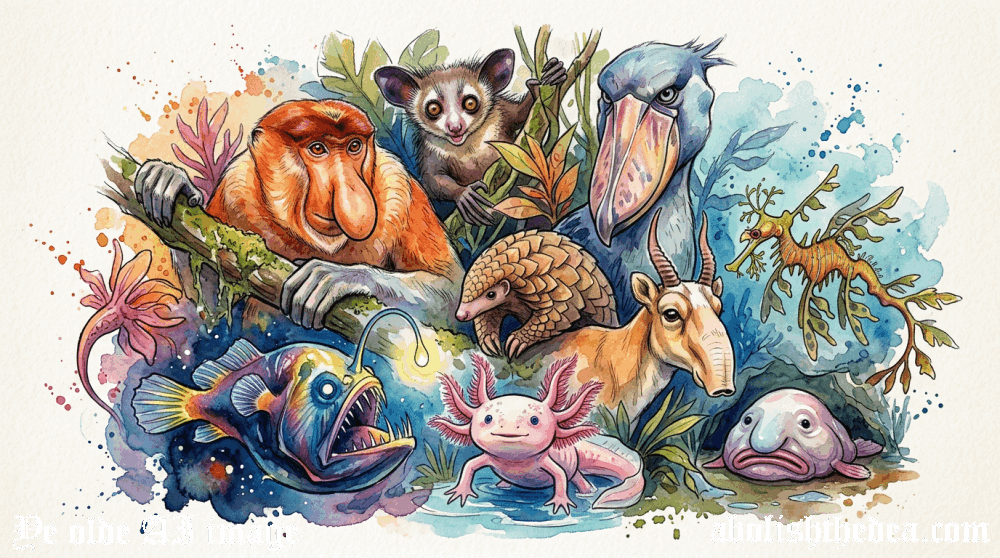
You can see why this attitude would be unpopular among WEIRD people. We WEIRD people have developed a whole mythos around the idea that human beings are here by accident and that life is a bad joke. In the '80s it was "hip to be square." In the 21st century, it's hip to be a cynic. This accounts for the popularity of cartoons like The Simpsons and South Park, in which confident happiness about life and its meaning never goes unpunished. We "knowing" WEIRD people look on and think, "Look at that guy, trying to be optimistic when science itself has taught him to be cynical." But what if we are wrong? What if science really tells us that the universe is all about a constant attempt to try new things, of novelty almost as a philosophical "good" in itself? Witness the Angler Fish that dangles a lantern in front of its monstrous face the better to see its prey; behold the Proboscis Monkey that looks like a consciously created caricature of the simian race with its absurdly large orange nose; consider the Glass Frog with its transparent abdomen or the Myotonic Goat that faints when it gets scared. Cast your cynical gaze on the tiny Blue Glaucus, a kind of cross between a frog and a hummingbird.5 No wonder that Pablo Picasso concluded that God was an eclectic artist. "He invented the giraffe, the elephant, and the cat," says Picasso. "He has no real style. He just goes on trying other things." Okay, the cockroach has a long life span. Whoop-dee-doo. Even whole species eventually die out, as geological history shows us. If diversity is king, then the cockroach is a failed species, one that got stuck in a rut as far as adaption was concerned and never got out, a conclusion that we could draw for all the so-called "living fossils," although some dead ends are better than others from an aesthetic point of view, as, for instance, I'd rather see horseshoe crabs scurrying around on my living room floor than cockroaches.

By the way, I feel terribly unhip (not to mention old) when I chide cartoons like The Simpsons and South Park for nihilism, and I feel hypocritical as well, since, as Charlie Chan might put it, "I myself used to chuckle at same." But here's the problem. In the kind of non-materialist view of life that I am just beginning to champion here, consciousness and thoughts matter and not mere survival. Our thoughts can change our very reality in ways and to extents that we have yet to fully understand or measure. Since thought helps bring about reality, shouldn't we be thinking positively rather than assuming the worst in fealty to a trendy penchant for pessimism? There is scientific proof that thoughts affect the world, after all, as for instance in the results obtained by the Princeton Engineering Anomalies Research Lab6, in which the outcome of various rolls of dice (or of digital equivalents thereof) were shown to be influenced by the thoughts of onlookers. The effects of the influence were small in absolute terms, but the point is that they were statistically significant, which is huge. It means that they simply could not be accounted for by chance. Conclusion? Mind matters. Thoughts matter. Consciousness matters. This is why it makes sense to avoid entertainment that posits a meaningless world, lest we create a meaningless world for ourselves as a sort of self-fulfilling prophecy. What I'm suggesting here is that a gloomy view of life may not be natural at all, but rather something that we inflict upon ourselves through legislation, entertainment and social expectations, all of which -- spoiler alert -- can be transcended with the wise use of psychoactive substances, but more of that anon.

Imagine if I'm right. It would change the clothing industry forever. The goths would take their sackcloth and ashes back to Abercrombie and Fitch and exchange them for loose-fitting silks and cottons in a wide range of interesting patterns and colors. Speaking of which, that's a good idea for another lecture. Note to self: Trace the creation of the goth style, of its "way of being in the world," to drug prohibition. Show how that deadly social policy outlaws precisely those substances whose wise use could teach one that there is meaning to life, that it is not just a zero-sum game requiring us to triumph over our fellows by any means necessary. Incidentally, I just realized something. We tend to think of our metaphysical pessimism (which the existentialists and the goths have leveraged into a whole way of life) as being present in all sensible people worldwide, and yet this rash conclusion merely demonstrates that we ourselves are biased in the way that was criticized by researchers Joseph Heinrich et al. in their paper about WEIRD people. We assume that we have found a universally applicable truth about life, that it's a zero-sum game of conquest, when in reality that assumption is peculiar to one specific demographic alone: namely, our own demographic of WEIRD people or, as I would call it for clarity sake, WEIRD capitalist people. We fail to see that our own culture encourages us to hold this pessimistic attitude toward life, especially in the absence of the godsend medicines that could help us think otherwise, that could help us think outside the box into which the media-supported Weltanschauung has placed us.

Of course, in a basic sense, evolutionary theory HAS to be true, insofar as it can be reduced, with a little verbal factoring, to a mere tautology, namely the fact that the species that survive are indeed the species that survive. The controversy arises when this is taken to be the only rule at work in nature, that it's all about physical survival, that there is no more meaning to life other than this simple biological truth. And here is where psychoactive substances become pertinent to our discussion, for the use of substances like DMT and psychedelics is well known to foster beliefs in the user that there is something more to life than a brute desire for survival on the part of different species. As Troy Farah reported in Vice in 2020:

An online survey of more than 2,500 people undertaken by researchers from Johns Hopkins School of Medicine revealed that after taking DMT—nicknamed “the spirit molecule” for its ability to create deeply spiritual experiences—58 percent of respondents said tripping on DMT had triggered a belief in divine beings and powerful supernatural entities." -- 7


In case you missed the point there, the title of the article quoted above says it all: "It’s Official: DMT Makes You Believe in God." You say that life is all about survival of the fittest? These study participants would beg to differ.

I'm sure I've already stretched your brains beyond recognition on this topic but let me throw one more monkey wrench into the works. Let me tell you a personal story that further illustrates whereof I speak. You must know then that about 20 years ago, I started thinking seriously about these matters. I started considering the gloomy way that Darwin thought about the world, how he saw nothing but deadly competition everywhere he looked, how he saw nature "red in tooth and claw," as Tennyson would have it. Why did he feel this way, I asked myself? Why was he focused on the dark side of life? Eager to find out, I went straight to the source. I retrieved my dog-eared copy of "The Origin of Species" from under my grandfather's bible, and started looking for clues. Then I ran across Darwin's efforts to second guess nature and even to judge it from a moral perspective. He was disgusted by the fact that that the Ichneumonidæ fed within the living body of caterpillars. He was revolted by the fact that young cuckoos kicked their foster brothers out of the nest and that ants made slaves. Perhaps most tellingly, however, he was shocked by what he described as the "astonishing waste of pollen by our fir-trees." It struck me that he sounded exactly like a capitalist owner of a business who was offended by the non-efficient use of resources -- failing to realize in this case, of course, that the system that the trees were using actually worked for all his second-guessing and that maybe -- just maybe -- Darwin is not in a position to understand all the ins and outs of the matter. Darwin may be like a goldfish in a goldfish bowl who thinks that his aquatic world is the universe. He might have been a little more humble had he known that 96% of the world was hidden from him -- as either dark energy or dark matter.

I hope you're still watching that door, guys. If you see a young lady with long black hair and a self-satisfied smirk on her face, let me know: it could be Susan G. of Guerilla Skeptics -- for whom anything I say against "the survival of the fittest" can and will be held against me by a jury of Susan's peers.

Where was I? Oh, yes. So after reading Darwin's dismal characterization of nature two decades ago, I did a little thought experiment. I asked myself, "Okay, Brian," I said, "suppose that you had never even heard of Darwin and you were asked to sum up what nature was all about based on the diversity of animals (insects, mammals, amphibians, etc.) that you have seen around you. What would you conclude?"

I answered myself as follows:

Well, if you MUST know, I would not obsess over the supposed moral shortcomings of parasitic wasps; I would simply consider that admittedly unprincipled insect to be Exhibit A in a trial of Nature in which there were an apparently endless number of exhibits. As to the caterpillar, let's remember that it presumably does not have the powers of reflection that would be needed for it to experience the disgust and horror that Darwin experiences on its behalf. A caterpillar is surely not like the human beings of whom the poet Shelley writes in "Adonais," his elegy for John Keats. A caterpillar does not "look before and after and pine for what is not." The fact is that we do not know what it's like to be a caterpillar any more than philosopher Thomas Nagel could figure out what it was like to be a bat in his oft-cited paper on that topic.8 I read of a philosopher who once speculated that the behavior of different species could be interpreted as moral lessons for humanity. In that case, parents could point to the parasitic wasp and say: "Kids, this is how you ought NOT to behave, you understand me?" The point is that we don't have anything close to enough of the necessary facts at hand to decide on the moral or biological propriety of the caterpillar's situation, which we can only problematically relate to human suffering, which always comes with a surcharge of psychological downsides unique to humanity. Maybe the caterpillar is getting its comeuppance for evil that it inflicted in another life -- or maybe we all share the caterpillar's fate in some incarnation, wherefore no one person can justifiably complain about being singled out for punishment. These suggestions are mostly frivolous, of course, but they are meant to illustrate an important point that Darwin did not understand: that we simply don't know enough about the "back story" of existence to say if the caterpillar is getting a raw deal or not "in the grand scheme of things."

There, that wasn't so bad, was it? Even a heretic can give a thought-inspiring lecture every now and then. Don't forget to pick up your cellphones on the way out.

[students leaving class]

And remember, mum's the word. If anyone asks, today's lecture was about Friedrich Schiller and his definition of the sublime. Speaking of which, funny story: I just began reading about Friedrich Schiller by mistake9. I noticed that William James kept referencing the name of Schiller in his personal letters10, so I started reading Friedrich Schiller on aesthetics. I get half-way through this collection of essays and think to myself, "Have I got the right Schiller here? This stuff is interesting in its way. I like his concept of the 'play instinct,' according to which we are most human when we are at play: at play in the sense of being childlike rather than childish. But I'll be blessed if I can tell what this has to do with the philosophy of William James." Then it occurred to me that I might be reading the wrong Schiller. So I did a little research and sure enough, I find that the Schiller of whom James was writing was British philosopher Ferdinand Canning Schiller11, a contemporary of James, and not the German philosopher of that name who had lived almost a century before. I lost my interest in James's Schiller quickly, however, after learning that he was a eugenicist, which brings up another problem with the theory about the "survival of the fittest," the fact that it produced so many eugenicists, including Darwin's own son, Lennard.

Okay, scoot.

By the way, if any of you aren't convinced of the philosophical absurdity and inhumanity of eugenics -- which, shame on you in that case -- please read "Eugenics and Other Evils12" by GK Chesterton by way of remedial education. That book also contains some profound observations about the evils of prohibition. Chesterton was writing about liquor prohibition, of course, but his comments apply equally well to drug prohibition of all kinds. Got that?

[following students out of class and into the hallway]

That's "Eugenics and Other Evils" by G... K... Chesterton!!!"


Notes for essay entitled Resolved: that nature is all about diversity, not survival: On the presumptuous and self-serving simplicity of Darwinian metaphysics:

1: Gober, Mark. 2018. An End to Upside Down Thinking: Dispelling the Myth That the Brain Produces Consciousness, and the Implications for Everyday Life. Waterside Productions. (up)
2: “Science and the Modern World : Whitehead, Alfred North, 1861-1947 : Free Download, Borrow, and Streaming : Internet Archive.” 2019. Internet Archive. 2019. https://archive.org/details/sciencemodernwor0000unse. (up)
3: Henrich, Joseph, Steven J. Heine, and Ara Norenzayan. 2010. “The Weirdest People in the World?.” Behavioral and Brain Sciences 33 (2–3): 61–83. https://doi.org/10.1017/s0140525x0999152x. (up)
4: Henrich, Joseph, Steven J. Heine, and Ara Norenzayan. 2010. “The Weirdest People in the World?.” Behavioral and Brain Sciences 33 (2–3): 61–83. https://doi.org/10.1017/s0140525x0999152x. (up)
5: Hall, Heather. 2021. “10 Weirdest Animals in the World: A Journey Through Nature’s Oddities.” A-Z Animals. May 22, 2021. https://a-z-animals.com/articles/10-weirdest-animals-in-the-world-a-journey-through-natures-oddities/. (up)
6: “Princeton Engineering Anomalies Research.” 2026. Icrl.Org. 2026. https://pearlab.icrl.org/experiments.html. (up)
7: Farah, Troy. 2020. “It’s Official: DMT Makes You Believe in God.” VICE. May 20, 2020. https://www.vice.com/en/article/its-official-dmt-makes-you-believe-in-god/. (up)
8: “What Is It Like to Be a Bat?” 1974 n.d. Accessed November 4, 2026. https://ia800100.us.archive.org/5/items/thomas-nagel-what-is-it-like-to-be-a-bat/Thomas%20Nagel %2C%20What%20Is%20It%20Like%20to%20Be%20a%20Bat.pdf. (up)
9: Copy it now, or save it to your project. Schiller, Friedrich, 1759. n.d. “Aesthetical and Philosophical Essays.” Gutenberg.Org. Accessed October 30, 2026. https://www.gutenberg.org/cache/epub/70669/pg70669-images.html. (up)
10: James, William, 1842. 2026. “The Letters of William James, Vol. 2.” Gutenberg.Org. 2026. https://www.gutenberg.org/cache/epub/38091/pg38091-images.html. (up)
11: The Information Architects of Encyclopaedia Britannica. 2026. “Ferdinand Canning Scott Schiller | British Philosopher | Britannica.” Encyclopedia Britannica. July 13, 2026. https://www.britannica.com/biography/Ferdinand-Canning-Scott-Schiller. (up)
12: “Eugenics and Other Evils by G. K. Chesterton.” 2008. Project Gutenberg. May 3, 2008. https://www.gutenberg.org/ebooks/25308. (up)


read more essays here


Ten Tweets

against the hateful war on US


I thought mycology clubs across the US would be protesting drug laws that make mushroom collecting illegal for psychoactive species. But in reality, almost no club even mentions such species. No wonder prohibition is going strong.

The drug war is the defeatist doctrine that we will never be able to use psychoactive drugs wisely. It's a self-fulfilling prophecy because the government does everything it can to make drug use dangerous.

Assisted suicide cannot be discussed meaningfully without discussing the drug prohibition that renders it necessary in the first place.

Ug! Fire bad! There were 4,731 fire-related deaths in America in 2023. Learn more at the Partnership for a Death Free America.

That's so "drug war" of Rick: If a psychoactive substance has a bad use at some dose, for somebody, then it must not be used at any dose by anybody. It's hard to imagine a less scientific proposition, or one more likely to lead to unnecessary suffering.

Drug Warriors never take responsibility for incentivizing poor kids throughout the west to sell drugs. It's not just in NYC and LA, it's in modest-sized towns in France. Find public housing, you find drug dealing. It's the prohibition, damn it!

Drug warriors aren't just deciding for us about drugs. They're telling us that we no longer need Coleridge poems, Lovecraft stories, Robin Williams, Sherlock Holmes, or the soma-inspired Hindu religion.

No imaginable downside could persuade westerners that guns and alcohol were too dangerous. Yet the DEA lies about almost all psychoactive drugs, saying there are no good uses.

People say shrooms should not be used by those with a history of "mental illness." But that's one of the greatest potential benefits of shrooms! (They cured Stamets' teenage stuttering.) Some folks place safety first, but if I did that, I'd die long before using mother nature.

Using the billions now spent on caging users, we could end the whole phenomena of both physical and psychological addiction by using "drugs to fight drugs." But drug warriors do not want to end addiction, they want to keep using it as an excuse to ban drugs.


Click here to see All Tweets against the hateful War on Us


back navigation arrow
Book Cover

Break the ice with a sledgehammer: place this book on your coffee table.

This book features 150 annotated images, designed to force brainwashed Americans to confront the fact that drug prohibition is wrong. Here is what author Richard Parrish II says of the book's compiler: "The drug prohibition philosopher provides first-hand, principled, persuasive, and insightful arguments against the current drug prohibition regime..."

Purchase Your Copy
Book Cover

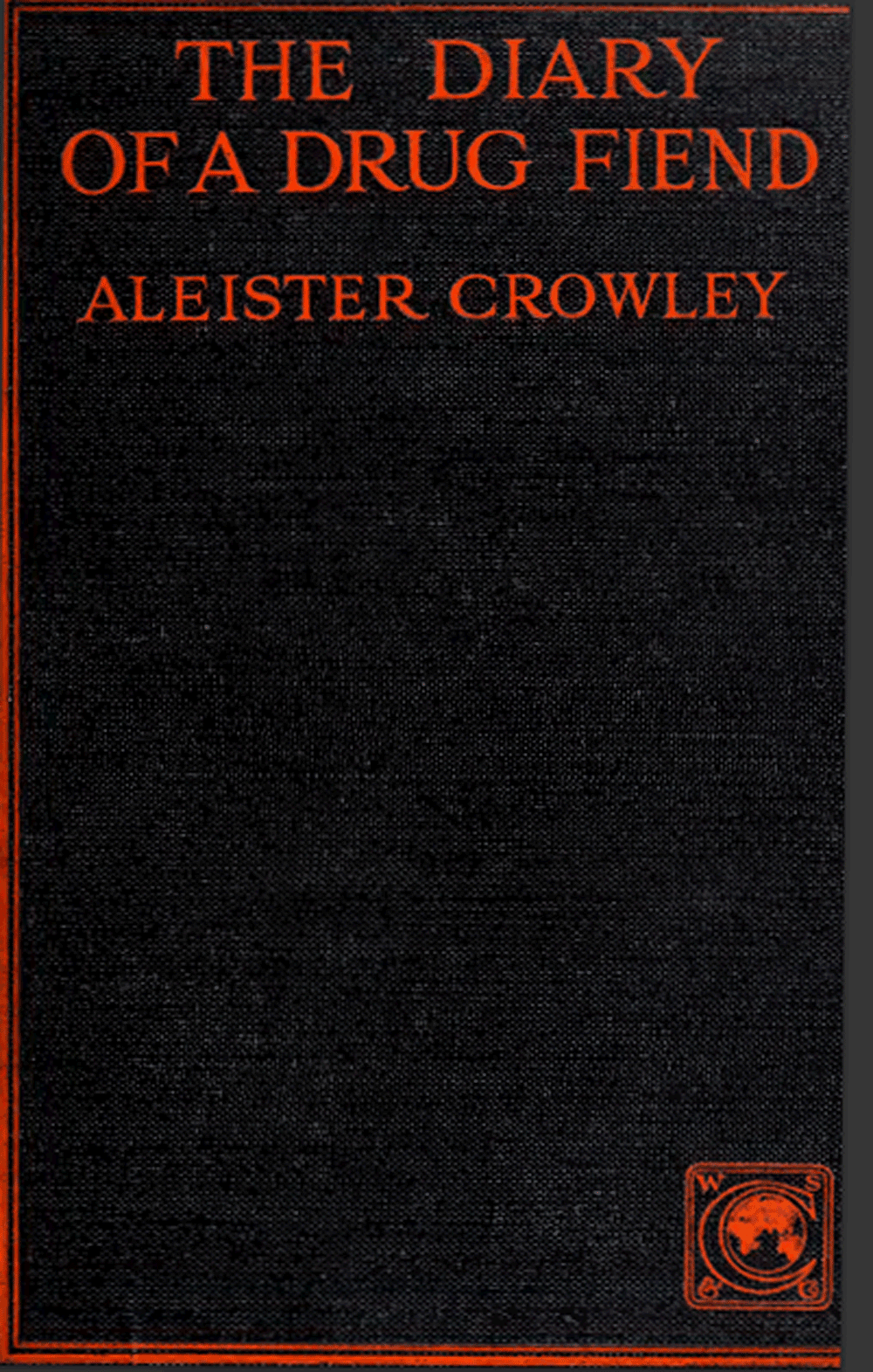
Diary of a Drug Fiend

This is the only full-cast recording of Aleister Crowley's 1922 classic paeon to common sense. It is the first book -- and so far almost the only book -- to stake out a philosophy of drug use that is compatible with human freedom, one in which we learn to use drugs as wisely as possible for the benefit of humanity. This recording was produced by the Drug War Philosopher and your purchases help support his effort to push back against the tragically counterproductive policy of drug prohibition, in the name of human freedom and of humanity's right to heal.

Purchase Your Copy


No cookies, no ads paid for by amoral and immoral billionaires (or trillionaires).


Unless otherwise indicated, no AI is used in the creation of site content. These essays represent the original ideas of their author and not the ideas that the author SHOULD have based on an algorithmic parsing of existing data. For more on this subject, consider the AI-related viewpoints to which the author subscribes as delineated in the New York Times opinion piece entitled "What 370,000 College Essays Tell Us About A.I.’s Effects on Creativity" by Rebecca Winthrop of the Brookings Institution.

The Partnership for a Death Free America is a proud sponsor of The Drug War Philosopher website @ abolishthedea.com.


Copyright 2026, Brian Ballard Quass Contact: quass@quass.com

tombstone for American Democracy, 1776-2024, RIP (up)