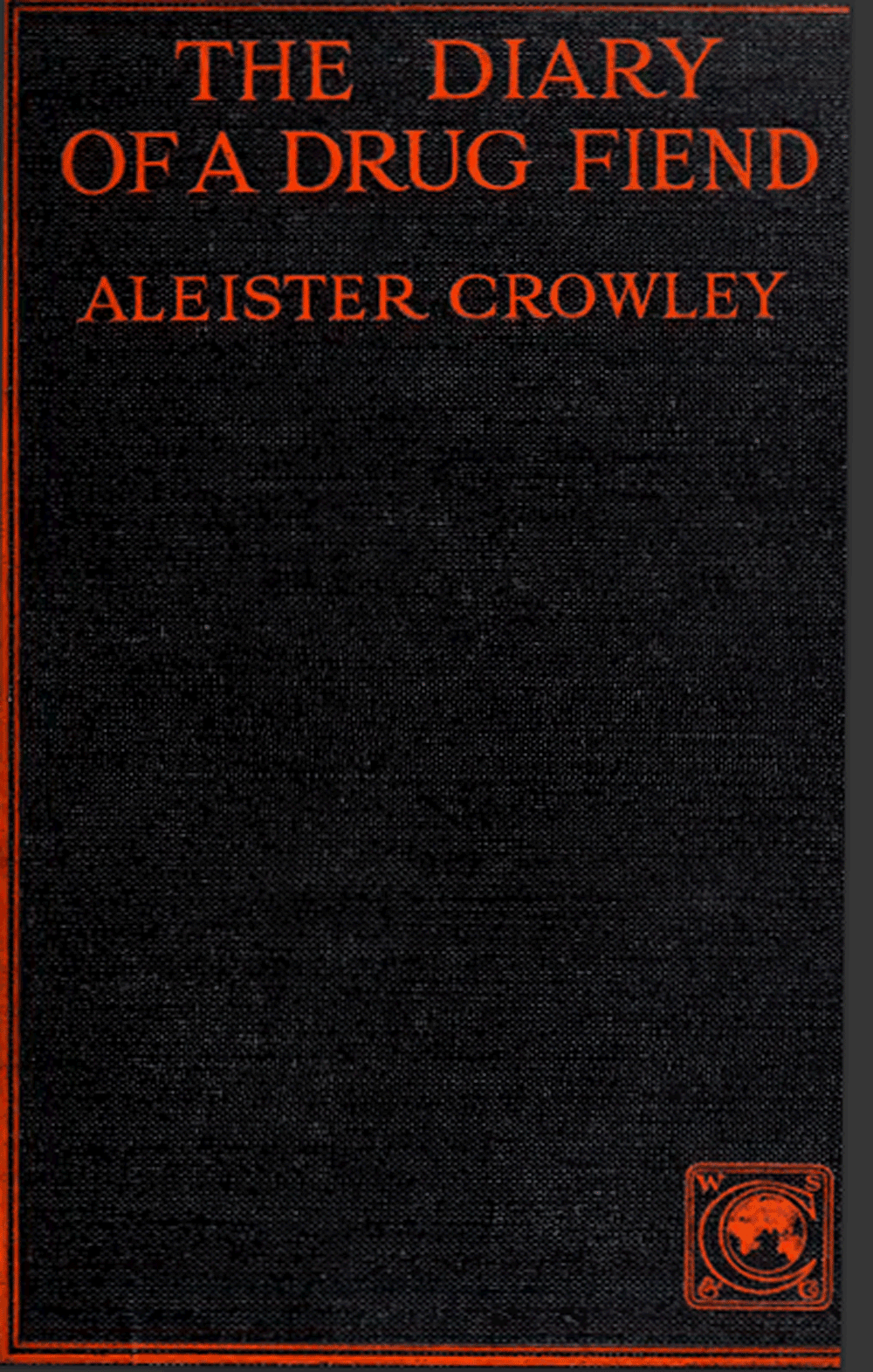





introduction to the Drug War Philosopher website at abolishthedea.com
blog icon orange rss icon with stylized radio waves bird icon for twitter bird icon for twitter substack icon


back navigation arrow


Notes from Underground, Drug War Edition

by Ballard Quass, the Drug War Philosopher

July 1, 2026


I was planning to write an essay on “The Politics of Ecstasy” by Timothy Leary today, citing numerous passages to show that the man was far more than a grandstander. I was also going to copy the contents of my satirical site called Partnership for a Death Free America to my Substack. God love me, I was even going to create an original newspaper-style crossword puzzle for you lot on the subject of America’s hateful drug attitudes. It would have done your heart good just to see it. But then I made the mistake of looking at my stats and the wind just went right out of my sails. Six subscribers. Six. They say that I should be posting notes, and before I know it, I’ll have subscribers up the wazoo on Substack. “Okay, fine,” I think to myself, “I’ll try to remain patient.” And yet post as I might, I can find almost no one online who seems to resonate with my position, namely, that we should use drugs as wisely as possible for the benefit of humanity.

I can find Libertarians who think that we have the right to drugs based on utilitarian grounds, and plenty of healthcare professionals and bestselling journalists who think that we need to get away from dependence-causing meds — yet no one but myself seems to be putting the two thoughts together, concluding that we need to get away from meds, not while becoming drug-scorning Christian Scientists, but while re-establishing the rights of human beings to access the natural medicines that grow at their very feet.

So I got distracted this morning. I began looking for ways to open a whole bunch of apparently very heavy eyelids. In addition to adding audio files to my essays, I was canvassing the possibility of turning those audio files into videos with the help of AI, under the theory that people who demur at reading philosophical treatises might yet deign to listen to them while being entertained with the bauble of a little whimsical eye candy from the Getty’s Images film archive. So I started experimenting with the audio-to-video app at the Pictory AI website — an activity which began hopefully enough, but I soon discovered that I lacked the motivation to really roll up my sleeves insofar as I was still obsessing about the non-result in the stats department.

Speaking of which, while researching Substack, I saw a teaser graphic for a YouTube tutorial with a big arrow pointing to the number 23, apparently as a subscriber total on the platform, and then featuring the words “What to do about this!” And I’m thinking to myself, “What do you mean, ‘What to do about this?’ I’m jealous of anyone who has as many as 23 Substack subscribers! The real question is, how does an apparent one-off like myself reach such a milestone in the first place? Let’s deal with first things first before we start talking about the 1,000-plus subscribers that the Substack influencers assure me anyone can garner in three months with the least bit of effort.

It’s not like I don’t have a niche. I know of literally no one else who is writing about my subjects of choice from my perspective, that of a med-dependent patient for life who is not willing to go gently into that good night without giving the medical establishment a good tongue-lashing for disempowering me in this way — for colluding with the inhumane policy of drug prohibition in order to deny me the right to heal. Someone connected with the medical field might have at least stood up in 1914 in Congress and said, “Whoa, fellas! It seems to me that, by outlawing erstwhile panaceas like opium and cocaine, we’re basically outlawing the right of people to heal! Am I right, gentlemen, or am I right?”

My first two weeks on this platform have been an eye-opener however. While searching for thematically similar Substacks, I realized for the first time how completely the “experts” today on mind and mood matters live in a world of make-believe, one in which drug prohibition and the substances that it outlaws simply do not exist. Almost everything that they say about the needs of the depressed might be correct enough in a world wherein there was literally no other biochemical option for those patients but Big Pharma meds, but when considered in the light of drug prohibition, the question is just begging to be asked: “Why are all of these endless well-paid professionals who claim to care so much about the depressed not protesting against drug prohibition on the grounds of their patients’ right to heal; indeed, on the grounds of their patients’ right not to BE patients in the first place?”

I would rather have people just peaceably show up here of their own accord, so to speak, after saying to themselves: “Oh, yes, you’re darn tootin’. I want the freedom to take care of my own health as well, and come to think of it, I am getting quite tired of seeing this ridiculously young doctor every three months of my life. In fact, do you know what? You GO, Brian. You go.” But if people aren’t going to show up willingly, I might have to start making some noise. I need to keep posting inconvenient questions in the many self-satisfied feeds about mental health on Substack, in which literally all of the credentialed pundits are reckoning without drug prohibition. I need to become a Socratic gadfly on the topic.

I’ve only been on the platform for two weeks and I’ve already got a list of mainstream psychologists whom I suspect are ghosting me on Substack, including Mark Horowitz, Neil Harper and Awais Aftab himself, a certified subscription superstar on Substack (which is highly annoying, by the way, that someone who reckons without drug prohibition can hold the healthcare community of our time in thrall like that). One pays a high price for committing the faux pas of bringing up drug prohibition in a discussion thread about mental health these days: one is kicked out of polite society. We patients are supposed to shut up and take our meds, after all — or at least to shut up. If anything can end our depression, trust them, the experts will be sure to tell us about it! We need to just return to our seats and pipe down, remembering that doctors know best when it comes to our mental and emotional needs.

One is reminded of the scene in “High Anxiety” when a mere patient (i.e., Mel Brooks) questions his psychiatrist’s call for a series of therapy sessions:

DR. THORNDYKE: But, Professor, is it really nece--

PROFESSOR LILLOMAN: It IS “nece”! I know what is “nece”! Don’t tell ME what’s “nece,” I tell YOU what’s “nece.”


read more essays here


Ten Tweets

against the hateful war on US


Michael Pollan is the Leona Helmsley of the Drug War. He uses outlawed drugs freely while failing to support the re-legalization of Mother Nature. Drug laws are apparently for the little people.

I just can't believe... [image]

I'm told antidepressant withdrawal is fine because it doesn't cause cravings. Why is it better to feel like hell than to have a craving? In any case, cravings are caused by prohibition. A sane world could also end cravings with the help of other drugs.

New article in Scientific American: "New hope for pain relief," that ignores the fact that we have outlawed the time-honored panacea. Scientists want a drug that won't run the risk of inspiring us.

Americans love to blame drugs for all their problems. Young people were not dying in the streets when opiates were legal. The prohibition mindset is the problem, not drugs.

Self-medication is not a dirty word. It has always been a fundamental right to take care of one's own health -- until the medical establishment demonized the practice for obvious financial reasons.

I, for one, am actually TRYING to recommend drugs like MDMA and psilocybin as substitutes for shock therapy. In fact, I would recommend almost ANY pick-me-up drug as an alternative to knowingly damaging the human brain. That's more than the hateful DEA can say.

I'm told that most psychiatrists would like to receive shock therapy if they become severely depressed. That's proof of drug war insanity: they would prefer damaging their brains to using drugs that can elate and inspire.

Thomas Szasz was not an extremist when it comes to drugs. The extremists are those who feel that psychiatrists know more about our mind and mood than we do.

We need a Controlled Prohibitionists Act, to get psychiatric help for those who think that prohibition makes sense despite its appalling record of causing civil wars overseas and devastating inner cities.


Click here to see All Tweets against the hateful War on Us


back navigation arrow


No cookies, no ads.


Unless otherwise indicated, no AI is used in the creation of site content. These essays represent the original ideas of their author and not the ideas that the author SHOULD have based on an algorithmic parsing of existing data. For more on this subject, consider the AI-related viewpoints to which the author subscribes as delineated in the New York Times opinion piece entitled "What 370,000 College Essays Tell Us About A.I.’s Effects on Creativity" by Rebecca Winthrop of the Brookings Institution.

The Partnership for a Death Free America is a proud sponsor of The Drug War Philosopher website @ abolishthedea.com.


Copyright 2026, Brian Ballard Quass Contact: quass@quass.com

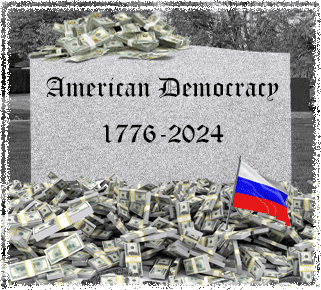
tombstone for American Democracy, 1776-2024, RIP (up)