




Homepage of the Drug War Philosopher, Brian Quass
blog icon orange rss icon with stylized radio waves bird icon for twitter bird icon for twitter substack icon


back navigation arrow


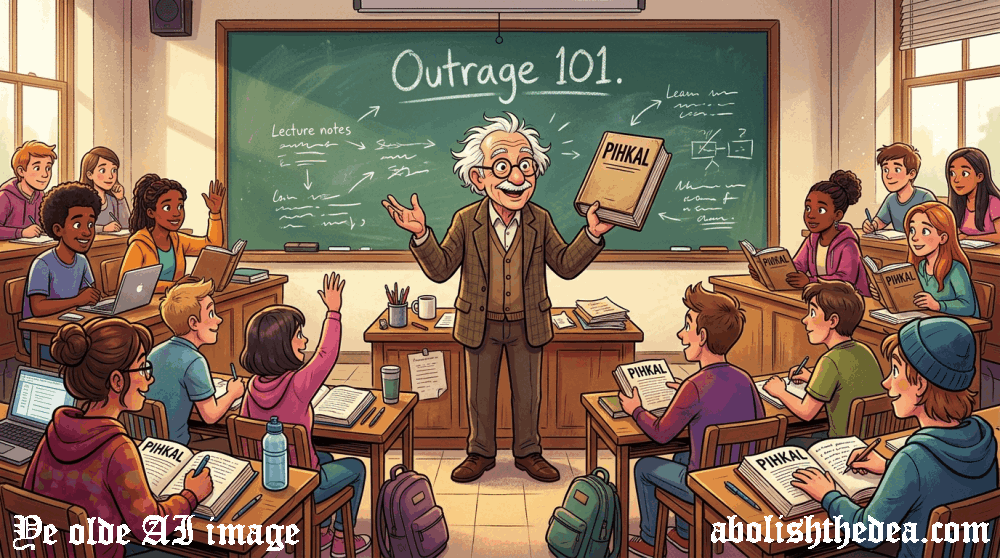
Outrage 101

Remedial education for those who are not yet furious about drug prohibition

by Brian Ballard Quass, the Drug War Philosopher

October 10, 2026


Okay, take your seats, class. I will be picking up where we left off yesterday. It will be remembered that I was making drug-related comments on the letters written by William James to his friends and family and published in a posthumous two-volume collection by his son, Henry James1. This Henry James is, of course, the namesake of William's famous brother, the cosmopolitan author of "The Turn of the Screw" and "The Portrait of a Lady." (Come on in, there are plenty of seats -- about 5,000 in fact, after which my web server might crash.) Speaking of William's siblings, it's interesting. He had three successful brothers: Henry, Robertson and Garth Wilkinson (the latter of whom he refers to as "Wilky" in his letters) and an ill-starred sister named Alice, who died in her mid-40s after a life full of mostly vague medical complaints that were apparently dismissed as female hysteria by the doctors of her day.2 I say it's interesting because it reminds me of the biography of the Bronte family in the same century. It consisted of three highly successful young ladies and one ill-starred brother, Branwell, an unsuccessful painter who died in his early 30s after turning himself into a sort of poster child for how NOT to employ substances like laudanum and alcohol3. The fate of these two sets of siblings mirrors each other, with the luckless sibling being the female of the James family and the male of the Brontes'. I should add that all of the Bronte siblings were luckless in terms of longevity. Not one of them lived to the age of 404.

To be honest, this parallel struck me while I was still under the impression that William only had two brothers, Henry and "Wilky." In that case, both the Bronte and the James family would have consisted of four siblings each. The fact that James actually had a third brother, raising the sibling count to five, somewhat lessons the impact of the analogy that I was attempting to draw between the psychological makeup of the two clans. I think the comparison still "holds up," so to speak, as an interesting factoid, but it is no longer the front-page news that I originally thought it to be. I am no longer thinking of passing this observation on to a genetically oriented philosopher for subsequent processing. Incidentally, I blame my miscount of the James clan on William himself. He only refers to Robertson once (at least in volume I of his letters), and then only incidentally, in a letter to the luckless Alice, where he informs her that "I would give a good deal to be able to enjoy as you are all doing the society of Venerable Brother Robertson." For want of other references to this Robertson, it did not occur to me that he was a board-certified brother until subsequent research convinced me of the fact. This excerpt that I've cited at least gives us reason to believe that this Robertson was a pleasant fellow to be around. Had this third brother of William's turned out to be a rogue, it would have destroyed the pedagogic value of my comparison altogether.

I have provided this backstory on the James family for a reason. It will help the student to better appreciate the following quotation upon which the remainder of this class will focus, philosophically speaking. In this excerpt, William is writing to his ailing sister Alice from his summer home in Chocorua, New Hampshire, just south of Mount Washington. Alice is 42 years old and suffering from breast cancer. She has less than one year to live5.

Above all things, save yourself from bodily pain, if it can be done. You've had too much of that. Take all the morphia (or other forms of opium if that disagrees) you want, and don't be afraid of becoming an opium-drunkard. What was opium created for except for such times as this? 6


This is such a refreshing quotation. Finally, common sense when it comes to drugs! It reminds us of something that Americans have completely forgotten: that misuse and abuse are only one part of the drug story -- just as traumatic brain injury is only one part of the story of horseback riding7. This is why drug prohibition is such a crime: it sends the Alices of the world to clinics, where they'll be given god knows what synthetic pharmaceutical and charged through the roof for the privilege. Worse yet, they will have a stranger decide FOR them how much pain relief they require. And that stranger will be sure to underprescribe, knowing as they do that government bureaucrats will be monitoring their prescriptions, ready to destroy their lives should their prescribing patterns be deemed to be statistically excessive. And if Alice's complaints are thought to be psychological in origin, she'll be worse off yet: the doctors may decide to damage her brain with shock therapy. I hope that it is not only myself here, class, who sees all the freedom-busting problems that arise when we put the medical industry in charge of treating the Alices of the world like this. In a free world, Alice could stay at home and treat her symptoms based on how she feels rather than on how a stranger thinks that she SHOULD feel. But that's not good for the stock market, I suppose. This is just another reason why capitalism, as practiced today, is antithetical to drug freedom. Self-interested parties want to medicalize and monetize everything. Everything whatsoever, including human suffering. Note also that if William were to give the same advice today, to tell his sister to benefit from a naturally occurring plant medicine, he would be considered to be a villain -- and would even be deemed a murderer should Alice have so much as sniffed a bottle of laudanum on the day of her decease.

If you are not indignant now, you have not been paying attention, class. I'm just sayin'...

Meanwhile, I would like to take this discussion one step further by introducing you students to the thoughts of James' friend, Oliver Wendell Holmes Jr., on this subject. In his medical essays compiled over the course of 40 years, Holmes has written one paragraph in particular to which I would like to draw your attention8. Notice how Holmes gets it half right, so to speak, when it comes to drugs. Like William James, Holmes understood that opium was a godsend. He refers to opium as the drug "which the Creator himself seems to prescribe, for we often see the scarlet poppy growing in the cornfields, as if it were foreseen that wherever there is hunger to be fed there must also be pain to be soothed." So far, so good. But this observation is part of a paragraph in which Holmes disparages almost every other medicine in the world, except for wine and anesthetics. He makes the allegorical claim that medicines should be considered guilty until proven innocent, meaning that they should always be assumed to be harmful unless specific circumstances call for their use. I trust that the fallacy of this viewpoint is obvious to everyone: it is the fact that the decision about what is "necessary" is entirely subjective when it comes to psychoactive substances, as opposed to substances that are used to correct a specific physically manifested condition. But I will let Holmes speak for himself:

Presumptions are of vast importance in medicine, as in law. A man is presumed innocent until he is proved guilty. A medicine—that is, a noxious agent, like a blister, a seton, an emetic, or a cathartic —should always be presumed to be hurtful.... Throw out opium, which the Creator himself seems to prescribe, for we often see the scarlet poppy growing in the cornfields, as if it were foreseen that wherever there is hunger to be fed there must also be pain to be soothed; throw out a few specifics which our art did not discover, and is hardly needed to apply; throw out wine, which is a food, and the vapors which produce the miracle of anaesthesia, and I firmly believe that if the whole materia medica, as now used, could be sunk to the bottom of the sea, it would be all the better for mankind,—and all the worse for the fishes. 9
Medical Essays

It's odd that Holmes should have been so unaware of -- or at least indifferent to -- the psychological, spiritual, religious, and philosophical effects of the use of opium and of the anaesthetic gases of his time. We see here the drug-related myopia of the utilitarian thinker in the age of a supposedly all-powerful science. This is the kind of almost willful ignorance that was eventually to give rise to the moralistic and scientistic attempt to distinguish between "drugs" and "meds," with the former being evil and pointless and the latter being blessed, at least when sanctified by the intervention of a doctor -- preferably in a white lab coat -- to sign a prescription by way of blessing the substance use in question. But then this was many decades before the field of ethnobotany had even been invented, before the work of Richard Schultes in the Amazon rainforest, before Americans knew that psychoactive substances had been used for millennia by indigenous communities, not simply for healing purposes but for religious and practical reasons as well. William James would no doubt have been equally blind to the "non-physical" benefits of opiates and anesthetics, were it not for a pamphlet that he received from an eccentric American Philosopher by the name of Benjamin Paul Blood. In "The Anaesthetic Revelation and the Gist of Philosophy," Blood described a kind of experiential philosophy that he was developing with the help of mental states created by (or allowed by) the mindful and strategic inhalation of anesthetic gases10. James was fascinated. He did some hands-on checking of the claims in the pamphlet. He ultimately concluded that the intensely inspiring mental states of which Blood had written not only existed, but that they raised crucial questions about the nature of consciousness and of reality itself. James summed up his findings as follows in "The Variety of Religious Experiences":

One conclusion was forced upon my mind at that time, and my impression of its truth has ever since remained unshaken. It is that our normal waking consciousness, rational consciousness as we call it, is but one special type of consciousness, whilst all about it, parted from it by the filmiest of screens, there lie potential forms of consciousness entirely different.11


I trust that your blood is boiling now. Well, doggone it, it should be. Drug prohibition has outlawed our right to take care of our own health, after all, meanwhile outlawing the philosophical investigations of William James. Is that not bad enough for you?

Next time we'll continue with drug-related quotations from The Letters of William James Volume II. Don't forget to get those permission slips in, signed and dated, for our upcoming visit to the DEA Museum in Arlington, Virginia -- for protesting purposes, that is. Eww! I don't know about you, class, but the very idea of a DEA Museum creeps me out. I just want to walk into the place and exclaim in the dismissive and choppy manner of a Valley girl: "OK... like... this is so wrong on so many levels."


Notes for essay entitled Outrage 101: Remedial education for those who are not yet furious about drug prohibition:

1: The Letters of William James DWP (up)
2: “Henry James.” 2024. The Poetry Foundation. 2024. https://www.poetryfoundation.org/people/henry-james. (up)
3: Barnett, David. 2017. “Branwell Bronte, the Mad, Bad and Dangerous Brother.” The Independent. September 17, 2017. https://www.independent.co.uk/news/long_reads/branwell-bronte-emily-charlotte-anne-family-haworth-yorkshire-a7940396.html. (up)
4: Wikipedia Contributors. 2019. “Brontë Family.” Wikipedia. Wikimedia Foundation. February 7, 2019. https://en.wikipedia.org/wiki/Bront%C3%AB_family. (up)
5: “Alice James.” 2022. Wikipedia. October 20, 2022. https://en.wikipedia.org/wiki/Alice_James. (up)
6: James, William, 1842. 2024. “The Letters of William James, Vol. 1.” Gutenberg.Org. 2024. https://www.gutenberg.org/cache/epub/40307/pg40307-images.html. (up)
7: Equestrian Sports Are The Leading Cause of Sports-Related TBI Neurologic Rehabilitation Institute at Brookhaven Hospital, 2016 (up)
8: “Medical Essays, by Oliver Wendell Holmes.” 2018. Gutenberg.Org. 2018. https://www.gutenberg.org/files/2700/2700-h/2700-h.htm. (up)
9: “Medical Essays, by Oliver Wendell Holmes.” 2018. Gutenberg.Org. 2018. https://www.gutenberg.org/files/2700/2700-h/2700-h.htm. (up)
10: Blood, Benjamin Paul, d. 1919. [from old catalog. 1874. The Anaesthetic Revelation and the Gist of Philosophy. Amsterdam, N.Y. https://archive.org/details/anstheticrevela00bloogoog. (up)
11: “The Varieties of Religious Experience : William James : Free Download, Borrow, and Streaming : Internet Archive.” 2021. Internet Archive. 2021. https://archive.org/details/the-varieties-of-religious-experience_202109. (up)


read more essays here


Ten Tweets

against the hateful war on US


Cocaine is not evil. Opium is not evil. Drug prohibition is evil.

Today's drug laws tell us that we must respect the historical use of sacred medicines, while denying us our personal right to use them unless our ancestors did so. That's a meta-injustice! It negatively affects the way that we are allowed to experience our world!

To oppose the Drug War philosophically, one has to highlight its connections to both materialism and the psychiatric pill mill. And that's a problem, because almost everyone is either a Drug Warrior or a materialist these days and has a vested interest in the continuation of the psychiatric pill mill.

You can get a master's degree in healthcare today and not learn a thing about the power of hundreds of outlawed drugs to inspire and elate.

In his treatise on laws, Cicero reported that the psychedelic-fueled Eleusinian Mysteries gave the participants "not only the art of living agreeably, but of dying with a better hope."

In response to a tweet that "some drugs cannot be used wisely for recreational purposes": The problem is, most people draw such conclusions based on general impressions inspired by a media that demonizes drugs. In reality, it's hard to imagine a drug that cannot theoretically be used wisely for recreation at some dose, in some context.

As such, "we" are important. The sun is just a chaos of particles that "we" have selected out of the rest of the raw data and declared "This we shall call the sun!" "We" make this universe. Consciousness is fundamental.

Drug warriors have taught us that honesty about drugs encourages drug use. Nonsense! That's just their way of suppressing free speech about drugs. Americans are not babies, they can handle the truth -- or if they cannot, they need education, not prohibition.

There is something wrong with a country that thinks it can decide what human beings around the world are allowed to ingest.

The drug war tells us that certain drugs have no potential uses and then turns that into a self-fulfilling prophecy by outlawing these drugs. This is insanely anti-scientific and anti-progress. We should never give up on looking for positive uses for ANY substance.


Click here to see All Tweets against the hateful War on Us


back navigation arrow
Book Cover

Break the ice with a sledgehammer: place this book on your coffee table.

This book features 150 annotated images, designed to force brainwashed Americans to confront the fact that drug prohibition is wrong. Here is what author Richard Parrish II says of the book's compiler: "The drug prohibition philosopher provides first-hand, principled, persuasive, and insightful arguments against the current drug prohibition regime..."

Purchase Your Copy
Book Cover

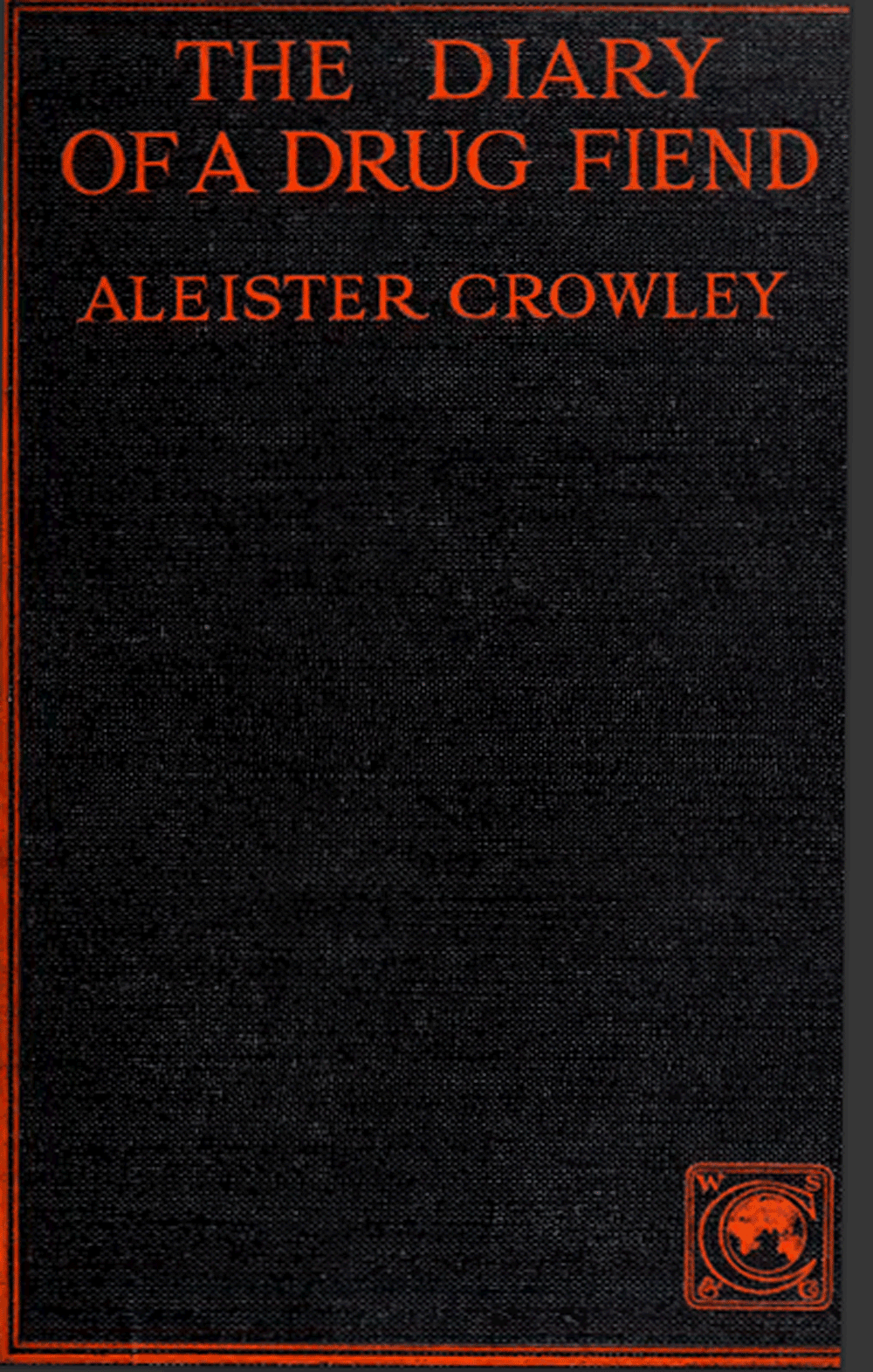
Diary of a Drug Fiend

This is the only full-cast recording of Aleister Crowley's 1922 classic paeon to common sense. It is the first book -- and so far almost the only book -- to stake out a philosophy of drug use that is compatible with human freedom, one in which we learn to use drugs as wisely as possible for the benefit of humanity. This recording was produced by the Drug War Philosopher and your purchases help support his effort to push back against the tragically counterproductive policy of drug prohibition, in the name of human freedom and of humanity's right to heal.

Purchase Your Copy


No cookies, no ads paid for by amoral and immoral billionaires (or trillionaires).


Unless otherwise indicated, no AI is used in the creation of site content. These essays represent the original ideas of their author and not the ideas that the author SHOULD have based on an algorithmic parsing of existing data. For more on this subject, consider the AI-related viewpoints to which the author subscribes as delineated in the New York Times opinion piece entitled "What 370,000 College Essays Tell Us About A.I.’s Effects on Creativity" by Rebecca Winthrop of the Brookings Institution.

The Partnership for a Death Free America is a proud sponsor of The Drug War Philosopher website @ abolishthedea.com.


Copyright 2026, Brian Ballard Quass Contact: quass@quass.com

tombstone for American Democracy, 1776-2024, RIP (up)