



Homepage of the Drug War Philosopher, Brian Quass
blog icon orange rss icon with stylized radio waves bird icon for twitter bird icon for twitter substack icon


back navigation arrow


Poppycock!

Why everything you think you know about opium is rubbish

by Brian Ballard Quass, the Drug War Philosopher

August 26, 2026


The American war against the Chinese in the United States was a terrible tragedy regardless of how often this drama continues to be enacted on the stage of history. Although we did not succeed in beating them down, at least we took away something that they treasured and that made life better for them. Envious persecutors must be thankful for small victories no less than for large. 1
Thomas Szasz, Ceremonial Chemistry: the ritual persecution of drugs, addicts, and pushers


It has long been my custom to listen to public domain literature in bed, typically while solving a Japanese number puzzle as I do so. I find it a great way to bide my time while waiting for 'Nature's soft nurse' to knit up my raveled sleeves of care. While that nurse is going about her business, however, I sometimes hear the word "opium" spoken by a story narrator. Whenever that happens, I think to myself, "What? Who? Why? Who said that?!" It is as if I had just heard my name mentioned in the distance at a noisy and overcrowded cocktail party. I am suddenly on the qui vive, ready to box, philosophically speaking, with all comers. Of course, this instantly undoes all of the pacifying work that my metaphorical caregiver has thus far performed on me, forcing her to start all over again with the customary ministrations. At such times I can almost hear her crying out loud, "Great! Now I have to start all over again! A goddess's work is literally never done. Well, what can I do? [sigh] Here we go again. Ahem. Slip one and yarn over, slip one and yarn over..." Well, my apologies to Nyx, or whatever her name is, but I have a great interest in learning what anglophone authors thought about opium prior to its complete and utter demonization in the name of marginalizing Chinese-Americans. If I have to lose a little sleep as a consequence, so be it.

I only recently "wised up," however. I finally realized that it wasn't enough for me to simply marvel at these references about opium in the public domain; I should be collecting these "soundbites" in a database table as well. I should be using them to both identify and to comment upon the western mindset about opium as it existed just before the erstwhile panacea was rebranded as an existential threat to humanity by racists and xenophobes. Philosophical epiphanies are all well and good, after all, but what good will they do if one fails to share them with others? (Precious little, I should imagine.) It is with this backstory in mind that I present the following list of quotations concerning "opium," each of which was written by a well-known English-language author whose work has now passed into the public domain. Following each citation, I will share my thoughts on the mindset that it betrays and what it might tell us about the western viewpoint about opium, a drug that Americans hate so much today that they refuse to let the very word 'opium' pass from their drug-free lips.

One might say that opium is "that substance whose name must not be spoken" in America, were it not for the fact that such a designation might prove ambiguous. Americans have been taught to exercise a similar reticence with respect to the utterance of the words 'heroin' and 'cocaine' as well.

CHILD: Mommy, what is opium?

MOTHER: Hush, child! We must never talk about... about that substance whose name must not be spoken.

This craven self-censorship on the part of Americans would be highly amusing, were it not for the fact that it reminds us of the existence of a highly intolerant nationwide attitude about drugs, one which could easily metastasize into a cockeyed effort to remove drug references entirely from all mainstream sections of the online world, just as the Disney corporation removed all drug-positive comments from 'The Making of Sgt. Pepper' prior to airing it on their streaming channel. In such a world, the Project Gutenberg version of short stories like 'What was it?' by Fitz-James O'Brien 2 would be rewritten to remove all references to opium. The bogie man that is conjured by the smoking of the drug in the original story would henceforth be conjured by an overactive imagination, making the tale safe for our poor vulnerable young people. If the fourth amendment can be ignored in the interests of fighting drugs, what's to stop the first amendment from giving way as well? What's to stop the Drug Warrior from censoring the past to better accord with the drug-related prejudices of the present?

In fact, do you know what? I perceive that my newly adopted project of finding and highlighting drug-related quotations from public domain literature may actually be a time-sensitive project. Even as I type this line, Drug Warriors may be going behind my back to remove the evidence that there has ever been anything but unqualified disdain on the part of western authors for the drugs that we love to hate today in America. They might already have a mole inside the team at Project Gutenberg in Montclair, NJ, someone who claims to be volunteering for a good cause but who is actually removing drug-friendly references from many a quaint and curious volume of digitized lore. Well, I'm happy to say that they are too late -- at least when it comes to the following opium-related quotations that I nabbed from mainstream sources yesterday.


Opium-Related Quotations from public domain literature


Charlotte Bronte


Villette 3


“Ah! the sedative had been administered. In fact, they had given me a strong opiate... I know not whether Madame had overcharged or under-charged the dose; its result was not that she intended. Instead of stupor, came excitement. I became alive to new thought to reverie peculiar in colouring. A gathering call ran among the faculties, their bugles sang, their trumpets rang an untimely summons. Imagination was roused from her rest, and she came forth impetuous and venturous. With scorn she looked on Matter, her mate. Rise! she said. Sluggard! this night I will have my will; nor shalt thou prevail. Look forth and view the night! was her cry; and when I lifted the heavy blind from the casement close at hand with her own royal gesture, she showed me a moon supreme, in an element deep and splendid. To my gasping senses she made the glimmering gloom, the narrow limits, the oppressive heat of the dormitory, intolerable. She lured me to leave this den and follow her forth into dew, coolness, and glory.”


Comment:
Charlotte does not identify the opiate here, but I found the following passage in a book on Project Gutenberg entitled World's Best Literature edited by one Charles Dudley Warner:

On being asked once how she could describe so accurately the effects of opium as she does in 'Villette,'4 she replied that she knew nothing of opium, but that she had followed the process she always adopted in cases of this kind. She had thought intently on the matter for many a night before falling asleep; till at length, after some time, she waked in the morning with all clear before her, just as if she had actually gone through the experience, and then could describe it word for word as it happened.5


I hate to be a cynic, but I have to respond to this citation by adopting a wry smile and saying: "If you say so, Charlotte." Personally, I wonder if Charlotte had not actually partaken. Given the public attitude about the drug at the time, she would hardly wish to admit to such a deed in public. And why should she? Even the critics who asked her the question seem to have assumed that she would never in a million years have learned about the effects of opium by acquiring firsthand experience of the drug. To which I can only add, "Or WOULD she? On what basis do we assume that Charlotte Bronte would hew to a Christian Science understanding of psychoactive substances?" Charlotte's brother, Branwell, was notorious for his overuse of the opium derivative known as laudanum, after all. Why do we assume that Charlotte, who was clearly far wiser than her hapless sibling, would never have thought to use laudanum wisely for herself, which is to say, on a variety of chronologically spaced occasions, as a way to inspire herself with interesting visions that might someday prove useful to her in her literary career? Why might she NOT have used laudanum? Perhaps she partook of the drug "in a series of quarterly carouses," as did the poets of the 19th century according to author Richard Middleton in his supernatural short story entitled 'The Last Adventure'? 6 She might indeed have used laudanum. Who shall say?


Richard Middleton


The Last Adventure 7


“He took life as young poets take opium : in a series of magnificent quarterly carouses.”


Comment:
Here we see a 19-century author alluding to the wise use of opium for wise purposes. Imagine that! Amazingly, modern westerners can see nothing but evil in this drug that has such vast potential for inspiring a user. I would add "when used wisely" to that sentence, but such caveats would be taken for granted in a world in which we were not all programmed to associate drug use with death and sorrow. Programmed how, you ask? By the media's ruthless censorship of all reports of wise and beneficial drug use, that's how. Indeed, so crazed is America's Christian Science hatred of drug use that Drug Czar William Bennett reserved his most venomous scorn for those individuals who used drugs wisely, under the bizarre assumption that in doing so, they were setting a bad example for our poor vulnerable young people.


Fitz-James O'Brien


What Was It? 8


“Those hours of opium happiness which the Doctor and I spent together in secret were regulated with a scientific accuracy. We did not blindly smoke the drug of paradise, and leave our dreams to chance. While smoking, we carefully steered our conversation through the brightest and calmest channels of thought.”


Comment:
Here is yet another 19th-century author speaking of the wise and strategic use of opium. If America and the world ever outgrows its childish fear of drugs (and the caveman attitude on which it is based), we will someday see book titles such as the following:

How to get the most out of opium smoking with your friends and loved ones, safely and without addiction."


Someday even that latter stipulation, "safely and without addiction," will no longer even be necessary. As Aldous Huxley reminds us in "The Human Situation,"9 a book published posthumously by his wife Laura in 1977, there are "naturally occurring drugs which open up the consciousness to the visionary experience and which appear to be relatively harmless to the physiology and not to be addictive in any way."10 Did you catch that? He's talking about inspiring drugs that are not addictive in any way. And Huxley lived decades before Alexander Shulgin11 revealed how the chemistry of these natural drugs could inspire a theoretically endless raft of synthetics in the form of phenethylamines and tryptamines, each with its own unique propensities for bringing about a wide variety of highly desirable mental and emotional states. My point here is that opium need never be the only drug in one's household pharmacy. Much of the fear about opiate addiction is predicated on the idea that opiates are the only game in town, but in a free world, there would be a wide variety of pharmacologically assisted ways to attain self-transcendence. There would therefore be no need for any but the grossly uninformed to become addicted to any one drug in particular, especially in a world in which we no longer had a superstitious taboo against the common sense practice of "fighting drugs with drugs."


Edgar Allan Poe
12


A Tale of the Ragged Mountains 13


“In the meantime the morphine had its customary effect- that of enduing all the external world with an intensity of interest. In the quivering of a leaf- in the hue of a blade of grass- in the shape of a trefoil- in the humming of a bee- in the gleaming of a dew-drop- in the breathing of the wind- in the faint odors that came from the forest- there came a whole universe of suggestion- a gay and motley train of rhapsodical and immethodical thought.”


Comment:
Well, okay, morphine is not exactly opium, but it is one of opium's primary psychoactive alkaloids. Besides, one cannot be picky when looking for quotations referring to the positive use of opium in English literature. And clearly the above citation represents a positive use of morphine, at least in the eyes of any reader with any poetic propensities whatsoever. Imagine seeing nature in this way, as inspiring us with a whole universe of suggestion. Would it not make us a sort of Walt Whitman for a day? The narrator is describing the effect of morphine on an eccentric young man named Augustus Bedloe, the protagonist of Poe's short story entitled 'A Tale of the Ragged Mountains'. 14 The story is set in the forested mountains to the southwest of Charlottesville, Virginia. I ask the reader to forget their kneejerk fear of the drug just long enough to recognize the astonishing mindset that it has facilitated in the user. It is no wonder that Drug Warriors do not wish us to read such literature, because it begs an enormous question about our healthcare system, especially in the minds of a chronic depressive like myself: namely, why are our scientists telling us that depression is such a tough nut to crack, one requiring many more well-funded scientific studies, when such substances as these exist in the world?

But here I need to stop and add a qualification that will be unnecessary once Americans finally grow up when it comes to drugs. I need to explicitly say what should be obvious to any adult, that this wondrous outcome of morphine use of which Poe is writing here presupposes an educated and imaginative user to begin with. If you give a cynical and poorly educated dullard a shot of morphine, they are not going to suddenly start rejoicing in the shape of a trefoil or the humming of a bumble bee. It is far more likely that they will spend the motivational power supplied by the drug on their customary avocations: things like beating their wives, kicking house pets, and wrecking the joint when a convenience store refuses to sell them liquor after midnight. Nor should this come as a surprise. The effects of psychoactive drugs are created by a joint partnership between the user and the drug itself. This, indeed, is one of many reasons why reductionist scientists cannot "wrap their heads" around such substances. A "real" drug, as far as they're concerned, causes the same effect in everybody who takes it. This, in fact, was the rationale behind the creation of the one-size-fits-all antidepressants on which 1 in 4 American women are now dependent for life.


Edgar Allan Poe
15


The Fall of the House of Usher 16


“I looked upon the scene before me — upon the mere house, and the simple landscape features of the domain — upon the bleak walls — upon the vacant eye-like windows — upon a few rank sedges — and upon a few white trunks of decayed trees — with an utter depression of soul which I can compare to no earthly sensation more properly than to the after-dream of the reveller upon opium — the bitter lapse into every-day life — the hideous dropping off of the veil.”


Comment:
Here is the quotation that Drug Warriors were waiting for: a citation that shows that drugs are evil. "Yes!" they shout to themselves as they jerk down their fists in glee. "That's all we've ever been saying, yo!" Well, I hate to interrupt their victory party, but I must point out that Poe is writing here about the excessive use of opium. He is writing about what the Victorians would have referred to as an "opium debauch." He is not referring to the effects of the occasional smoking of opium, or even of the daily smoking of opium in moderate amounts. The use of which Poe is writing here has little to do with the nightly smoking of opium as practiced by the Chinese under British rule. As Dr. Ayres, the last and longest-serving British Surgeon General of Hong Kong, testified in the late 19th century:

My opinion of it is that [opium smoking] may become a habit, but that that habit is not necessarily an increasing one. Nine out of twelve men smoke a certain number of pipes a day, just as a tobacco smoker would, or as a wine or beer drinker might drink his two or three glasses a day, without desiring more. I think the excessive opium smoker is in a greater minority than the excessive spirit drinker or tobacco smoker. In my experience, the habit does no physical harm in moderation.17


To claim otherwise would be like saying that the nightly drinker of a wine cooler is going to pay for their indulgence by seeing pink elephants and going through the DTs.


Mark Twain


Goldsmith's Friend Abroad Again 18


“SAN FRANCISCO, 18—. DEAR CHING-FOO: I stepped ashore jubilant! I wanted to dance, shout, sing, worship the generous Land of the Free and Home of the Brave. But as I walked from the gangplank a man in a gray uniform—[Policeman] —kicked me violently behind and told me to look out—so my employer translated it. As I turned, another officer of the same kind struck me with a short club and also instructed me to look out. I was about to take hold of my end of the pole which had mine and Hong-Wo's basket and things suspended from it, when a third officer hit me with his club to signify that I was to drop it, and then kicked me to signify that he was satisfied with my promptness. Another person came now, and searched all through our basket and bundles, emptying everything out on the dirty wharf. Then this person and another searched us all over. They found a little package of opium sewed into the artificial part of Hong-Wo's queue, and they took that, and also they made him prisoner and handed him over to an officer, who marched him away. They took his luggage, too, because of his crime, and as our luggage was so mixed together that they could not tell mine from his, they took it all. When I offered to help divide it, they kicked me and desired me to look out.”


Comment:
This snippet comes from an article by Twain published in Galaxy magazine in 1870. We see here that American immigration and custom officials were already assuming the role of noxious busybodies decades before they had been egged on to new heights of inhumanity by the unprecedented wholesale outlawing of psychoactive substances, first at the state level and then at the federal level. But as this epistolary story reveals, bad-tempered border guards are the least of an immigrant's worries when traveling to America. The story consists of the letters that an ambitious Chinaman named Ah Song Hi is writing to his friend back home in order to demonstrate how the former's search for freedom and opportunity is progressing in the Land of the Free. Scarcely has Ah Song Hi "cleared customs," however, when he is attacked by a fierce dog that has been sicced upon him by a couple of young anti-immigrant hoodlums, out for a good time. A police officer finally arrives on the scene thanks to help from a good Samaritan, but this is only after the Chinaman has been reduced to "rags and blood from head to foot." When the benefactor asks the young men why they are abusing the man in this way, they answer as follows:

This Ching divil comes till Ameriky to take the bread out o' dacent intilligent white men's mouths, and whir they try to defind their rights there's a dale o' fuss made about it.


The good Samaritan soon realizes that the growing crowd of bystanders was on the side of the hooligans, and so he slinks way, after which the police officers charge Ah Song Hi with disturbing the peace.

It is quite the indictment of America that such a story should be as relevant as ever today, 150 years later, on the 250th anniversary of our birth as a country. But it does remind us of something that Americans refuse to recognize: the fact that drug prohibition is an impulse that comes from the dark side of humanity, the impulse to find scapegoats. As Thomas Szasz warns us in Our Right to Drugs:

Lacking the usual grounds on which people congregate as a nation, we [Americans] habitually fall back on the most primitive yet most enduring basis for group cohesion, namely, scapegoating. 19
Thomas Szasz -- Our Right to Drugs


Notes for essay entitled Poppycock!: Why everything you think you know about opium is rubbish:

1: “Ceremonial Chemistry – Syracuse University Press.” 1974. Syr.edu. 2026. https://press.syr.edu/supressbooks/1114/ceremonial-chemistry/. (up)
2: Great Ghost Stories O'Brien, Fitz-James , Dodd, Mead and Company, Inc., 1918 (up)
3: Brontë, Charlotte. n.d. “Villette.” Https://Www.Gutenberg.Org/Files/9182/9182-h/9182-h.Htm. Accessed August 26, 2026. https://www.gutenberg.org/cache/epub/9182/pg9182-images.html. (up)
4: Brontë, Charlotte. n.d. “Villette.” Https://Www.Gutenberg.Org/Files/9182/9182-h/9182-h.Htm. Accessed August 26, 2026. https://www.gutenberg.org/cache/epub/9182/pg9182-images.html. (up)
5: Project Gutenberg. 2019. “Project Gutenberg.” Project Gutenberg. 2019. https://www.gutenberg.org/. (up)
6: “The Collected Supernatural and Weird Fiction of Richard Middleton by Richard Middleton.” 2026. SciFier.com. 2026. https://scifier.com/the-collected-supernatural-and-weird-fiction-of-richard-middleton-forty-one-short-stories-of-the-strange-and-unusual-inc (up)
7: “The Collected Supernatural and Weird Fiction of Richard Middleton by Richard Middleton.” 2026. SciFier.com. 2026. https://scifier.com/the-collected-supernatural-and-weird-fiction-of-richard-middleton-forty-one-short-stories-of-the-strange-and-unusual-inc (up)
8: Great Ghost Stories O'Brien, Fitz-James , Dodd, Mead and Company, Inc., 1918 (up)
9: “The Human Situation : Lectures at Santa Barbara, 1959 : Huxley, Aldous, 1894-1963 : Free Download, Borrow, and Streaming : Internet Archive.” 2026. Internet Archive. 2026. https://archive.org/details/humansituationle00huxl/page/n5/mode/2up?view=theater. (up)
10: “The Human Situation : Lectures at Santa Barbara, 1959 : Huxley, Aldous, 1894-1963 : Free Download, Borrow, and Streaming : Internet Archive.” 2026. Internet Archive. 2026. https://archive.org/details/humansituationle00huxl/page/n5/mode/2up?view=theater. (up)
11: Shulgin, Alexander T, and Ann Shulgin. 2019. Pihkal : A Chemical Love Story. Berkeley, Ca: Transform Press. (up)
12: “Edgar Allan Poe Society of Baltimore - Works - Tales - A Tale of the Ragged Mountains (Text-02A).” 2026. Eapoe.Org. 2026. https://www.eapoe.org/works/tales/raggeda.htm. (up)
13: “Edgar Allan Poe Society of Baltimore - Works - Tales - A Tale of the Ragged Mountains (Text-02A).” 2026. Eapoe.Org. 2026. https://www.eapoe.org/works/tales/raggeda.htm. (up)
14: “Edgar Allan Poe Society of Baltimore - Works - Tales - A Tale of the Ragged Mountains (Text-02A).” 2026. Eapoe.Org. 2026. https://www.eapoe.org/works/tales/raggeda.htm. (up)
15: “Edgar Allan Poe Society of Baltimore - Works - Tales - The Fall of the House of Usher (Reading Copy).” 2026. Eapoe.Org. 2026. https://www.eapoe.org/works/reading/pt025r1.htm. (up)
16: “Edgar Allan Poe Society of Baltimore - Works - Tales - The Fall of the House of Usher (Reading Copy).” 2026. Eapoe.Org. 2026. https://www.eapoe.org/works/reading/pt025r1.htm. (up)
17: The Truth About Opium by William H. Brereton DWP (up)
18: Project Gutenberg. 2019. “Project Gutenberg.” Project Gutenberg. 2019. https://www.gutenberg.org/. (up)
19: Szasz, Thomas. 1992. Our Right to Drugs. Praeger. (up)


read more essays here


Ten Tweets

against the hateful war on US


Our government treats drugs like uranium and spends hundreds of billions of dollars trying to scare us about them.

If drug war logic made sense, we would outlaw endless things in addition to drugs. Because the drug war says that it's all worth it if we can save just one life -- which is generally the life of a white suburban young person, btw.

A pharmacologically savvy drug dealer would have no problem getting someone off one drug because they would use the common sense practice of fighting drugs with drugs. But materialist doctors would rather that the patient suffer than to use such psychologically obvious methods.

No drug causes addiction after one use. From this fact alone, it follows that even drugs like meth and crack and Fentanyl can be used wisely -- on an intermittent basis.

It's disgusting that folks like Paul Stamets need a DEA license to work with mushrooms.

The Partnership for a Death Free America is launching a campaign to celebrate the 50th year of Richard Nixon's War on Drugs. We need to give credit where credit's due for the mass arrest of minorities, the inner city gun violence and the civil wars that it's generated overseas.

Now the folks who helped Matthew get Ketamine must be sacrificed on the altar of the Drug War, lest people start thinking that the Drug War itself was at fault.y

We've got to take the fight TO the drug warriors by starting to hold them legally responsible for having spread "Big Lies" about "drugs." Anyone involved in producing the "brain frying" PSA of the 1980s should be put on trial for willfully spreading a toxic lie.

One merely has to look at any issue of Psychology Today to see articles in which the author reckons without the Drug War, in which they pretend that banned substances do not exist and so fail to incorporate any topic-related insights that might otherwise come from user reports.

America arrests people whose only crime is that they are trying to be all that they can be in life... in such a way that psychiatrists are not getting THEIR cut.


Click here to see All Tweets against the hateful War on Us


back navigation arrow
Book Cover

Break the ice with a sledgehammer: place this book on your coffee table.

This book features 150 annotated images, designed to force brainwashed Americans to confront the fact that drug prohibition is wrong. Here is what author Richard Parrish II says of the book's compiler: "The drug prohibition philosopher provides first-hand, principled, persuasive, and insightful arguments against the current drug prohibition regime..."

Purchase Your Copy
Book Cover

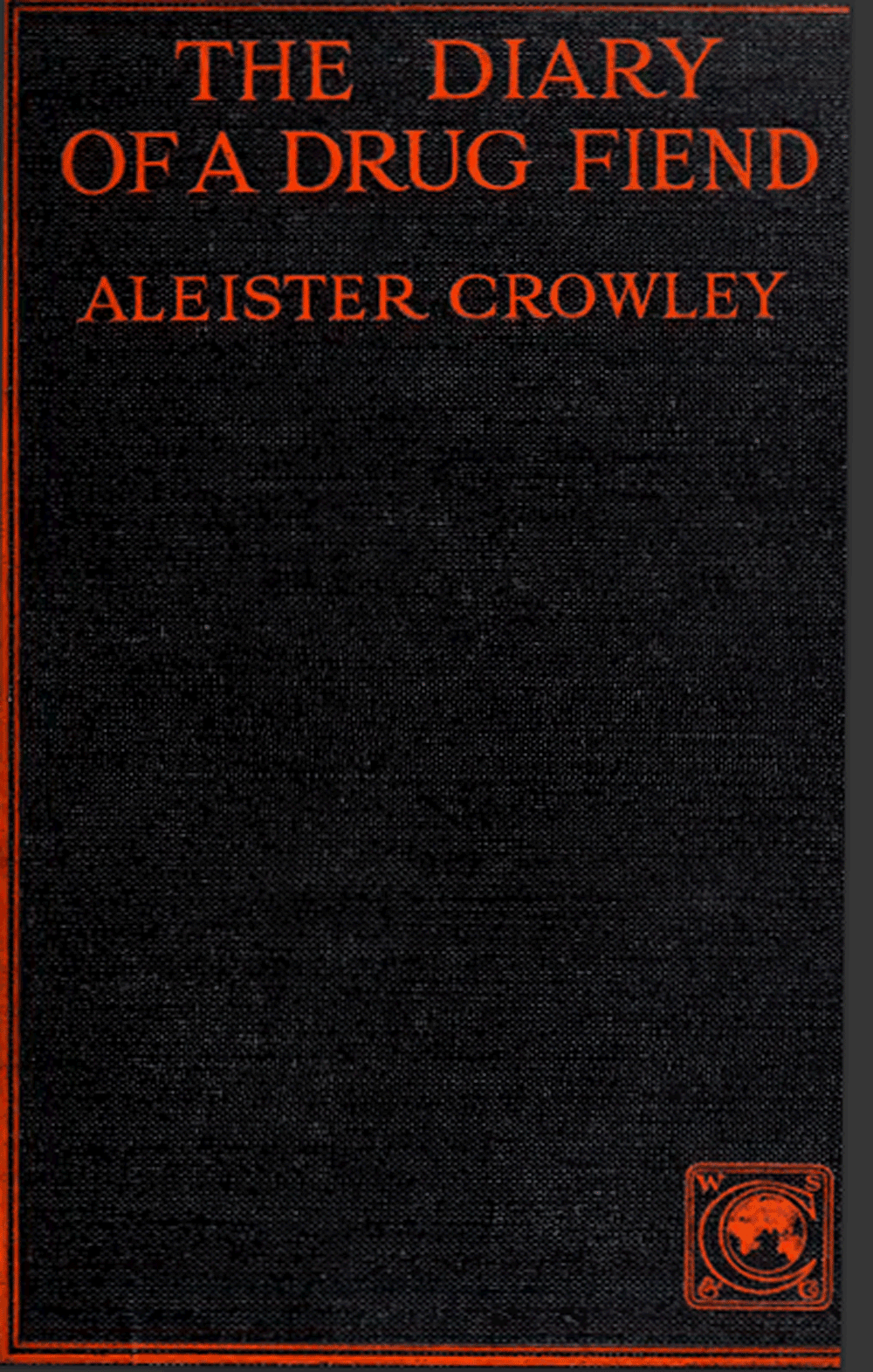
Diary of a Drug Fiend

This is the only full-cast recording of Aleister Crowley's 1922 classic paeon to common sense. It is the first book -- and so far almost the only book -- to stake out a philosophy of drug use that is compatible with human freedom, one in which we learn to use drugs as wisely as possible for the benefit of humanity. This recording was produced by the Drug War Philosopher and your purchases help support his effort to push back against the tragically counterproductive policy of drug prohibition, in the name of human freedom and of humanity's right to heal.

Purchase Your Copy


No cookies, no ads paid for by amoral and immoral billionaires (or trillionaires).


Unless otherwise indicated, no AI is used in the creation of site content. These essays represent the original ideas of their author and not the ideas that the author SHOULD have based on an algorithmic parsing of existing data. For more on this subject, consider the AI-related viewpoints to which the author subscribes as delineated in the New York Times opinion piece entitled "What 370,000 College Essays Tell Us About A.I.’s Effects on Creativity" by Rebecca Winthrop of the Brookings Institution.

The Partnership for a Death Free America is a proud sponsor of The Drug War Philosopher website @ abolishthedea.com.


Copyright 2026, Brian Ballard Quass Contact: quass@quass.com

tombstone for American Democracy, 1776-2024, RIP (up)