




Homepage of the Drug War Philosopher, Brian Quass
blog icon orange rss icon with stylized radio waves bird icon for twitter bird icon for twitter substack icon


back navigation arrow forward navigation arrow


Psychoactive Drugs and the Fountain of Youth

by Brian Ballard Quass, the Drug War Philosopher

November 13, 2022


"With a child's heart, nothin' can ever get you down" -- Stevie Wonder


When I was a kid growing up in coastal Virginia, I would go on yearly skiing trips with the local church youth group to the western part of the state. Having lived the majority of my life in the flatlands, I was always excited when I saw the first mountains appear on the horizon. The peaks in question were scarcely the Himalayas, maxing out at less than 4,000 feet at Skyland on the Skyline Drive, with the ski resort itself rising less than 2,000 feet above the Shenandoah Valley at the southern end of the Massanutten Range. Yet when the first rounded summit became visible on rural route 33 in Orange County west of Richmond, I actually felt that we were entering a kind of Alpine Oz. I wanted Mr. Coulthard to stop the car so that I could run up to the door of one of the many land-rich country properties en route and remind the owner how lucky they were to be living in this location. It's difficult to explain what I was feeling at that time, except to say that I felt that life in that whole area must be boosted psychologically by the mere presence of the mountains. If one had a bad day here in Orange County, one merely needed to glance westward and realize that they could escape to the mountains at any moment, thus rising both literally and figuratively above the mundane problems of daily life.

Fast-forward 40 years and cue "Trying to Get the Feeling Again" by Barry Manilow.

Today I live smack-dab in the middle of those peaks that so enchanted me as a child and I see all too clearly the folly of rushing up to the doors of my neighbors and telling them how lucky they are. For I've discovered that humans quickly get used to anything -- even mountains. I've been living in "Alpine Oz" now for over ten years, and I blush to think how many times I've driven the back roads here with bleary eyes and preoccupied mind. That's why I'm always searching for obscure local routes that I've never taken before, since the lack of predictable surroundings helps me regain at least some of that childhood wonder that came so easily to me as a kid.

Now we've come to the part where the typical autobiographer sighs and reminds us that "those days will never come again."

But, like almost every other author in business today, such a writer reckons without the Drug War.

There is ample and time-honored evidence showing that many of the drugs that we outlaw today can return the user to this original state of awe and wonder. Anecdotal accounts reveal that such seemingly improbable transformations have been wrought by "drugs" ranging from MDMA to psychedelics to coca and, yes, even opium . Here is a starting list of authors whose books present such first-person testimony about the rejuvenating effect of such "drugs": James Fadiman, William Griffiths, William Richards, Stanislav Grof, Charles Grob, Anton Bilton, Aleister Crowley, Thomas De Quincey, Kenaz Filan, Daniel Pinchbeck,Julie Holland, Timothy Leary 1 2 3 , Terrance McKenna, W. Golden Mortimer, William H. Brereton and Jim Hogshire. We also learn this truth from fiction. Arthur Conan Doyle shows how Sherlock Holmes CHOSE to use cocaine 4 5 because it sharpened his mental acumen. Edgar Allan Poe shows how August Bedloe CHOSE to use morphine 6 because it gave him a profound appreciation of the byzantine complexity of Mother Nature. He would suddenly stop and appreciate the flora and fauna that he had previously passed by with a yawn.

But the Drug Warrior is determined to keep us seeing the world in a cynically practical way, and so they outlaw substances that could conduce to what Heidegger would call "other ways of being in the world,7" as for instance seeing the world with a child's heart.

The Drug Warrior accomplishes this goal by raising the specter of addiction. Thanks to many decades of propaganda (chiefly the propaganda of omission, whereby "drugs" are never portrayed in a positive light, neither in TV, film, nor in academic papers), we have been taught to believe that an addictive drug must be USED addictively. Of course, this is a big fat lie. The only reason why it seems to be true, is that Drug War prohibition MAKES it true by foisting users off on the addictive substances peddled by self-interested dealers, meanwhile discouraging honest discussion of substances in deference to their policy of fearmongering, thereby rendering "safe use" almost impossible.

This propaganda has been so successful that even most of the opponents of the Drug War would never dare to praise, say, opium , coca, or morphine 8 . Like everyone else, they have been taught since childhood that those substances are "drugs," indeed "hard drugs," and so their use can only end in sorrow and despair.

This is an absolute lie! If such drugs end in despair, it is merely thanks to a self-fulfilling prophecy guaranteed by the War on Drugs. If you remove me from the work force and arrest me for using opium , yes, that might make me despair, but the culprit in such a case would be the Drug War itself, not opium 9 .

Creative humanity can find safe ways to use any substance. Even cyanide and Botox have valid medical uses. Such drugs are not devil spawn, they are inanimate substances.

In a free and scientific society, we would learn EVERYTHING POSSIBLE about these substances and use them in a shamanic empathic way to bring out the best in human beings. We would learn how to schedule and alter the use of substances such that dependency does not develop -- unless the user CHOOSES that dependency, in which case we would permit them to use maintenance doses of their drug of choice, just as we now let 1 in 4 American women use maintenance doses of Big Pharma 10 11 meds.

Instead, we outlaw almost all psychoactive medicines, thereby censoring scientists and ignoring godsends (like the coca leaf and MDMA 12 ) whose advised use could end depression in America and help fight autism and Alzheimer's 13 disease.

This is not just substance boosterism on my part. Alison Gopnik tells us that "Babies and children are basically tripping all the time." It follows automatically that tripping can help us experience the world as a child.

Unfortunately, the government will not allow such a salubrious return to childhood.

Instead, they have criminalized godsend medicines which are ours by natural right and thereby denied us all of the enormous benefits that they could provide: not just the ability to appreciate mountains but perhaps even to help Alzheimer's and autistic patients, given the fact that some of these outlawed medicines increase neuronal connections in the brain.

The good news is that Ponce Leon was right: there is a fountain of youth.

It was growing all around him, in the form of psychoactive plants and fungi.

The bad news is that the Drug War has padlocked the fountain and threatened trespassers with unemployment, imprisonment and death.


Notes:

1: “Full Text of ‘the Politics of Ecstasy.’” 2026. Archive.org. 2026. https://archive.org/stream/ecstaspoliticsof00learrich/ecstaspoliticsof00learrich_djvu.txt. (up)
2: The One Thing that Timothy Leary Got Wrong: a philosophical review of The Politics of Ecstasy DWP (up)
3: Timothy Leary was Right DWP (up)
4: Sigmund Freud's real breakthrough was not psychoanalysis DWP (up)
5: “Freud on Cocaine : Freud, Sigmund, 1856-1939 : Free Download, Borrow, and Streaming : Internet Archive.” 2023. Internet Archive. 2023. https://archive.org/details/freudoncocaine0000freu/page/n5/mode/2up?view=theater. (up)
6: Three takeaway lessons from the use of morphine by William Halsted, co-founder of Johns Hopkins Medical School DWP (up)
7: “Being-In-The-World.” n.d. MIT Press. https://mitpress.mit.edu/9780262540568/being-in-the-world/. (up)
8: Three takeaway lessons from the use of morphine by William Halsted, co-founder of Johns Hopkins Medical School DWP (up)
9: The Truth About Opium by William H. Brereton DWP (up)
10: Seife, Charles. 2012. “Is Drug Research Trustworthy?” Scientific American 307 (6): 56–63. https://doi.org/10.1038/scientificamerican1212-56. (up)
11: LaMattina, John. n.d. “Why Is Biopharma Paying 75% of the FDA’s Drug Division Budget?” Forbes. https://www.forbes.com/sites/johnlamattina/2022/09/22/why-is-biopharma-paying-75-of-the-fdas-drug-division-budget/. (up)
12: How the Drug War killed Leah Betts DWP (up)
13: What the Honey Trick Tells us about Drug Prohibition DWP (up)


read more essays here


Ten Tweets

against the hateful war on US


The formula is easy: pick a substance that folks are predisposed to hate anyway, then keep hounding the public with stories about tragedies somehow related to that substance. Show it ruining lives in movies and on TV. Don't lie. Just keep showing all the negatives.

NIDA is just a propaganda arm of the U.S. government -- and will remain so until it recognizes the glaringly obvious benefits of drugs -- as well as the glaringly obvious downsides of prohibition. We need a National Institute on Drug Use, not a National Institute on Drug Abuse.

Drug prohibition is the biggest tyranny imaginable. It is the government control of pain relief. It is government telling us how and how much we are allowed to think and feel in this life.

A Pennsylvanian politician now wants the US Army to "fight fentanyl." The guy is anthropomorphizing a damn drug! No wonder pols don't want to spend money on education, because any educated country would laugh a superstitious guy like that right out of public office.

The Drug War is the ultimate example of strategic fearmongering by self-interested politicians.

Drug testing should flag impairment only. Any other use is a flagrant violation of the Fourth Amendment.

Malcolm X sensed an important truth about drugs: the fact that it was always a self-interested category error for Americans to place medical doctors in charge of mind and mood medicine.

Almost all addiction services assume that the goal should be to get off all drugs. That is not science, it is Christian Science.

In an article about Mazatec mushroom use, the author says: "Mushrooms should not be considered a drug." True. But then NOTHING should be considered a drug: every substance has potential good uses.

Materialist scientists cannot triumph over addiction because their reductive focus blinds them to the obvious: namely, that drugs which cheer us up ACTUALLY DO cheer us up. Hence they keep looking for REAL cures while folks kill themselves for want of laughing gas and MDMA.


Click here to see All Tweets against the hateful War on Us


back navigation arrow forward navigation arrow
Book Cover

Break the ice with a sledgehammer: place this book on your coffee table.

This book features 150 annotated images, designed to force brainwashed Americans to confront the fact that drug prohibition is wrong. Here is what author Richard Parrish II says of the book's compiler: "The drug prohibition philosopher provides first-hand, principled, persuasive, and insightful arguments against the current drug prohibition regime..."

Purchase Your Copy
Book Cover

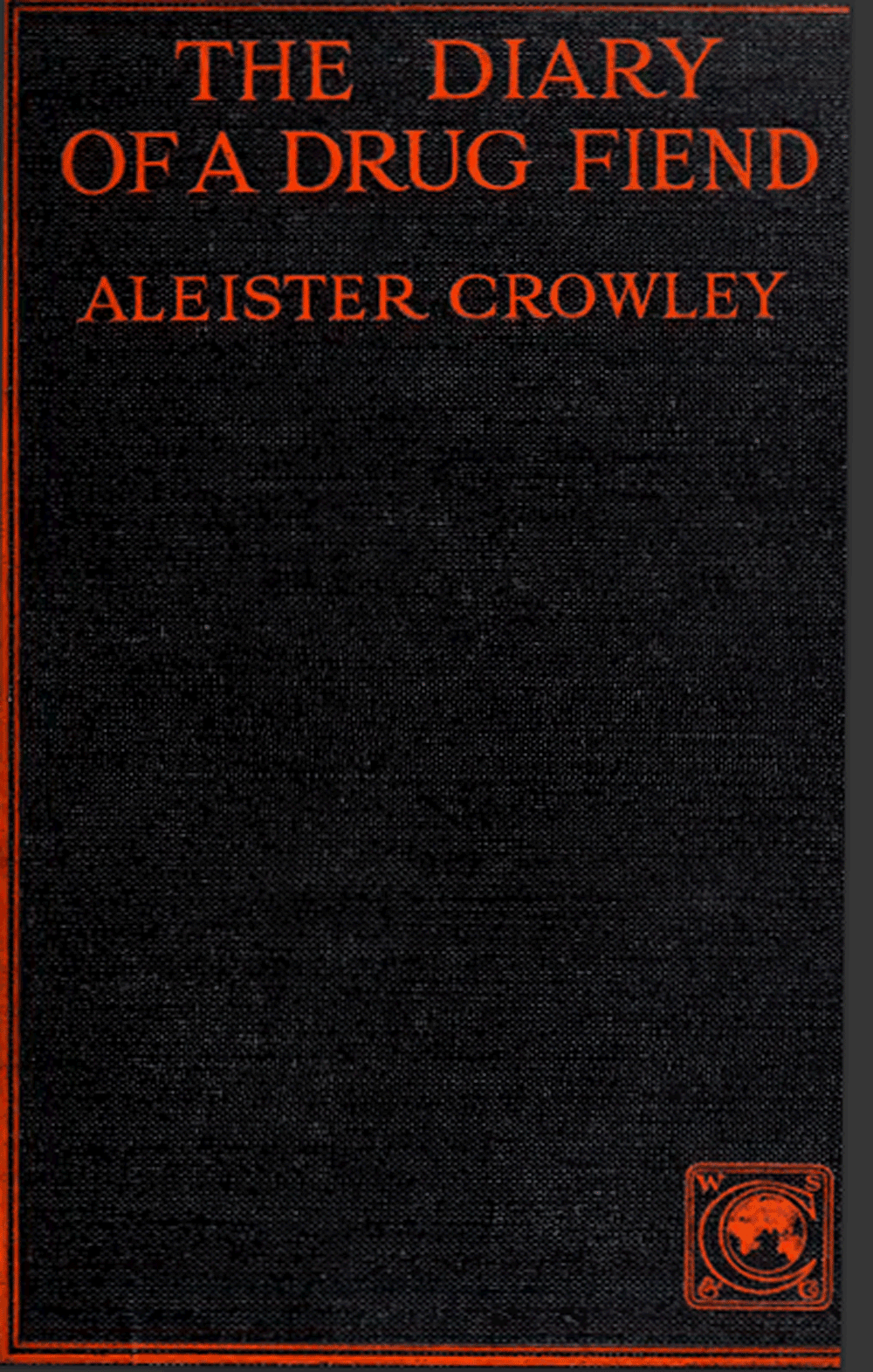
Diary of a Drug Fiend

This is the only full-cast recording of Aleister Crowley's 1922 classic paeon to common sense. It is the first book -- and so far almost the only book -- to stake out a philosophy of drug use that is compatible with human freedom, one in which we learn to use drugs as wisely as possible for the benefit of humanity. This recording was produced by the Drug War Philosopher and your purchases help support his effort to push back against the tragically counterproductive policy of drug prohibition, in the name of human freedom and of humanity's right to heal.

Purchase Your Copy


No cookies, no ads paid for by amoral and immoral billionaires (or trillionaires).


Unless otherwise indicated, no AI is used in the creation of site content. These essays represent the original ideas of their author and not the ideas that the author SHOULD have based on an algorithmic parsing of existing data. For more on this subject, consider the AI-related viewpoints to which the author subscribes as delineated in the New York Times opinion piece entitled "What 370,000 College Essays Tell Us About A.I.’s Effects on Creativity" by Rebecca Winthrop of the Brookings Institution.

The Partnership for a Death Free America is a proud sponsor of The Drug War Philosopher website @ abolishthedea.com.


Copyright 2026, Brian Ballard Quass Contact: quass@quass.com

tombstone for American Democracy, 1776-2024, RIP (up)