



Much has been made of Rimbaud's criticism of religion, and of Christianity in particular, in "Une Saison en Enfer," but there is less recognition that the poet was disillusioned with modern science as well, meaning science in the broadest sense of that term, as involving the way in which we, as a society, interpret and categorize the world around us in order to come to terms with that world. Now I know that this poem is, by its very nature, a kind a Rorschach test for reviewers, so I will not claim to know for sure what Rimbaud meant when he wrote of science being too slow. But when I first read this line over 30 years ago, I felt that I had finally found someone who understood me! I had finally found someone who felt the same way about the modern world that I had felt ever since I was a teenager. I was all the more delighted by this apparently coinciding viewpoint when I learned that the poet himself was just 18 years old when he wrote this poem.
I first discovered that science was too slow in my youth, when I was treated for severe depression, not with medicines that could help me succeed in the endeavors in which I had been triumphing pre-depression, not by elating and inspiring me, but rather by causing me to "back up from life," psychologically speaking. They numbed the depression, yes, but they numbed my reactions in general, while yet leaving me unable to return to the activities of which I had dreamed of making a career. According to science, you see, I needed a "real" cure for my depression, one that worked according to biochemical theory. Anybody could cheer me up, but that would have been a "fake" cure, it would have been treating the "symptoms." Sure, all those obviously beneficial drugs may someday be proven to work, but until the scientists can figure out why, I would just have to wait. Alas, if only science could, in the meantime, pay me the great salary that I now had to go without because of their refusal to give me the kind of medicines that could have kept me in the game, occupationally speaking.
This is what I think the "child Shakespeare" known as Rimbaud intuited in this poem: that science was eternally behind the curve when it came to psychological common sense, when it came, that is, to what actually matters to human beings as opposed to what should matter to them according to the armchair rationalist, especially an armchair rationalist who is concerned with legal liabilities in the age of draconian substance prohibition. Of course, the poet lived almost a century before the mass use of antidepressants, but he was already aware of the materialist triumphalism of the Crystal Palace and the mad scientistic ambitions of the French Enlightenment School, according to which mathematicians would eventually rule the world, not just the world of objects but the world of human feelings as well. His emotion-filled poem, full as it is of contradictory and illogical impulses, is itself a rebuttal of the notion that the God of science could solve all human problems, that human beings are predictable widgets amenable to more or less the same intervention for the same problem.
Science remains as slow as ever today. Scientists have yet to figure out how laughing gas could help the depressed. What a poser, right? In fact, they are so slow when it comes to the benefits of psychoactive substances, that they actually believe that assisted suicide for the depressed can be discussed without discussing drug prohibition. One has to pull them aside so as not to embarrass them in front of the class and say, "Now, sweetie, it's like this: You see, there are substances, like coca and poppies and phenethylamines, that can help cheer one up in a trice, and it is therefore problematic to discuss the propriety of assisted suicide without discussing the propriety of outlawing all such drugs. Understand? Or should I take it down yet another level for you?" If you think I am exaggerating, I invite you to read the story of Claire Brosseau, the depressed Canadian who is demanding her right to state-assisted suicide. No one even remotely involved in Claire's case is even mentioning the subject of drug prohibition, and one of her two psychiatrists is even championing her "right" to die.
Science is slow, indeed. I learned this truth through hard experience. I imagine that Rimbaud owes at least some of his precocity on the subject to his smoking of opium. The use of such substances impress the intelligent inebriate with the presumptuous nature of our attempts to understand human consciousness through dispassionate analysis and bar charts.
AFTERWORD
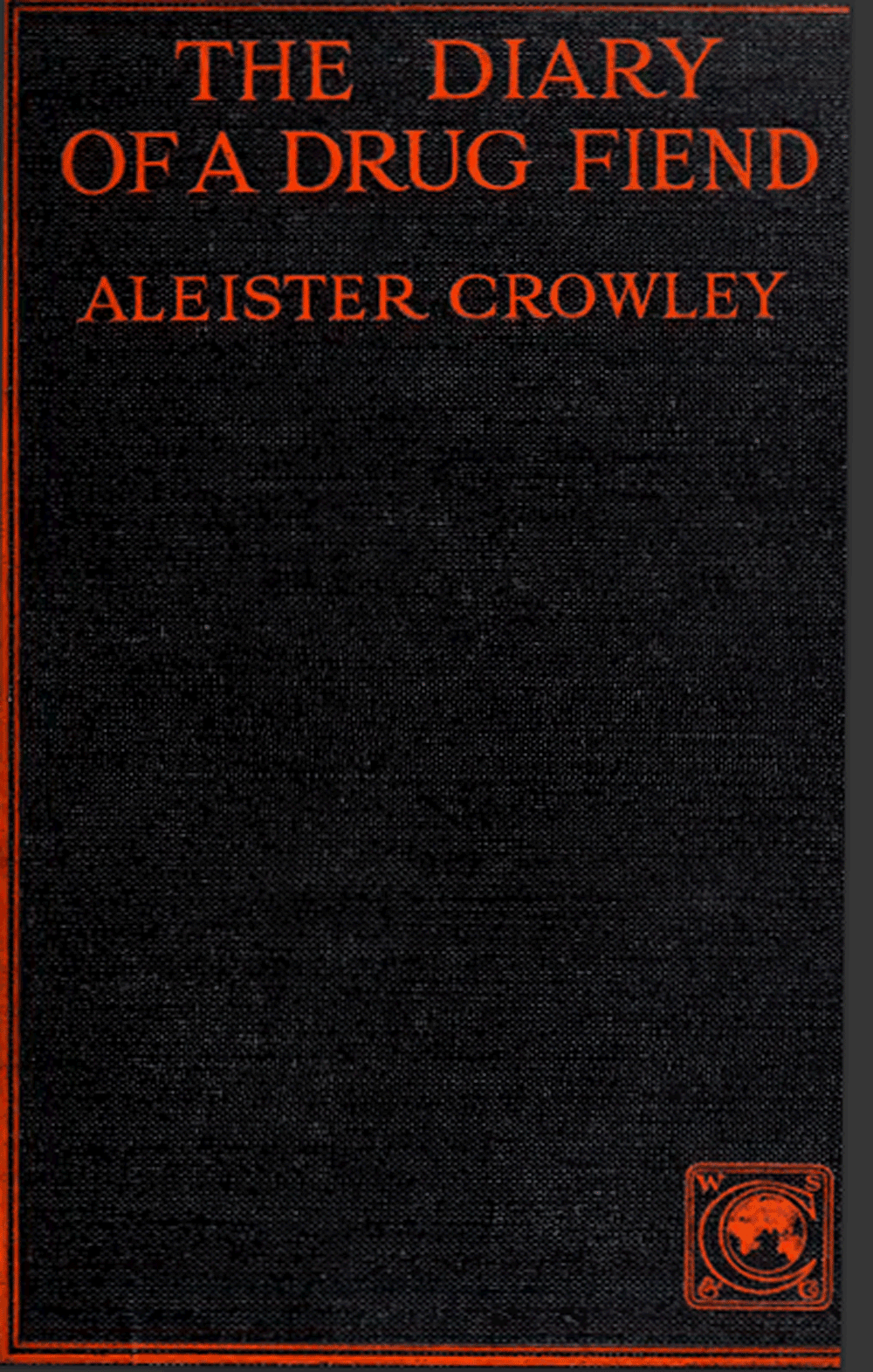
The takeaway message here is not that science needs to catch up, however, but rather that science, like a smart racetrack driver, needs to stay in its own lane. Science in our time is all about measurement and classification and the winnowing away of variables in the name of idealistic conceptions of the world around us. That approach is inappropriate in the case of human action given the plethora of causes of human behavior and the inextricable way in which those causes interact, transmogrify and combine to bring about end results. Science may ask, for instance, is heroin a stimulant or a depressant? But the very question presupposes a binary simplicity in the world of human behavior. As King Lamus explains in "Diary of a Drug Fiend," heroin can be either a stimulant or a depressant depending upon the mental attitude that one brings to its consumption.
The deeper message, however, is that drug prohibition is nonsense, and that it is folly to put either scientists or politicians in charge of deciding which psychoactive drugs are right for which human beings. In order to make such decisions, the judge would have to do a cost-benefit analysis of use versus non-use, and a fair cost-benefit analysis of that kind is impossible. Why? Because the costs of non-use of a given substance by a specific individual may be their inability to appreciate a sunset or their inability to force themselves to get up in the morning. The costs of non-use may be the inability to write a poem, or even to WANT to write a poem. The cost may even be the inability to find a reason to live. Now, neither scientists nor politicians nor utilitarians (not John Mill himself) have such a Godlike intelligence that they can assign a value to those factors without thereby enforcing their own values on the question, their own conception about what REALLY matters in life.
Seen in this light, drug prohibition constitutes the outlawing of the poetic spirit, the attempt to keep visionaries in check and to enforce a Christian Science mindset throughout the world.
Key Takeaways:
Rimbaud criticized modern science in Une Saison en Enfer.
Scientists ignore common psychological sense, insisting on 'real' cures instead, i.e., those that flatter the latest biochemical theories.
Scientists cannot see that laughing gas has any positive uses for the depressed.
It is a category error to place scientists in charge of deciding on the propriety of drug use.
The real value of Erowid is as a research tool for a profession that does not even exist yet: the profession of what I call the pharmacologically savvy empath: a compassionate life counselor with a wide knowledge of how drugs can (and have) been used by actual people.
If Fentanyl kills, then alcohol slaughters. Drug prohibition is the real killer.
New article in Scientific American: "New hope for pain relief," that ignores the fact that we have outlawed the time-honored panacea. Scientists want a drug that won't run the risk of inspiring us.
Here is a sample drug-use report from the book "Pihkal":
"More than tranquil, I was completely at peace, in a beautiful, benign, and placid place."
Prohibition is a crime against humanity for withholding such drug experiences from the depressed (and from everybody else).
High suicide rates? What a poser! Gee, I wonder if it has anything to do with the fact that the US has outlawed all substances that elate and inspire???
Being less than a month away from an election that, in my view, could end American democracy, I don't like to credit Musk for much. But I absolutely love it every time he does or says something that pushes back against the drug-war narrative.
Drug warriors have taught us that honesty about drugs encourages drug use. Nonsense! That's just their way of suppressing free speech about drugs. Americans are not babies, they can handle the truth -- or if they cannot, they need education, not prohibition.
By reading "Drug Warriors and Their Prey," I begin to understand why I encounter a wall of silence when I write to authors and professors on the subject of "drugs." The mere fact that the drug war inspires such self-censorship should be grounds for its immediate termination.
The FDA approves of shock therapy and the psychiatric pill mill, but they cannot see the benefits in MDMA, a drug that brought peace, love and understanding to the dance floor in 1990s Britain.
People are talking about re-scheduling psilocybin, but they miss the point. We need to DE-schedule everything. It's anti-scientific to conclude in advance that any drug has no uses -- and it's a lie too, of course. End drug scheduling altogether! It's childish and wrong.