




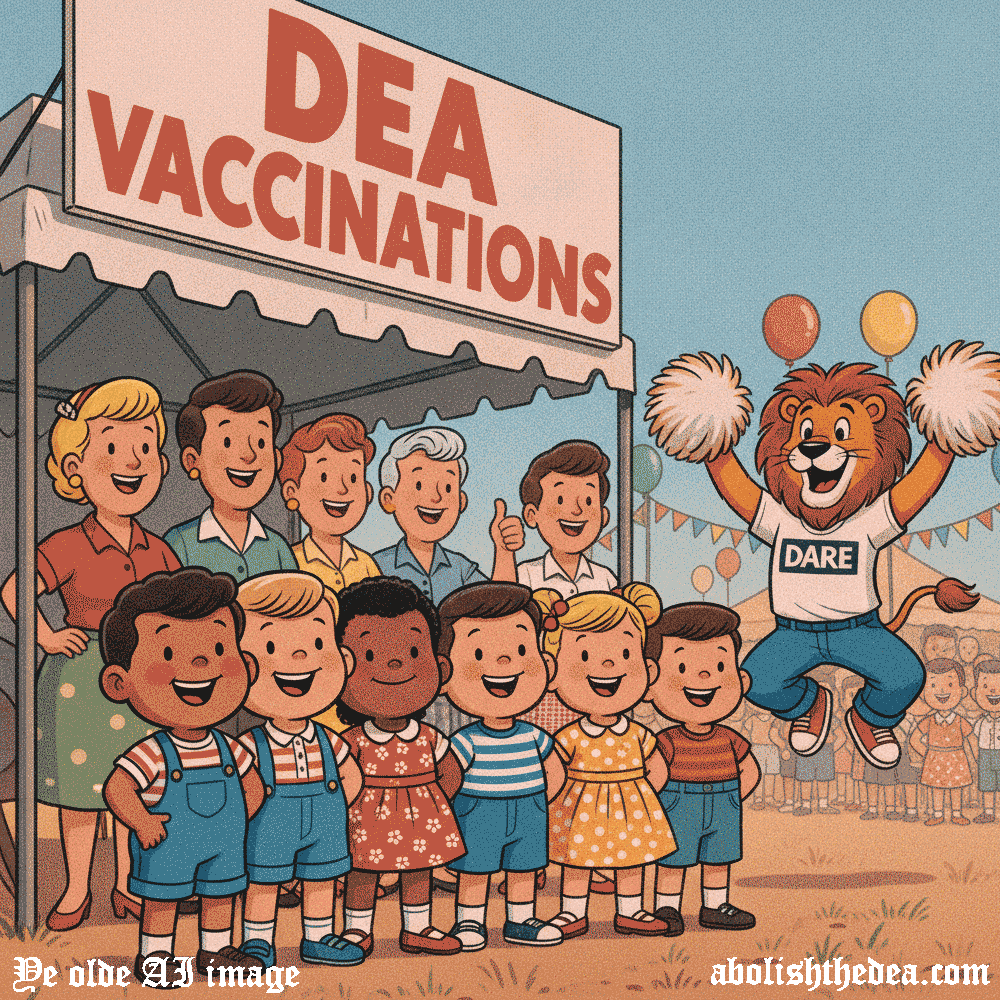
Homepage of the Drug War Philosopher, Brian Quass
blog icon orange rss icon with stylized radio waves bird icon for twitter bird icon for twitter substack icon


back navigation arrow


The Coming Biochemical Dystopia

How America's childish view about drugs empowers tyrants

by Brian Ballard Quass, the Drug War Philosopher (Substack version)

September 28, 2026


Even Libertarians don't "get it" when it comes to drugs. To illustrate this claim, let us start with a line from Colleen Cowles' new book "War on Us," which was written with the help of Jeffrey Singer of the Cato Institute1:

"It may be counterintuitive to use drugs to treat addiction, but the U.S. Substance Abuse and Mental Health Services Administration reports that medications cut overdose rates in half!"2


This is certainly good news in and of itself. But we are talking about ways to help the overdose victim survive, here. We must remember that we have already permitted a lot of things to go wrong to merely reach this point. It was drug prohibition that got us to this sad outcome in the first place thanks to its outlawing of less potent opiate alternatives, its failure to educate, and its failure to regulate as to dosage, quality, and even identity. So, while, we can all sign off on a drug that helps users come back from an overdose, my concern is this: that Cowles is silent throughout her book regarding the obvious ways in which drugs (as opposed to "meds") could help get us off drugs that we find problematic, even before potential lethal overdose becomes an issue. And her trust in the government medical establishment and their "medicines" is problematic in light of her politically correct silence about such drug benefits. It raises a variety of questions about opiate policies in general.

First, why do we feel that we need to get people off of opiates in the first place? We have no moral ground for demanding that people get off of opiates given that 1 in 4 American women are dependent on a Big Pharma drug for life.3 We should help them to make their opiate use safe and sustainable, not simply to stop it altogether, unless that is what the user actually desires. If it is immoral to use a dependence-causing "mind" or "mood" medicine on a daily basis, then that moral tabu should extend to the users of antidepressants. It was the outlawing and discouragement of peaceable opium smoking at home that led to the widespread sale of more potent opiates in the first place.4 (It also led to the creation of the psychiatric pill mill by putting Big Pharma and psychiatry in charge of mind and mood medicine.) It is our very war on the opiate experience that should be called into question.

Now, I thank Cowles for her courageous work in marshalling facts against the evils of drug prohibition, particularly when it comes to the horrendous way in which drug prohibition has deformed our justice system into a world of plea deals, extorted confessions, and an Orwellian parole system that places young people in degrading ankle bracelets that were originally designed for psychopaths. But Cowles is helping to normalize and advance drug prohibition by bringing in the government to provide "medicines" to wean us off of opiates, including "medicines" that render the body incapable of benefitting from such drugs. Imagine if the government created a drug that would make it impossible for us to "benefit" from antidepressants.

Of course, there's nothing wrong with a drug that can reverse the effects of overdose in real-time. And we can certainly imagine a place for anti-opiate drugs for specific users who simply cannot handle opiates of any kind, but here is the problem: we cannot tell for certain who those abuse-prone people even ARE -- not in an age when drug prohibition is rendering safe use almost impossible for everybody, including even the most prudential of users. And how is drug prohibition doing this? As already noted above, it is doing this by refusing to teach safe use, by outlawing the least potentially dangerous kinds of opiate use, and by refusing to regulate product as to quality, quantity and even identity.

Here's where the uninformed reader will insist that antidepressants are different from drugs, that antidepressants are created scientifically, but that is not true. As Dr. Noam Shpancer wrote in Psychology Today in 2022:

"We don’t know how antidepressants work."5


And that's assuming, of course, that they "work" at all, according to the user's definition of that term. The fact is that it is a highly fraught philosophical statement to say that a drug works as an antidepressant. The accuracy of that statement depends entirely on how the drug user defines the word "works." For Avicenna, opium worked, because, as he is famous for saying, he preferred a short life with width to a narrow one with length.6 The government simply assumes that the user should prefer a narrow life with length. At any rate, there is no proof that moderate opium use shortens life; indeed, there are reasons to believe that the contrary might be true, based on the usage reports by doctors as documented in China in the late 19th century.7

I should add that no one would dare suggest that antidepressant use shortens life, because we are so programmed as a society into treating such "meds" with kid gloves that we would not even think to speculate that there might be such downsides to their use, this despite the fact that SNRIs and SSRIs were never originally tested for long-term use. Users are the guinea pigs for the efficacy of the long-term use of antidepressants.

The American justice system had to contort into a pretzel in order to accommodate drug prohibition. Drug prohibition overwhelmed the courts with cases until trials for most people became a thing of the past. As Cowles reports, 97% of all criminal cases are now handled with plea deals.8 And here is the irony. Colleen Cowles is now suggesting how we can do the same thing with the government's medical system, we can force it to change in order to handle the victims of drug prohibition. In both cases, we are trying to remake the world around our apparently sacrosanct policy of drug prohibition. We should be attempting to end drug prohibition altogether, not changing our institutions to accord with the dystopic world created by drug prohibition. This is like trying to handle a spate of unprovoked stabbing incidents by buying bandages and investing in wound-healing technology.

And this brings us to the point that almost no one in the western world seems to understand, Libertarians included: the fact that "drugs" actually do have benefits, benefits that a child can see and for which we need no verification from scientists. If a non-addictive phenethylamine, for instance, can inspire me and give me glimpses of heaven, then that drug has prima facie uses as an antidepressant.9 We do not need lab studies to tell us this! That is mere gaslighting. The only role for science is to tell us about the abstract risks that might be associated with the use of a given substance. And even these risks must be put into context before publication, to let us know how the risk profile of a given drug compares with, say, the risk profile of antidepressant use. Merely to list potential risks of a drug is propaganda when provided out of context, at least in the age of drug prohibition.

Finally, let's think of the sci-fi dystopia that we seem to be moving toward here by using government-approved drugs to make opiate use unpalatable to Americans. Consider what pharmacist Jonathan Pereira wrote about opium in his Materia Medica of 1842:

"Opium is undoubtedly the most important and valuable remedy of the whole Materia Medica."10


Now, keep that quotation in mind as you contemplate a government campaign to render Americans both psychologically and physiologically antagonistic to the effects of opium. Although that approach may save lives in the short run, lives that were placed in danger by drug prohibition itself , that approach would take drug prohibition to a whole new level of evil, a level in which godsends like opium are not only outlawed, but in which the government is taking medical steps to see that we could not benefit from opiates even if we wanted to.

Unless this madness is identified and addressed, unless we finally recognize the fact that drug prohibition is the problem, not drugs, we can look forward to a day in which everyone will be vaccinated so that they will lack the biochemical ability to profit from any of the substances that the government does not want us to use. All transcendence would be outlawed at the source, so to speak, as would the research that William James urged us to undertake with respect to the nature of consciousness and reality. The existence of such a world would bar the creation of an untold number of new religions in the future, insofar as the Vedic religion was inspired by the use of a substance that inspired and elated, or in other words, just the sort of substance that Drug Warriors insist on outlawing.

You might think that this could not happen, that our bodies are sacrosanct, after all. Unfortunately, that has not been true for over century now. Our bodies have not been sacrosanct since drug prohibition gave government a role in telling us what we could place in those bodies, a fact that Reagan underscored in the 1980s when he successfully encouraged businesses to begin checking our very digestive systems for the existence of substances of which the government disapproved.

Of course, all substance-aided transcendence is already outlawed thanks to drug prohibition, but at least we are still biochemically capable of improving our mind and mood, albeit with the ever-present risk of arrest for doing so. In the age of a chemically-enforced drug prohibition, on the other hand, we would be forced to forego all psychological and spiritual and philosophical benefits of drug use, whatever our political, philosophical and/or religious beliefs may be about the value of Mother Nature's godsend medicines. We would just have to trust our pharmacologically clueless, beer-loving and nominally Christian leadership when they tell us that there is "no there there" when it comes to psychoactive substances.


Notes for essay entitled The Coming Biochemical Dystopia: How America's childish view about drugs empowers tyrants:

1: https://www.cato.org/people/jeffrey-singer. 2025. “Your Body, Your Health Care.” Cato Institute. April 8, 2025. https://www.cato.org/books/body-health-care. (up)
2: “War on Us – the War on Drugs Is a War on All of Us.” 2019. Waronus.com. 2019. http://waronus.com/. (up)
3: Richard Louis Miller. 2017. Psychedelic Medicine : The Healing Powers of LSD, MDMA, Psilocybin, and Ayahuasca. Rochester, Vermont: Park Street Press. (up)
4: The Truth About Opium by William H. Brereton DWP (up)
5: Shpancer, Noam. 2022. “Depression Is Not Caused by Chemical Imbalance in the Brain | Psychology Today.” Www.psychologytoday.com. July 24, 2022. https://www.psychologytoday.com/us/blog/insight-therapy/202207/depression-is-not-caused-chemical-imbalance-in-t (up)
6: “Avicenna Quotes.” 1001Philosophers. Accessed September 15, 2026. https://1001philosophers.com/avicenna/quotes/. (up)
7: The Truth About Opium by William H. Brereton DWP (up)
8: “War on Us – the War on Drugs Is a War on All of Us.” 2019. Waronus.com. 2019. http://waronus.com/. (up)
9: Shulgin, Alexander T, and Ann Shulgin. 2019. Pihkal : A Chemical Love Story. Berkeley, Ca: Transform Press. (up)
10: The Truth About Opium by William H. Brereton DWP (up)


read more essays here


Ten Tweets

against the hateful war on US


Aleister Crowley actually TRIED to get addicted to drugs and found he could not. These things are not inevitable. The fact that there are town drunkards does not mean that we should outlaw alcohol.

Psychedelics and entheogens should be freely available to all dementia patients. These medicines can increase neuronal plasticity and even grow new neurons. Besides, they can inspire and elate -- or do we puritans feel that our loved ones have no right to peace of mind?

Today's drug laws tell us that we must respect the historical use of sacred medicines, while denying us our personal right to use them unless our ancestors did so. That's a meta-injustice! It negatively affects the way that we are allowed to experience our world!

In the 19th century, author Richard Middleton wrote how poets would get together to use opium "in a series of magnificent quarterly carouses."

Imagine someone starting their book about antibiotics by saying that he's not trying to suggest that we actually use them. We should not have to apologize for being honest about drugs. If prohibitionists think that honesty is wrong, that's their problem.

Prohibition turned habituation into addiction by creating a wide variety of problems for users, including potential arrest, tainted or absent drug supply, and extreme stigmatization.

"The Oprah Winfrey Fallacy": the idea that a statistically insignificant number of cases constitutes a crisis, provided ONLY that the villain of the piece is something that racist politicians have demonized as a "drug."

By reading "Drug Warriors and Their Prey," I begin to understand why I encounter a wall of silence when I write to authors and professors on the subject of "drugs." The mere fact that the drug war inspires such self-censorship should be grounds for its immediate termination.

Freud found that cocaine CURED most people's depression and he "got off it" without trouble.

The Partnership for a Drug Free America should be put on trial for having blatantly lied to Americans in the 1980s about drugs, while using our taxpayer money to do so!


Click here to see All Tweets against the hateful War on Us


back navigation arrow
Book Cover

Break the ice with a sledgehammer: place this book on your coffee table.

This book features 150 annotated images, designed to force brainwashed Americans to confront the fact that drug prohibition is wrong. Here is what author Richard Parrish II says of the book's compiler: "The drug prohibition philosopher provides first-hand, principled, persuasive, and insightful arguments against the current drug prohibition regime..."

Purchase Your Copy
Book Cover

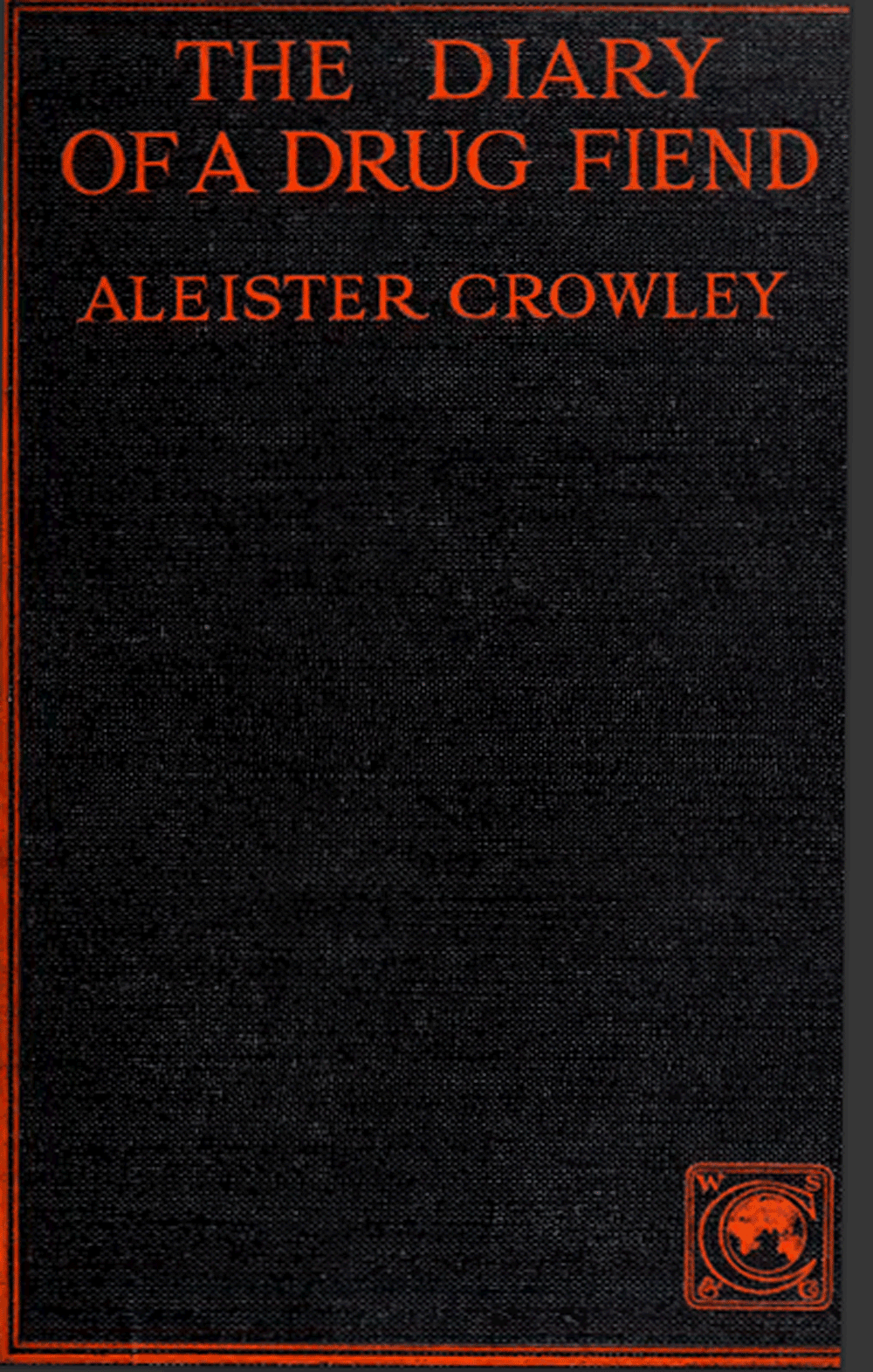
Diary of a Drug Fiend

This is the only full-cast recording of Aleister Crowley's 1922 classic paeon to common sense. It is the first book -- and so far almost the only book -- to stake out a philosophy of drug use that is compatible with human freedom, one in which we learn to use drugs as wisely as possible for the benefit of humanity. This recording was produced by the Drug War Philosopher and your purchases help support his effort to push back against the tragically counterproductive policy of drug prohibition, in the name of human freedom and of humanity's right to heal.

Purchase Your Copy


No cookies, no ads paid for by amoral and immoral billionaires (or trillionaires).


Unless otherwise indicated, no AI is used in the creation of site content. These essays represent the original ideas of their author and not the ideas that the author SHOULD have based on an algorithmic parsing of existing data. For more on this subject, consider the AI-related viewpoints to which the author subscribes as delineated in the New York Times opinion piece entitled "What 370,000 College Essays Tell Us About A.I.’s Effects on Creativity" by Rebecca Winthrop of the Brookings Institution.

The Partnership for a Death Free America is a proud sponsor of The Drug War Philosopher website @ abolishthedea.com.


Copyright 2026, Brian Ballard Quass Contact: quass@quass.com

tombstone for American Democracy, 1776-2024, RIP (up)
