





Homepage of the Drug War Philosopher, Brian Quass
blog icon orange rss icon with stylized radio waves bird icon for twitter bird icon for twitter substack icon


back navigation arrow forward navigation arrow


The DEA's War on Alzheimer's Research

and how philosophers completely ignore the great philosophical problem of our times

by Brian Ballard Quass, the Drug War Philosopher

March 29, 2020


Funny how we all come to regret some basic decisions in our lives. Take me, for instance. I am just a trifle galled by the fact that I did not become a board-certified philosopher in my 30s when I had that chance, because now, everything that I write on the subject of drugs is merely my opinion, (lil ol' me, one among billions), and so my thoughts on these topics are just as easily ignored as the next fellow's insane musings.

That said, I will maintain until my dying day that philosophy* is studiously ignoring the great philosophical problem of our times: the way that humanity has created a problem out of linguistic whole cloth merely by referring to natural godsends pejoratively as "drugs," beginning round about 1914 when the Harrison Narcotics Act decided that the root of substance abuse was to be found, not in human behavior, amoral capitalism 1 and social arrangements, but rather in PLANTS, the very plants that surround us, thus turning nature overnight into a great temptress rather than a great healer.

Since then, a faux morality has arisen under the battle cry of "Just say no to drugs!" -- which is clearly a political statement, since nobody ever means that statement literally (given its implied exemption for alcohol, tobacco, caffeine, Valium, and anti-depressants, etc.) : hence that statement always means: "Just say no to those substances that have been politically determined to be bad for you and which we are not allowed to study because they are too evil to even touch!"

{^The use of the word "drugs" these days is so loaded with false and dubious presuppositions that you'd think philosophers would have a field day ending the Drug War, not with the usual statistical arguments, but by appealing to first principles 2 , beginning with the absurdity of outlawing Mother Nature's plants.}{

Instead, they're musing about whether any of us really exist, whether we're not all victims of a Matrix conspiracy, one so clever that it actually made Martin Luther King seem like a hero to us back in the '60s when he may have well been a mere holographic projection of some great hidden alien manipulator who got a kick out of forcing us puppets to become passionate and compassionate about mere mirages. (Yeah, right.)

Just when the world needs philosophy the most, the philosophers have literally gone mad, and modern science along with it. (Even the seemingly sensible Neil deGrasse Tyson has asserted that we humans may well be mere data points that are being manipulated by some God-like computer programmer, and if that's what the sensible scientists are thinking, heaven shield us from the irrational ones.)

Some readers (assuming this stuff is eventually read, if only decades from now) might say that "drugs" are a parochial issue, since many folks get along just fine using only the politically approved substances available to us, but this is wrong. The Drug War has devastating effects on everybody's health, no matter how determined a particular individual may be to avoid illegal substances.

Take Alzheimer's 3 disease. One would assume that everyone, including the government, is in a hurry to defeat that scourge.

Wrong. The DEA has outlawed the mere research of a whole class of drugs (namely psychedelics) which show the power to regenerate memory and facilitate -- if not actually cause -- the growth of new neurons. In a sane world, these tantalizing hints would be followed up with a huge government investment in research in order to glean the therapeutic benefits of this new discovery.

We also know that stress can promote, if not cause, cancer. So when we ban substances that reduce stress, we give cancer a green light to spread in those patients who are genetically disposed to acquire it.

But the scientistic Drug War logic has so blinded us to our own interests that we knowingly prevent this vital research, merely because it would involve the free use of substances that politicians have decided to demonize and ban.

This situation won't change until philosophers stop counting aliens on pinheads and finally take up the task of unveiling the illogical and disingenuous premises behind America's imperial Drug War, which it maintains worldwide on threat of invasion. Is a country leaning toward socialist policies of which America disapproves? No problem. Let's invade in order to topple a "narcoterrorist." Is an eastern country growing plants that pose a threat to the liquor industry? No problem. Cut off their aid until they let us come in and burn their plants.

America is just plain screwed by the Drug War, and American authors are self-censoring. Thus folks write whole books about the depression problem -- entirely ignoring the role that the Drug War plays in limiting our emotionally therapeutic arsenal to a handful of addictive Big Pharma 4 5 meds. Thus folks write whole books about relaxation techniques, totally ignoring the fact that the Drug War outlaws all substances that could help us understand and adopt the kind of peaceful mindset that the authors are promoting.

I could go on and on -- were it not for the fact that I failed to get the above-mentioned philosophy certifications 30 years ago and thus have to go back to my day job even as we speak.

But I hope someone digs up this post after I'm gone and does me the favor of recognizing that America is on the wrong politically motivated track -- and that philosophers need to wake up and take notice: not for vague libertarian reasons but for the health of world democracy and ourselves when we grow old -- when, God forbid, we ourselves suffer from the Alzheimer's curse for which our anti-scientific Drug War has blocked the cure.

*to the extent that it's currently staring at its board-certified navel, wondering if reality even exists -- and here I will mercifully refrain from naming such over-rationalizing offenders as Daniel Dennett and Donald Hofmann


Author's Follow-up:

April 10, 2026

picture of clock metaphorically suggesting a follow-up


The above was written six years ago, when I -- yea, even I -- was still too scared of my government to say anything positive about cocaine. It occurs to me now, however, that cocaine could be a godsend for millions of older Americans with cognitive disabilities of all kinds. The drug so sharpens the intellect that Arthur Conan Doyle made it the go-to drug of the world's most clear-minded and incisive detective. And yet cocaine is about the last thing that Americans would think of when we mention cognitive impairment. Should the world survive another thousand years, this willful ignorance on our part will turn the medical "experts" of our time into a laughing stock for hundreds of more enlightened generations to come.

Incidentally, cocaine may do more than simply provide symptomatic relief. It may help reverse decline in some cases by giving the brain an example, as it were, of new ways to wire itself in order to overcome cognitive impairments. Even Shakespeare realized that one can sometimes bring about long-term changes by simply forcing oneself to behave in the way that one would wish to behave automatically, as it were, although the Bard did not necessarily envision the use of psychoactive substances for this purpose. This was the point that Hamlet was trying to make when he urged his mother to "assume a virtue, if you have it not," telling her, in effect, that habits of "fair and good" behavior could eventually serve to instill in their possessor the inner virtues of which they are meant to be the outer token. This same idea is conveyed in "Two Gentlemen of Verona," when Proteus says of Valentine, "How use doth breed a habit in a man!"

We will never know the extent of the brain's ability to heal itself until we discard the puritanical belief in biochemical predeterminism that is inherent in our a priori scorn of psychoactive medicines that improve brain function.

For more, on this trailblazing subject, I refer the reader to my latest essay entitled: From the psychiatric pill mill to assisted suicide for the depressed.


Notes:

1: What the drug war tells us about American capitalism DWP (up)
2: A Principle-Driven Approach to Ending Drug Prohibition DWP (up)
3: What the Honey Trick Tells us about Drug Prohibition DWP (up)
4: Seife, Charles. 2012. “Is Drug Research Trustworthy?” Scientific American 307 (6): 56–63. https://doi.org/10.1038/scientificamerican1212-56. (up)
5: LaMattina, John. n.d. “Why Is Biopharma Paying 75% of the FDA’s Drug Division Budget?” Forbes. https://www.forbes.com/sites/johnlamattina/2022/09/22/why-is-biopharma-paying-75-of-the-fdas-drug-division-budget/. (up)


read more essays here


Ten Tweets

against the hateful war on US


The drug war is a way for conservatives to keep America's eyes OFF the prize. The right-wing motto is, "Billions for law enforcement, but not one cent for social programs."

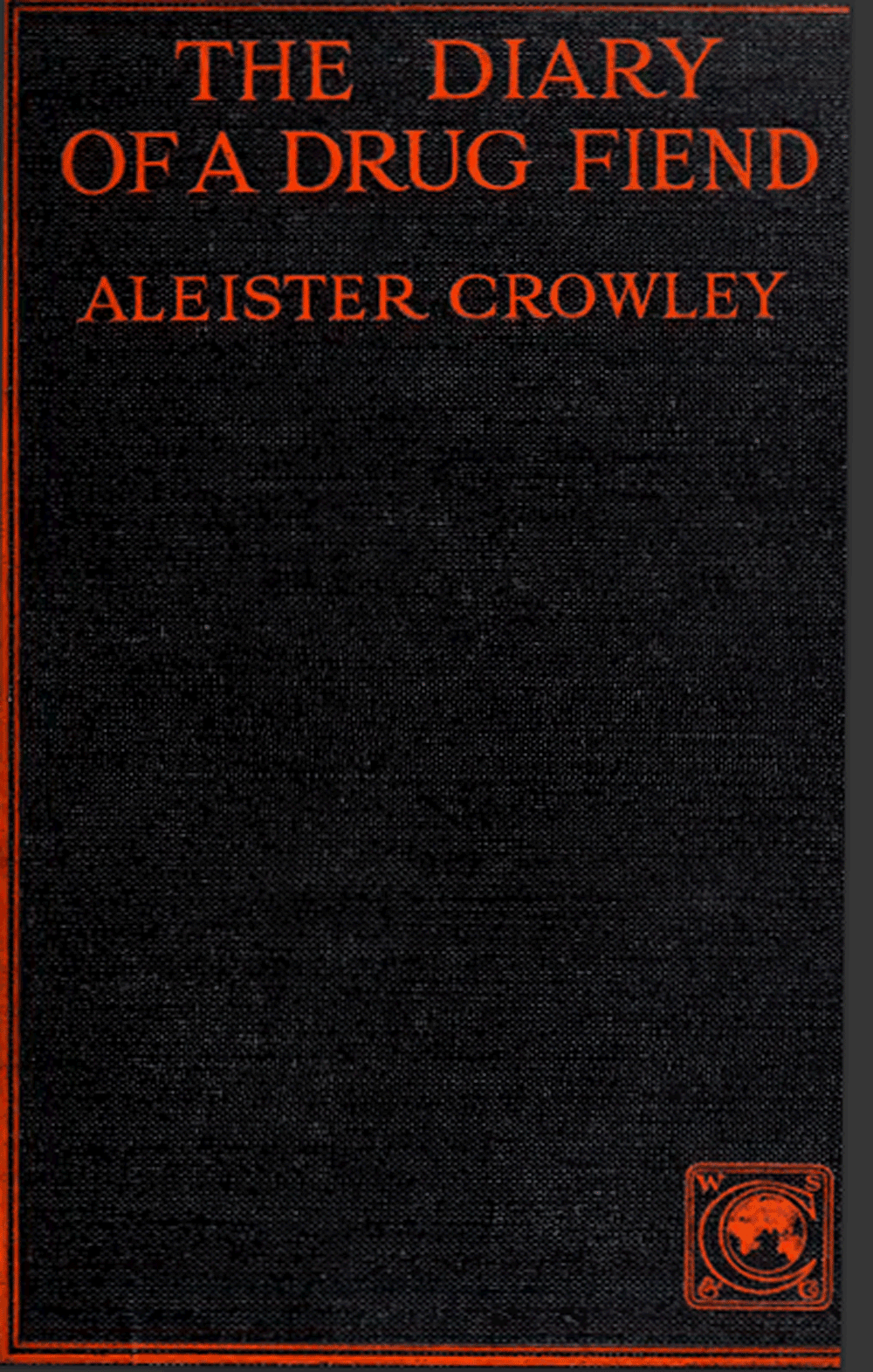
"The Legislature deliberately determines to distrust the very people who are legally responsible for the physical well-being of the nation, and puts them under the thumb of the police, as if they were potential criminals." -- Aleister Crowley on drug laws

I personally hate beets and I could make a health argument against their legality. Beets can kill for those allergic to them. Sure, it's a rare condition, but since when has that stopped a prohibitionist from screaming bloody murder?

High suicide rates? What a poser! Gee, I wonder if it has anything to do with the fact that the US has outlawed all substances that elate and inspire???

I hope that scientists will eventually find the prohibition gene so that we can eradicate this superstitious way of thinking from humankind.

I should have added to that last post: "I in no way want to glorify or condone drug demonization."

Our tolerance for freedom wanes in proportion as we consider "drugs" to be demonic. This is the dark side behind the new ostensibly comic genre about Cocaine Bears and such. It shows that Americans are superstitious about drugs in a way that Neanderthals would have understood.

Mad in America publishes stories of folks who are disillusioned with antidepressants, but they won't publish mine, because I find mushrooms useful. They only want stories about cold turkey and jogging, or nutrition, or meditation.

Imagine the Vedic people shortly after they have discovered soma. Everyone's ecstatic -- except for one oddball. "I'm not sure about these experiences," says he. "I think we need to start dissecting the brains of our departed adherents to see what's REALLY going on in there."

After a long life, I have come to the conclusion that when all the establishment is united, it is always wrong. (Harold MacMillan)


Click here to see All Tweets against the hateful War on Us


back navigation arrow forward navigation arrow
Book Cover

Break the ice with a sledgehammer: place this book on your coffee table.

This book features 150 annotated images, designed to force brainwashed Americans to confront the fact that drug prohibition is wrong. Here is what author Richard Parrish II says of the book's compiler: "The drug prohibition philosopher provides first-hand, principled, persuasive, and insightful arguments against the current drug prohibition regime..."

Purchase Your Copy
Book Cover

Drama lovers: collect full-cast recordings of classic plays

In my spare time, when I am not shaming drug warriors for their heartless drug policies, I create full-cast recordings of classic plays using the latest in synthetic voices licensed by the Natural Reader company. Snag your copy of my production of Volpone, by Ben Jonson... and follow me on Payhip for more where that came from, including classics like The Post Office, The Double Dealer and The Inspector General. -- Yours in all-too-justified outrage, the Drug War Philosopher @ abolishthedea.com.

Purchase Your Copy


No cookies, no ads paid for by amoral and immoral billionaires (or trillionaires).


Unless otherwise indicated, no AI is used in the creation of site content. These essays represent the original ideas of their author and not the ideas that the author SHOULD have based on an algorithmic parsing of existing data. For more on this subject, consider the AI-related viewpoints to which the author subscribes as delineated in the New York Times opinion piece entitled "What 370,000 College Essays Tell Us About A.I.’s Effects on Creativity" by Rebecca Winthrop of the Brookings Institution.

The Partnership for a Death Free America is a proud sponsor of The Drug War Philosopher website @ abolishthedea.com.


Copyright 2026, Brian Ballard Quass Contact: quass@quass.com

tombstone for American Democracy, 1776-2024, RIP (up)