




The Make-Believe World of Academics in the Age of Drug Prohibition
how behavioral scientists connive with drug warriors to disempower the depressed
by Brian Ballard Quass, the Drug War Philosopher
June 24, 2026
In the following essay, I am going to analyze a variety of research papers on the subject of "depression and drugs" in an effort to demonstrate how modern academia is completely out of touch with the needs of the depressed. In so doing, I will highlight the links between this de rigueur cluelessness and the policy of drug prohibition, which involves the wholesale outlawing of almost all drugs that have the potential to inspire and elate. I will show how academics help normalize drug prohibition by adopting a behaviorist view of human beings, insisting that drug efficacy be established by looking under a microscope and not by merely observing the results of drug use in the real world. I will argue that this dogmatic approach to "depression and drugs" causes academics to ignore the most basic of psychological truths, like the fact that anticipation of symptomatic relief is therapeutic in itself and that drug-aided positive behavior can create virtuous circles. I will make these arguments from the point of view of someone who, like myself, has been unnecessarily depressed his entire lifetime now thanks to the outlawing of Mother Nature's plant medicines, a handicap in which today's academic "experts" are complicit thanks to their ongoing insistence on treating drug prohibition as a natural baseline from which to draw conclusions about what depressed people like myself should need by way of medicinal intervention.
I will proceed by identifying the prejudices inherent in a variety of recent academic papers on the topic of "depression and drugs." After doing so, I will suggest what an unbiased paper on these topics might look like in a free world, one in which academics were not under pressure to generate research that supported the government's Christian Science view of psychoactive drug use.
It is at this point that I feel obliged to add a confession that would be entirely inappropriate in almost any other kind of essay on these topics: namely, the fact that I am feeling particularly depressed and unmotivated at this very moment. In any other context, this admission would be "too much information" (and ridiculously "bad form" into the bargain), but when inserted precisely here, the confession reminds us (unless we are academic experts, of course) that there are a wide variety of outlawed drugs that could motivate me to get this essay done in a trice, and so the following question suddenly becomes enormously relevant: why are our experts not even mentioning this fact, let alone suggesting wise ways that I could put such drugs to use?
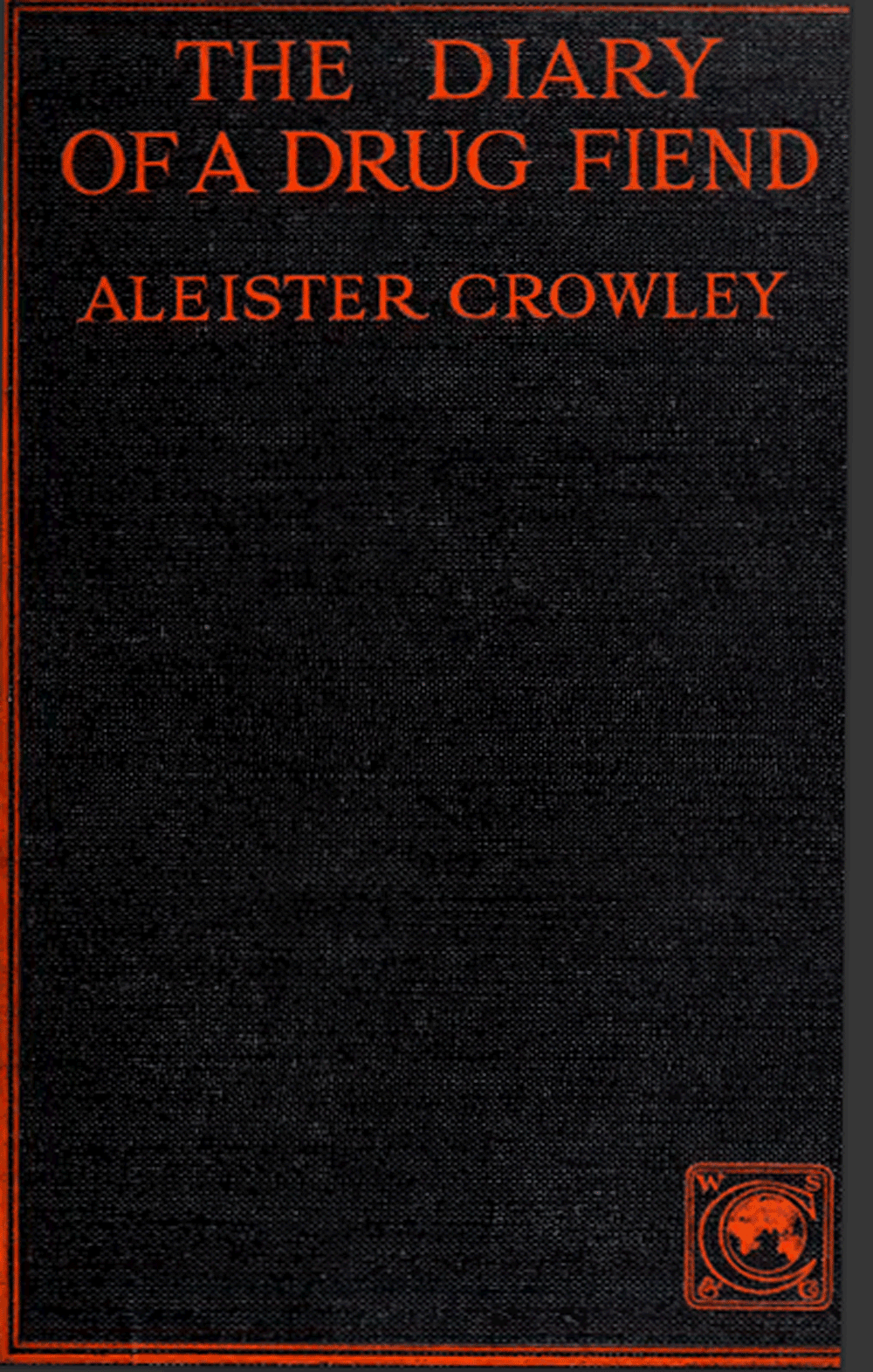
I dare not even mention cocaine in this connection, the most demonized drug on earth, knowing as I do that mainstream Americans have been taught to jump at the very sound of the word. And yet the well-documented effects of cocaine are "just what the doctor ordered" for the depressed, as Sigmund Freud well knew, and Robin Williams, and Aleister Crowley. As the latter author reports after his first use of the drug, as reported by the fictional character Peter Pendragon in "The Diary of a Drug Fiend":
The depression lifted from my mind like the sun coming out of the clouds.
How can any academic dare to discuss depression without at least acknowledging the existence of such drugs and the fact that they have been outlawed?
Sure, cocaine use is dangerous in the age of drug prohibition, but why is that so? It is because, just like the opiates with which one's cocaine can be unknowingly "cut," the product is not regulated as to quantity, quality -- or even as to identity -- and so overdoses and unwanted dependencies proliferate. Nor is America even thinking of teaching safe use of dangerous substances. To the contrary, the view from Congress is that education is a bad thing when it comes to drugs. That fact, in itself, should be a red flag to freedom-loving Americans, telling them that drug prohibition is not consistent with the basic principles on which America was founded.
But a defense of cocaine would require an entire essay, in fact, an entire book (and the search for the rare publisher who would not run in panic from any text that discussed cocaine use from any other viewpoint than that of abject scorn and horror). My point here is that cocaine is not the only drug that can focus the mind. The world is our biochemical oyster, once we stop insisting on the defeatist lie that potentially addictive drugs can only be used on an addictive basis. This is the defeatist lie that Crowley's provocatively titled "Diary" was meant to refute. Even if the lie were true, Americans are in no position to complain about the daily use of drugs, given the status quo in which one in four American women take a psychiatric "med" every day of their life.
Moreover, those who insist that I be drug free are being outrageously presumptuous, insofar as they neither know nor CAN know how I experience the world given my default biochemistry, so how can they tell me that such an unknown state is better than the one facilitated by my drug use? I may as well tell THEM that they do not need a "cold one" after coming home from the factory late at night. "I know that you THINK you need that 'cold one,'" say I, "but the fact is that no one really needs a 'cold one' insofar as I myself work just as hard as you do during the day and see no need to alter my brain chemicals in that fashion!"
This is just a reminder that Drug Warriors and drug researchers lack imagination, that they fail to account for psychological variability. If they did, they would realize at once that some so-called "sober" states of mind are so disempowering as to render drug use a perfectly defensible option. Even if that drug use eventually brings problems of its own, it will be problems that can be treated, unlike the pathological sobriety itself which hitherto dogged the user at every turn, preventing them from living a fulfilling life according to their definition of that term.
Before ending this digression about my current state of mind, I wish to observe, as it were, by way of protest, that this is why drug prohibition is so very wrong: it is not just a case of the government trying to control what I can think, as in the Orwellian days of 20th-century dictatorship; the policy of drug prohibition is the product of a far more ambitious tyrant: drug prohibition seeks to control how and how much I can think about the issues of the day, how much passion and energy I can devote to pushback against inhumane government policies, and this renders drug prohibition, in my view, the worst government tyranny imaginable: it is an attempt to control my very soul, to insist that I be a certain kind of person in the world. I am stunned at the philosophical shallowness of our politicians that they have yet to see this policy for the unprecedented overreach that it is, one that makes a mockery of the ideals of a free society as to independence of thought and to the once-obvious right to control our own minds and bodies as we see fit.
One final related observation. Prohibitionists complain about the way that re-legalization advocates are always citing the legal status of alcohol as a sign of the disingenuity of the prohibitionists; but the legality of alcohol is the whole point. That legality shows that drug prohibition is a political law, not one based on health considerations. Our politicians only believe in drug prohibition because they are the ones enforcing it. It is THEIR drugs (tobacco, alcohol and coffee) that are privileged in their drug legislation. Were aliens to invade the earth and institute drug prohibition based on the flawed assumption that safety (as considered in the abstract) is the most important value in a free society, they would clearly outlaw alcohol first and foremost (along with tobacco, of course), after which our Drug Warriors would be the first to start demanding an immediate end to drug prohibition. In other words, drug prohibition is a product of self-interest and racial prejudice all down the line, a fact that makes academic collusion in the game all the more inexcusable.
Biased Academics
TITLE: "The drugs don’t work? Antidepressants and the current and future pharmacological management of depression"1
COMMENTS: The drugs don't work? Which drugs? The authors do not even bother to specify. They know that their readers will understand that they are talking about antidepressants. Why? Because the authors assume (alas, correctly) that readers will construe their work according to the usual drug-war prejudices, according to which outlawed drugs are assumed to have no positive uses for anyone, ever, and to be thoroughly unscientific.
The authors strike a self-congratulatory tone in the abstract as well. We're told that the creation of antidepressants was "serendipitous." Really? For whom? For the medical industry, perhaps. Not for those who have been turned into wards of the healthcare state by an underperforming "med" after being denied the use of the godsend medicines that grow at their very feet. There is the obligatory allusion to the high costs of depression: "£9 billion in 2000 alone." They quote the World Health Organization as predicting that depression will become the leading cause of global disability by 2030. How can anyone possibly make such statements (or quote them) without simultaneously reminding their readers of the existence of drugs that can end depression in a trice? How? This is why I say that employees in the behavioral health field are living in a land of make-believe, a world in which they live by false assumptions that prevent them from drawing any conclusions that would run counter to the drug-hating sensibilities of the west.
Another interesting thing about the paper's abstract. It tells of the "serendipitous" advent of antidepressants, failing to even mention the fact that such drugs are causing dependency that leads to a lifetime of use -- closely supervised use, at that -- which turns the user into a ward of the healthcare state. That is simply not a problem in the age of 'science triumphant.' Nor are these authors exceptions to a more humane rule. I have yet to find any psychiatrist or drug researcher who considers that lifetime dependency to antidepressants is a downside of such drug use. Well, at least they are being honest. Lifetime dependency is not a downside for them, personally, since it keeps the patients coming back for decades to come.
And notice the word "management" in the title. We are not supposed to simply end our depression with the common-sense use of substances and be done with it: we are supposed to "manage" our depression, over time, with the well-remunerated help of psychiatrists and chemists. We are reminded here that the interests of doctors as healers are quite different from the interests of doctors as capitalists. The former want what is best for the patient; the latter want what is best for their bank account. The former's wish is to free us from the "patient" label entirely; the latter's wish is to turn us into patients for life.
TITLE: Depression: why drugs and electricity are not the answer2
COMMENTS: This is as close as scientists ever come to understanding what the depressed really need. The authors realize, correctly enough, that "meds" are not the answer, and they've even advanced to the stage of realizing that the barbaric practice of ECT might not even be ideal for us, either. (Verily, scientists are the slow kids in the class on matters of mind and mood.) And yet they still miss the point. They still reckon without drug prohibition. They still believe that drugs do not exist, except for "meds." And so instead of simply concluding that "meds do not work," they proceed straight to the mother of all non-sequiturs by implicitly telling us that "drugs do not work." Which drugs? Apparently, all of them. Or rather none of them.
TITLE: Drug Abuse as Self-Medication for Depression: An Empirical Study3
COMMENTS: It's amazing how scientists can turn common sense into front-page news when we put them in charge of the behavioral health of human beings. The authors tell us that drug use may equate with self-medication. You think? There needs no ghost come from the grave, nor chemist come from the laboratory, to tell us THIS. Of course people are self-medicating when they take drugs. What else could they be doing? Are they merely swallowing illegal substances for the thrill of putting one over on the police? No, they are trying to achieve what they consider to be beneficial changes in their mental processes. For their part, the depressed wish to ingest substances that will lift them out of the doldrums. If we wish to give such acts a rebellious gloss by calling it "self-medicating," so be it. Yet let us still remember that self-medication has been the time-honored right of all human beings since the beginning of recorded history. The choice of such a title by the authors suggests that they have forgotten this fact and wish to characterize self-medication as pathological, or at very least as highly unusual.
I say they "apparently" wish to do this because I only have access to the abstract of this 2009 paper. The rest of the text is firmly ensconced behind paywalls, and I can't bring myself to pay $19 or more to read an article that is sure to pluck my last and final nerve. This is one of the problems that one encounters when attempting to investigate academic drug attitudes from a "patient's" point of view. The more influential and established an academic becomes, the more likely their papers will not be available to the mere mortals whose lives are negatively impacted by their philosophically challenged analyses. The very online infrastructure of academia puts "patients" in their place, telling us by implication that we need to "shut up and take our meds" while those who know best discuss our fate behind the closed doors of the ivory tower.
It's also not clear to me why the title refers to "Drug Abuse" rather than to "Drug Use." But then I suppose that self-medicating is drug abuse by definition for healthcare professionals (it's an attempt to put them out of a job after all) just as "drug use" is the same thing as "drug abuse" from the DEA's point of view, insofar as it involves the use of a psychoactive substance without a doctor's prescription.
TITLE: The reality of comorbidity: Depression and drug abuse 4
COMMENTS: I have said that behavioral scientists pretend that drugs do not exist -- but that, of course, is only when they are discussing drug benefits. They are more than happy to talk about outlawed drugs providing that the subject is drug downsides. I recently performed a search on Google Scholar for "cocaine and depression," feeling that I surely must encounter at least a few papers discussing the common-sense use of cocaine to elevate the mood of the suicidal, that protocol having been suggested by Sigmund Freud himself, before self-interested doctors started demonizing the drug by looking only at downsides. But I found no such articles whatsoever. After some "hopeful" speculation, one of the authors concluded, somewhat grudgingly, that cocaine didn't seem to contribute to depression, at least not directly, but... You could almost hear the academic sighing with disappointment about his own conclusion.
The search also revealed a paper about a woman who claimed that she was using cocaine for the purpose of beating her depression. Now, that's a rarity, indeed! Unfortunately, the academic was writing about her as if she were an alien from Mars, speculating on the various dangers that she would surely encounter with her unheard of protocol, and asking metaphysical questions like, "Is she REALLY addressing her depression?" This is the metaphysics to which academics resort when they wish to lend a veneer of science to their attempt to toe the Drug War party line about the uselessness of drugs: the idea that only expensive dependence-causing meds and decades of talk therapy can "really" treat a problem. I wonder if these academics realize that they themselves are not REALLY treating their own problems when they have a "cold one" at home after a long day at work, or when they pray to God for that matter. This is the whole problem with academics in the healthcare business: their belief that they can -- and should -- find a "real" answer for human sadness, rather than allowing human beings to treat their problems symptomatically, as all other peoples have done, with the help of religion, exercise, philosophy, and the diverse and sundry medicines that we know-it-all moderns dismiss with the pejorative epithet of "drugs."
ACADEMIA IN A FREE WORLD
The foregoing comments beg the following question: what should academics in behavioral healthcare be up to, then?
Well, for starters, we must confess that there would be far fewer such academics in the world after we end drug prohibition. We may indeed need endless behavioral healthcare academics if depression were truly destined to become the number-one form of disability in the world by 2030, as the WHO is hoping -- er, I mean predicting. But how many academics would we need if human beings were going to be allowed once again to end their own depression in a trice with the help of the alkaloids of a naturally occurring plant medicine? A few less, I shouldn't wonder. In other words, the first thing that academics should be doing -- in anticipation of the end of drug prohibition -- is placing their staplers and sticky pads in boxes, downloading their personal files from their work computer onto a thumb drive, and going home to reconsider their career choices.
I don't mean to be cruel. I wish such displaced workers in the age of freedom Godspeed in finding new jobs in which they can apply their talents and knowledge to the hilt. But it must be acknowledged that much of the job security and advancement that they enjoyed in the behavioral healthcare business over the last half century has been a result of the corresponding disempowerment of tens of millions of unnecessarily depressed Americans like myself.
Not all of the jobs need disappear in any case. We will need new realistic drug trials of the kind that Alexander Shulgin performed with phenethylamines and tryptamines in the early 1990s, trials that highlighted user reactions to a wide variety of substances, human reactions rather than those of rats. For the first time in the history of the world, we will sit down, unterrified, in front of the vast potential pharmacopoeia of the world and create drug trials to answer the following simple question: how can people use these various substances with so much hitherto untapped potential as wisely as possible for psychological, religious or philosophical benefit -- or to just plain relax in a less inherently dangerous way than by tippling?
CONCLUSION
I hope that the above reflections have given the reader at least some idea of why a depressed American like myself finds modern academics to be completely out of touch with the issues that really matter from the point of view of a depressed individual. It will be objected, of course, that most depressed Americans are not "up in arms" as I seem to be, and that they actually report benefits from taking "meds" and so forth. This is no doubt true, but I ascribe this state of affairs to the following three considerations:
the ten-plus billion dollars spent on pharmaceutical advertisements every year...
the decades of lies from the healthcare field about the scientific nature of antidepressants (the false idea that they correct a chemical balance, and so forth) and...
the success of drug prohibition (and above all media censorship) in keeping depressed Americans from learning about the godsend benefits of outlawed medicines.
I understand where the bamboozled are coming from. I myself used to think (many decades ago now) that I was doing the right thing by taking antidepressants and that they were the only game in town for a reason: because they were the only thing that worked for folks like myself. I believed that they were, in fact, the scientific thing for me to be using. Then one day I was given a drug at a party that completely changed my whole view of the matter. I do not remember the precise circumstances of its acquisition, but I remember ingesting it after arriving home at my new and still somewhat bare first apartment, part of a complex created out of former Army barracks. Within minutes, I saw the world around me in a completely new way. Nothing had changed, and yet everything had changed. This was before I had read any so-called "drug literature" that might have biased my interpretation of what I was experiencing in any particular direction. I suddenly felt that the world was full of possibilities, that there were so many interesting things that I could and should be doing. I actually began to "tear up" at the thought of the years that I now realized that I had passed in unproductive gloominess.
That feeling was temporary, of course, and yet it had a lasting impact: it taught me that the antidepressants that I was ingesting were having very little effect on my depression, indeed, a truth that I would never have suspected had this new drug not given me something against which to compare the lackluster status quo. I suddenly realized that the powers-that-be had been gaslighting me for years about the supposed uselessness of outlawed drugs. Of course, I realized even then that such substances were susceptible of misuse, and yet I could never see why that fact alone should compel me to ignore them entirely. But I had yet to put such reservations about drug prohibition into words -- or to find anyone else who had done so in Drug War America.
It wasn't until decades later that I discovered my instincts on the subject embodied in the words of an eccentric rehab guru named King Lamus in a novel by Aleister Crowley. "The danger of the so-called habit-forming drugs," quoth Lamus, "is that they fool you into trying to dodge the toil essential to spiritual and intellectual development. But they are not simply man-traps. There is nothing in nature which cannot be used for our benefit, and it is up to us to use it wisely."
Lamus might have added that our attempts to save society from the frying pan often sends it into the fire, as when drug prohibition "saved" me from drugs only to make me dependent for a lifetime on "meds." In other words, I was saved from drugs by being turned into a drug user for life. I will have to see a doctor one-third my age every three months of my life for a refill on an expensive and underperforming "med" that has turned me into a ward of the healthcare state. It is in light of this injustice -- this massive disempowerment -- that I call on modern academics to stop collaborating with Drug Warriors and to finally dare to point to the gorilla in the room: the fact that godsend medicines are all around us and that we have a duty as free human beings to use them as wisely as possible for human benefit.
With this aspiration in mind, I close with these additional words from King Lamus, which, though now over one-hundred years old, serve as a fitting rebuke to the drug prohibition mindset of our time:
We have tamed the wild lightning, shall we run away from a packet of powder ?
Had the DEA been active in the Punjab and 1500 BCE, there would be no Hindu religion today.
America created a whole negative morality around "drugs" starting in 1914. "Users" became fiends and were as helpless as a Christian sinner -- in need of grace from a higher power. Before prohibition, these "fiends" were habitues, no worse than Ben Franklin or Thomas Jefferson.
Drug war pundits need to stop using the word "snorts" when it comes to cocaine. We "take" our "meds," and yet we "snort" cocaine, just like a pig. That is NOT neutral language, folks!
I will gladly respect the police once we remove them from Gestapo duty by ending the war on drugs. Police should also learn to live on a budget, without deriving income from confiscating houses and dormitories, etc.
The drug war is is a multi-billion-dollar campaign to enforce the attitude of the Francisco Pizarro's of the world when it comes to non-western medicine. It is the apotheosis of the colonialism that most Americans claim to hate.
I have yet to find one psychiatrist who acknowledges the demoralizing power of being turned into a patient for life. They never list that as a potential downside of antidepressant use.
UNESCO celebrates the healing practices of the Kallawaya people of South America. What hypocrisy! UNESCO supports a drug war that makes some of those practices illegal!
The Shipiba have learned to heal human beings physically, psychologically and spiritually with what they call "onanyati," plant allies and guides, such as Bobinsana, which "envelops seekers in a cocoon of love." You know: what the DEA would call "junk."
"The Legislature deliberately determines to distrust the very people who are legally responsible for the physical well-being of the nation, and puts them under the thumb of the police, as if they were potential criminals."
-- Aleister Crowley on drug laws
Drug Prohibition is a crime against humanity. It outlaws our right to take care of our own health.
Unless otherwise indicated, no AI is used in the creation of site content. These essays represent the original ideas of their author and not the ideas that the author SHOULD have based on an algorithmic parsing of existing data. For more on this subject, consider the AI-related viewpoints to which the author subscribes as delineated in the New York Times opinion piece entitled "What 370,000 College Essays Tell Us About A.I.’s Effects on Creativity" by Rebecca Winthrop of the Brookings Institution.