





Homepage of the Drug War Philosopher, Brian Quass
blog icon orange rss icon with stylized radio waves bird icon for twitter bird icon for twitter substack icon


back navigation arrow forward navigation arrow


From the Penal Laws of Ireland to the Drug Laws of the United States

How governments always find a way to treat hated demographics like dirt

by Brian Ballard Quass, the Drug War Philosopher

June 20, 2026


One of the best ways to demonstrate the hateful prejudices of drug prohibition is to compare America's drug laws with the Penal Laws created in Ireland by English protestants between the 16th and 18th centuries.1 In the time of the Protestant Ascendancy, the British Government in Ireland sought to marginalize Catholics with what Dublin Professor Charles Ivar McGrath has described as a "rag-bag" of tyrannical laws, designed (at least in theory) to harry Catholics to the point that they finally renounced their Catholic faith in favor of Protestantism.2 In the time of the American Drug War, the U.S. government seeks to marginalize drug users with its own rag-bag of tyrannical laws, designed (at least in theory) to harry drug users to the point that they finally renounce their belief in Mother Nature's medicines and live instead according to the drug-hating dictates of the Christian Science religion. In both cases, the government's legislators sought (and seek) to outdo themselves in devising new and creative ways to treat their enemies like dirt while evincing a cavalier disregard for the "rights of man," or what we moderns might refer to as the rights of the human being qua human being.

Let us now compare some of the punishments meted out to Irish Catholics during the Protestant Ascendancy with those given to drug users and dealers in our Age of Drug Prohibition, the age of our country's unprecedented wholesale outlawing of Mother Nature's plant medicines. We will see that there is a shared mindset at work here on the part of the powers-that-be, one that not only links the Penal Laws with modern drug laws, but a mindset that links both of these in turn with South African Apartheid, American racism, and ultimately with the policies of Nazi Germany itself. This is why the drug-demonizing mindset has to be ended as soon as possible. If left unchecked, our bandwagon of hysteria-driven scapegoating is poised to end in something even blinder and more callous than it already has become, in a dystopia that has no longer even a superficial resemblance to the world of freedom envisioned by our nation's founders.

Note: The term "drug users" in the following chart refers to any of the 20 million Americans who have been charged with felony drug possession (usually for small amounts of drugs) or drug dealing. Bear in mind that 33% of all Blacks have felony convictions, most of them for drug use and/or drug dealing. 33%.


Could not become doctors or lawyers.


Cannot become doctors, lawyers, or practice a long list of other professions -- although they are still eligible to become president of the United States.


Could be evicted from home.


Can be evicted from home, along with their family, especially when that home is considered public housing.


Forced to sign documents declaring their belief in Protestant doctrine.


Forced to take drug tests to ensure their adherence to the drug-hating doctrines of the Christian Science religion.


A priest who came to Ireland could be hanged.


US drug patrols shoot to kill when they see boats that fit their profile for drug running. This real-time capital punishment can even be meted out to non-felons and without so much as a trial.


Let's consider some of the additional punishments that convicted drug users and dealers face in Drug War America, as detailed by Colleen Cowles in War On Us.3


Surely, any fair reader must conclude that America's unprecedented criminalization of Mother Nature's plant medicines has resulted in a hate-filled world in which we scapegoat vulnerable human beings for the social problems that we blame on drugs. Our use of draconian legislation to punish those who access Mother Nature's plant medicines has created a permanent underclass in the west, one which we treat with all of the disdain that Protestants once lavished upon Catholics with the help of the Penal Laws of the 16th, 17th and 18th centuries.

As Richard Miller reminds us in "Drug Warriors and their Prey":

The population explosion of drug offenders in the penal system was caused by politics. Not partisan politics, but a political decision to make war on drug users.4


Political decisions of this kind have been taken throughout the years: to make war on Blacks, to make war on Catholics, to make war on Jews, and today to make war on drug users. Until we recognize the feature in common to all of these wars of hysteria-inspired hatred -- namely, the desire to dehumanize the designated enemy in every way possible -- then citizens of even the most ostensibly free countries in the world will continue to be susceptible to the fearmongering of self-interested politicians, those morally challenged racists and xenophobes who encourage us to blame all of our problems in life on the unpopular demographic of the time, whatever that demographic may happen to be in any particular case.

Ecclesiastes was right. There is nothing new under the sun. Even in a world in which technology is changing every minute, the basics of human personality remain the same, both as to the bright side of the homo Sapiens species and to its dark side. We have seen the Drug Warrior's MO before, after all, in the war against Catholics, Jews, Gypsies, Tutsis, Armenians, Cambodians, indigenous North Americans, and particularly in the war against Blacks, of which the Drug War is really just the continuation after a little rebranding in order to bring Black leaders themselves onboard. And so the wholesale disempowerment of Blacks in America has been presided over, tragically enough, with the help of Black leaders themselves, who were convinced that Mother Nature’s plant medicines are the root of all evil rather than the social policies that serve to weaponize those substances.

Instead of spending the last 50 years attempting to change human nature and make the entire Black community renounce the benefits of Mother Nature, the leadership should have been recognizing drug prohibition for what it was: an attempt to disempower minorities, and above all the Black community. They should have taken a close look at the roster of avid Drug Warriors and seen at a glance that the War on Drugs had nothing to do with ensuring public health, insofar as it was enthusiastically supported by obviously racist politicians who did not wish to spend a single dime to improve health care. They should also have studied history, especially the history of the war against Catholics in Ireland. Edmund Burke could have been speaking about the modern policy of drug prohibition and what it has wrought for Black communities in the United States when he described the Penal Laws of 18th-century Ireland as follows:

A machine of wise and elaborate contrivance, as well fitted for the oppression, impoverishment, and degradation of a people, and the debasement in them of human nature itself, as ever proceeded from the perverted ingenuity of man.5


Notes for essay entitled From the Penal Laws of Ireland to the Drug Laws of the United States: How governments always find a way to treat hated demographics like dirt:

1: Penal Laws in Ireland. n.d. Library Island. Accessed June 20, 2026. https://libraryireland.com/HistoryIreland/Penal-Laws.php. (up)
2: Securing the Protestant interest: the origins and purpose of the penal laws of 1695 McGrath, Charls Ivar (up)
3: “War on Us – the War on Drugs Is a War on All of Us.” 2019. Waronus.com. 2019. http://waronus.com/. (up)
4: Miller, Richard L. 1996. Drug Warriors and Their Prey. Praeger. https://www.goodreads.com/book/show/594749.Drug_Warriors_and_Their_Prey. (up)
5: Pádraig Mac Donnchadha. 2011. “Effects of Penal Laws in Irish Society - History of Ireland.” Your Irish Culture. May 28, 2011. https://yourirish.com/history/18th-century/the-effects-of-the-penal-laws-upon-irish-society#google_vignette. (up)


read more essays here


Ten Tweets

against the hateful war on US


Q: Where can you find almost-verbatim copies of the descriptions of religious experiences described by William James? A: In descriptions of user reports of "trips" on drugs ranging from coca to opium, from MDMA to laughing gas.

I thought mycology clubs across the US would be protesting drug laws that make mushroom collecting illegal for psychoactive species. But in reality, almost no club even mentions such species. No wonder prohibition is going strong.

We need a scheduling system for psychoactive drugs as much as we need a scheduling system for sports activities: i.e. NOT AT ALL. Some sports are VERY dangerous, but we do not outlaw them because we know that there are benefits both to sports and to freedom in general.

We live in a make-believe world in the US. We created it by outlawing all potentially helpful psychological meds, after which the number-one cause of arrest soon became "drugs." We then made movies to enjoy our crackdown on TV... after a tough day of being drug tested at work.

The FDA tells us that MDMA is not safe. This is the same FDA that signs off on Big Pharma drugs whose advertised side effects include death itself.

Irony of ironies, that the indignant 19th-century hatred of liquor should ultimately result in the outlawing of virtually every mind-affecting substance on the planet EXCEPT for liquor.

A lot of drug use represents an understandable attempt to fend off performance anxiety. Performers can lose their livelihood if they become too self-conscious. We only call such use "recreational" because we are oblivious to the common-sense psychology.

Today's drug laws tell us that we must respect the historical use of sacred medicines, while denying us our personal right to use them unless our ancestors did so. That's a meta-injustice! It negatively affects the way that we are allowed to experience our world!

I'm told antidepressant withdrawal is fine because it doesn't cause cravings. Why is it better to feel like hell than to have a craving? In any case, cravings are caused by prohibition. A sane world could also end cravings with the help of other drugs.

"I can take this drug that inspires me and makes me compassionate and teaches me to love nature in its byzantine complexity, or I can take Prozac which makes me unable to cry at my parents' funeral. Hmm. Which shall it be?" Only a mad person in a mad world would choose SSRIs.


Click here to see All Tweets against the hateful War on Us


back navigation arrow forward navigation arrow
Book Cover

Break the ice with a sledgehammer: place this book on your coffee table.

This book features 150 annotated images, designed to force brainwashed Americans to confront the fact that drug prohibition is wrong. Here is what author Richard Parrish II says of the book's compiler: "The drug prohibition philosopher provides first-hand, principled, persuasive, and insightful arguments against the current drug prohibition regime..."

Purchase Your Copy
Book Cover

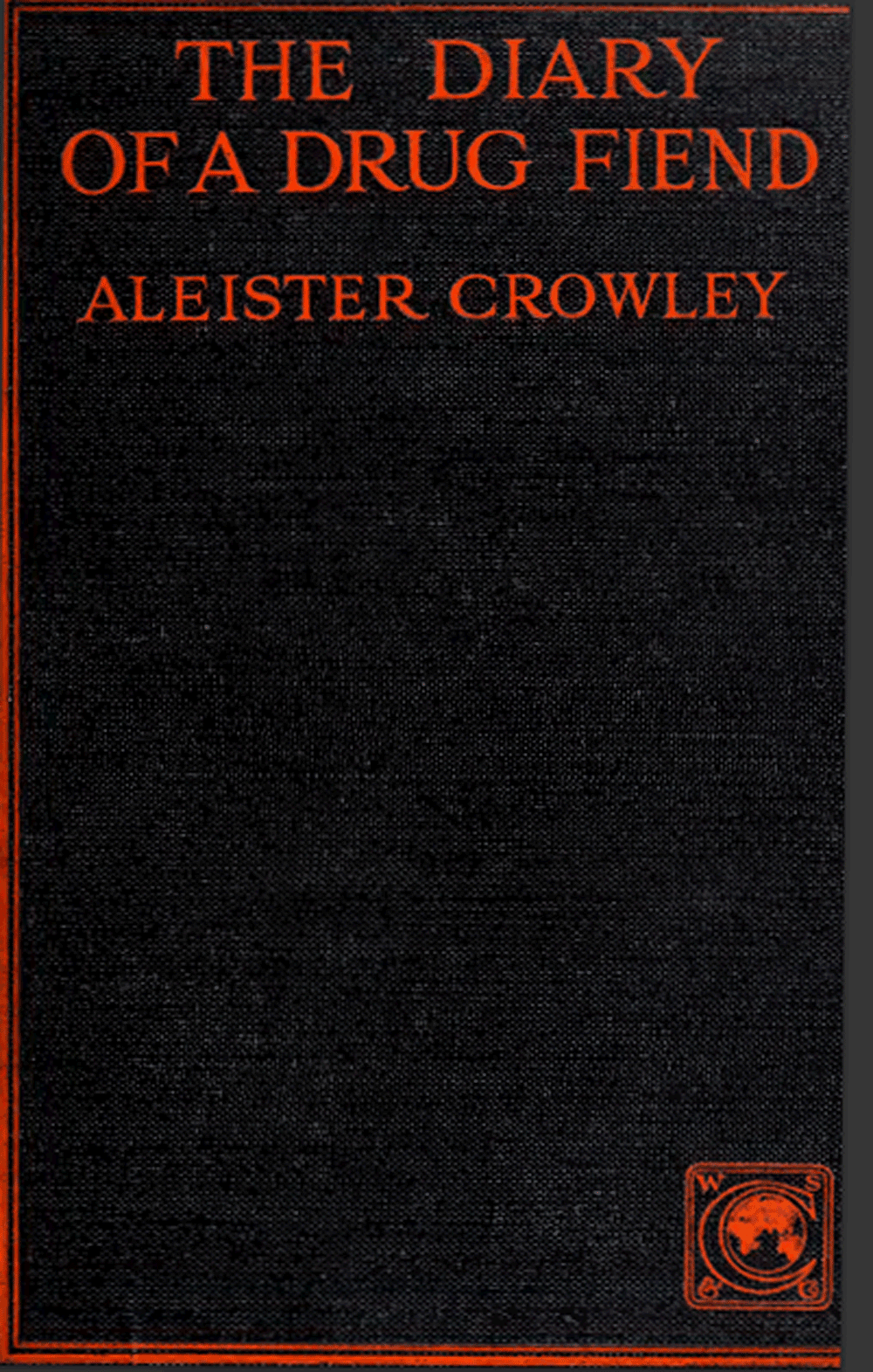
Diary of a Drug Fiend

This is the only full-cast recording of Aleister Crowley's 1922 classic paeon to common sense. It is the first book -- and so far almost the only book -- to stake out a philosophy of drug use that is compatible with human freedom, one in which we learn to use drugs as wisely as possible for the benefit of humanity. This recording was produced by the Drug War Philosopher and your purchases help support his effort to push back against the tragically counterproductive policy of drug prohibition, in the name of human freedom and of humanity's right to heal.

Purchase Your Copy


No cookies, no ads paid for by amoral and immoral billionaires (or trillionaires).


Unless otherwise indicated, no AI is used in the creation of site content. These essays represent the original ideas of their author and not the ideas that the author SHOULD have based on an algorithmic parsing of existing data. For more on this subject, consider the AI-related viewpoints to which the author subscribes as delineated in the New York Times opinion piece entitled "What 370,000 College Essays Tell Us About A.I.’s Effects on Creativity" by Rebecca Winthrop of the Brookings Institution.

The Partnership for a Death Free America is a proud sponsor of The Drug War Philosopher website @ abolishthedea.com.


Copyright 2026, Brian Ballard Quass Contact: quass@quass.com

tombstone for American Democracy, 1776-2024, RIP (up)