





Homepage of the Drug War Philosopher, Brian Quass
blog icon orange rss icon with stylized radio waves bird icon for twitter bird icon for twitter substack icon


back navigation arrow


The Truth About the Healthcare Field

an open letter to Marcia Angell, author of The Truth About the Drug Companies

by Brian Ballard Quass, the Drug War Philosopher (Substack version)

November 13, 2026


Dear Marcia Angell:

I have just been reading your excellent book entitled "The Truth About Drug Companies,1" and I would like to share my views with you from what I think you will agree is a unique perspective: that of a chronically depressed American who has been turned into a ward of the healthcare state by American drug policy. I have been on Effexor for over 30 years, a "med" that I have found far harder to kick than heroin2. I have to see a doctor one-third my age every three months of my life for a refill, at which time I have to answer humiliating questions such as: "Have you been hearing voices?" and "Have you considered suicide lately?", to which I always want to respond: "Only when I think how American drug policy has turned me into a ward of the healthcare state and enriched the medical establishment at my expense, meanwhile turning me into a child for life!"

Please note that my criticisms are not personal in nature: literally every author who deals with these topics ignores the issues that I am attempting to raise in this letter. Every single one of them. Indeed, I have yet to find one medical professional who will even respond to my emails on this subject. I know that people are busy, but I cannot help but feel that I am thereby being told to "shut up and take my meds." Indeed, Mad in America will not so much as publish my autobiography3. They want to help the depressed, but they do not want to listen to them, unless they toe the Christian Science party line according to which drugs are thought to have no positive uses whatsoever.

NOTES

A LIFELONG CONDITION?

On page 82, you refer to depression as a lifelong condition. I would point out that depression is a lifelong condition only because American drug policy makes it a lifelong condition. As Aleister Crowley wrote of his first use of cocaine: "The depression lifted from my mind like the sun coming out of the clouds.4" Sigmund Freud wrote that: "My impression has been that the use of cocaine over a long time can bring about lasting improvement.5" He wrote this before self-interested doctors began judging the drug based on worst-case scenarios, exactly as if they were to judge alcohol by looking only at alcoholics. No one considered the depressed as stakeholders in the evaluation of cocaine. But then cocaine is the most demonized drug in the world, and for good reason from the point of view of the self-interested medical establishment. Yet whatever we believe about cocaine, there are plenty of other drugs that can inspire and elate with little or no chance of causing addiction: this is clear from the work of pharmacologist Alexander Shulgin6 and ethnobotanist Richard Schultes7 -- to say nothing of laughing gas, which the FDA is trying to treat like a drug, thereby making it even less available than ever for the depressed, as a practical matter8. The medical industry then gaslights the depressed by telling us the substances that I am writing about here have no proven benefits whatsoever.

RISKS VERSUS BENEFITS

This brings me to the next point that I would like to make.

On page 57, you write:

Deciding simply on the basis of whether individual patients seem to respond is a notoriously unreliable and dangerous method.


This is true enough for "physical" medicine, but the FDA can have no expertise in deciding if a psychoactive drug can survive a risk-benefit analysis. To do this, they would have to weigh abstract risks of use against perceived benefits of use. And what are the benefits of use for psychoactive drugs? Benefits may include "taking a closer walk with God" or "thinking more clearly and finishing my first book, thereby making me feel better about myself, thereby making me a kinder and more understanding person, ad beneficia." Weighing such risks is not a scientific task. Scientists have no expertise in deciding what we should value in life, unless we assume that everyone should be a hypochondriac and value safety above everything else. You use the word "patient" to designate the consumer of substances, but the user should not have to BE a "patient" in such cases. Should a Christian have to be a patient in order to drink the Communion wine? This is the problem with medical care today: it has turned me into a patient for life and put scientists in charge of deciding how and how much I should be allowed to think and feel in this life.

PURE FOOD AND DRUGS ACT

As you know, the 1906 act had nothing to do with the effectiveness of a substance. The FDA was placed in charge of ensuring effectiveness by the Kefauver-Harris Amendments of 19629. This new job was assigned by politicians who scorned psychoactive substances and were completely ignorant (and/or disdainful) of their time-honored use, not only in the west, but especially in indigenous communities in Latin America. In such communities, these substances were used for religious and healing purposes in various rites and protocols that could be traced back hundreds of years if not millennia. Given the entirely subjective nature of the benefits sought by the users of these substances, it is a category error to place FDA scientists in charge of deciding if these substances have proven benefits. It is exactly like asking scientists to determine if prayer has any proven benefits. Scientists have no qualifications here; they have nothing but their own biases -- which they pass off as fact based on their appeal to their philosophically problematic belief in biochemical determinism. They are capable of citing risks of substance use in the abstract, perhaps, but it is impossible for them to do a fair cost-benefit analysis of the use of such substances. They have gotten away with this so far by simply choosing to ignore all perceived benefits of use whatever, as if they did not even exist. They thereby reserved the right to tell us whether we (the depressed) are "really" happy or "really" having a religious epiphany, etc., when we use a given substance. This is a metaphysical claim on their part, not a medical one.

QUACK CURES

On page 36, you say that we do not want to go back to the days of "cure-all claims for worthless and dangerous patent medicines." But the problems that were addressed by the 1906 act had nothing to do with the usefulness of medicines. That was not a factor for government concern until 196210. And some of those "cure-all claims" were made concerning potions that included cocaine and/or opium11. Although capable of misuse, these ingredients are time-honored medicines. Coca has been used by the Peruvian Indians for thousands of years. Opium has been considered a panacea since the time of Galen. America outlawed this substance to spite the hated Chinese. The 1906 act as I understand it was in response to the fact that drugs were not being properly labeled as to contents and dosage, not that the drugs did not work. Many such nostrums actually worked, albeit in an holistic way that is beyond the comprehension of materialist western scientists, but many of those nostrums were made dangerous because they were misidentified as to contents, dosages and contraindications. They were not quack cures just because they were being sold by vagabonds. They were time-honored substances that were being sold irresponsibly. Meanwhile the charge of "quackery" is a two-edged sword. On page 108, you tell us how Big Pharma is now marketing hormone cures for what ails the elderly and testosterone for erectile dysfunction in the elderly. These are quack cures themselves. The "need" for such drugs had to be fabricated in the exact same way that the medicine men of the early 19th century fabricated a market for their cure-all nostrums: by advertising and appealing to credulity, insecurity and the hope that springs eternal in the consumer's breast.

IN PRAISE OF CURE-ALLs

Note that "cure-all" is a potentially valid adjective when it comes to psychoactive substances. It is valid for substances that work holistically, by creating virtuous circles of health by creating a variety of beneficial psychophysical knock-on effects. As Jim Hogshire writes in Opium for the Masses:

As a deadening agent, opium has almost no effect. If measured purely for its ability to alleviate the sensation of pain, morphine, opium, or any of the others would score no better than aspirin. It is the perception of pain that opium alters, and that makes all the difference in the world.12


ROBBING PETER TO PAY PAUL

We hear much talk about the dangers of a free market in drugs, but drug prohibition has done nothing but outsource drug dangers to non-white demographics. Drug prohibition has "protected" white young people -- the white young people whom we refuse on principle to educate about drugs -- only to kill minorities and destroy inner cities around the globe with the violence and torture that has been all-too-predictably incentivized by drug prohibition. To "save" our kids, we have destroyed the rule of law in Latin America and caused civil wars in Mexico13 14, where hundreds of thousands have died in the 21st century alone thanks to violence that was predictably fueled by drug prohibition. The regime in Washington, DC is now even killing drug suspects without trial in an effort to end the use of the divine plant of the Inca. The Constitution no longer applies to cases in which drugs are concerned. If the health community cared more about human suffering and American freedoms than profit, they would fight to end drug prohibition, even at the cost of ending their own monopoly as gatekeepers for mind and mood medicine. The alternative is an evermore vicious world as we put police and law enforcement in charge of cracking down on an ever-growing list of godsend medicines, in the crazy and anti-American idea that it is better to arrest than to educate, that it is better to fear substances than to use them as wisely as possible for the benefit of humanity.


Thank you so much for your time.

Brian Quass


Notes for essay entitled The Truth About the Healthcare Field: an open letter to Marcia Angell, author of The Truth About the Drug Companies:

1: Marcia Angell,M.D. 2004. The Truth About the Drug Companies. Random House. https://archive.org/details/sochara.truthaboutdrugco0000marc. (up)
2: Hall, Wayne, and Megan Weier. 2016. “Lee Robins’ Studies of Heroin Use among US Vietnam Veterans.” Addiction 112 (1): 176–80. https://doi.org/10.1111/add.13584. (up)
3: Madder in America DWP (up)
4: Arthur Crowley. “Full Text of ‘the Diary of a Drug Fiend.’” 1922. Archive.org. 2017. https://archive.org/stream/b29826433/b29826433_djvu.txt. (up)
5: “Freud on Cocaine : Freud, Sigmund, 1856-1939 : Free Download, Borrow, and Streaming : Internet Archive.” 2023. Internet Archive. 2023. https://archive.org/details/freudoncocaine0000freu/page/n5/mode/2up?view=theater. (up)
6: Shulgin, Alexander T, and Ann Shulgin. 2019. Pihkal : A Chemical Love Story. Berkeley, Ca: Transform Press. (up)
7: “Schultes, Hofmann Plants of the Gods ( Healing Arts, 2001) : Alberto Hoffman : Free Download, Borrow, and Streaming : Internet Archive.” 2015. Internet Archive. 2015. https://archive.org/details/SchultesHofmannPlantsOfTheGodsHealingArts2001. (up)
8: Why the FDA is not qualified to judge psychoactive medicine DWP (up)
9: Parrish II, Richard Henry. 2026. “How the Constitution Lost the Drug War: A Century of Federal Overreach and the Rights Sara Was Never Meant to Lose.” Richard Henry Parrish II Sovereign Patient. Substack. March 4, 2026. https://richardhenryparrish2.substa (up)
10: Parrish II, Richard Henry. 2026. “How the Constitution Lost the Drug War: A Century of Federal Overreach and the Rights Sara Was Never Meant to Lose.” Richard Henry Parrish II Sovereign Patient. Substack. March 4, 2026. https://richardhenryparrish2.substa (up)
11: The Truth About Opium by William H. Brereton DWP (up)
12: Hogshire, Jim. 2009. Opium for the Masses. Feral House. (up)
13: ThriftBooks. 2026. “Drug War Capitalism.” ThriftBooks. 2026. https://www.thriftbooks.com/w/drug-war-capitalism/9217021/?resultid=e8667266-257a-41bf-83e3-78200e3527f3#edition=8539401&idiq=10283063. (up)
14: Carpenter, Ted Galen. 2012. The Fire Next Door: Mexico’s Drug Violence and the Danger to America. Cato Institute. https://pangobooks.com/titles/the-fire-next-door. (up)


read more essays here


Ten Tweets

against the hateful war on US


In the 19th century, poets got together to use opium "in a series of magnificent quarterly carouses" (as per author Richard Middleton). When we outlaw drugs, we outlaw free expression.

Immanuel Kant wrote that scientists are scornful about metaphysics yet they rely on it themselves without realizing it. This is a case in point, for the idea that euphoria and visions are unhelpful in life is a metaphysical viewpoint, not a scientific one.

Oregon's drug policy is incoherent and cruel. The rich and healthy spend $4,000 a week on psilocybin. The poor and chemically dependent are thrown in jail, unless they're on SSRIs, in which case they're congratulated for "taking their meds."

Being less than a month away from an election that, in my view, could end American democracy, I don't like to credit Musk for much. But I absolutely love it every time he does or says something that pushes back against the drug-war narrative.

The FDA should have no role in approving psychoactive medicine. They evaluate them based on materialist standards rather than holistic ones. In practice, this means the FDA ignores all glaringly obvious benefits.

If NIDA covered all drugs (not just politically ostracized drugs), they'd produce articles like this: "Aspirin continues to kill hundreds." "Penicillin misuse approaching crisis levels." "More bad news about Tylenol and liver damage." "Study revives cancer fears from caffeine."

Billboards reading "Fentanyl kills" encourage the creation of racist legislation that outlaws all godsend uses of opiates. Kids in hospice in India go without morphine because of America's superstitious fear of opiates.

Freud found that cocaine CURED most people's depression and he "got off it" without trouble.

If we cared about the elderly in 'homes', we would be bringing in shamanic empaths and curanderos from Latin America to help cheer them up and expand their mental abilities. We would also immediately decriminalize the many drugs that could help safely when used wisely.

Today's doctors are "quacks" because they fail to see any of the many obvious uses for psychoactive substances.


Click here to see All Tweets against the hateful War on Us


back navigation arrow
Book Cover

Break the ice with a sledgehammer: place this book on your coffee table.

This book features 150 annotated images, designed to force brainwashed Americans to confront the fact that drug prohibition is wrong. Here is what author Richard Parrish II says of the book's compiler: "The drug prohibition philosopher provides first-hand, principled, persuasive, and insightful arguments against the current drug prohibition regime..."

Purchase Your Copy
Book Cover

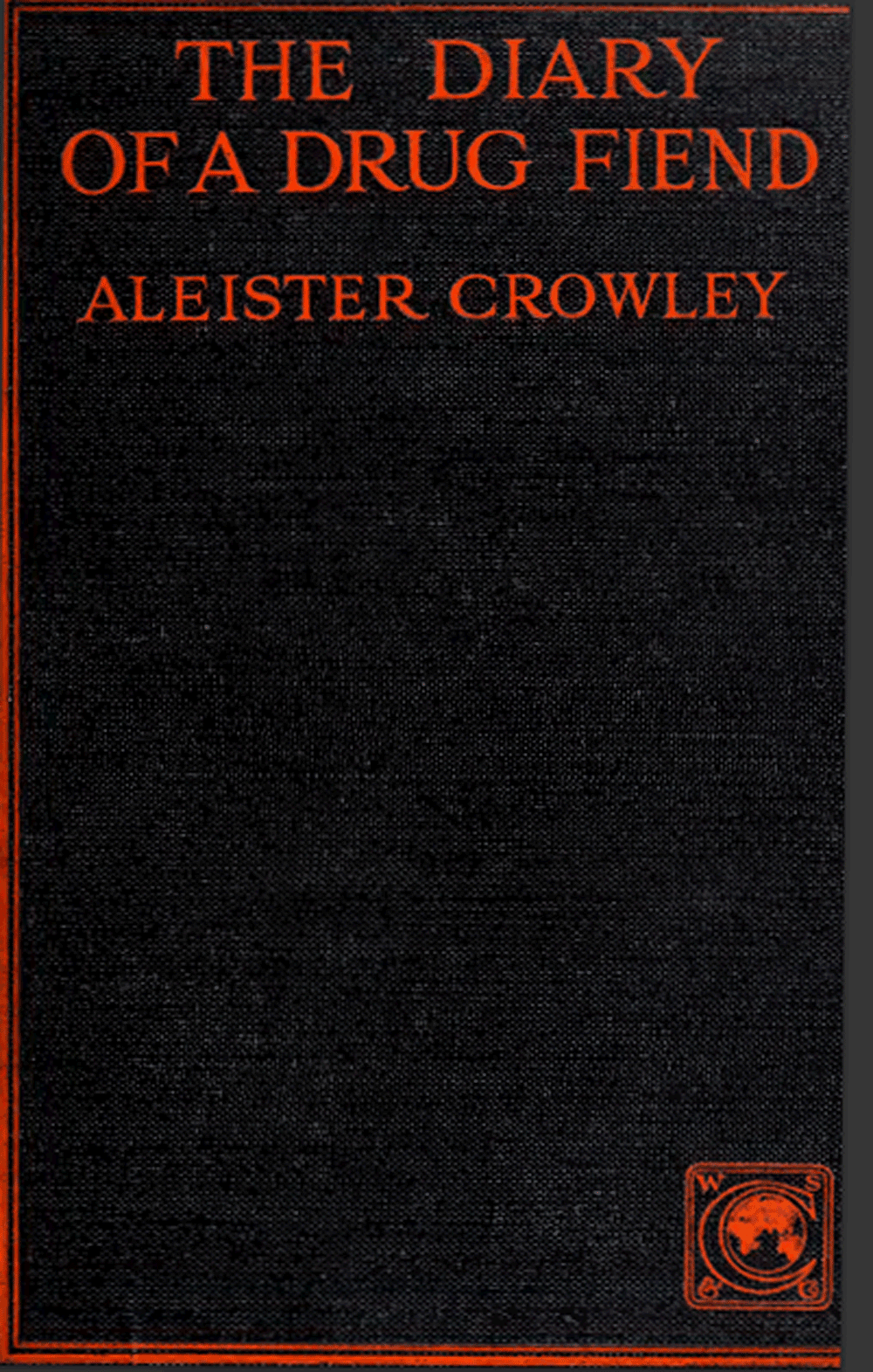
Diary of a Drug Fiend

This is the only full-cast recording of Aleister Crowley's 1922 classic paeon to common sense. It is the first book -- and so far almost the only book -- to stake out a philosophy of drug use that is compatible with human freedom, one in which we learn to use drugs as wisely as possible for the benefit of humanity. This recording was produced by the Drug War Philosopher and your purchases help support his effort to push back against the tragically counterproductive policy of drug prohibition, in the name of human freedom and of humanity's right to heal.

Purchase Your Copy


No cookies, no ads paid for by amoral and immoral billionaires (or trillionaires).


Unless otherwise indicated, no AI is used in the creation of site content. These essays represent the original ideas of their author and not the ideas that the author SHOULD have based on an algorithmic parsing of existing data. For more on this subject, consider the AI-related viewpoints to which the author subscribes as delineated in the New York Times opinion piece entitled "What 370,000 College Essays Tell Us About A.I.’s Effects on Creativity" by Rebecca Winthrop of the Brookings Institution.

The Partnership for a Death Free America is a proud sponsor of The Drug War Philosopher website @ abolishthedea.com.


Copyright 2026, Brian Ballard Quass Contact: quass@quass.com

tombstone for American Democracy, 1776-2024, RIP (up)