








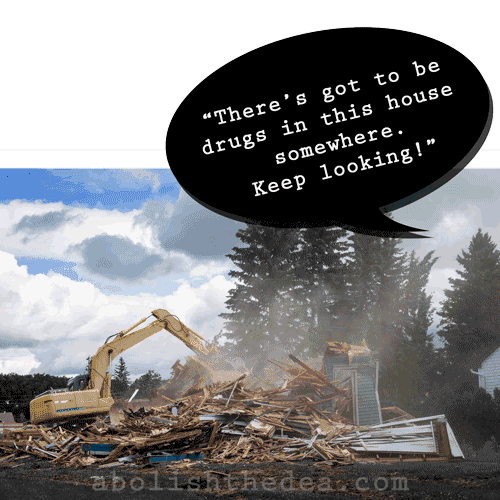
 Click the audio link above to listen to "There's No Place Like Home (until it's wrecked by a DEA SWAT team)," written and performed by the Drug War Philosopher @ abolishthedea.com.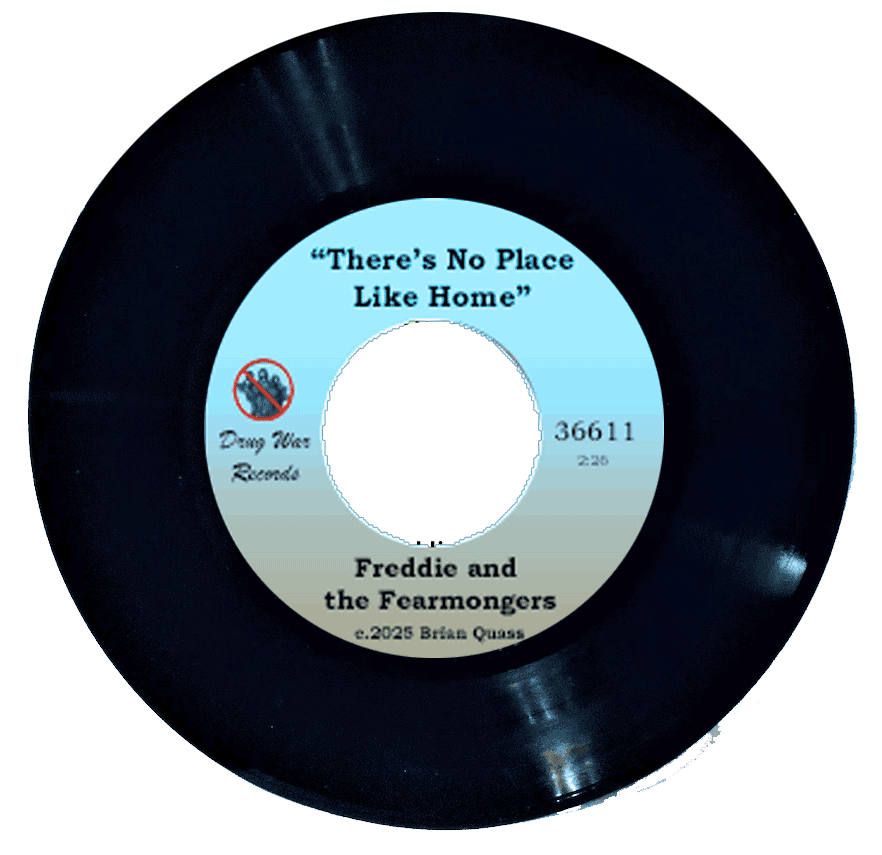
 Researchers say that the New York Times has been flooding the world with Drug War agitprop.
Drug prohibition is not a victimless crime.
In "The Book of the Damned," Charles Fort writes about the data that science has damned, by which he means "excluded." The fact that drugs can inspire and elate is one such fact, although when Fort wrote his anti-materialist broadside, drug prohibition was in its infancy.
UNESCO celebrates the healing practices of the Kallawaya people of South America. What hypocrisy! UNESCO supports a drug war that makes some of those practices illegal!
The drug war tells us that certain drugs have no potential uses and then turns that into a self-fulfilling prophecy by outlawing these drugs. This is insanely anti-scientific and anti-progress. We should never give up on looking for positive uses for ANY substance.
Magazines like Psychology Today continue to publish feel-good articles about depression which completely ignore the fact that we have outlawed all drugs that could end depression in a heartbeat.
Drug testing labs should give high marks for those who manage to use drugs responsibly, notwithstanding the efforts of law enforcement to ruin their lives. The lab guy would be like: "Wow, you are using opium wisely, my friend! Congratulations! Your boss is lucky to have you!"
"The homicidal drug is booze. There's more violence on a Saturday night in a neighborhood tavern than there has been in the whole 20-year history of LSD." -- Timothy Leary
Getting off some drugs could actually be fun and instructive, by using a variety of other drugs to keep one's mind off the withdrawal process. But America believes that getting off a drug should be a big moral battle.
Reagan paid a personal price for his idiocy however. He fell victim to memory loss from Alzheimer's, after making a career out of demonizing substances that can grow new neurons in the brain!
Researchers say that the New York Times has been flooding the world with Drug War agitprop.
Drug prohibition is not a victimless crime.
In "The Book of the Damned," Charles Fort writes about the data that science has damned, by which he means "excluded." The fact that drugs can inspire and elate is one such fact, although when Fort wrote his anti-materialist broadside, drug prohibition was in its infancy.
UNESCO celebrates the healing practices of the Kallawaya people of South America. What hypocrisy! UNESCO supports a drug war that makes some of those practices illegal!
The drug war tells us that certain drugs have no potential uses and then turns that into a self-fulfilling prophecy by outlawing these drugs. This is insanely anti-scientific and anti-progress. We should never give up on looking for positive uses for ANY substance.
Magazines like Psychology Today continue to publish feel-good articles about depression which completely ignore the fact that we have outlawed all drugs that could end depression in a heartbeat.
Drug testing labs should give high marks for those who manage to use drugs responsibly, notwithstanding the efforts of law enforcement to ruin their lives. The lab guy would be like: "Wow, you are using opium wisely, my friend! Congratulations! Your boss is lucky to have you!"
"The homicidal drug is booze. There's more violence on a Saturday night in a neighborhood tavern than there has been in the whole 20-year history of LSD." -- Timothy Leary
Getting off some drugs could actually be fun and instructive, by using a variety of other drugs to keep one's mind off the withdrawal process. But America believes that getting off a drug should be a big moral battle.
Reagan paid a personal price for his idiocy however. He fell victim to memory loss from Alzheimer's, after making a career out of demonizing substances that can grow new neurons in the brain!


 (up)
(up)