





Homepage of the Drug War Philosopher, Brian Quass
blog icon orange rss icon with stylized radio waves bird icon for twitter bird icon for twitter substack icon


back navigation arrow


Thomas Szasz Under Attack

Having failed to refute him rationally, critics resort to metaphysics

by Brian Ballard Quass, the Drug War Philosopher

October 26, 2026


Good morning, class.

Oh, please, hold your applause, guys, you're embarrassing me. True, I am the only philosopher who holds drug prohibition up to the full measure of scorn that it deserves, but that hardly makes me god. In fact, I'm scarcely even a DEMIgod. Think of me, rather, as the one philosopher in America who hasn't completely lost his flippin' mind when it comes to drugs -- although I'm sure that there are a few outliers (think Mike Jay1 2 3 4 and Jacob Sullum5 6 7) who will be found to exhibit only moderate impairment in this quarter8. And I would even lose my claim to singularity if Thomas Szasz were alive today. Speaking of which, it is amazing how chronology plays such a large role in the destiny of human beings. Am I right? Take me, for instance. There's no telling whither my disdain for drug prohibition might have taken me had the epoch of my philosophical enlightenment on this subject aligned more felicitously with that of the academic in question. Abbott might have finally met his Costello and vicey versy. Instead, I've spent the last eight years trying to get a didactic rise out of philosophers with my attacks on the untenable presuppositions of the drug prohibitionists and been met with nothing but indignant silence all down the line. I've learned that it is bad manners to talk about drugs in academia. Most academics have long since made their peace with ignoring the topic altogether. And no wonder. They have pedantically drawn conclusions about the world in profusely annotated research papers-- conclusions that only make sense when one considers drug prohibition as a natural baseline for a democratic society, such as the laughable idea that depression is a tough nut to crack. If they just once were to consider the role of drug prohibition in biasing their conclusions, they would have to take down their most cross-referenced papers and replace them with analyses that actually assume the existence of the world as it really is.

Okay, fine, I'll accept another 30 seconds of this unbridled adulation and then we'll begin today's class. 30, 29... Oh my, and now everybody is actually standing UP, even. Please!

Today I'd like to defend Thomas Szasz, author of The Myth of Mental Illness9, from an interesting charge that has been leveled against him by academia. It has been said that Szasz presupposes a dualistic world, one in which there are physical problems on the one hand and mental problems on the other hand and that ne'er the twain shall meet in Szasz's philosophy10. This, we're told, is problematic. Szasz's assumptions, the critics tell us, run counter to the modern understanding according to which Descartes is seen to have erred in proposing the existence of two separate realms of this kind. In reality, the physical and mental worlds cannot be neatly divided like this. Either these categories affect each other or they are both illusory, with reality consisting of a sort of mind-matter, a conglomeration that itself can be interpreted differently according as we change our definitions of its two ingredients, namely, the mental and the physical. But those readers who dislike philosophical discourse can relax. We need go no further into detail here in order to understand the critic's charge against Szasz. The charge is simply this: that if the mental and the physical are ultimately one, then what is wrong with placing medical doctors in charge of psychological problems?

To answer this question, I shall invoke the scholarly adage employed by William James in his solution to the famous metaphysical riddle about the Adirondack squirrel (see the beginning of the second lecture in Pragmatism -- A New Name for Some Old Ways of Thinking 11). The adage tells us that whenever we encounter a contradiction, we must make a distinction. In this case, we have to distinguish between two definitions of reality, a practical one and a metaphysical one. A writer must speak of matter and mind in order to be understood. But the critics in this case imagine a metaphysical world in which everything is matter, and mind is simply an epiphenomenon. Then they carp at Szasz for not inhabiting that world. But why should he? That metaphysical world is strategically defined to place materialist doctors in charge, doctors who look at mind and say "nothing to see here." How do I know this is true? The proof is extant. This helps explain why scientists lack all common sense when it comes to drugs, why they fail to recognize any benefits to the use of substances that obviously work and that have been considered godsends since the time of Galen. They insist that truth can only be found by looking under a microscope, not by putzing around with unverifiable feelings and anecdotes. And no wonder. If drugs can be judged merely by their effects as experienced by the user, then who needs scientists and doctors? No one, except insofar as those professionals can warn us about drug dangers in the abstract.

Szasz was dealing with the world as it is, with reality as our species has come to conceive of it. And how did that conception come about? That world was created for us in the late 18th and early 19th century at a time when medical doctors were assumed to be experts on health per se, with no distinction then being made between mental and physical health12. Yes, it is true that the professions of scientist and doctor could, theoretically, be stretched to include expertise in compassion and counseling, but this is not how the world works. Nor does it seem like a consummation to be wished, considering that an expertise in physical medicine is enough to ask of any one person in this world, without also requiring that they be empaths who can guide human beings on the productive use of godsend medicines. You see here, by the way, that I myself have just used the word "physical." One has to use that term to be understood today, but it implies no metaphysical position on my part, just as Szasz's discussion of drugs implies no metaphysical position on his part. He is simply opining on the world as it is, using the terms that we use today to make sense of the world, even when they don't seem to fit with our philosophical acceptance of the ultimate holism behind things. The fact is that we simply do not know exactly where and how what we call the mental or psychological interacts with what we call the physical or material world; until we know how these things interact and affect each other, we are compelled to talk in terms of a mental world in contradistinction to a physical world. We should only be blamed for doing so when we claim to be thereby making metaphysical claims about reality writ large.

Fair enough? If you still don't get it, pick up a video of my foregoing remarks on the way out and watch them again tonight. If you pay close attention, I think you'll find that I have settled the hash of the above-mentioned critics but good. You've got to admire the creativity of these materialists, however. They couldn't defeat the common-sense arguments of Thomas Szasz, so they stooped to metaphysics. Very sneaky. Veeeeeery sneaky.

One final note: I composed this lecture before I had alighted on an online paper that is highly apposite to the discussion of Szasz and Dualism. It is an article by a former Szasz associate and psychotherapist by the name of Anthony Stadlen13. It was written in response to some dubious criticism of Szasz from psychologist Christina Richards. Fortunately, I have found upon reading Stadlen's piece that my remarks on the subject above require no amendment in light of the new information provided by this paper -- except to say that Szasz himself was well aware of the issues that the subjects of his writing raised when it came to dualism and the so-called mind-body problem and that he saw this as an area requiring much future work. Szasz, writes Stadlen, "assured me, at the end of his life, that he stood by his early papers and saw this as a field wide open for research." Stadlen later summarizes the views of Szasz on dualism as follows:

He didn’t even believe in ‘the mind’, let alone in ‘mind’ and ‘body’ as separate ‘substances’. And his opponents say there are two kinds of illness, ‘physical’ and ‘mental’ – but he said there is only one. A singular ‘dualist’. 14
Szasz and the Unreliable Reader. When is a ‘critique’ not a critique?


EXTRA CREDIT

I have probably been taken to task for my criticism of Michel Foucault in my essay entitled Justice for the Med-Dependent Depressed 15. Someone (you, perhaps?) has almost certainly thought that I was rash in that admittedly interesting piece of mine. And yet... two things: First, I wasn't so much criticizing Foucault as I was pointing out what William James would call the pragmatic consequences of taking Foucault seriously: namely, an inability to take seriously the transformative potential of the American ideal of justice, since justice, according to that intellectual, is nothing more than the practical expression of power. This understanding, I fear, cuts the ground out from under those who would attempt to end drug prohibition by appealing to an American's sense of disinterested justice.

William James reminds us that we are all arch conservatives when it comes to changing our basic viewpoints in life. We are highly resistant to making any sudden changes to our beliefs based on what we read, hear, or see. And yet my probable remonstrants can take comfort in the fact that I cannot unsee what I have thus far seen in reading Foucault. I will of necessity, going forward, have to assimilate his views of the causative role of power into my analyses, if only to explain to my own satisfaction why I can safely ignore him in any given essay. The same goes for what at least one of you almost certainly considered to be my "hatchet jobs" on Karl Marx, namely, my essays entitled: The Missing Ingredient in the Marxist Utopia 16 and The False Consciousness of Karl Marx 17. Though I consider Marx like Charles Darwin in this respect: that both, if alive today, would have to completely re-imagine their theories to encompass and accord with all manner of new facts and findings, the very nature of which they could have scarcely imagined in their day, let alone predicted.


Notes for essay entitled Thomas Szasz Under Attack: Having failed to refute him rationally, critics resort to metaphysics:

1: “Blue Tide - Mike Jay.” 2025. Mike Jay. May 18, 2025. https://mikejay.net/books/blue-tide/. (up)
2: “Artificial Paradises - Mike Jay.” 1999. Mike Jay. May 18, 2025. https://mikejay.net/books/artificial-paradises/. (up)
3: How the West turned the world into a police state: a philosophical review of Psychonauts: Drugs and the Making of the Modern Mind, by Mike Jay DWP (up)
4: Notes on Artificial Paradises by Mike Jay DWP (up)
5: Sullum, Jacob. 2005. “Thomas Szasz Takes on His Critics.” Reason.com. May 1, 2005. https://reason.com/2005/05/01/thomas-szasz-takes-on-hiscriti/. (up)
6: An open Letter to Jacob Sullum of Reason magazine DWP (up)
7: Our Minds, Ourselves: a philosophical review of Saying Yes by Jacob Sullum DWP (up)
8: They don't have skin in the game. Sullum won't even respond to my heads-up that ethicists are discussing state-assisted suicide for the depressed without discussing drug prohibition which outlaws drugs that could inspire the depressed to live. (up)
9: Noble, Barnes. 2010. “The Myth of Mental Illness: Foundations of a Theory of Personal Conduct.” Barnes & Noble. February 23, 2010. https://www.barnesandnoble.com/w/the-myth-of-mental-illness-thomas-s-szasz/1111509892. (up)
10: Stadlen, Anthony. 2014. “Szasz and the Unreliable Reader When Is a ‘Critique’ Not a Critique?.” Existential Analysis: Journal of the Society for Existential Analysis 25 (2). https://doi.org/10.65828/13hy7w08. (up)
11: James, William. n.d. “Pragmatism: A New Name for Some Old Ways of Thinking.” Https://Www.Gutenberg.Org/Files/5116/5116-h/5116-h.Htm. Accessed October 9, 2026. https://www.gutenberg.org/cache/epub/5116/pg5116-images.html. (up)
12: When legislators take sides in scientific disputes DWP (up)
13: Anthony, Stadlen. n.d. Anthony Stalden: My Blogs. Blogger.com. Accessed October 26, 2026. https://www.blogger.com/profile/10748673258255174330. (up)
14: Stadlen, Anthony. 2014. “Szasz and the Unreliable Reader When Is a ‘Critique’ Not a Critique?.” Existential Analysis: Journal of the Society for Existential Analysis 25 (2). https://doi.org/10.65828/13hy7w08. (up)
15: Justice for the Med-Dependent Depressed DWP (up)
16: The Missing Ingredient in the Marxist Utopia DWP (up)
17: The False Consciousness of Karl Marx DWP (up)


read more essays here


Ten Tweets

against the hateful war on US


Guess who's in charge of protecting us from AI? Chuck Schumer! The same guy who protected us from drugs -- by turning America into a prison camp full of minorities and so handing two presidential elections to Donald Trump.

To treat opioid use disorder, we should re-normalize the peaceable smoking of opium at home as an alternative to drinking alcohol.

There are definitely good scientists out there. Unfortunately, they are either limited by their materialist orthodoxy into showing only specific microscopic evidence or they abandon materialism for the nonce and talk the common psychological sense that we all understand.

We should start taking names. All politicians and government officials who work to keep godsends like psilocybin from the public should be held to account for crimes against humanity when the drug war finally ends.

Freud thought cocaine was a great antidepressant. His contemporaries demonized the drug by focusing only on the rare misusers. That's like judging alcohol by focusing on alcoholics.

The search for SSRIs has always been based on a flawed materialist premise that human consciousness is nothing but a mix of brain chemicals and so depression can be treated medically like any other physical condition.

For those who want to understand what's going on with the drug war from a philosophical point of view, I recommend chapter six of "Eugenics and Other Evils" by GK Chesterton.

Drug warriors have taught us that honesty about drugs encourages drug use. Nonsense! That's just their way of suppressing free speech about drugs. Americans are not babies, they can handle the truth -- or if they cannot, they need education, not prohibition.

The FDA tells us that MDMA is not safe. This is the same FDA that signs off on Big Pharma drugs whose advertised side effects include death itself.

Check out the 2021 article in Forbes in which a materialist doctor professes to doubt whether laughing gas could help the depressed. Materialists are committed to seeing the world from the POV of Spock from Star Trek.


Click here to see All Tweets against the hateful War on Us


back navigation arrow
Book Cover

Break the ice with a sledgehammer: place this book on your coffee table.

This book features 150 annotated images, designed to force brainwashed Americans to confront the fact that drug prohibition is wrong. Here is what author Richard Parrish II says of the book's compiler: "The drug prohibition philosopher provides first-hand, principled, persuasive, and insightful arguments against the current drug prohibition regime..."

Purchase Your Copy
Book Cover

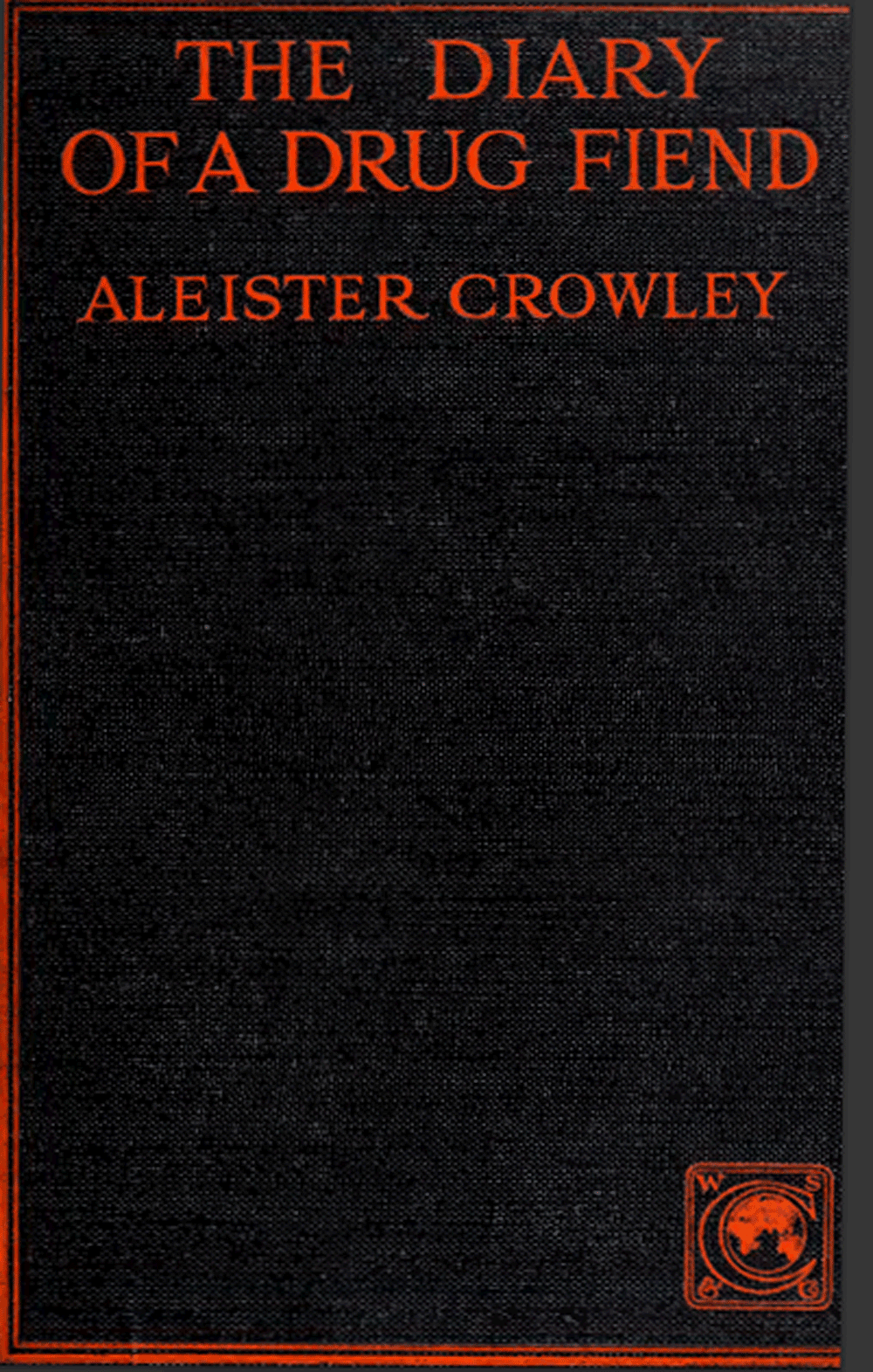
Diary of a Drug Fiend

This is the only full-cast recording of Aleister Crowley's 1922 classic paeon to common sense. It is the first book -- and so far almost the only book -- to stake out a philosophy of drug use that is compatible with human freedom, one in which we learn to use drugs as wisely as possible for the benefit of humanity. This recording was produced by the Drug War Philosopher and your purchases help support his effort to push back against the tragically counterproductive policy of drug prohibition, in the name of human freedom and of humanity's right to heal.

Purchase Your Copy


No cookies, no ads paid for by amoral and immoral billionaires (or trillionaires).


Unless otherwise indicated, no AI is used in the creation of site content. These essays represent the original ideas of their author and not the ideas that the author SHOULD have based on an algorithmic parsing of existing data. For more on this subject, consider the AI-related viewpoints to which the author subscribes as delineated in the New York Times opinion piece entitled "What 370,000 College Essays Tell Us About A.I.’s Effects on Creativity" by Rebecca Winthrop of the Brookings Institution.

The Partnership for a Death Free America is a proud sponsor of The Drug War Philosopher website @ abolishthedea.com.


Copyright 2026, Brian Ballard Quass Contact: quass@quass.com

tombstone for American Democracy, 1776-2024, RIP (up)