




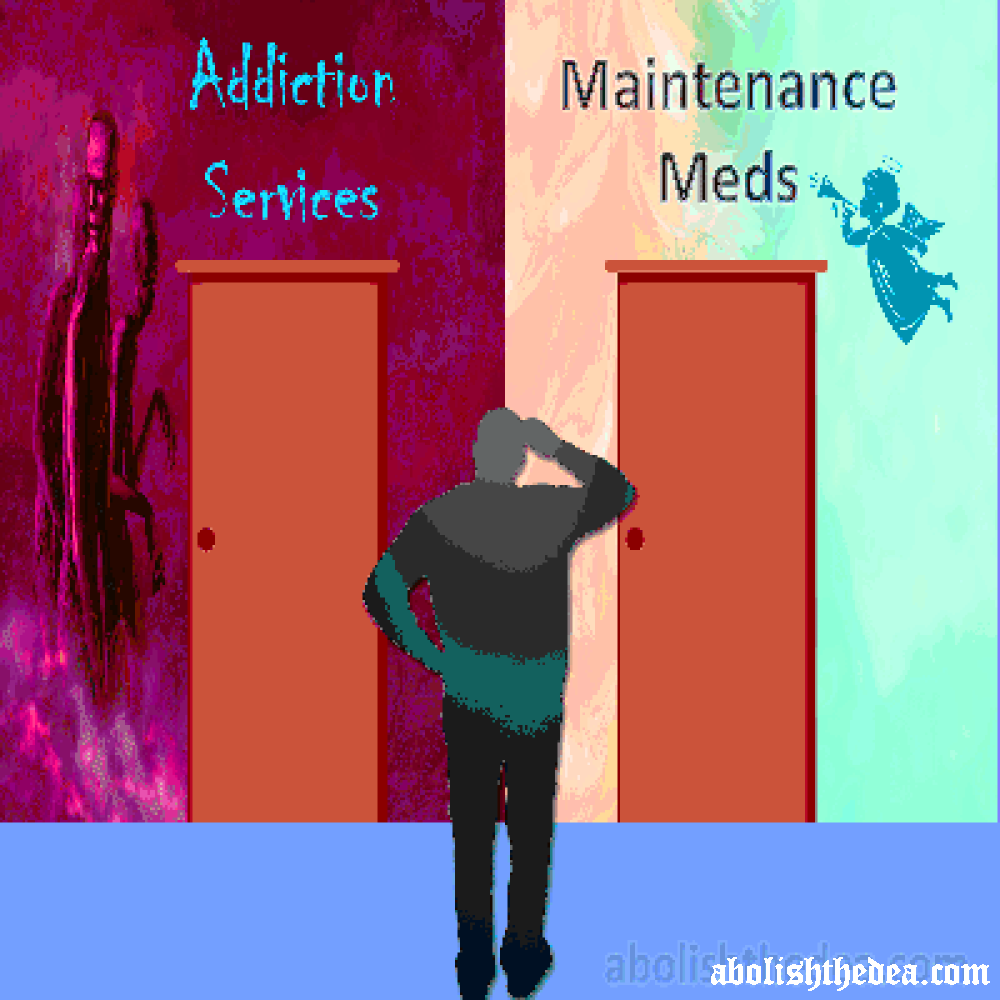
Homepage of the Drug War Philosopher, Brian Quass
blog icon orange rss icon with stylized radio waves bird icon for twitter bird icon for twitter substack icon


back navigation arrow


Warning: This article contains honest talk about drug benefits. Viewer discretion is advised.

How drug prohibition has scared Americans into uneducated silence about pharmacological godsends.

by Brian Ballard Quass, the Drug War Philosopher (Substack version)

October 5, 2026


The following was written in response to some thoughtful feedback that I received from a subscriber to my substack at https://drugwarphilosopher.substack.com/

Thanks for the message, _____. Sorry for the delay. I saw that I had a message but I could not determine who had messaged me because I did not sufficiently understand the Substack interface.

You raise a good point. Many people have valid reasons to remain silent on these subjects. That is one of the worst things about drug prohibition: it encourages self-censorship. When I began writing philosophical essays about drug prohibition seven years ago, I myself was nervous about even mentioning words like "heroin" and "cocaine," even though I was a freelancer and was not likely to be punished for writing freely on the subject. I realized that I had been taught, both in subtle and obvious ways, to think only of downsides for such drugs. I had been taught to fear even mentioning the names of the drugs that I had been taught to hate. Subsequent study assured me of two things, however: 1) that even opiates and cocaine can be used wisely if we teach "best practices" and personal responsibility, and 2) that there are drugs with far less addictive potential than heroin and cocaine, alternative drugs that can produce the same sort of results that people are looking for when they use heroin and cocaine. As for opiates in particular, I learned that the least addictive way to use them has always been the smoking of a pipe of raw opium once or twice a night (smoking, that is, as opposed to the more potent drug-delivery protocol of eating opium). I learned that smoking an opium pipe at night has a similar risk profile to drinking a couple of nightly beers (see the testimony of various 19th-century doctors to this effect in "The Truth about Opium" by William Brereton1). And yet we see what prohibition has done: it outlawed the raw product and thereby encouraged the illicit sale of far more powerful opiates.

I feel strongly about these topics because the status quo, in my view, is so unfair to the millions of depressed in the world. Last weekend, my 35-year-old cousin was back in the hospital after her third suicide attempt over the last 15 years, this despite the fact that she had been religiously taking her antidepressants every day at 7 p.m. during that time period. It bothers me to think that such people go to the ER for help and that the ER has nothing to give them – nothing -- not even a bit of a psychological "timeout" with the help of laughing gas, say. They have nothing to give the depressed but the promise of an eventual cure with still more antidepressants. But it's worse than this, actually. If nothing works for my cousin, the doctors may start thinking about subjecting her to shock therapy or some other brain-damaging protocol. Shock therapy, in a world full of psychoactive godsends! This status quo shows, in my view, how drug prohibition has rendered modern healthcare barbaric and why we must keep fighting for a whole new way of thinking about drugs – one that is consistent with human freedom and common sense and that acknowledges the power of education. America spends $51 billion a year arresting Americans who seek to improve their mind and mood 2 -- imagine if we spent even $1 billion on educating Americans as to "best use" practices based on actual user experience! Imagine if we educated rather than arrested. Imagine that we certified substances as to quality and dose rather than militarizing law enforcement and involving them in an endless game of cat-and-mouse with the dealers and cartels that drug prohibition has created out of whole cloth.

I'd like to add a final word about potential addiction, if I may, since this, in my opinion, is the fear that many people have about re-legalizing mind and mood medicine. I have already mentioned that beneficial drugs exist that have little or no addictive potential – but even if that were not so, there are ways to treat addiction with willpower, this despite all the doom-and-gloom of the biochemical determinists. The proof of this statement is in the American history books -- or at least it is in those few American history books that have not been censored to pass muster with drug prohibitionists. Thomas Szasz points this out in Ceremonial Chemistry3. He reminds us that when Malcolm X decided to get his followers off of heroin, he did not turn to the latest medical science about dependency. He never once considered his followers to be suffering from a board-certified "illness." He rejected all help from the white mainstream medical field. Instead, he simply used psychological common sense. He gave his followers a REASON to get off heroin. He told them that their continued use of the drug was exactly what "The Man" wanted from them, and that to get off the drug would be to set themselves free from "The Man." This was all that his followers needed to hear. They now had a reason to get off the drug, and that's exactly what they proceeded to do. Thomas Szasz expands on this subject as follows in "The Ethics of Addiction":

The opiate habit, like the cigarette habit or the food habit, can be broken—usually without any medical assistance —provided the person wants to break it. Often he doesn’t. And why indeed should he if he has nothing better to do with his life? Or as happens to be the case with morphine, if he can live an essentially normal life while under its influence?4


This latter question is especially relevant when we consider the fact that 1 in 4 American women take a psychiatric "med" every day of their life and we praise them for it! And yet it's considered a huge problem when someone uses heroin or cocaine daily. I fear that the "real" problem there is simply the fact that doctors are not getting their "cut." Of course, if I were dependent on heroin instead of antidepressants, life would be hard for me, if only because our government is spending $51 billion a year to make it so. But there would be at least one enormous benefit to being dependent on those kinds of drugs instead of being dependent on antidepressants. It would mean that I no longer had to see a doctor 1/3rd my age every three months of my life to be asked humiliating questions such as "Do You Hear Voices?" -- all so that I can qualify for yet another 3-month prescription of an expensive, underperforming and dependence causing med that is far harder to kick than heroin!

Thanks again for raising that important point about the fears of being honest in the age of drug prohibition. I'll try to keep that in mind the next time that I look at my lackluster site statistics!

Have a great week!


Notes for essay entitled Warning: This article contains honest talk about drug benefits. Viewer discretion is advised.: How drug prohibition has scared Americans into uneducated silence about pharmacological godsends.:

1: The Truth About Opium by William H. Brereton DWP (up)
2: “War on Us – the War on Drugs Is a War on All of Us.” 2019. Waronus.com. 2019. http://waronus.com/. (up)
3: “Ceremonial Chemistry – Syracuse University Press.” 1974. Syr.edu. 2026. https://press.syr.edu/supressbooks/1114/ceremonial-chemistry/. (up)
4: “Full Text of ‘The Ethics Of Addiction.’” 2026. Archive.Org. 2026. https://archive.org/details/382239100-the-ethics-of-addiction. (up)


read more essays here


Ten Tweets

against the hateful war on US


"Like Christians burning mosques and temples to spread the word of Jesus, modem drugabuseologists burn crops to spread the use of alcohol." -- Ceremonial Chemistry, p. 48

This is why "rock stars" use drugs: not just for performance anxiety (which, BTW, is a completely UNDERSTANDABLE reason for drug use), but because they want to fully experience the music, even tho' they may be currently short on money and being hassled by creditors, etc.

The idea that "drugs" have no medical benefits is not science, it is philosophy, and bad philosophy at that. It is based on the idea that benefits must be molecularly demonstratable and not created from mere knock-on psychological effects of drug use, time-honored tho' they be.

My depression would disappear overnight if religiously intolerant America would just allow me to live as freely as Benjamin Franklin.

Capitalism naturally results in disease-mongering by a self-interested medically establishment -- and disease-mongering requires the suppression of medicines that work holistically.

Healthline posted an article in 2021 about the benefits of getting off of antidepressants. They did not even mention the biggest benefit: NO LONGER BEING AN ETERNAL PATIENT -- no longer being a child in the eyes of an all-knowing healthcare system.

Anyone who has read Pihkal by Alexander Shulgin knows that the drug warriors have it exactly backwards. Drugs are our friends. We need to find safe ways to use them to improve ourselves psychologically, spiritually and mentally.

Psychiatrists prescribe drugs that muck about with a patient's biochemical baseline, making them chemically dependent and turning them into patients for life.

Another problem with MindMed's LSD: every time I look it up on Google, I get a mess of links about the stock market. The drug is apparently a godsend for investors. They want to profit from LSD by neutering it and making it politically correct: no inspiration, no euphoria.

Even if the FDA approved MDMA today, it would only be available for folks specifically pronounced to have PTSD by materialist doctors, as if all other emotional issues are different problems and have to be studied separately. That's just ideological foot-dragging.


Click here to see All Tweets against the hateful War on Us


back navigation arrow
Book Cover

Break the ice with a sledgehammer: place this book on your coffee table.

This book features 150 annotated images, designed to force brainwashed Americans to confront the fact that drug prohibition is wrong. Here is what author Richard Parrish II says of the book's compiler: "The drug prohibition philosopher provides first-hand, principled, persuasive, and insightful arguments against the current drug prohibition regime..."

Purchase Your Copy
Book Cover

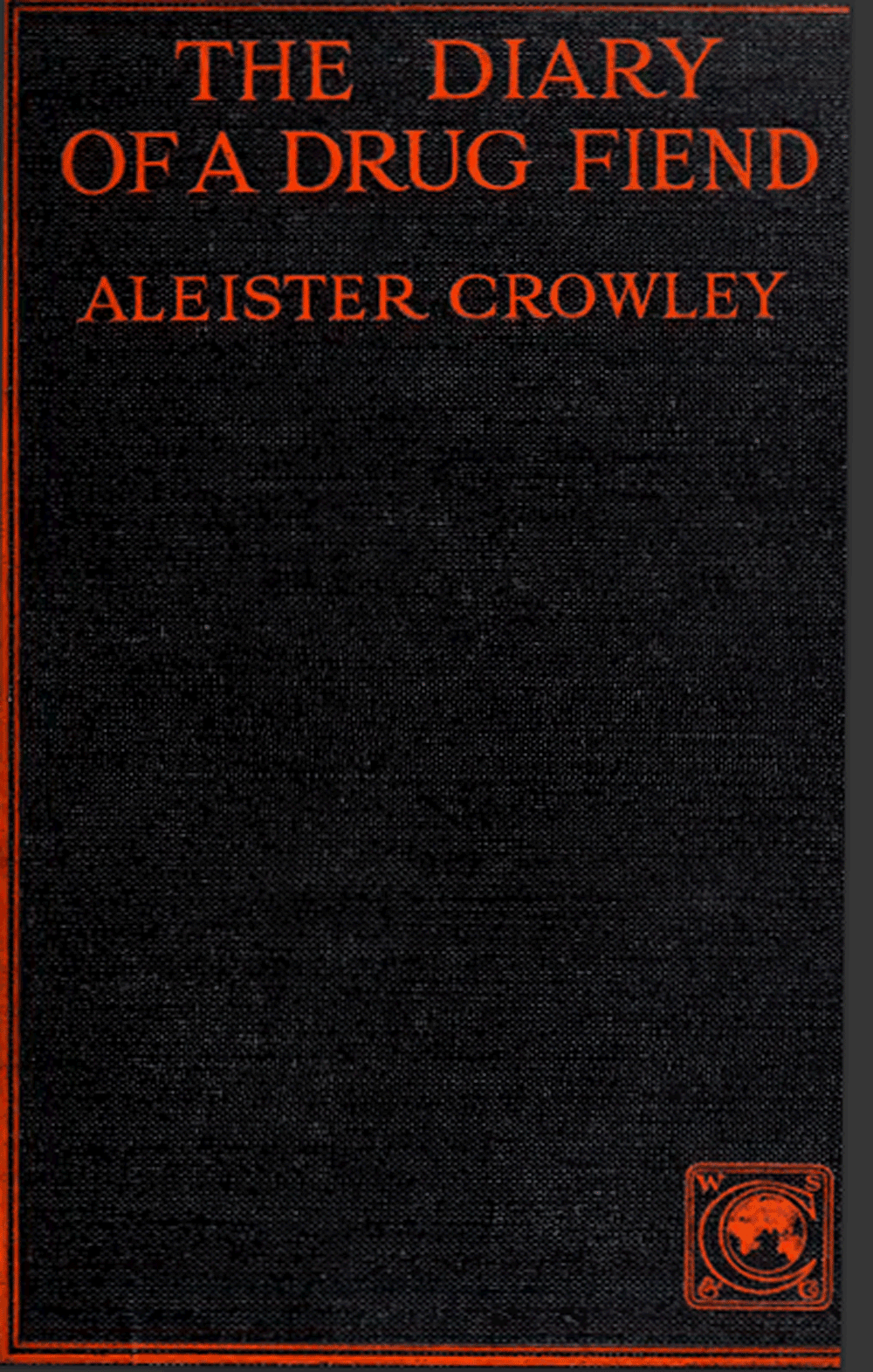
Diary of a Drug Fiend

This is the only full-cast recording of Aleister Crowley's 1922 classic paeon to common sense. It is the first book -- and so far almost the only book -- to stake out a philosophy of drug use that is compatible with human freedom, one in which we learn to use drugs as wisely as possible for the benefit of humanity. This recording was produced by the Drug War Philosopher and your purchases help support his effort to push back against the tragically counterproductive policy of drug prohibition, in the name of human freedom and of humanity's right to heal.

Purchase Your Copy


No cookies, no ads paid for by amoral and immoral billionaires (or trillionaires).


Unless otherwise indicated, no AI is used in the creation of site content. These essays represent the original ideas of their author and not the ideas that the author SHOULD have based on an algorithmic parsing of existing data. For more on this subject, consider the AI-related viewpoints to which the author subscribes as delineated in the New York Times opinion piece entitled "What 370,000 College Essays Tell Us About A.I.’s Effects on Creativity" by Rebecca Winthrop of the Brookings Institution.

The Partnership for a Death Free America is a proud sponsor of The Drug War Philosopher website @ abolishthedea.com.


Copyright 2026, Brian Ballard Quass Contact: quass@quass.com

tombstone for American Democracy, 1776-2024, RIP (up)
