If the red pill is LSD, the blue pill is a dependence-causing 'med'
What The Matrix tells us about American drug attitudes
by Brian Ballard Quass, the Drug War Philosopher
October 7, 2026
I am always about three decades behind the curve when it comes to trends. Only today have I decided to investigate what this "red pill-blue pill" business is all about in the movie "The Matrix"1. I know, I know. The film was released in 1999, 27 years ago now, but I've been busy. (A full list of my must-do chores is available upon request.) Besides, I've always had a bias against sci-fi films that play on the philosophically problematic notion of the "brain in a vat." I will not attempt to explain that bias here, except to point out that the book by Alvin Noe entitled "Out of our Heads" addresses at least some of my concerns in this quarter2. (See Noe's comments on page 12 about the importance of a face in communicating with others.) My focus in this essay is quite different, however: it concerns what I believe to be the obvious connection between this "pill" metaphor from "The Matrix" and drug prohibition.
First, I should note that the use and meaning of terms like "red pill" and "blue pill" have changed significantly over the years, and for the worse, I'm afraid. Generally speaking, "red pill" seems to be connected these days with misogyny and archly conservative viewpoints on all things humanistic -- viewpoints that are held to be obvious truths by the red pill crowd, who therefore hold their blue-pill counterparts in a form of condescending contempt, as who should say, "If they only knew the truth that we red-pillers have learned without having to read any dumb old books and stuff!" The motto of this gang seems to be: "Say it loud, I'm dumb and I'm proud!" In fact, I received a comment from a red-piller this very morning after referring tech triumphalists to the work of Alfred North Whitehead on the subject of consciousness; a red-pill techie gave me to understand in his response that the work of the British polymath was, and I quote, "Boring slop thats [sic] demonstrably false." I refrained from giving a snarky reply. These days I realize that I have won an argument whenever my opponent is forced to resort to the argumentum ad hominem, and what's more, I realize that any intelligent person reading such comments will understand that fact as well.
But this is by the way. My point is that I will be discussing below what I take to be the original philosophical meanings of the terms "red pill" and "blue pill," as opposed to the misogynistic and anti-liberal meanings that have accreted to those terms over the years. But first, let's remind ourselves of the original meanings of those terms by reading the relevant lines from the script of the first episode of the cyberpunk sci-fi franchise known as "The Matrix." In this scene, Morpheus is offering Neo his choice of pills:
Like everyone else, you were born into bondage... born into a prison that you cannot smell or taste or touch. A prison for your mind. Unfortunately, no one can be told what the Matrix is. You have to see it for yourself. This is your last chance. After this, there is no turning back. You take the blue pill... the story ends, you wake up in your bed and believe... whatever you want to believe. You take the red pill... ...you stay in Wonderland... and I show you how deep the rabbit hole goes. Remember... all I'm offering is the truth. Nothing more. 3
This proffered choice has multiple parallels in our world today, a world wherein our reality is shaped by narratives that are supported by media using the propaganda strategies that ultimately came from Nazi Germany -- especially the strategy of repeating a short statement over and over again until people come to believe it, whether that statement be that 'drugs kill' or that 'Coke is it.' One can choose to accept these media-supported narratives on all sorts of subjects, to allow them to subconsciously drive your behavior, or one can decide for themselves how to think about the world by turning off their TV and reading books, for instance, especially those books that were written in an era when today's baseline assumptions did not apply. In other words, one can 'take the blue pill' and submit oneself to endless indoctrination during commercial breaks, or one can 'take the red pill' by muting the volume and looking away. Apparently, the writers of The Matrix, the Wachowskis, had gender narratives in mind when they put this metaphorical tool in the hands of social critics4, but the pill metaphor can serve the purposes of conservatives as well as progressives, as subsequent events have all-too-clearly shown. I therefore suggest that we ask the following question: to which social narrative does this "pill" critique most ubiquitously apply in 21st-century America? On which issue is almost everybody "sucked in," as it were, by the reigning narrative in such a way as to yield absurd and inhumane results in the real world? I maintain that the obvious answer to this question is: drug prohibition5. The mainstream narrative on drugs has led to a world in which we will submit the depressed to brain-damaging shock therapy while refusing to let them use substances that would make that "therapy" unnecessary. We will even help to kill the depressed with drugs via state-assisted suicide, while refusing to let the depressed use drugs that could make them wish to live6.
In thinking of "The Matrix," I realize that I myself am Morpheus when it comes to American drug attitudes. My essays are the "red pills" that teach the site visitor the many inconvenient truths that are ignored by the modern narrative about drugs: the fact that drug prohibition has outlawed the rights of the depressed to heal, the fact that it has outlawed academic research into the origins and meaning of human consciousness, the fact that it has outlawed religion by outlawing precisely the kinds of drugs that have inspired the creation of religions in the past. Needless to say, these viewpoints are not popular. Almost all of my visitors appear to have been "blue-pilled," judging by my site's enormous "bounce rate" on Google Analytics. Most people apparently take one look at my essays and then literally "fold up shop" like a cartoon business owner who has just seen Caspar the Friendly Ghost.
PARSING THE MATRIX
To better demonstrate the relevance of "The Matrix" to drug attitudes, unintentional though that relevance may be as far as the producers were concerned, I will now proceed to parse the lines that Morpheus speaks to Neo as quoted above.
Like everyone else, you were born into bondage...
Like everyone else, you were raised from childhood to hate drugs and were "protected" from learning anything at all about drug benefits...
...born into a prison that you cannot smell or taste or touch.
Thanks to drug prohibition, you are only allowed to experience the world with your feeble default senses; you are barred from improving your default perceptions, from developing new senses, and from experiencing the world synesthetically, all of which are capabilities that substance use could have enabled for you.
A prison for your mind.
You are stuck inside the box of your upbringing and culture, bound to endlessly repeat counterproductive responses to stimuli thanks to a sort of PTSD in petto (aka neurosis) that afflicts every human being, every human being who is not allowed to step outside themselves with the help of medicines that allow that potentially therapeutic state of mind to come about.
Unfortunately, no one can be told what the Matrix is. You have to see it for yourself.
No one can be told what certain "altered states" are. You have to experience them for yourself. This is a common theme in the user accounts of psychedelic drugs, the fact that the transcendent results cannot be conveyed by language, except indirectly, perhaps, through metaphor.
This is your last chance. After this, there is no turning back. You take the blue pill, the story ends, you wake up in your bed and believe... whatever you want to believe.
If you ignore the disconcerting truth about western drug attitudes, the story ends, you continue believing whatever you always believed, namely, that antidepressants are blessed "meds" and other psychoactive substances are cursed "drugs."
You take the red pill... ...you stay in Wonderland... ...and I show you how deep the rabbit hole goes.
This is so very true of psychedelic drug experiences, which are only just beginning to show westerners what human consciousness is capable of.
Remember... ...all I'm offering is the truth. Nothing more.
Nothing more, yes, but it is still more than enough. The truth is certainly stranger than fiction when it comes to the states of consciousness that are rendered possible by certain substance use, as the following user reports reveal. I won't bias the reader by telling them which drugs helped inspired the user reports that follow, except to say that the final amazingly therapeutic user report was in response to the use of some form of DMT:
We are given the chance to learn the truth of Life inherent in each of us, all of truth, perfected, beyond the faculties of our senses. A truth inexpressible in words or by concepts and judgments...
Almost anything Saint Theresa did, you can do better if you bear to be ravished by évanouissement réveillé.
Every act is a sacrament. Incidents which in the ordinary way would check one or annoy one, become merely material for joyous laughter.
Trains of vivid visible images rapidly passed through my mind and were connected with words in such a manner, as to produce perceptions perfectly novel.
Geometry exploded across my vision and soon I was in another place entirely. This was a house not unlike the one I was physically in, the walls were colors and faces pulsing with the now louder music, I saw every possible color shift into another with each beat, and it was as though the walls were people. They all wordlessly welcomed me and I danced with them as part of the walls. I felt such an overwhelming sense of belonging as if all of the loneliness I had felt before in my life was just debt building up to be repaid in this moment.
PERSONAL NOTE
I have to step out of character for a moment now as a dispassionate essayist in order to scream at America's unjust healthcare system. I have a 35-year-old cousin who is in the hospital as I type this after her third suicide attempt in 15 years. She spent all 15 of those years dutifully taking her expensive, underperforming and dependence-causing Big Pharma "meds" every day of her life -- and thinking that she was a good patient for doing so. And look where the "miracle" drugs of modern science have gotten her. And why was she placed on these "meds" in the first place? She was placed on these "meds" because we have outlawed substances like the one whose use has just been described above. This is a screaming injustice and yet amazingly, I am the only one who is pointing this out. This is the kind of injustice that Mad in America will not even let me discuss on their platform.7 I am not an "expert" after all. Only academics are the experts on my condition -- or on my cousin's condition. I only wish that my cousin had the right to "dance with the walls" as well. Instead, all they have to give her are more antidepressants. And we should be happy, because her scientific caretakers might have decided that she needed brain-damaging shock therapy instead. They might have even concluded that she needed state-assisted suicide.8 Anything is on the table these days for the depressed in the age of drug prohibition -- anything except for healthcare freedom.
LSD
I am not the only one to see the relevance of drugs to the "pill" dilemma created by the Wachowskis, though I am certainly the only one to use the dilemma to directly question the propriety of drug prohibition. In his 2015 book, "Matrix Warrior: Being the One," author Jake Horsley likens the red pill to LSD, claiming that it gave Neo the power to free himself from the mendacious narrative of the Matrix.9 I have not read that book -- my philosophical interest has not yet triumphed over my disinterest in the film as a work of art. But Jake has raised a crucial point here, a point that the "pill" metaphor should help us to appreciate. One of the obvious motives of the creators of the Drug Prohibition Matrix is to keep us from having the mental ability to transcend the petty limitations imposed on us by a corrupt status quo. Tyrants want to do more than make unjust laws -- they want those laws to be FELT as unjust, and that cannot happen in a world in which citizens are able to improve their minds to the extent that they can "see through" the injustices and so laugh them off as being literally beneath contempt. This is the psychological reason that the Chinese government in the 19th century disliked the opium habit (putting aside the economic reasons and the fact that the China of the time disliked doing business with hated foreigners). The government wanted a war-like people, not people who were content within their own skins and who were tolerant of the world around them.10
By the way, if the red pill is LSD, then surely the blue pill is an antidepressant such as Effexor, a drug whose theme song might be called: "Don't worry, be satisfied..." -- satisfied with the mainstream narrative, that is, which is the idea that there are two types of psychoactive substances in the world: blessed "meds" and evil "drugs."
This is one of the many reasons why I find drug prohibition so objectionable. Despots of yore sought to control what we could think about the world. Modern tyrants are more ambitious: they want to control how and how much we can think and feel about the world. The message of the modern tyrant is: "Not only are we going to screw with you, but we're going to prevent you from successfully 'wrapping your head' around that mistreatment by forcing you to feel every atom of that injustice, without possessing any 'get out of jail free' cards with the help of altered states."
Finally, a quick observation. I noticed in researching this article that many pundits on this subject are determinists. The far-right consumers of the red pill insist that your pill color is all that matters in life. If you know a person's pill color, you have figured that person out. These same determinists seem to be very angry and mean-spirited as well. And these observations have an obvious connection with drug prohibition, insofar as that deadly social policy has outlawed all substances whose use conduces to harmony and understanding, just as it outlaws drugs that can take advantage of neuroplasticity. As Troy Farah wrote in Vice magazine in 2020:
An online survey of more than 2,500 people undertaken by researchers from Johns Hopkins School of Medicine revealed that after taking DMT—nicknamed “the spirit molecule” for its ability to create deeply spiritual experiences—58 percent of respondents said tripping on DMT had triggered a belief in divine beings and powerful supernatural entities.11
Maybe that is why we seldom find haters who champion drug relegalization: they don't want to live in a world in which love and understanding have become normalized, thereby placing curmudgeons like themselves in a bad light. Which brings us to another insight by Jack Horsley: he claimed that the blue pill is addictive -- and that is surely true since human beings are generally frightened of change. It is soothing to do the same thing over and over again despite the palpable failure of one's approach, hence the longevity of the demonstrably deadly policy of drug prohibition.
OPTION THREE
It is interesting that Morpheus only gives us two options in the film: we can either take the blue pill or we can take the red pill. There is another option, after all, at least when it comes to drug prohibition. What if we were to take neither of these figurative pills? I suspect that this is what most people do when it comes to drug prohibition. They don't believe the lies of the government about drugs for one second; but they are scared of pushing back against those lies in word or in deed, for fear of subjecting themselves to personal and/or legal consequences. I would no doubt be a member of this silent majority myself were it not for the fact that I have skin in the game. Drug prohibition is the story of my life insofar as it has denied the right to heal to both myself and my extended family -- and I feel that I owe it to the millions of unnecessarily depressed in the world to speak out on behalf of a whole new outlook on drugs. When American politicians of the early 1900s decided how to deal with what Aleister Crowley called "the moral problem posed by the discoveries of organic chemistry," they got it all wrong. They decided to use drug laws to punish minorities. Never for a moment did they stop to realize what Thomas Szasz pointed out in "Our Right to Drugs," the fact that "the laws that deny healthy people 'recreational' drugs also deny sick people 'therapeutic' drugs."
I can only hope that my essays will eventually make blue-pilled Americans ashamed of supporting a drug prohibition policy that has outlawed my right to heal.
The FDA says that MindMed's LSD drug works. But this is the agency that has not been able to decide for decades now if coca "works," or if laughing gas "works." It's not just science going on at the FDA, it's materialist presuppositions about what constitutes evidence.
Imagine someone starting their book about antibiotics by saying that he's not trying to suggest that we actually use them. We should not have to apologize for being honest about drugs. If prohibitionists think that honesty is wrong, that's their problem.
When folks banned opium, they did not just ban a drug: they banned the philosophical and artistic insights that the drug has been known to inspire in writers like Poe, Lovecraft and De Quincey.
I'm on SNRIs. But SSRIs and SNRIs are both made with materialist presumptions in mind: that the best way to change people is with a surgical strike at one-size-fits-all chemistry. That's the opposite of the shamanic holism that I favor.
My consciousness, my choice.
We should start taking names. All politicians and government officials who work to keep godsends like psilocybin from the public should be held to account for crimes against humanity when the drug war finally ends.
"Users" can be kept out of the workforce by the extrajudicial process of drug testing; they can have their baby taken from them, their house, their property -- all because they do not share the intoxiphobic attitude of America.
The FDA should have no role in approving psychoactive medicine. They evaluate them based on materialist standards rather than holistic ones. In practice, this means the FDA ignores all glaringly obvious benefits.
There is an absurd safety standard for "drugs." The cost/benefit analysis of the FDA & co. never takes into account the costs of NOT prescribing nor the benefits of a productive life well lived. The "users" are not considered stakeholders.
The FDA will be accepting comments through September 20th on the subject of ways to fight PTSD.
PTSD@reaganudall.org
Ask them why they support brain-damaging shock therapy but won't approve drugs like MDMA that could make ECT unnecessary.
Break the ice with a sledgehammer: place this book on your coffee table.
This book features 150 annotated images, designed to force brainwashed Americans to confront the fact that drug prohibition is wrong. Here is what author Richard Parrish II says of the book's compiler: "The drug prohibition philosopher provides first-hand, principled, persuasive, and insightful arguments against the current drug prohibition regime..."
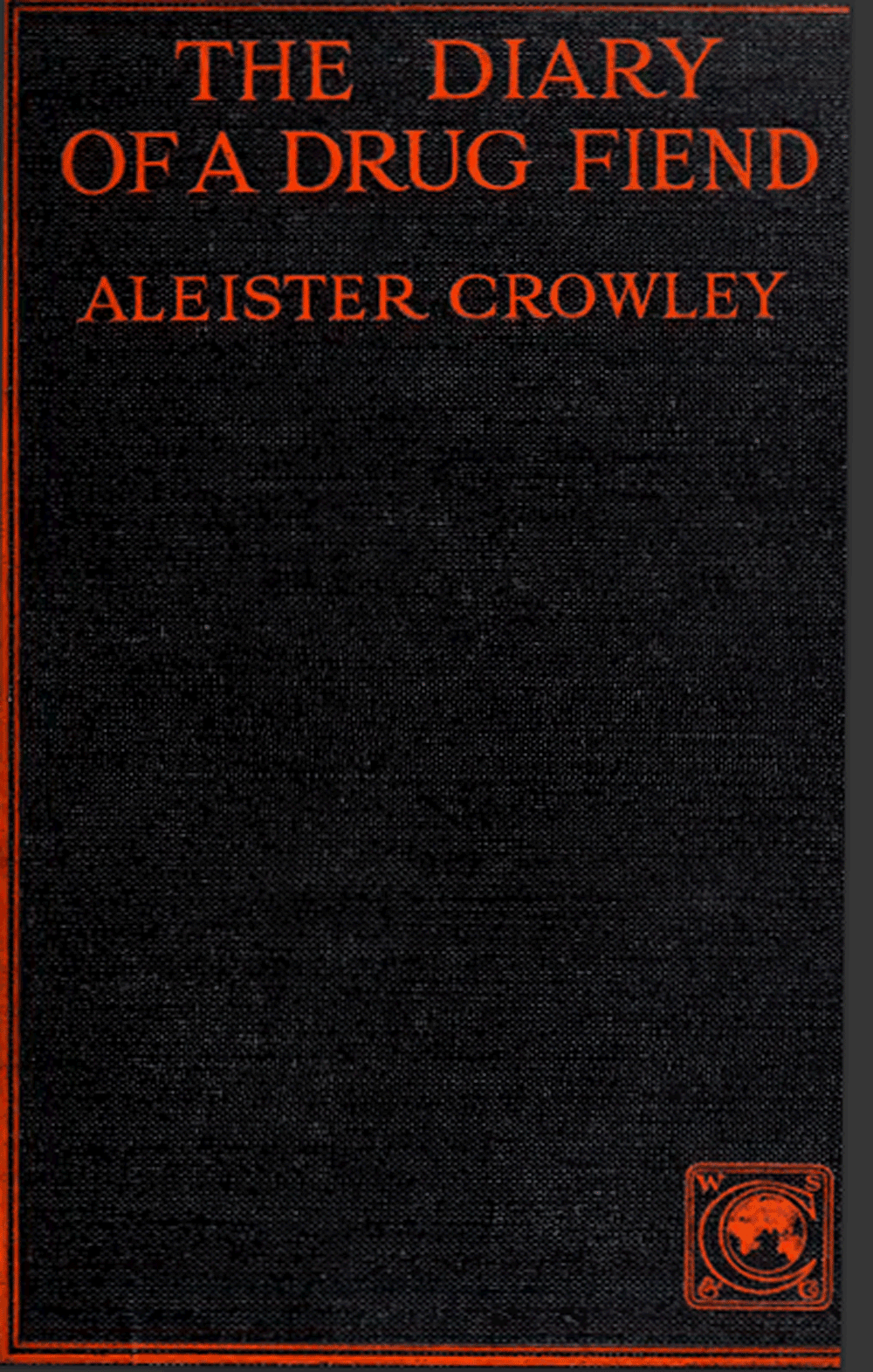
This is the only full-cast recording of Aleister Crowley's 1922 classic paeon to common sense. It is the first book -- and so far almost the only book -- to stake out a philosophy of drug use that is compatible with human freedom, one in which we learn to use drugs as wisely as possible for the benefit of humanity. This recording was produced by the Drug War Philosopher and your purchases help support his effort to push back against the tragically counterproductive policy of drug prohibition, in the name of human freedom and of humanity's right to heal.
No cookies, no ads paid for by amoral and immoral billionaires (or trillionaires).
Unless otherwise indicated, no AI is used in the creation of site content. These essays represent the original ideas of their author and not the ideas that the author SHOULD have based on an algorithmic parsing of existing data. For more on this subject, consider the AI-related viewpoints to which the author subscribes as delineated in the New York Times opinion piece entitled "What 370,000 College Essays Tell Us About A.I.’s Effects on Creativity" by Rebecca Winthrop of the Brookings Institution.











 (up)
(up)