Dear Dr. Grinspoon,
Thank you for this informative article. You write, as you say, as a former opioid addict, so I respect your expertise on this subject. I write about opioids from another point of view, and so I thought I would share my own ideas with you in the hope of growing our respective understandings of the issues involved. I write as a current antidepressant "addict," someone who has been shunted off onto a Big Pharma "med" that turned out to be far harder to kick than heroin. I write as someone who has been turned into a child for life by drug prohibition, someone who has to see a doctor one-third my age every three months of my life in order to qualify for a refill on an expensive, underperforming and dependence-causing "med." This healthcare disempowerment, in my view, was a direct result of drug prohibition, which "saved me" from the coca plant and from "raw opium" by outlawing almost all psychoactive medicines in the world except for those created by pharmaceutical companies. This has turned me into a ward of the healthcare state, with the help of psychiatrists, who first prescribed Effexor for me 35 years ago now, a "med" that I now find it impossible to "kick." (I speculate that this is because such "meds" change default brain chemistry in unknown ways rather than fixing brain chemistry as they were initially supposed to do.) The pharmaceutical companies sought to profit from my depression -- not because they were evil but because they were simply obeying the capitalist mandate of making as much money as possible out of existing business opportunities. This, I believe, is one of the many downsides of drug prohibition that have yet to be acknowledged by the healthcare industry.
While I agree with you that regulation is necessary for ensuring drug quality, dosage and even identity of substances, I believe that it is only drug re-legalization that can solve the problems of which you speak. There is a reason why people are using hard opiates today: it is because America first discouraged and then outlawed the peaceable smoking of raw opium at home, a drug-delivery method that is the least addictive of all when it comes to opiate use -- a protocol that is even less potentially addictive than the eating of opium. Opium does have beneficial uses. It has been considered a panacea since the time of Galen. British doctors in the 19th-century praised the healing powers of opium -- as did Oliver Wendell Holmes on this side of the Atlantic as Ivan Illich reminds us in "Medical Nemesis" -- and likened its casual nightly smoking to the consumption of a nightly beer -- except that the former "vice" did not conduce to wife beating. It was anti-Chinese prejudice and the hypocritical, uninformed and self-interested concerns of western missionaries that caused the western powers-that-be to paint opium smoking as a lurid foreign vice. The protestant missionaries wanted Chinese men to put down their opium pipes and to pick up a Bible instead.
You say that the withdrawal symptoms while getting off opiates were "soul crushing." I can believe that, especially since drug prohibition makes it almost impossible to use other substances (like laughing gas, phenethylamines, tryptamines, etc.) in order to obfuscate and transcend those symptoms on a symptomatic basis. But "soul crushing" is also the perfect description for what I underwent in my attempts to get off of my Big Pharma antidepressant. After a year of careful hyberbolic tapering of Effexor following all the best "scientific" practices (and "on my own dime," be it said), I suddenly woke up one day and found my world was black. This was when I was down from taking 225 mgs per day to taking a mere 5 milligrams per day, so far successfully, more or less. Suddenly, I woke up one morning and I could simply see no reason for living. My mental state was darkness. I sat at the top of my stairs and knew that I had only two choices: to go back to my normal dose of Effexor or kill myself. The doctors will tell me that this is simply my depression returning, but this depression came on suddenly and with an intensity that I had never experienced before. At any rate, the "meds" were supposed to "cure" my depression, not render me med-dependent. This was beyond disempowerment, this was complete and utter decapacitation. And yet I am told that it is my medical duty to take a Big Pharma drug every day of my life.
This begs an obvious question: Why should I not be allowed to use heroin instead of "meds" every day of my life? At least getting off of heroin would be theoretically possible
2. Besides, studies show that many heroin users are productive citizens (see the book by historian Richard Miller entitled "Drug Warriors and Their Prey"), notwithstanding the fact that the government is spending $51 billion a year to make their use as problematic as possible. Herbert Spencer was a daily morphine user, as was a co-founder of Johns Hopkins medical center, surgeon William Halsted. These drugs actually improved their performance in life, though to say so conflicts with the Drug War superstition according to which drugs can have no beneficial uses whatsoever. Of course, I take your word for it that your own opioid use was highly problematic, but I have to ask: how many of those problems were created (either directly or indirectly) by the fact that you were not allowed to use your drug of choice safely and without supply problems, as do the 1 in 4 American women who take a Big Pharma "med" every day of their life? Frankly, I would rather be a daily heroin user than a daily pill popper. Why? There are at least two reasons: 1) Because heroin use actually does have benefits, even though it's almost illegal to say so these days, and 2) because I could get the drug without having to answer humiliating questions from a doctor who is one-third my age -- questions like: "Have you been hearing voices lately?" and "Have you considered suicide lately?" -- to which I always want to respond: "Only when I consider how drug prohibition has turned me into a ward of the healthcare state."
You yourself say that liquor prohibition was a "disastrous experiment." And you are right. It brought machine-gun fire to American streets and resulted in the creation of the Mafia as we know it today. Knowing this, however, I do not understand why you would recommend more of the same when it comes to all of alcohol's competitors. It is the criminalization of the suppliers that caused the problems that we associate with liquor prohibition. By continuing to criminalize the suppliers of much-desired substances, we are ensuring that gun violence and torture will continue and that demagogue politicians will continue using such facts to abrogate democratic freedoms, just as the 4th amendment is no longer considered to be applicable to cases involving drugs. Hundreds of thousands of Mexicans have been killed south of the border thanks to the violence that has been introduced by the never-ending (and never-endable) attempt to stop drug suppliers from supplying much-desired substances -- and tens of thousands of young people have been "disappeared" as well. I feel that we must keep these victims in mind when we try to save young people in America from making bad decisions. We can't get rid of drug dangers in the age of drug prohibition; we can only outsource them to other demographics. We need to educate our young people rather than trying to protect them from themselves by incentivizing civil wars overseas with the criminalization of suppliers. Nor should we place the government in charge of deciding who "really" needs an opiate. Is a bureaucrat going to realize that it is better for a deeply depressed person to use opiates than to kill themselves? The bureaucrat would have to be God to understand who really needs opiates and when. And what about the philosophers, theologians, poets, and writers who wish to use opiates for professional reasons: to study the nature of perception, to investigate the ontology of ecstatic visions, or to inspire themselves to write interesting prose and poetry?
I understand the "prohibition impulse." The problem of drug abuse is real enough. Aleister Crowley described that problem succinctly when he wrote of our need to "conquer the moral problem posed by the discoveries of organic chemistry." But we got it all wrong when we first tried to solve this problem with legislation. Our solution has been to outlaw a whole pharmacopoeia of desirable substances under the demonstrably false belief that drugs can have no beneficial uses for anyone, anywhere, ever. That approach was a recipe for eternal drug-related violence, academic censorship, and the outlawing of our right to heal. No one stood up for the depressed when Congress was outlawing godsends in the early 20th-century America. No one stood up for philosophers like William James
3, who urged us to study the effects of psychoactive substances to learn about new kinds of consciousness. No one stood up for the rights of the cognitively impaired to drastically improve their cognition. Even the drugs that we have been taught to hate most -- the powerful opiates -- have obvious potential uses for the severely depressed -- unless, that is, we have come to hate drugs so much that we believe that death itself is preferable to their use
4. Aspirin is only legal today because politicians insisted in congressional hearings in the 1950s that they wanted to use the drug without hassles. They wanted to buy it over the counter, with no one keeping track of them for having done so. It's time that we told the politicians that the rest of us demand the same freedom to use the drugs that we value without hassles as well.
But let me address what I take to be your main fear, Dr. Grinspoon: that the legalization of opiates will increase opiate dependence. I believe that this fear is based on a number of assumptions about the world that will no longer be valid in the kind of drug-educated and free world that I propose -- or rather that I think that we must create if we are going to have a drug policy that comports with the American freedoms that are implicit in our Constitution and our Bill of Rights. Here are some conditions that would "obtain," as the philosophers say, in a free world, one in which we dealt with the existence of wonderful but sometimes dangerous substances in the manner of adults, by educating the drug-loving public rather than arresting them. Here is what that world would look like:
1) All Americans would learn about drugs with the help of some of that $51 billion that we're now spending on arresting them. They will learn about "best practices" of those who have actually used drugs wisely and for good reasons -- like the poets of the 19th century who smoked opium in what author Richard Middleton described as a "series of magnificent quarterly carouses.
5"
2) Americans would learn that there are nonaddictive drugs (both out in nature and synthetic) that can give users the same psychoactive benefits that they now seek from opiates but in a non-addictive manner.
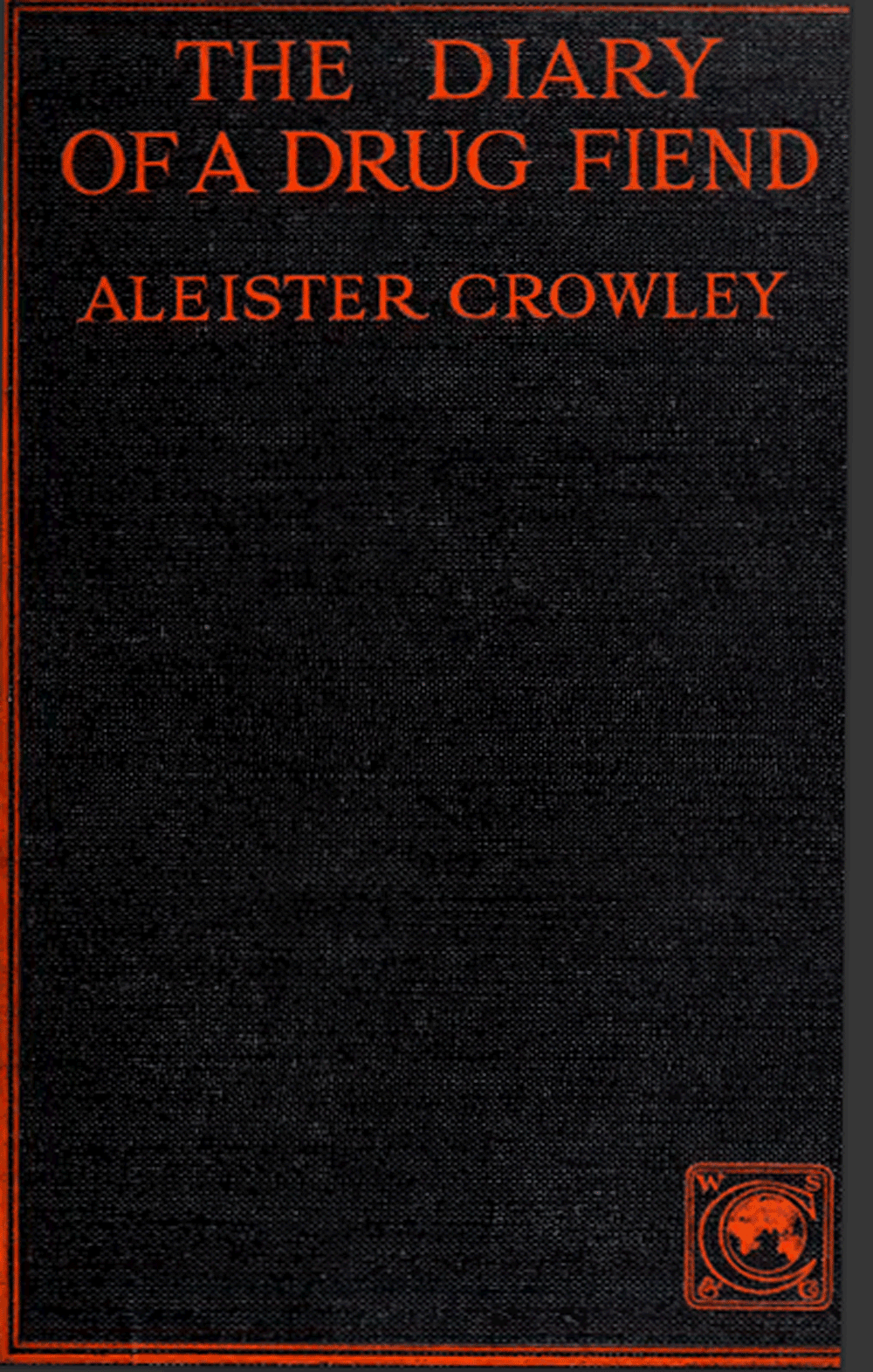
3) Americans would also be taught, however, that yes, they can use all substances safely: that it requires willpower and responsibility. As the rehab coach exclaims in "The Diary of a Drug Fiend" by Aleister Crowley:
We have tamed the wild lightning, after all; shall we run away from a packet of powder?
6
We must remember in this connection that doctors and drug makers have a vested interest in painting Americans as powerless victims in the face of drugs. They tell us that we are powerless without the help of modern science. But this is not true, notwithstanding the fact that it is said to be "proven" by science. The life story of Malcolm X is a case in point. Malcolm successfully got his followers to give up heroin by motivating them to renounce the drug. How? By claiming that heroin was a tool of the white man to keep them down. Malcolm understood basic psychology. He knew that his followers had to WANT to get off of heroin, and so he gave them a reason to make the effort, a reason to think of the downsides of withdrawal in a new way -- after which that withdrawal process was relatively easy for them -- even in a world in which, as mentioned above, we have outlawed all substances that could have helped them to better endure the downsides of their withdrawal process.
4) In a free world, we would advertise not just the dangers of drug use, but the benefits as well. We would let the depressed know that there are better options than underperforming and dependence-causing meds whose use will turn them into wards of the healthcare state. We will show them user reports concerning the godsend states that drugs can produce, like the following user account of a DMT experience chosen at random from the plethora of such accounts that can be found online:
Geometry exploded across my vision and soon I was in another place entirely. This was a house not unlike the one I was physically in, the walls were colors and faces pulsing with the now louder music, I saw every possible color shift into another with each beat, and it was as though the walls were people. They all wordlessly welcomed me and I danced with them as part of the walls. I felt such an overwhelming sense of belonging as if all of the loneliness I had felt before in my life was just debt building up to be repaid in this moment.
7
Finally, Americans forget that it is not just drug use that causes problems, that sobriety itself is problematic for hundreds of millions of people. As Thoreau tells us, "Most men lead lives of quiet desperation." Forty-seven thousand Americans commit suicide every year, and most of them could have passed a drug test with flying colors. The answer is not to get people off of drugs, unless they hold a Christian Science view of these matters; it is to help them to obtain the state of mind that they desire in the safest and most sustainable way possible given their circumstances in life. We have to recognize, however, that we cannot save everybody when it comes to any risky activity -- whether that risky activity be drug use, skateboarding or rock climbing. Our attempts to save everybody always ends up causing more problems than they were meant to solve, and when we pursue this Quixotic goal to the hilt, we make our world safe only at the price of destroying the freedoms that once defined us as a people.










 (up)
(up)