








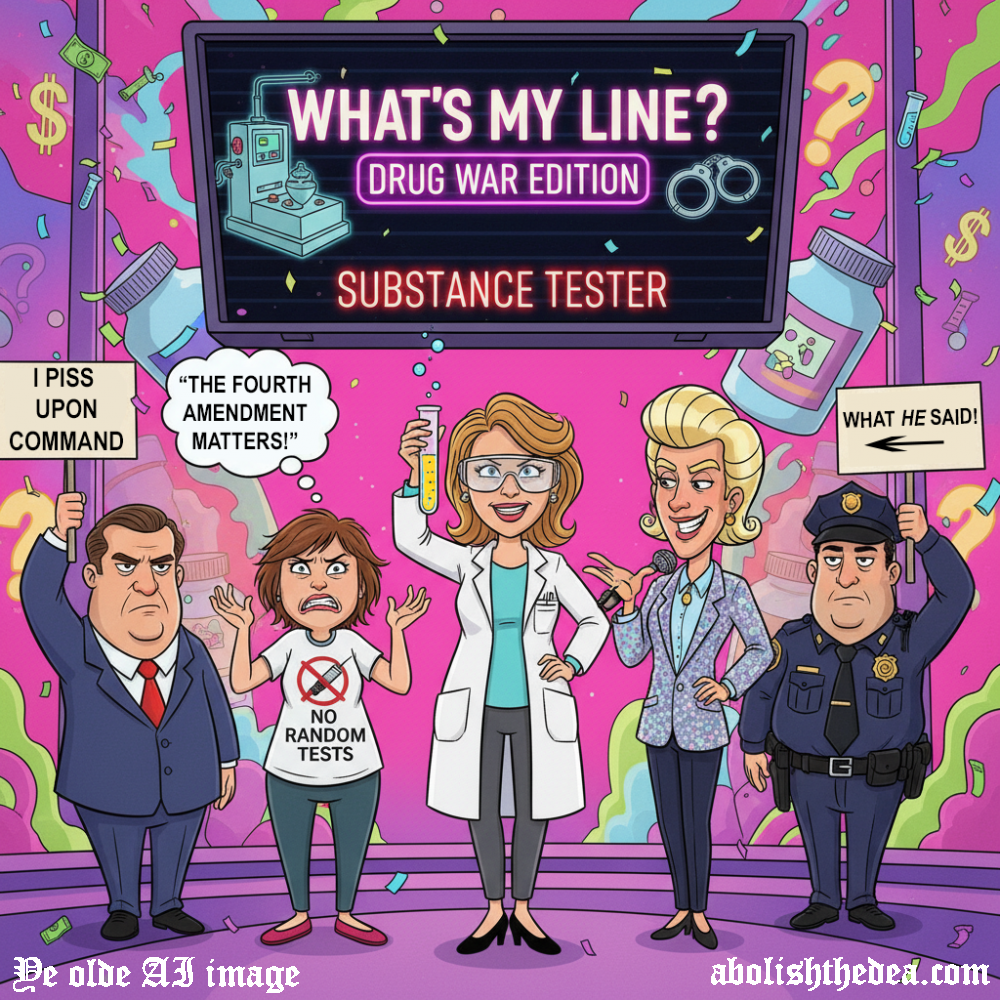
 HOST: Welcome to What's My Line?! Today's guest is someone in the biomedical field. Someone in the biomedical field. Our contestants' duty is to identify the job that he holds. Okay, guys? Let's start with the star of Celebrity Lawn Darts, Talon West. Talon, your first question, please?
The term "hard" is just our modern term for the kinds of drugs that doctors of yore used to call panaceas
John Halpern wrote a book about opium, subtitled "the ancient flower that poisoned our world." What nonsense! Bad laws and ignorance poison our world, NOT FLOWERS!
I'm told that science is completely unbiased today. I guess I'll have to go back and reassess my doubts about Santa Claus and the Tooth Fairy.
This is why it's wrong to dismiss drugs as "good" or "bad." There are endless potential positive uses to psychoactive drugs. That's all that we should ask of them.
All drugs have potential positive uses for somebody, at some dose, in some circumstance, alone or in combination. To decide in advance that a drug is completely useless is an offense to reason and to human liberty.
The DEA has done everything it can to keep Americans clueless about opium and poppies. The agency is a disgrace to a country that claims to value knowledge and freedom of information.
Amphetamines are "meds" when they help kids think more clearly but they are "drugs" when they help adults think more clearly. That shows you just how bewildered Americans are when it comes to drugs.
We might as well fight for justice for Christopher Reeves: he was killed because someone was peddling that junk that we call horses. The question is: who sold Christopher that horse?! Who encouraged him to ride it?!
Drug prohibition is the biggest tyranny imaginable. It is the government control of pain relief. It is government telling us how and how much we are allowed to think and feel in this life.
Using the billions now spent on caging users, we could end the whole phenomena of both physical and psychological addiction by using "drugs to fight drugs." But drug warriors do not want to end addiction, they want to keep using it as an excuse to ban drugs.
HOST: Welcome to What's My Line?! Today's guest is someone in the biomedical field. Someone in the biomedical field. Our contestants' duty is to identify the job that he holds. Okay, guys? Let's start with the star of Celebrity Lawn Darts, Talon West. Talon, your first question, please?
The term "hard" is just our modern term for the kinds of drugs that doctors of yore used to call panaceas
John Halpern wrote a book about opium, subtitled "the ancient flower that poisoned our world." What nonsense! Bad laws and ignorance poison our world, NOT FLOWERS!
I'm told that science is completely unbiased today. I guess I'll have to go back and reassess my doubts about Santa Claus and the Tooth Fairy.
This is why it's wrong to dismiss drugs as "good" or "bad." There are endless potential positive uses to psychoactive drugs. That's all that we should ask of them.
All drugs have potential positive uses for somebody, at some dose, in some circumstance, alone or in combination. To decide in advance that a drug is completely useless is an offense to reason and to human liberty.
The DEA has done everything it can to keep Americans clueless about opium and poppies. The agency is a disgrace to a country that claims to value knowledge and freedom of information.
Amphetamines are "meds" when they help kids think more clearly but they are "drugs" when they help adults think more clearly. That shows you just how bewildered Americans are when it comes to drugs.
We might as well fight for justice for Christopher Reeves: he was killed because someone was peddling that junk that we call horses. The question is: who sold Christopher that horse?! Who encouraged him to ride it?!
Drug prohibition is the biggest tyranny imaginable. It is the government control of pain relief. It is government telling us how and how much we are allowed to think and feel in this life.
Using the billions now spent on caging users, we could end the whole phenomena of both physical and psychological addiction by using "drugs to fight drugs." But drug warriors do not want to end addiction, they want to keep using it as an excuse to ban drugs.


 (up)
(up)